What Counts as a UPW Performance Criterion
UPW performance criteria are the quantitative, application-driven limits that govern how an ultrapure water system is specified, operated, and verified. Because conductivity and resistivity are sensitive to ionic contamination — theoretical-pure water is 0.05501 µS/cm and 18.18 MΩ·cm at 25 °C (per ASTM D1125 and D5391) — resistivity alone is not enough; total organic carbon, silica, dissolved oxygen, and particle counts must also be specified. The binding numbers change with the governing monograph: semiconductor plants follow SEMI F63 (line widths 32 nm and smaller, latest revision F63-1224, used with F61 and F75), pharmaceutical and biotech plants follow USP, Ph. Eur., or JP, and power generation follows EPRI, ASME, and IAPWS guidance. A spec is only credible when the governing monograph is named up front and each polishing unit operation is qualified against the parameter it actually controls.
Performance criteria are not a marketing label. A spec line such as "18.2 MΩ·cm" is meaningless without the temperature, the analytical method, the on-line instrument, and the monograph it is being measured against. Always state the measurement temperature; the 18.18 MΩ·cm anchor is only valid at 25 °C, and uncompensated cross-facility comparisons will mislead. Conductivity and resistivity probes are used for continuous monitoring because CO₂ ingress through leaks or polymer tubing forms carbonic acid and shifts the reading. Resistivity is blind to non-ionic species, so it must be paired with total organic carbon, silica, dissolved oxygen, and particle counters to characterise a complete UPW spec. Any claim of "UPW quality" without a named monograph, a temperature, and a supporting analytical panel is incomplete.
The Three-Stage UPW Train: Where Each Spec Line Is Earned
Every UPW train is built in three ascending stages, and the spec line for each parameter is earned at a specific stage. Pretreatment produces "purified water" and is sized to protect downstream reverse osmosis and ion-exchange units from fouling and scaling. The key output target is a silt density index (SDI) suitable for RO membrane protection, and that SDI must be measured, not assumed. A correctly specified multi-media filter train ahead of an industrial water softener keeps the SDI in range so the RO and UF membrane elements behind them are not prematurely blinded.
Primary treatment removes ions, dissolved gases, and organics. Multi-pass reverse osmosis is the dominant 21st-century primary method, stripping dissolved ions, dissolved organics, and suspended solids in a single architecture. Dissolved gases — including oxygen and volatile organics — are removed by vacuum or membrane degassers. In microelectronics rinse water, dissolved oxygen must be held below 10 µg/L to prevent oxidation of wafer films; in power plant water and steam, DO is controlled to ppb levels to minimise corrosion. Silica must reach sub-ppb levels for microelectronics because it volatilises in high-temperature boilers and deposits on turbine blades. The HydropureWater industrial RO system is the unit operation that delivers the bulk of the ionic and organic reduction called for in this stage.
Polishing is where the spec sheet is finally satisfied. UV light sterilises water at this stage, killing bacteria that downstream filters then capture; final 0.45 µm ultrafiltration removes the dead organisms and fragments. Semiconductor fabs add filters with pore sizes of 200 nm or smaller just before distribution to further cut particle counts. UPW is recycled continuously through the polishing loop after distribution to prevent stagnation and bacterial regrowth, and reclaimed-feed TOC problems (urea, sub-7 nm) are now treated as a current re-qualification trigger.
Per-Unit-Operation Binding Parameters: Who Owns Which Spec Line
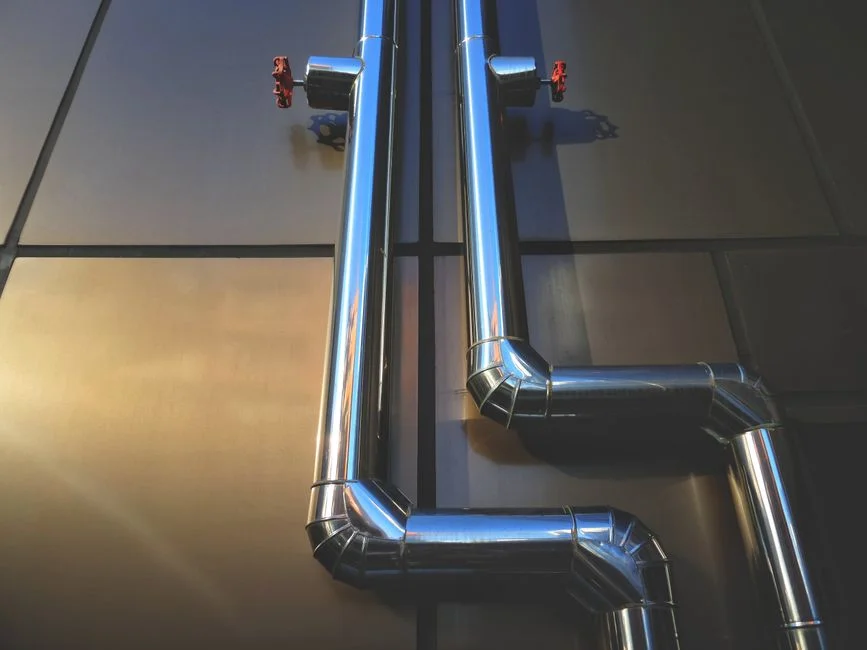
Each binding parameter must be allocated to the unit operation that actually hits it. The table below maps each polishing technology to the parameter it controls; treat the rows as a delegation matrix when you write or defend a UPW spec.
| Unit Operation | Binding Parameter Owned | Spec Driver |
|---|---|---|
| EDI polishing stack | Resistivity (approaches 18.18 MΩ·cm at 25 °C) | Final ionic purity |
| UV steriliser (185/254 nm) | TOC reduction; microbial inactivation | Organics; microbial count |
| 0.45 µm UF | Bacteria and pyrogen/fragment counts | Microbial control before distribution |
| Final ≤200 nm filter | Particle counts at the half-feature size (e.g. ≤20 nm for 40 nm chip feature) | Wafer-yield particle rule |
| UV-AOP / sulfate-radical AOP | TOC breakthrough on reclaimed feed (urea, small-molecule organics) | Sub-7 nm device-node TOC |
| Recycling loop (no dead legs) | Bacterial regrowth / stagnation | Continuous turnover |
Engineers must pair RO primary with EDI polishing, UV sterilisation, and UF, while stating the analytical panel (resistivity, TOC, DO, silica) the supplier actually holds on-line under load. Equipment pairing such as the HydropureWater EDI polishing stack downstream of a HydropureWater UV steriliser and a HydropureWater UF system is the conventional way to land each row in the table above. A UPW loop sizing guide for semiconductor fabs shows how the recycling-loop flow target is set so stagnation does not occur at the loop tail.
Industry Monographs Compared: SEMI, USP / Ph. Eur., EPRI / ASME
The same equipment train can carry very different spec limits. The polishing configuration must be qualified against the target monograph, not against a generic UPW label. The table below consolidates the binding parameters for the three largest user industries so the engineer can see at a glance which constraint governs their project.
| Industry | Governing Monograph(s) | Conductivity / Resistivity | TOC (on-line) | Trace / Anion Targets | Particle / Microbial |
|---|---|---|---|---|---|
| Semiconductor (≤32 nm) | SEMI F63-1224 (with F61, F75); ASTM D1125 / D5391 | Approaches 18.18 MΩ·cm at 25 °C | Per current F63 revision | F63-0213 "Advanced": 22 elements + 7 anions + ammonium | Half-feature rule (e.g. ≤20 nm for 40 nm chips) |
| Pharmaceutical / biotech | USP, Ph. Eur., JP (parent Purified Water monograph; WFI for injection) | Per pharmacopoeia limit | Per pharmacopoeia limit | Per pharmacopoeia limit | Endotoxin, microbial, virus control required |
| Power generation | EPRI, ASME, IAPWS guidance | Per cycle / boiler spec | Per cycle / boiler spec | Per cycle / boiler spec | DO controlled to ppb to minimise corrosion |
Semiconductor purity is the most stringent because particles and dissolved ions cause faults at the nanometre scale where current device features are measured. Pharmaceutical plants reference a parent "Purified Water" monograph that in turn points to the application-specific monograph for water for injection or other uses. Power generation follows EPRI, ASME, and IAPWS guidance, with DO controlled to ppb levels to minimise corrosion in the steam cycle.
SEMI F63 Revision History and Why Your Spec Must Be Revalidated
SEMI F63 is the guide facility engineers and quality professionals use to establish performance criteria when purchasing UPW purification equipment, to set process control parameters for UPW-system operation, and to establish quality expectations for the supplied UPW. It is used in conjunction with SEMI F61 (system design) and SEMI F75 (quality monitoring). The current revision, F63-1224, applies to line widths of 32 nm and smaller and includes hot UPW in scope.
Revision history, in order: F63-0701 (first published) → F63-0309 → F63-0211 → F63-0213 → F63-1016 → F63-0918 → F63-0521 → F63-1224 (current). F63 is developed from IRDS risk assessment, independent-laboratory UPW testing at semiconductor manufacturing sites, water-system equipment-manufacturer specifications, and SEMI Standards Liquid Chemical Global Technical Committee input. Successive technical revisions have changed the trace-element list and TOC targets; specifications written before 2024 should be revalidated against current SEMI monographs on both trace elements and TOC.
Advanced fabrication plants consume several million gallons of UPW per day, and some manufacturers now use reclaimed municipal or industrial wastewater as raw feedstock. Reclaimed feedwater contains small-molecule organics such as urea that conventional RO, ion exchange, and conventional UV do not remove, so UV-AOP and sulfate-radical AOP are being added as supplementary polishing unit operations to meet sub-7 nm TOC specifications. This reclaimed-feed problem is treated as a current polishing-train re-qualification trigger.
Spec-Refresh Checklist and Supplier-Evaluation Questions
Before any polishing-equipment purchase, complete a spec refresh: confirm the feedwater source, name the governing monograph, state the target device node or boiler pressure, and identify the TOC breakthrough point that the new unit operation must hold. State the measurement temperature, the analytical method, and the on-line instrument for each binding parameter so that future audits can reproduce the number.
Budget should be framed around the dominant cost drivers: semiconductor-grade polishing equipment, a continuous recycling loop, and on-line monitoring for resistivity, TOC, DO, and silica. Rather than chasing a single price, request a line-item split for the RO primary, EDI polishing, UV sterilisation, and the analytical panel, so the spec-driving line items are visible. A line-item split is the only way to confirm that the bidder has actually allocated equipment to each binding parameter rather than rolled everything into a generic "UPW skid."
Supplier evaluation should reference proven delivery of EDI polishing and UF positioned after UV sterilisation, not generic "water treatment" capability. Ask for reference installations at the same governing monograph (SEMI for microelectronics, USP or Ph. Eur. for pharma, EPRI/ASME for power) and for the on-line analytical record the supplier's system actually holds under load. Any change in feedwater source or in the target device node should trigger a documented re-qualification before the new operating point is accepted.
Frequently Asked Questions
What resistivity defines UPW and why is temperature compensation required?
Pure water has a resistivity of 18.18 MΩ·cm at 25 °C, per ASTM D1125 and D5391. The 25 °C anchor is non-negotiable: uncompensated readings from a 35 °C polishing loop will look worse than the same water at 18 °C, and cross-facility comparisons will mislead. Always require temperature-compensated and raw values on the supplier data sheet, and confirm the probe calibration against a known standard at commissioning.
Which SEMI F63 revision is current and how often should a UPW spec be revalidated?
The current revision is SEMI F63-1224. Because successive technical revisions have changed the trace-element list and TOC targets, any specification written before 2024 should be revalidated against the current revision. The buyer should request the supplier's revision-by-revision delta on trace elements and TOC, plus the date the supplier last updated its in-house reference, before accepting the proposal.
What filter pore size is required for a given device node?
Apply the half-feature rule: a 40 nm chip feature requires that all particles larger than 20 nm (0.02 µm) be removed. The polishing filter is sized to the smallest linewidth on the wafer, so the pore size is derived from the wafer roadmap. For a 14 nm node the polishing filter pore size drops accordingly, and SEMI C79 / C82 / C89 / C93 / F104 / F121 provide the test methods to qualify the filter at that size.
How should a buyer compare UPW equipment suppliers without getting a generic "water treatment" pitch?
Demand reference installations at the same governing monograph and an on-line analytical record (resistivity, TOC, DO, silica) held under load, not marketing curves. Ask which F63 revision the reference installation was qualified against, what the trace-element panel looks like, and whether the analytical record is continuous on-line or grab-sample. A supplier that can only show brochure specifications and a single conductivity trace under no-load conditions has not demonstrated a UPW performance claim.