Why UPW Loop Sizing Is a Yield Decision in 2026
Ultrapure water loop sizing is a direct lever on yield, energy, and reclaim economics in 2026. The UltraFacility 2026 brief notes that UPW purity has moved from parts-per-billion toward parts-per-quadrillion, that advanced packaging is set to roughly double pure-water consumption per die, and that UPW is climbing toward 10% of total fab energy load. Any residence-time excursion in a distribution loop now costs measurable yield, and any oversized header costs measurable pumping energy.
Basis-of-design memos for 3nm and 2nm tool sets treat the loop as a process instrument rather than a plumbing run. Molewater's 2026 evaluation framework ranks purity stability, energy and water recovery, and intelligent monitoring at the top of the criteria list. An undersized loop starves tools during cleaning peaks; an oversized loop drifts on TOC, wastes pump energy, and complicates reclaim-to-polisher return. The article that follows details the three numbers an engineer must defend in that memo — line velocity, residence time, and loop count — and shows how they combine into a defensible pipe diameter and architecture decision.
The Three Engineering Targets Behind Every UPW Loop Sizing Guideline
Every defensible UPW loop sizing guideline in 2026 reduces to three coupled engineering targets: line velocity, residence time, and recirculation turnover. Locking these before pipe diameter is chosen is what separates a basis-of-design memo from a pipe-schedule copy-paste.
Line velocity is the first number to fix. It is held in a defined band to suppress particle deposition and biofilm growth at low velocities, and to avoid erosion and fitting damage at high velocities. The supplied research does not publish a single canonical band to copy verbatim, so the exact value must be confirmed with the fab's UPW specifier or EPC basis-of-design; treat the velocity band as a project-specific input.
Residence time is the second target. The volume of water between the final polisher — typically the polishing stage of an RO plus EDI train — and the point of use must be small enough that resistivity, TOC, and dissolved oxygen do not drift outside tool limits during the loop's longest dwell. Molewater's 2026 guidance lists 18.2 MΩ·cm resistivity and ultra-low TOC as the steady-state targets that the loop must protect, with online resistivity, TOC, particle, and flow sensors as the monitoring layer that confirms residence time is being met.
Recirculation turnover rate is the third target, and it is the lever that ties flow to volume. Turnover is how many times the loop's contents are refreshed per hour; higher turnover protects purity but costs pumping energy and accelerates wear on valves and joints. PVDF and polypropylene piping — the dominant UPW materials per SNS Insider's 2024 market data — tolerate the velocity band but are sensitive to joint count and dead legs, which is why diameter, geometry, and turnover must be designed together.
| Target | What it controls | Trade-off when pushed | Source |
|---|---|---|---|
| Line velocity | Particle deposition, biofilm, fitting erosion | Too low → dropout; too high → erosion and energy waste | Qualitative engineering rule; confirm exact band with fab UPW specifier |
| Residence time | Drift of resistivity, TOC, DO between polisher and tool | Longer → purity drift; shorter → larger pumps and pipe | Molewater 2026 (S2) — 18.2 MΩ·cm and ultra-low TOC as steady-state targets |
| Recirculation turnover | Loop refresh rate per hour | Higher turnover → cleaner water, more pump energy | Engineering coupling between the three targets; no single value in research |
Pipe Diameter vs. Flow: How to Pick UPW Loop Diameter in 2026
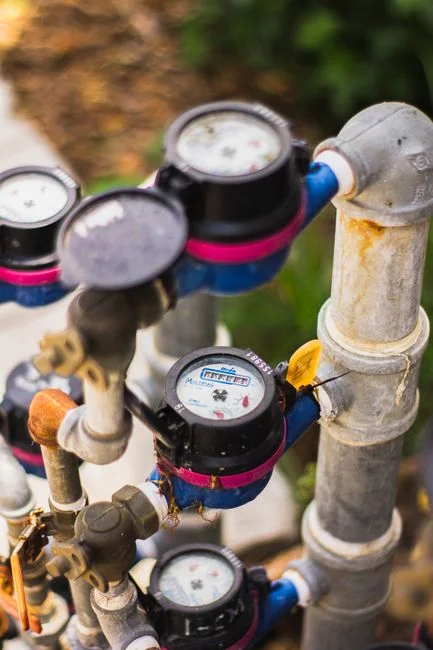
Pipe diameter follows from a straightforward hydraulic conversion once the three targets are locked. The method is to pick a line velocity inside the accepted UPW band, convert the target loop GPM into a cross-sectional area, and then select the next standard pipe diameter up — never down, because partial-flow conditions in UPW cause particle dropout and TOC spikes at the invert.
SNS Insider's 2024 UPW piping market data confirms the qualitative direction the industry is moving. Small-diameter pipe (less than 2 inches) held the dominant share in 2024 because of ease of installation and flow control on tool-side branches. The fastest-growing segment through 2032 is medium-diameter pipe (2 to 6 inches), driven by multi-loop chemical delivery and the higher flow capacity that advanced-node rinsing and cleaning loops demand. For tool-side branches serving a single wet bench or scrubber, less than 2 inches remains the default; for a main loop feeding multiple bays or a reclaim-to-polisher return, 2 to 6 inches is the 2024–2032 direction (S4, SNS Insider 2024).
Cleaning and rinsing is the fastest-growing end-use application for UPW piping through 2032, so any new loop should be sized with future cleaning and rinsing load growth in mind, not only today's SC1, SC2, and piranha demand. The 2024 market was USD 1.45 billion and is projected to reach USD 3.15 billion by 2032 at a 10.20% CAGR, with more than 50 new semiconductor fabs planned globally by 2030 (S4, SNS Insider 2024). This capacity pipeline is why the medium-diameter band is where most 2026 sizing decisions will land.
The exact velocity band and maximum GPM must be confirmed with the fab's UPW specifier or EPC basis-of-design; the supplied research confirms the qualitative direction toward 2–6 inch medium-diameter pipe and the dominance of multi-loop systems. For a 2026 UPW piping material comparison, see this 2026 UPW piping material comparison, and for surface finish limits see the UPW pipe surface roughness spec.
Single-Loop, Multi-Loop, or Customized: Choosing the Right 2026 Architecture
Loop count is the second architecture decision after diameter, and the 2024–2032 market data makes the default direction clear. Multi-loop systems held roughly 44.84% of the UPW piping market in 2024, offering redundancy, better circulation, and more consistent purity across bays. Customized multi-loop systems are projected to grow fastest at a 12.43% CAGR from 2025 to 2032, reflecting demand for layouts matched to 3nm and 2nm tool placement and advanced packaging lines. Single-loop designs remain viable for conventional, lower-mix fabs where one purity class serves the whole plant, but they concentrate risk and limit per-tool flow control (S4, SNS Insider 2024).
Molewater's 2026 evaluation framework reinforces this, as modularity and flexible scaling are core criteria only achievable with a multi-loop or customized multi-loop architecture. The decision rule for a 2026 fab or major expansion at advanced nodes is to default to multi-loop, with loop count driven by tool sensitivity tiers and the desired redundancy for the most yield-sensitive steps.
| Architecture | 2024 market share | 2025–2032 growth | When to use in 2026 | Source |
|---|---|---|---|---|
| Single-loop | Smaller share, steady adoption in conventional fabs | Steady | Lower-mix fabs, one purity class, limited redundancy need | S4, SNS Insider 2024 |
| Multi-loop | ~44.84% in 2024 — dominant | Strong, market-dominating | Default for advanced nodes; tool-tier-based purity control | S4, SNS Insider 2024 |
| Customized multi-loop | Smaller share in 2024 | Fastest at 12.43% CAGR 2025–2032 | 3nm/2nm tool placement, advanced packaging lines, brownfield retrofits | S4, SNS Insider 2024 |
Worked Example: Sizing a 2026 Multi-Loop UPW Header for a 3nm Bay
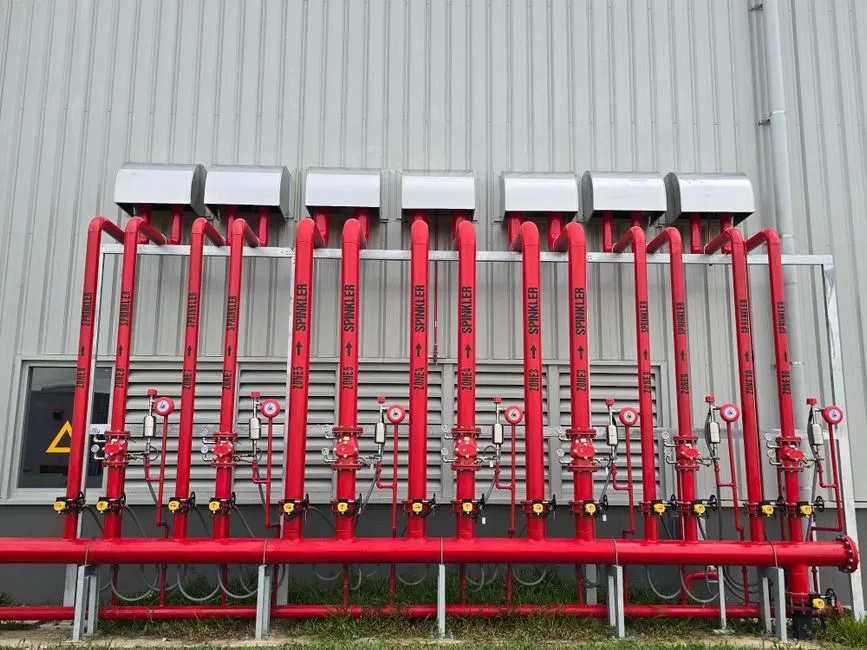
The fastest way to make the three targets defensible is to walk them through one header.
- Lock the tool-side GPM demand. Pull the peak GPM from the tool data sheets for the 3nm bay and apply a diversity factor to account for non-coincident peak draws. The exact diversity factor is a project input and must be confirmed with the EPC.
- Pick the line velocity target and convert to diameter. Pick a line velocity inside the fab's UPW band, convert the diversified GPM into a cross-sectional area, and select the next standard pipe diameter up. For a 3nm bay main header, that almost always lands inside the 2–6 inch medium-diameter range identified as the fastest-growing segment through 2032 (S4).
- Check residence time against the loop volume. Compute residence time from the loop's wetted volume at the chosen diameter. If it exceeds the fab's allowed residence time, split the loop or add a return-side polishing branch rather than oversizing the diameter — oversizing pushes velocity below the deposition threshold and breaks the first target.
- Validate against cleaning and rinsing peak load. S4 identifies cleaning and rinsing as the fastest-growing UPW end use through 2032, so check that the chosen diameter supports the future cleaning peak, not only today's wet-etch and rinse demand.
- Feed the sizing back to the pretreatment train. The final GPM and water-quality spec drive the sizing of the upstream RO and EDI polishing stack. Loop and pretreatment are coupled, and they must be designed against the same GPM, resistivity, and TOC targets. The polishing side is typically served by an EDI polishing stack fed by a HydropureWater industrial RO system, with capacities matched to the loop's diversified peak and turnover.
Frequently Asked Questions
What line velocity, residence time, and turnover should a 2026 UPW loop be sized to?
The three coupled targets are line velocity (held in a band to suppress deposition and erosion), residence time (short enough that resistivity, TOC, and dissolved oxygen do not drift between the polisher and the tool), and recirculation turnover (the loop's refresh rate per hour). The exact values are project-specific and must be confirmed with the fab's UPW specifier or EPC basis-of-design. Molewater's 2026 framework lists 18.2 MΩ·cm resistivity and ultra-low TOC as the steady-state targets that the loop must protect (S2).
How much does a multi-loop UPW distribution system cost in 2026?
The supplied research does not publish a per-loop or per-GPM price for a multi-loop UPW distribution system, so a buyer's pricing check must be built from inputs. Request a per-GPM installed cost split by diameter band (less than 2 inches vs. 2–6 inches), a separate line for the polishing side (RO and EDI capacity), and a contingency for PVDF vs. polypropylene joint count, since joint count drives both cost and dead-leg risk. SNS Insider's 2024 market sizing (USD 1.45 billion in 2024, USD 3.15 billion by 2032 at 10.20% CAGR) is a useful macro reference but is not a price quote (S4).
Single-loop vs. multi-loop: which architecture should a 3nm or 2nm fab default to?
Default to multi-loop, and evaluate customized multi-loop if the layout has unusual constraints. SNS Insider's 2024 data shows multi-loop systems at roughly 44.84% market share in 2024, with customized multi-loop as the fastest-growing segment at a 12.43% CAGR from 2025 to 2032, driven by 3nm and 2nm tool placement and advanced packaging lines (S4). Single-loop remains viable only for conventional, lower-mix fabs where one purity class serves the whole plant.