
Why Melbourne Housing Developments Need a Packaged Sewage Treatment Plant
A packaged sewage treatment plant for a Melbourne housing development is most commonly a buried A/O biological unit or a containerised MBR/MBBR/SBR skid, sized to the development's equivalent population (EP) and matched to a discharge path approved by EPA Victoria. For projects that cannot connect to a Melbourne Water sewer, suppliers such as True Water deliver packaged systems in the 5 kL–500 kL range covering 50–5,000 EP and hold more than 2,500 government approvals nationally, with a combined fleet capacity of about 5 ML/day. Choice between underground and above-ground modular formats depends on site constraints, effluent class required, and the developer's preference for phased expansion as stages are released.
Outer-Melbourne growth corridors — Wyndham, Casey, Hume, Whittlesea and Mitchell — routinely outpace Melbourne Water trunk-sewer delivery, which is why packaged systems are positioned by True Water as a way to "unlock development before municipal sewage" (S1). The broader metropolitan context is dominated by Melbourne's Western Treatment Plant at Werribee, which treats about 485 ML/day, roughly 50% of Melbourne's sewage, and produces around 40,000 ML of recycled water a year under an EPA Victoria licence (S4, Melbourne Water). On top of that, Australia's population is growing at about 1.5% per year and the country faces recurring water-stress drivers, which has made on-site treatment and reuse an established part of the residential infrastructure mix rather than a last resort (S3).
For an engineer, a "packaged plant" means a prefabricated, factory-built biological treatment unit delivered as one or a few skids or tanks, rather than a stick-built concrete works constructed entirely on site. That distinction matters because it sets expectations on civil-works scope, commissioning time and the kind of approvals EPA Victoria and the local water corporation will accept.
The Four Process Families Used in Melbourne Residential Packages
Four process families cover almost every packaged sewage treatment plant tendered into Greater Melbourne residential work: MBR, MBBR, SBR and fixed-bed biological reactors. Each has a defensible place on a shortlist, and each maps to a different effluent class and footprint.
MBR (membrane bioreactor) — submerged PVDF membranes deliver near-reuse effluent at sub-micron clarity, with the HydropureWater MBR membrane bioreactor covering 10–2,000 m³/day in a footprint roughly 60% smaller than a conventional activated-sludge plant. MBBR (moving bed biofilm reactor) — free-floating HDPE carriers on which the biology grows; Biocell lists MBBR as a typical below-ground option for residential developments where civil works are acceptable (S2). SBR (sequencing batch reactor) — cyclic fill/aerate/settle/decant; Biocell markets a patented SBR variant whose cycle includes rest and settlement phases without electricity, reducing OPEX (S2). Fixed-bed biological reactor — listed by Biocell alongside MBBR and MBR for containerised residential packages where a compact biofilm footprint is needed (S2).
All four are typically offered either as a below-ground concrete-tank build (cost-effective but needs civil works) or as a containerised "plug and play" module that needs less site work and can be relocated (S2). If the project is in a heritage-sensitive or visually constrained inner suburb, the containerised form is usually easier to defend at council; if the site has open ground and the developer wants the plant invisible, the buried form is the default. Engineers comparing these process classes against moving-bed and IFAS variants can cross-check the trade-offs in the MBBR vs IFAS 2026 engineering comparison.
Matching Technology to Site: Underground Tank vs Containerised Skid
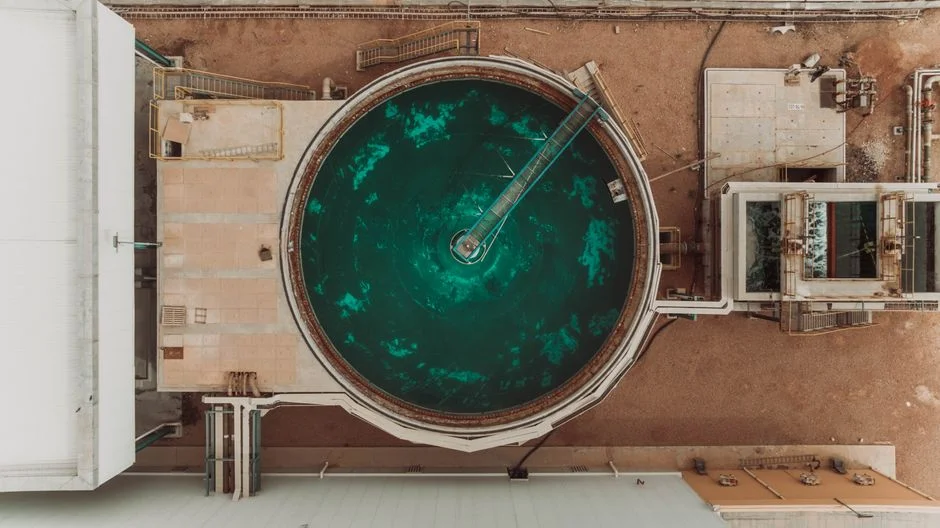
The format choice — buried concrete tank or containerised skid — is driven by four real site constraints: available footprint, council attitude to visible plant, phasing intent, and the effluent class the discharge path demands. Underground packages, such as the WSZ underground package sewage treatment plant in the 1–80 m³/h band, suit sites with available footprint, landscaping intent, or council pushback on visible plant; the unit is buried and turfed over, leaving only access covers and a control kiosk visible. Containerised or skid packages suit constrained inner-suburban infill sites, staged delivery, or temporary approvals — they need less civil works and can be relocated (S2).
Phased growth is a recurring driver in residential developments: Biocell specifically markets modular add-on capability (P-removal, disinfection, ammonia, grease) for plants that need to be upgraded as the estate fills (S2). Effluent-quality requirement is the second format driver: higher reuse classes (irrigation, Class A) push the choice toward MBR, while basic sewer-discharge classes can be met with MBBR or SBR (S2). Operator model matters as well: Biocell emphasises systems with no submerged moving parts and SCADA/GSM alarm options, so any maintenance contractor — not a specialist — can service them (S2).
| Format | Typical process | Best fit | Key trade-off |
|---|---|---|---|
| Below-ground concrete tank | MBBR or SBR | Open site, landscaping intent, council pushback on visible plant | Requires civil works; cost-effective per kL |
| Containerised / skid | MBR, MBBR, SBR or fixed-bed | Constrained infill, staged approvals, relocatable plant | Visible above ground; faster install |
| Underground packaged A/O | A/O biological | 1–80 m³/h, fully buried, automated | Limited to the catalog hydraulic band |
| Containerised MBR skid | MBR with PVDF membranes | Class A reuse, tight footprint, 10–2,000 m³/day | Higher membrane OPEX |
Sizing a Packaged Plant for a Melbourne Subdivision
Equivalent Population (EP) is the standard Victorian sizing unit, and Biocell brackets residential projects from fewer than 50 people up to 5,000 people (S2). True Water's published 5 kL–500 kL packaged range is the residential/community band, overlapping with the WSZ underground envelope of 1–80 m³/h and the MBR envelope of 10–2,000 m³/day (S1). The 50–500 EP band the question is framed around sits comfortably inside all three envelopes; the cross-over point where a packaged plant becomes a conventional municipal-style WWTP is where flows exceed the packaged band and EPA Victoria engagement becomes mandatory rather than discretionary.
Residential flows are highly peaky — Biocell flags that peak flow rate typically occurs in the mornings, late afternoon and evenings, so hydraulic design must handle the peak factor, not just average dry-weather flow (S2). Pollutant load in residential sewage is also high in ammonia and COD, partly due to household cleaning products and the absence of grease traps on many houses (S2). The biological stage must be sized for this load, not for municipal averages, and the surge volume between the morning and evening peaks has to be buffered or equalised inside the package. If a supplier quotes a plant on average flow alone, that quote needs to be challenged.
For a quick sanity check: 1 EP ≈ 150–200 L/day in a residential scheme, so a 200 EP stage sits around 30–40 kL/day average, and a 500 EP stage sits around 75–100 kL/day average. Confirm the supplier's design EP definition and per-capita flow assumption before accepting either number.
EPA Victoria and Melbourne Water: The Two Interfaces That Decide the Project
Most vendor-led articles under-cover the regulatory step that actually kills Victorian projects. EPA Victoria licence triggers depend on discharge volume and receiving environment; Biocell flags that "in many regions the wastewater values generated from residential developments can be quite large, resulting in the need for the discharge to be licensed" (S2). The Werribee / Port Phillip Bay context is relevant because the 2004 Western Treatment Plant upgrade was driven by CSIRO's 1996 Port Phillip Bay Environmental Study, which required nitrogen-load reductions to protect the bay (S4).
If a Melbourne Water trade-waste sewer is available, the project may only need pre-treatment to trade-waste acceptance limits rather than a full EPA discharge licence — and that changes the plant class entirely (S2). If no sewer is available, the developer faces three realistic effluent paths: subsurface irrigation, recycle for irrigation (Class A/B per EPA Victoria guidelines), or licensed discharge — each drives a different packaged-plant effluent spec, and each demands different monitoring and reporting (S2; S4). The practical implication is to confirm the discharge path with EPA Victoria and the local water corporation before locking in process selection; the plant chosen for a Class A irrigation reuse path is not the plant chosen for a trade-waste pre-treatment path.
| Discharge path | Regulator | Typical plant implication |
|---|---|---|
| Melbourne Water trade-waste sewer | Melbourne Water / local water corporation | Pre-treatment to trade-waste acceptance limits; MBBR or SBR usually sufficient |
| Subsurface irrigation on-site | EPA Victoria + council | Disinfection and nutrient reduction; MBR or SBR with polishing |
| Recycled water for irrigation (Class A/B) | EPA Victoria | MBR with disinfection; ongoing monitoring |
| Licensed discharge to waters | EPA Victoria | Full nutrient reduction; highest plant class |
Cost and Delivery Realities for 2026 Melbourne Projects
The developer's first question is almost always "what does it cost?", and the honest answer is that the research does not publish a specific AUD per m³ price for Melbourne residential packages in 2026. What is published is the qualitative shape of the cost ladder. True Water positions packaged systems as a way to accelerate development compared with waiting for municipal sewer — speed-to-occupancy is the value proposition, not lowest capex (S1). The WSZ underground plant is described as fully automated with no operator required, which compresses ongoing OPEX relative to a conventional plant (catalog). Below-ground concrete-tank systems are typically the most cost-effective package option where civil works are acceptable, per Biocell (S2). Modular or containerised packages are typically faster to install and easier to phase as stages are released, but they require an accessible site footprint and truck delivery access (S2).
For a 50/200/500 EP scheme the developer should expect to ask each shortlisted supplier for a site-specific quote covering civil works, mechanical equipment, electrical, commissioning, EPA Victoria approvals and the first 12 months of OPEX. Any quote that excludes approvals or operator interface is incomplete; the cheapest capex number is rarely the lowest whole-of-life cost on a 20–30 year asset.
| Scheme size | Indicative packaged envelope | Format that usually wins on whole-of-life |
|---|---|---|
| ~50 EP | Within 5 kL–500 kL True Water band; lower end of WSZ 1–80 m³/h | Below-ground concrete-tank MBBR or SBR if civil works acceptable |
| ~200 EP | Mid WSZ 1–80 m³/h; lower end of MBR 10–2,000 m³/day | Containerised MBR if reuse class required, otherwise buried SBR |
| ~500 EP | Upper True Water band; mid WSZ 1–80 m³/h | Containerised MBR or MBBR with modular add-ons for staged fill |
Selecting a Supplier in Melbourne: What to Verify Before Signing

The cheapest tender is rarely the right one on a packaged STP. A defensible supplier shortlist checks five things before price. Confirm the supplier holds EPA Victoria design approvals and has secured government approvals on previous residential projects — True Water cites more than 2,500 government approvals and ISO-certified treatment technology (S1). Confirm the packaged plant is independently tested and certified to local and national regulatory standards; Biocell states this for its commercial and residential packages (S2). Confirm SCADA and remote-alarm capability, and that maintenance can be carried out without tank entry or specialist operators (S2). Confirm the supplier can deliver on a supply-install-operate basis or a supply-only basis — both models exist in the Australian market (S1). Confirm modular expandability for staged estates, which Biocell markets explicitly and which is the typical Victorian growth-corridor scenario (S2).
Two of those checks — regulatory standing and operator model — usually determine which supplier a Victorian council or water corporation will accept. For a parallel read on how the same technology classes are tendered in south-east Queensland, see the Brisbane packaged sewage treatment plant guide.
Frequently Asked Questions
What capacity band does a packaged sewage treatment plant cover for a 50–500 dwelling Melbourne subdivision?
Published Australian residential bands sit at 5 kL–500 kL per day for community-scale packaged systems (True Water, S1), 1–80 m³/h for buried A/O units such as the WSZ series, and 10–2,000 m³/day for containerised MBR systems. A 50–500 dwelling scheme typically falls in the lower-to-middle of the 5 kL–500 kL band; the developer should request a site-specific EP-to-flow translation, including peak factor, from each shortlisted supplier.
How much does a packaged sewage treatment plant cost for a Melbourne housing development in 2026?
The research does not publish a specific AUD per m³ price for Melbourne residential packages in 2026. The buyer should request a site-specific quote covering civil works, mechanical, electrical, commissioning, EPA Victoria approvals and the first 12 months of OPEX, and benchmark at least two suppliers on the same scope. A quote that excludes approvals or operator interface is not comparable to one that includes them.
When does a packaged sewage treatment plant in Victoria need an EPA Victoria discharge licence?
EPA Victoria licence triggers depend on discharge volume and receiving environment, and Biocell flags that residential developments in many regions generate wastewater volumes large enough to require the discharge to be licensed (S2). Confirm the discharge path with EPA Victoria and the local water corporation before locking in process selection; the plant class chosen for a licensed discharge is materially different from one chosen for trade-waste pre-treatment.
How do phased Melbourne subdivisions get a packaged plant that can grow with the estate?
Modular systems can be installed on a phased basis as the development grows, with add-on modules for phosphorus removal, disinfection, ammonia removal and grease treatment added to an existing plant as flow or licence conditions demand (S2). The developer should confirm modular expandability, SCADA/remote-alarm capability and the supplier's ability to deliver staged commissioning before signing, particularly on staged titling in growth-corridor councils.