Why Rosario housing developments are specifying packaged STPs in 2026
Argentina's sewerage gap is the structural reason a packaged sewage treatment plant is now a standard line item on a Rosario residential project rather than an optional extra. Reporting from Global Press Journal (2024) citing the 2022 Argentine census found that nearly 40% of Argentines lack access to public sewage systems, and the same reporting documents a 2008 Argentine Supreme Court ruling that ordered sewage treatment as part of the Matanza-Riachuelo basin plan.
The 1993 World Bank Argentina Water Supply and Sewerage Sector Note records that, at the time of the mission, less than 5% of collected sewage was treated nationally, a baseline that has shaped the regulatory defaults provincial authorities still apply to any new discharge. For a developer, consultant or municipal engineer in the Rosario metropolitan area, the practical consequence is that a new housing development cannot assume a sewer connection is available, cannot assume a treatment plant will be built downstream, and must produce an effluent that satisfies the local discharge limit set under the Santa Fe provincial framework administered through ASSA and the Ente Regulador de Servicios Sanitarios (ENRESS). Federal financing windows (ENOHSA for water and sanitation infrastructure, ACUMAR for basin-restoration work in the Paraná corridor) typically require a packaged, modular STP to be specified before funds are released, because the financing bodies will not commit to a project that lacks an on-site treatment solution. That is the procurement context a Rosario project lead walks into when opening a supplier conversation in 2026.
Sizing a packaged STP for a Rosario housing development
Sizing is a four-step calculation, and the reader should be able to sanity-check any supplier proposal by walking through it.
- Count dwellings and confirm per-capita load. The standard residential design approach uses a per-capita hydraulic load and a per-capita BOD load, but the specific Rosario or Santa Fe provincial figure is not published in the research supplied; the correct next action is to request the current ASSA or provincial norm from the project engineer of record before locking the load assumption.
- Apply a peak factor. Peak flow at residential developments occurs in the mornings, late afternoon and evenings, and the treatment system must be designed for the significant peak flows combined with periods of low flow; a peak factor in the 2.0–2.5× range is the standard residential convention.
- Translate m³/day into m³/h and check the candidate envelope. A 1,000-home development at typical Argentine per-capita hydraulic loading falls well inside the published envelope of the WSZ underground integrated sewage treatment plant (1–80 m³/h) and the HydropureWater MBR membrane bioreactor (10–2,000 m³/day), so capacity itself is rarely the constraint at residential scale.
- Add a phased-build margin. Modular systems allow for adding capacity as the development grows, and a Rosario housing project delivered in tranches through ENOHSA-style financing windows should carry a 20–30% design margin so the first phase is not oversize and the later phases do not require a new plant.
| Step | Input | Source / action |
|---|---|---|
| 1. Dwellings × occupancy | Number of homes × assumed persons per dwelling | Confirm the per-capita load with ASSA / Santa Fe provincial norm (not published in supplied research) |
| 2. Average daily flow (m³/day) | Population × per-capita hydraulic load | Per-capita figure to be confirmed locally |
| 3. Peak hourly flow (m³/h) | Average flow × peak factor | Residential peak pattern; 2.0–2.5× convention |
| 4. Design capacity (m³/h or m³/day) | Peak flow × 1.2–1.3 phased margin | Check against WSZ 1–80 m³/h or MBR 10–2,000 m³/day envelope |
Four packaged-plant technologies and how each fits a Rosario site
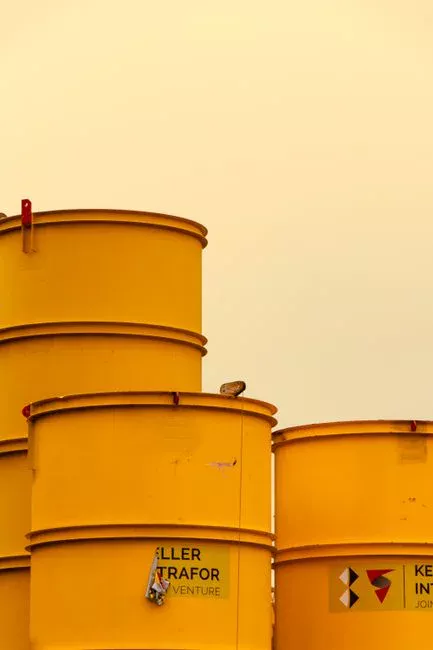
Four packaged configurations cover almost every residential STP brief in Argentina, and each maps to a different combination of site constraint, effluent target and O&M skill level.
- Buried A/O integrated plant (WSZ-type). Anoxic + aerobic contact oxidation with sedimentation and disinfection in a single buried package, published at 1–80 m³/h, fully automated with no operator required and coverable by landscaping. The right answer where the developer wants zero visible plant, where the water table permits a buried installation with sealed joints, and where the discharge target is the standard provincial limit rather than irrigation reuse.
- Containerized MBR (MBR membrane bioreactor). Submerged PVDF membranes with sub-micron filtration in a factory-built skid, with a published 10–2,000 m³/day envelope. The right answer where the effluent must meet a tight limit for discharge near the Paraná basin or for irrigation reuse, and where the site is too wet or too shallow for a buried tank. Trade-off: higher energy and scheduled membrane care.
- SBR sequencing batch reactor. A timed fill–aerate–settle–decant sequence. The SBR cycle consumes less electricity than constant-aeration systems because rest and settlement periods run without power, which is directly relevant to Rosario sites with intermittent supply or a solar-hybrid power plan. SBR can be delivered as a below-ground concrete-tank package (cost-effective if civil works are already in scope) or as a skid.
- MBBR fixed-film moving-bed reactor. A robust biological stage tolerant of variable loads, requiring civil works. Suits medium-sized Rosario developments where the developer is already building a concrete tank and wants a simple, tolerant biological stage with no membranes to maintain.
| Technology | Footprint | Effluent target | Power sensitivity | Phased hand-over |
|---|---|---|---|---|
| Buried A/O WSZ | Smallest (buried) | Standard provincial discharge | Continuous aeration required | Modular, multiple units in parallel |
| Containerized MBR | ~60% smaller than conventional per catalog | Tight limit / irrigation reuse | Higher energy, membrane care | Skid-based, easy to add modules |
| SBR batch | Moderate (tank-based) | Standard to moderate reuse | Lowest — rest cycles unpowered | Cycle timing adjustable per phase |
| MBBR fixed-film | Moderate (tank-based) | Standard discharge | Moderate, intermittent-aeration capable | Adds carrier volume, not a full module |
Rosario-specific site constraints that change the design
A generic packaged-plant guide will mis-size a Rosario project because four local conditions are not negotiable. The lower Paraná corridor carries basin-level regulatory weight: the 1993 World Bank sector note records that the Río de la Plata basin, formed by the confluence of the Paraná and Uruguay rivers, covers more than a third of Argentina and is populated by about 79% of its inhabitants, which is why provincial authorities apply tighter effluent controls on any new discharge in the Rosario area than on inland developments. High water tables and seasonal flood pulses in the Paraná floodplain penalize open concrete tanks with penetrable joints and favor either a sealed buried A/O package of the WSZ type or an above-ground containerized MBR skid. The residential delivery pattern in Rosario is the social-housing complex ("Complejos Habitacionales"), documented in the Universidad Nacional de Rosario study of Barrio 7 de Septiembre as a peripheral urban typology built up from the 1970s onward; in a new build, residents typically move in while construction is still ongoing, which means the packaged plant must be quiet, buried and low-odour from day one. Finally, the operator on a Rosario housing complex is usually a maintenance contractor, not a wastewater engineer, so the requirement for a plant serviceable by a non-specialist is a critical procurement constraint.
CAPEX, OPEX and the buyer's decision framework
Translating the technical comparison into procurement language means separating CAPEX drivers, OPEX drivers and the delivery model. On CAPEX, buried A/O and MBBR/SBR packages are tankage-and-civil-heavy because they depend on a concrete tank being built first, while containerized MBR and skid-mounted SBR are factory-built and shift cost from the civil contractor to the equipment supplier; below-ground MBBR or SBR is the cost-effective option when a concrete tank is already in scope. On OPEX, the three structural levers are energy (SBR's unpowered rest cycles and MBBR's intermittent-aeration option are the lowest), sludge hauling (driven by biological yield and any on-site dewatering), and membrane replacement (an MBR-only line item that must be budgeted on a multi-year cycle). Phased modular procurement is a specific Rosario advantage because housing projects are frequently financed in tranches through ENOHSA and provincial windows, and the ability to "add modules as the development grows" is exactly the structure those financing bodies prefer. The research supplied does not publish a 2026 Argentine peso or USD price for packaged STPs, so the correct instruction to take to a supplier is to request a site-specific quotation with civil works, equipment, membranes, installation and commissioning shown as separate lines, and with energy and sludge OPEX stated on a per-m³-treated basis. The companion containerized MBR STP sizing guide walks through the same envelope logic for a comparable residential context.
What to send the supplier when you request a quote
A short, structured brief is the difference between a comparable quotation and a vague one. Send the following four items in a single email, with a site plan attached.
- Demand profile. Dwelling count, expected occupancy, phasing schedule (number of homes handed over per stage and the date of each stage). The supplier needs this to size the WSZ or MBR within its published 1–80 m³/h or 10–2,000 m³/day envelope and to confirm modular delivery.
- Site constraints. Water-table depth at the proposed plant location, available footprint, power availability (grid only, grid + generator, or solar-hybrid), and the noise and odour buffer distance to the nearest occupied dwelling.
- Effluent target. State explicitly whether the discharge is to a municipal sewer (pre-treatment only), to a watercourse under the Santa Fe / ENRESS limit, or to an irrigation reuse scheme. Each target narrows the technology shortlist and the supplier's process selection.
- O&M expectation. Who services the plant, what annual electrical and consumables budget the development's OPEX can carry, and whether SCADA remote monitoring is required. Suppliers price differently for a fully automated, contractor-serviced plant than for a plant with a dedicated operator on site.
Frequently Asked Questions
How much does a packaged STP cost for a Rosario housing development in 2026?
The research supplied does not include a published 2026 price for packaged STPs in Argentina, and any quote depends on capacity, effluent target, civil works and whether the unit is buried or containerized. The actionable step is to request a site-specific quotation with civil works, equipment, membranes, installation and commissioning broken out as separate lines, and to ask for energy and sludge OPEX stated per m³ treated, so the developer can compare offers on a like-for-like basis.
How do I size a packaged STP for a 50-, 200- or 1,000-home development in Rosario?
Multiply the dwelling count by the assumed occupancy, apply the per-capita hydraulic load (to be confirmed against the current ASSA or Santa Fe provincial norm, as the specific figure is not in the supplied research), then apply a residential peak factor of 2.0–2.5×, and finally add a 20–30% margin for phased hand-over. Cross-check the resulting m³/h and m³/day against the WSZ 1–80 m³/h envelope or the MBR 10–2,000 m³/day envelope, both published for residential and small-municipal duty.
How do I choose a packaged STP supplier for a Rosario project?
Shortlist suppliers who can document an automated packaged plant with a published capacity envelope, who can supply a discharge-limit-compliant effluent certificate against the Santa Fe / ENRESS standard, who can deliver modularly in phases to match ENOHSA-style financing tranches, and who can support a non-specialist maintenance contractor on site. The WSZ underground integrated sewage treatment plant and the HydropureWater