Why Egypt’s Industries and Municipalities Are Turning to Package WWTPs
Egypt faces significant challenges in wastewater management. Despite ongoing efforts, approximately 50% of the population lacks access to adequate wastewater treatment facilities, according to the African Development Bank (AfDB) in 2023. While the nation's 2030 Vision aims for universal coverage, this gap creates an urgent demand for rapid-deployment, scalable solutions. Industrial growth, particularly in new urban centers like Sadat City and the New Administrative Capital, further exacerbates this need. Facilities in these areas are increasingly subject to stringent discharge regulations under Law 48/1982, which mandates limits such as BOD < 30 mg/L and TSS < 30 mg/L. Non-compliance can result in substantial financial penalties. Traditional large-scale wastewater treatment plants, often costing upwards of $50 million for a capacity of 1 million m³/day and requiring 3–5 years for construction, are not suitable for these decentralized or rapidly developing applications. Package wastewater treatment plants (WWTPs), on the other hand, offer a modular, pre-engineered solution for small-to-medium applications (10–5,000 m³/day), capable of 90–98% BOD/TSS removal and deployment within 6–12 months. For instance, a textile factory in Sadat City successfully addressed non-compliance issues by installing a 200 m³/day package plant, reducing its BOD from 800 mg/L to below the <30 mg/L threshold and avoiding an estimated $120,000 in annual fines based on 2024 data.
Package WWTPs vs. Large-Scale Plants: Engineering Trade-Offs for Egypt’s Market
The choice between a package WWTP and a large-scale conventional plant hinges on several engineering and economic factors critical to Egypt’s operational context. Package plants are designed for capacities ranging from 10 to 5,000 m³/day, providing a flexible solution for localized treatment needs. In contrast, large-scale plants typically serve populations or industries requiring capacities from 50,000 m³/day up to 5.6 million m³/day, exemplified by projects like the Bahr Al-Baqar WWTP. Footprint is a key differentiator: package plants require a significantly smaller footprint, often between 0.5–1.5 m²/m³/day, and can be containerized or partially buried, whereas large plants demand 2–4 m²/m³/day (EPA 2023 benchmarks). Energy consumption also varies; while large plants benefit from economies of scale with consumption around 0.1–0.3 kWh/m³, package plants, particularly those utilizing advanced technologies like MBR, may consume 0.3–0.6 kWh/m³. Labor requirements are also starkly different: package plants are highly automated, often requiring only 0–1 operator, a significant advantage given Egypt’s labor cost considerations, compared to the 10–50 operators needed for large-scale facilities. Lead times are dramatically shorter for package plants, typically 6–12 months from order to operation, versus the 3–5 years required for large plants (World Bank 2024 data). package plants offer modularity, allowing for easier upgrades to meet future, more stringent discharge standards, a flexibility often lacking in major civil infrastructure projects.
| Parameter | Package WWTPs (10–5,000 m³/day) | Large-Scale WWTPs (50,000–5.6M m³/day) |
|---|---|---|
| Capacity Range | 10–5,000 m³/day | 50,000–5.6M m³/day |
| Footprint (m²/m³/day) | 0.5–1.5 | 2–4 |
| Energy Consumption (kWh/m³) | 0.3–0.6 (e.g., MBR) | 0.1–0.3 (economies of scale) |
| Operator Requirement | 0–1 (highly automated) | 10–50 |
| Lead Time (Months) | 6–12 | 36–60 |
| Modularity/Scalability | High (modular expansion) | Low (major retrofits required) |
Technical Specifications for Package WWTPs in Egypt: Influent, Effluent, and Process Parameters
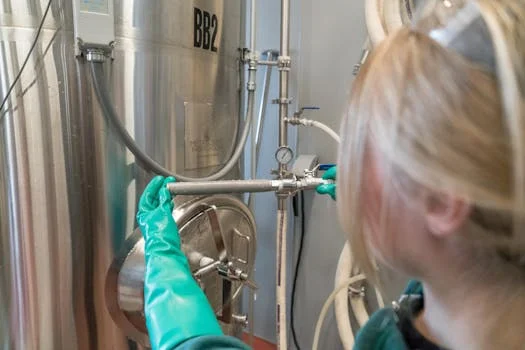
Selecting the appropriate package WWTP for Egypt necessitates a deep understanding of local influent characteristics and stringent effluent discharge requirements. Egyptian wastewater typically exhibits a wide range of parameters: BOD can vary from 200–1,200 mg/L, TSS from 250–1,500 mg/L, pH from 6.5–9.0, and salinity from 1,000–5,000 mg/L, with regional variations between the Nile Delta and desert areas. Ambient and influent temperatures also fluctuate significantly, from 15°C to 35°C (Egypt’s National Water Research Center, 2023). To comply with Law 48/1982 and Decree 92/2013, the treated effluent must meet specific targets: BOD < 30 mg/L, TSS < 30 mg/L, COD < 60 mg/L, fecal coliform < 1,000 CFU/100mL, pH 6–9, and residual chlorine at 0.5–1.0 mg/L. Several process technologies are suitable for package WWTPs in Egypt, each with distinct advantages. The A/O (Anoxic/Oxic) process is effective for municipal sewage, achieving 90–95% BOD removal and nitrogen reduction (TN < 15 mg/L), with energy consumption of 0.3–0.5 kWh/m³. For industrial applications requiring a compact footprint and high-quality effluent suitable for reuse, Membrane Bioreactor (MBR) systems excel, offering 95–98% BOD removal and filtration down to <1 μm, though they consume slightly more energy (0.4–0.6 kWh/m³). Sequencing Batch Reactors (SBRs) provide operational flexibility and are suitable for variable influent, delivering 85–92% BOD removal with 0.35–0.55 kWh/m³ energy use. Dissolved Air Flotation (DAF) is primarily used as a pre-treatment for industrial wastewater with high TSS, such as from tanneries or slaughterhouses, achieving 90–95% TSS removal at a lower energy cost (0.1–0.2 kWh/m³). Climate considerations are important; package plants operating in Egypt’s high ambient temperatures (up to 35°C) may require cooling mechanisms for MBR systems to prevent membrane fouling, as per manufacturer specifications, especially when influent temperatures consistently exceed 30°C. Explore the WSZ series for Egypt’s municipal and industrial applications, designed to handle these challenging conditions. See how MBR systems achieve 95%+ BOD removal in Egypt’s challenging influent conditions.
| Parameter | A/O Process | MBR Process | SBR Process | DAF Process (Pre-treatment) |
|---|---|---|---|---|
| BOD Removal (%) | 90–95 | 95–98 | 85–92 | N/A |
| TSS Removal (%) | 90–95 | >99 | 90–95 | 90–95 |
| TN Reduction (mg/L) | <15 | Variable (with MBR configurations) | Variable | N/A |
| Filtration Level | N/A | <1 μm (membrane) | N/A | N/A |
| Footprint | Moderate | Compact | Moderate | Compact |
| Energy Consumption (kWh/m³) | 0.3–0.5 | 0.4–0.6 | 0.35–0.55 | 0.1–0.2 |
| Salinity Tolerance (mg/L) | Up to 5,000 (with acclimation) | Up to 10,000+ (with specific membranes) | Up to 5,000 (with acclimation) | High |
| Temperature Range (°C) | 15–35 | 15–30 (requires cooling >30°C) | 15–35 | 15–35 |
Cost Benchmarks for Package WWTPs in Egypt: CAPEX, OPEX, and ROI by Plant Size
Accurate budgeting for package wastewater treatment plants in Egypt requires a detailed understanding of Capital Expenditure (CAPEX) and Operational Expenditure (OPEX), including local market nuances. For plants in the 100–5,000 m³/day range, 2025 CAPEX estimates fall between $1,200–$2,500/m³/day. This includes equipment costs ranging from $800–$1,800/m³/day, heavily influenced by whether local or imported units are chosen (e.g., HydropureWater WSZ series versus SUEZ ZeeWeed). Civil works for installation, whether underground or containerized, add $200–$500/m³/day, with installation labor costs between $100–$300/m³/day. Import duties can add 5–10% for equipment from the EU or US, while Chinese or Turkish suppliers may offer 0% duty (Egypt Customs, 2024). A significant consideration is foreign exchange (FX) risk; contracts denominated in USD are exposed to EGP devaluation, with the rate fluctuating from 15.7 EGP/USD in 2020 to 30.9 EGP/USD in 2024. Operational Expenditure (OPEX) typically ranges from $0.15–$0.30/m³ treated. Energy costs, based on Egypt’s industrial tariff of $0.15/kWh for 0.3–0.6 kWh/m³ consumption, account for $0.05–$0.15/m³. Chemical usage (coagulants, flocculants, chlorine) adds $0.03–$0.10/m³. Labor for package plants is minimal, $0.01–$0.05/m³, compared to $0.20–$0.50/m³ for larger facilities. Maintenance, including MBR membrane replacement every 5–8 years ($50–$100/m²), contributes $0.02–$0.08/m³. Sludge disposal, with Egyptian landfill tipping fees around $20–$60/ton, adds $0.04–$0.12/m³. A 500 m³/day package plant with a $600,000 CAPEX and $0.25/m³ OPEX, avoiding $120,000/year in fines, can achieve a payback period of approximately 3.5 years, based on 2024 data. Financing options in Egypt include Green Climate Fund grants, AfDB loans at 3–5% interest, and local bank financing at 12–18% interest.
| Cost Component | Range ($/m³/day for 100–5,000 m³/day plants) | Notes |
|---|---|---|
| CAPEX - Equipment | $800–$1,800 | Local vs. imported, technology |
| CAPEX - Civil Works | $200–$500 | Underground vs. containerized |
| CAPEX - Installation | $100–$300 | Local labor rates |
| CAPEX - Import Duties | 0–10% of equipment cost | Origin of equipment |
| OPEX - Energy | $0.05–$0.15/m³ | 0.3–0.6 kWh/m³ @ $0.15/kWh |
| OPEX - Chemicals | $0.03–$0.10/m³ | Coagulants, flocculants, disinfectants |
| OPEX - Labor | $0.01–$0.05/m³ | 0–1 operator for package plants |
| OPEX - Maintenance | $0.02–$0.08/m³ | Includes MBR membrane replacement |
| OPEX - Sludge Disposal | $0.04–$0.12/m³ | Landfill fees in Egypt |
| Total OPEX | $0.15–$0.30/m³ |
Egypt’s Regulatory Compliance for Package WWTPs: Standards, Permits, and Discharge Limits
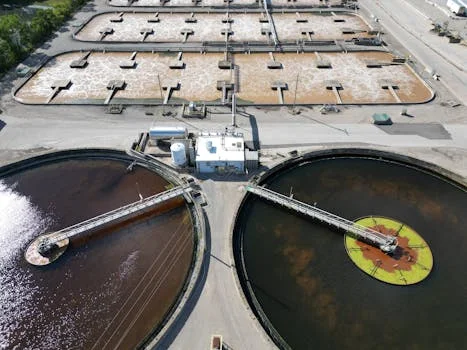
Navigating Egypt’s regulatory framework is paramount for the successful implementation and operation of package WWTPs, ensuring compliance and avoiding significant penalties. The primary legislation includes Law 48/1982, the National Water Resources Law, which sets broad discharge limits, and Decree 92/2013, its executive regulations, specifying limits for various industrial sectors. For projects exceeding 1,000 m³/day, Decree 44/2000 mandates Environmental Impact Assessment (EIA) reports. Additionally, Law 9/2009 outlines standards for wastewater reuse, crucial for facilities aiming to recycle treated water. Decree 92/2013 stipulates specific effluent targets: for municipal wastewater, BOD must be <30 mg/L and TSS <30 mg/L, with fecal coliform <1,000 CFU/100mL. Industrial sectors face more tailored limits; for instance, textile industries must adhere to BOD <50 mg/L, TSS <50 mg/L, color <100 Pt-Co units, and specific heavy metal limits like Cr <0.5 mg/L and Pb <0.1 mg/L. Food processing plants face limits of BOD <40 mg/L, TSS <40 mg/L, and oil & grease <10 mg/L, while pharmaceutical facilities must achieve BOD <20 mg/L, COD <50 mg/L, and AOX <1 mg/L. Obtaining the necessary permits involves a structured application process. A typical checklist includes an EIA report (for plants >1,000 m³/day), detailed technical specifications with process flow diagrams and equipment datasheets, a site plan, an operator training plan (for plants >500 m³/day), a monitoring plan, and an emergency response plan. Permit lead times can range from 3–6 months for municipal plants to 6–12 months for industrial facilities (Egypt’s Environmental Affairs Agency, 2024). Non-compliance with Law 48/1982 can lead to fines up to 500,000 EGP (approximately $16,000 USD) and potential plant shutdown.
| Requirement | Details |
|---|---|
| Law 48/1982 | National Water Resources Law; sets general discharge limits. |
| Decree 92/2013 | Executive regulations; specific limits for industrial sectors. |
| Decree 44/2000 | EIA requirements for WWTPs >1,000 m³/day. |
| Law 9/2009 | Wastewater Reuse Standards. |
| Municipal Effluent Limits | BOD < 30 mg/L, TSS < 30 mg/L, Fecal Coliform < 1,000 CFU/100mL. |
| Textile Industry Limits | BOD < 50 mg/L, TSS < 50 mg/L, Color < 100 Pt-Co, Cr < 0.5 mg/L, Pb < 0.1 mg/L. |
| Food Processing Limits | BOD < 40 mg/L, TSS < 40 mg/L, Oil & Grease < 10 mg/L. |
| Permit Application Checklist | EIA report, technical specs, site plan, training plan, monitoring plan, emergency plan. |
| Permit Lead Time | 3–12 months (depending on plant type). |
| Penalties | Fines up to 500K EGP, plant shutdown. |
Supplier Selection for Package WWTPs in Egypt: Local vs. International Vendors
Selecting the right supplier for a package WWTP in Egypt involves a strategic evaluation of both local and international vendors, considering criteria tailored to the Egyptian market. A crucial factor is the availability of a robust local service network, ensuring prompt access to spare parts and trained technicians for 24/7 support, especially for facilities in remote areas. Managing foreign exchange (FX) risk through USD-denominated contracts versus local EGP financing options is also a key consideration. Suppliers who can provide strong compliance support, assisting with permit applications and understanding local testing requirements (e.g., through Egypt’s National Water Research Center), offer significant value. Lead times vary significantly: local suppliers typically offer 3–6 months, while international vendors may require 6–12 months. The ability to customize systems to handle Egypt’s specific influent conditions, such as high salinity and temperature variability, is essential. Comparing five leading suppliers in 2025: Arab Contractors (Egypt) offers local EGP pricing and a 3-month lead time, leveraging 50+ years of experience, but is primarily limited to A/O and SBR processes. HydropureWater (China) provides MBR and DAF options with a 6-month lead time and maintains a service center in Cairo, though contracts are USD-denominated. SUEZ (France) offers advanced MBR systems with strong compliance support, but with a longer 9-month lead time and USD pricing. Metito (UAE) specializes in turnkey solutions and regional expertise in arid climates, with an 8-month lead time and USD contracts. EcoTech (Egypt) is a local option known for containerized systems and a 4-month lead time, ideal for smaller capacities (<500 m³/day), also offering EGP pricing. A 300 m³/day MBR plant supplied by HydropureWater for a pharmaceutical factory in 6th of October City successfully reduced BOD from 1,200 mg/L to <20 mg/L, avoiding $80,000 in annual fines in 2024.
| Supplier | Origin | Typical Lead Time | Pricing Currency | Key Processes Offered | Local Service Network | Compliance Support |
|---|---|---|---|---|---|---|
| Arab Contractors | Egypt | 3 months | EGP | A/O, SBR | Extensive | Moderate |
| HydropureWater | China | 6 months | USD | MBR, DAF, WSZ | Yes (Cairo) | Good |
| SUEZ | France | 9 months | USD | MBR | Developing | Strong |
| Metito | UAE | 8 months | USD | Turnkey Solutions, MBR | Regional | Good |
| EcoTech | Egypt | 4 months | EGP | Containerized (Small Capacity) | Extensive | Basic |
Frequently Asked Questions
Q: What is the smallest package wastewater treatment plant available in Egypt?
A: The smallest commercially available package plants in Egypt start at 10 m³/day, such as those in the HydropureWater WSZ series. These are fully automated, require no dedicated operator, and are often designed to fit within a standard 20-foot container. For capacities below 10 m³/day, traditional septic tanks combined with tertiary treatment like sand filters are more common, but these typically do not meet Egypt’s stringent discharge standards for BOD and TSS as outlined in Decree 92/2013.
Q: How much does a 500 m³/day package WWTP cost in Egypt in 2025?
A: In 2025, a 500 m³/day package WWTP in Egypt is estimated to cost between $600,000 and $1.2 million USD, depending on the chosen process technology and supplier. For example, an A/O system from a local supplier like Arab Contractors might range from $600,000 to $800,000, while an MBR system from an international vendor like HydropureWater or SUEZ could be between $900,000 and $1.2 million. These estimates include the equipment, necessary civil works, installation, and commissioning. Associated OPEX is projected to be $0.15–$0.30 per cubic meter treated.
Q: What are the discharge standards for package WWTPs in Egypt?
A: Package WWTPs in Egypt must comply with Law 48/1982 and Decree 92/2013. Key discharge limits include BOD <30 mg/L (municipal) and <20–50 mg/L (industrial, sector-specific), TSS <30 mg/L (municipal) and <30–50 mg/L (industrial), and COD <60 mg/L (municipal) and <50–100 mg/L (industrial). Fecal coliform standards are <1,000 CFU/100mL for municipal discharge and <200 CFU/100mL for reuse. The pH must be between 6 and 9, with residual chlorine maintained at 0.5–1.0 mg/L. Industrial sectors often have additional stringent limits for parameters like color, oil & grease, and heavy metals.
Q: Can package WWTPs in Egypt handle high-salinity wastewater?
A: Yes, package WWTPs can handle high-salinity wastewater, but process selection is critical. Wastewater in Egypt can range from 1,000–5,000 mg/L salinity. MBR systems, particularly those utilizing specialized membranes and halophilic bacteria (e.g., HydropureWater DF series), can effectively treat water with salinity up to 10,000 mg/L. SBR systems can also tolerate up to 5,000 mg/L with acclimated biomass. DAF is effective for pre-treatment in high-salinity industrial applications. For salinity exceeding 10,000 mg/L, post-treatment with reverse osmosis (RO) is typically required to meet reuse standards under Egypt’s Law 9/2009.
Q: What is the lead time for a package WWTP in Egypt?
A: Lead times for package WWTPs in Egypt vary based on the supplier and system complexity. Local suppliers such as Arab Contractors or EcoTech generally offer lead times of 3–6 months. International suppliers like HydropureWater, SUEZ, or Metito typically have lead times of 6–12 months. These durations encompass manufacturing, shipping (1–2 months for international shipments to ports like Port Said), installation (1–3 months depending on site conditions), and commissioning. The permitting process itself can add an additional 3–12 months, depending on the plant type and complexity.
Related Equipment
- Explore the WSZ series for Egypt’s municipal and industrial applications — view specifications, capacity range, and technical data
- See how MBR systems achieve 95%+ BOD removal in Egypt’s challenging influent conditions — view specifications, capacity range, and technical data
- Learn how DAF systems pre-treat high-TSS industrial wastewater in Egypt — view specifications, capacity range, and technical data
Need a customized solution? Request a free quote with your specific flow rate and pollutant parameters.