Industrial Wastewater Treatment in Morocco: 2026 Engineering Guide with Costs, Compliance & Equipment Selection
Morocco's industrial wastewater treatment sector in 2026 faces a hard resource limit: per capita water availability fell to 606 m³ in 2023, well below the 1,000 m³ scarcity threshold. A $5.6 billion national sanitation program aims to enable 100 Mm³/year of treated wastewater reuse by 2027 and 537 Mm³/year by 2040. Separately, Law 36-15, Decree 2-17-746, and the National Plan for Treated Wastewater Reuse (PNREU) still frame the 300 Mm³/year reuse target by 2030. Sector-specific limits — textile COD below 120 mg/L, mining TSS below 30 mg/L — and operating costs of $0.30–$1.20/m³ set the design envelope for textile, food, mining, and chemical plants.
Morocco's Water Crisis and Industrial Wastewater Regulations in 2025
Morocco's per capita water availability sits at 606 m³ in 2023, far below the 1,000 m³ scarcity threshold. Volumes are projected to reach 1,026 Mm³ by 2040, according to Moroccan Ministry of Equipment data. The National Water Strategy (SNE) responds with three targets: 80% treatment rate, 60% pollution reduction, and 300 Mm³/year of reuse by 2030. Law 36-15 governs water protection, Decree 2-17-746 sets industrial effluent limits, and PNREU defines reuse quality. The Ministry of Environment reports increased inspections in Tangier, Casablanca, and Agadir between 2024 and 2025. Fines reach MAD 500,000, with production-halt penalties possible; a textile factory in Mohammedia was shut down in 2023 for persistent violations. Most plants we size for these zones now build compliance margin into pretreatment from day one.
| Regulation/Strategy | Key Provisions for Industrial Wastewater | Impact on Facilities |
|---|---|---|
| Law 36-15 (Water Resources) | Establishes principles for water protection, pollution control, and resource rationalization. | Mandates permits for wastewater discharge and adherence to environmental standards. |
| Decree 2-17-746 (Industrial Effluent Limits) | Sets specific discharge limits for various pollutants (COD, BOD, TSS, heavy metals) by industry. | Requires regular monitoring, reporting, and investment in appropriate treatment technologies. |
| PNREU (National Plan for Reuse) | Targets 300 Mm³/year of treated wastewater reuse by 2030; defines quality standards for reuse. | Encourages tertiary treatment upgrades and promotes economic incentives for water recycling. |
| National Water Strategy (SNE) | Overall framework for water security, aiming for 80% treatment rate and 60% pollution reduction. | Drives long-term planning for water infrastructure and industrial water efficiency. |
Industry-Specific Effluent Limits and Treatment Challenges in Morocco
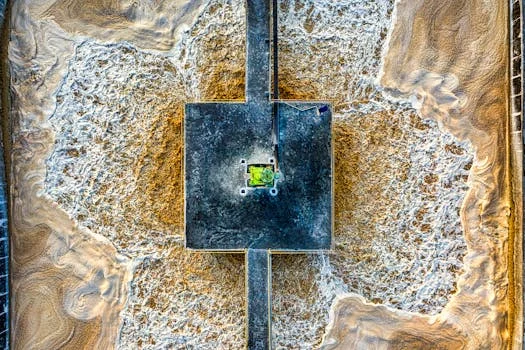
Meeting Morocco industrial effluent limits in 2025 requires sector-specific design, because discharge parameters vary widely. Textile effluent under Decree 2-17-746 (2025 update) must hold COD below 120 mg/L, BOD below 30 mg/L, TSS below 30 mg/L, and color below 50 Pt-Co. Textile streams often run at TDS above 2,000 mg/L with unstable pH, which complicates biological stages and pushes designers toward salinity-tolerant biomass or physico-chemical pretreatment.
Food processing wastewater, benchmarked against WHO standards adopted by Morocco, must meet BOD below 25 mg/L, TSS below 35 mg/L, FOG below 15 mg/L, and nitrogen below 15 mg/L. The dominant challenge is high organic load and FOG content, which demands robust primary treatment and equalization.
Mining wastewater follows Ministry of Energy and Mines 2024 standards: TSS below 30 mg/L, pH 6–9, cadmium below 0.01 mg/L, and lead below 0.1 mg/L. Acid mine drainage and dissolved heavy metals drive the design toward staged pH neutralization and selective precipitation.
Chemical-sector effluent must keep COD below 150 mg/L, TSS below 50 mg/L, and benzene below 0.1 mg/L, aligned with EU REACH provisions. These streams contain diverse organics that frequently require advanced oxidation or specialized biological reactors.
Reuse applications under PNREU add a tertiary layer: BOD below 10 mg/L, TSS below 5 mg/L, turbidity below 2 NTU, and E. coli below 10 CFU/100 mL. For more on disinfection sizing in similar conditions, review disinfection of piping, tanks, structures and equipment typical costs.
| Industrial Sector | Key Pollutants & 2025 Effluent Limits (mg/L, unless specified) | Primary Treatment Challenges |
|---|---|---|
| Textile | COD <120, BOD <30, TSS <30, Color <50 Pt-Co | High salinity (TDS >2,000 mg/L), fluctuating pH, complex dyes. |
| Food Processing | BOD <25, TSS <35, FOG <15, Nitrogen <15 | High organic load, significant FOG content, seasonal variations in flow. |
| Mining | TSS <30, pH 6–9, Cd <0.01, Pb <0.1 | Acid mine drainage, dissolved heavy metals, high mineral content. |
| Chemicals | COD <150, TSS <50, Benzene <0.1 | Complex, often toxic organic compounds, variable influent composition. |
| Reuse Targets | BOD <10, TSS <5, Turbidity <2 NTU, E. coli <10 CFU/100mL | Requires tertiary treatment (filtration, disinfection) post-secondary treatment. |
Wastewater Treatment Technologies for Moroccan Industries: Specs and Selection Criteria
Effective industrial wastewater treatment in Morocco starts with technology matched to local effluent and reuse targets. Dissolved Air Flotation (DAF) units such as HydropureWater's Morocco-optimized DAF systems for textile and food processing effluents remove over 95% of TSS and FOG in pretreatment. Capacities span 4–300 m³/h at saturation pressures of 0.5–1.2 bar, which suits food and textile front-end duties.
Membrane Bioreactors deliver reuse-grade permeate. HydropureWater's MBR systems for industrial water reuse in Morocco's water-scarce regions filter below 1 μm through 0.1 μm membranes with 80–225 m² of area, cutting reactor footprint up to 60% versus conventional activated sludge.
Chemical dosing covers pH trim (6–9), coagulation using PAC or FeCl₃, and flocculation with polyacrylamide; automated skids hold accuracy at ±2%. Sludge dewatering with plate-frame filter presses (1–500 m² area) reaches 25–35% dry solids, which materially cuts disposal cost in mining and textile plants. For reuse trains, on-site ClO₂ generators for Morocco's industrial wastewater disinfection deliver 50–20,000 g/h with a 99%+ microbial kill rate at EPA-compliant dosing.
Selection logic is straightforward: match influent COD/BOD/TSS and target pollutants to the technology that meets discharge or reuse at the lowest lifecycle cost. MBR wins where reuse quality is required; DAF is the workhorse for high-FOG streams. For sizing guidance on smaller packaged plants, see the Underground Package Sewage Treatment Plant (WSZ Series). A cross-check on DAF performance in another stressed region is available in our industrial wastewater treatment guide for Ghana.
| Technology | Key Specifications & Removal Efficiency | Ideal Applications in Morocco | Advantages for Moroccan Industries |
|---|---|---|---|
| Dissolved Air Flotation (DAF) | 95%+ TSS/FOG removal; 4–300 m³/h capacity; 0.5–1.2 bar saturation. | Food processing (FOG removal), textile (color/TSS pretreatment). | High efficiency for suspended solids and oils, compact footprint. |
| Membrane Bioreactor (MBR) | <1 μm filtration; 0.1 μm pore size; 80–225 m² membrane area; reuse quality effluent. | Textile, food processing, chemicals (for water reuse applications). | Superior effluent quality for reuse, smaller footprint, stable operation. |
| Chemical Dosing | pH adjustment (6–9); coagulants (PAC, FeCl₃); flocculants (polyacrylamide); ±2% precision. | Mining (heavy metal precipitation), textile (color removal, coagulation). | Cost-effective for specific pollutant removal, essential for pH control. |
| Sludge Dewatering (Filter Press) | 1–500 m² filtration area; 25–35% dry solids output. | Mining, textile, food processing (reducing sludge volume). | Significantly reduces sludge disposal costs, improves handling. |
| Disinfection (ClO₂ Generator) | 50–20,000 g/h capacity; 99%+ microbial kill rate. | All sectors targeting reuse (e.g., agricultural, industrial non-potable). | Effective against broad spectrum of pathogens, safe for reuse. |
Cost Benchmarks for Industrial Wastewater Treatment in Morocco (2025 Data)
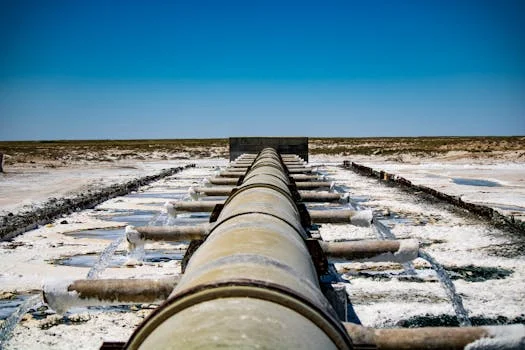
Capital budgets for industrial systems treating 50–500 m³/h — covering DAF, MBR, and chemical dosing — typically land between $0.5 million and $5 million including civil works and automation (2025 Moroccan market data). Operating cost for industrial-scale plants runs $0.30–$1.20 per cubic meter, covering energy, reagents, labor, and membrane replacement.
The reuse case is the financial hinge. Treated water replaces freshwater at a $0.80–$2.50/m³ cost advantage, which trims payback on reuse-equipped systems to 3–7 years in textiles and food processing. Mining sites that pair treatment with dewatering typically see 5–10 year payback through lower sludge disposal cost. Two funding levers are worth pursuing early: Green Climate Fund grants covering up to 50% of reuse-project costs, and AMEE subsidies providing 20–30% support for energy-efficient systems. For plants near Marrakech, broader water costs for businesses in Marrakech Morocco shape the operating savings a reuse system actually delivers. To map these figures to your own site, Request a free quote with your flow rate and influent profile.
Step-by-Step Guide to Designing an Industrial Wastewater System for Morocco
Designing an industrial wastewater system in Morocco begins with influent characterization, runs through technology matching and sizing, and closes with automation and sludge planning.
Step 1: Characterize Influent
The first step is comprehensive influent analysis. Pull 24-hour composite samples and measure COD, BOD, TSS, pH, salinity, FOG, and heavy metals (ISO 5667-10:2020). These numbers drive every downstream choice.
Step 2: Select Technology Based on Effluent Limits and Reuse Targets
Match characterized influent to Moroccan effluent limits and any reuse target. Use the technology table above to compare DAF for FOG removal in food plants against MBR for reuse-grade effluent in textile sites, then pick the lowest-cost compliant path.
Step 3: Size System Using Hydraulic and Organic Load
Size against both hydraulic load (m³/h) and organic load (kg BOD/day). Moroccan design practice typically targets 1.2× peak flow for resilience, with reactor volumes, membrane areas, and dosing rates set from the characterization step.
Step 4: Integrate Automation for Compliance Reporting
PLC and remote monitoring are no longer optional. Real-time data acquisition, process control, and Ministry of Environment 2025 digital reports depend on them.
Step 5: Plan for Sludge Disposal
Plan disposal routes up front. Landfilling or agricultural reuse each require quality checks; mining sludge must be stabilized per Decree 2-17-746 before disposal.
Step 6: Pilot-Test Tertiary Treatment for Reuse
Where reuse is a target, pilot tertiary stages — typically ultrafiltration or reverse osmosis followed by ClO₂ disinfection — to confirm permeate quality and operating cost before full-scale build.
Frequently Asked Questions
What are the top 3 industries in Morocco that require significant wastewater treatment?
Textile (30% of industrial water use), food processing (25%), and mining (20%) lead wastewater treatment demand, per the Ministry of Industry 2024. Each sector carries different pollutant loads — dyes and salts, high organics and FOG, and acidic metal-bearing streams — so treatment trains diverge. Compliance with Morocco industrial effluent limits in 2025 depends on matching technology to these specific challenges rather than running a single generic train.
Which country has the best wastewater treatment system globally, and how does Morocco compare?
Singapore and Israel are often cited for advanced reuse, but ranking depends on whether reuse share, coverage, or treatment capacity is the metric. Morocco ranks 5th in MENA for wastewater treatment capacity (World Bank 2023) and trails in reuse (0.3% vs. Tunisia's 24%) because of tertiary treatment gaps. The $5.6B national program aims to enable 100 Mm³/year reuse by 2027, with longer-term capacity toward 537 Mm³/year by 2040.
How can industrial facilities reduce DAF system operating costs in Morocco?
Hold the air-to-solids ratio at 0.02–0.04 and dose 0.5–2 mg/L polymer to tighten floc formation. Sludge volume typically drops 30–40%, which directly lowers Morocco sludge disposal regulations compliance cost. Routine maintenance and energy-efficient pumps add a second tier of savings on DAF operating cost in Morocco.
What are the primary challenges for MBR wastewater treatment Morocco?
Higher capex than conventional activated sludge, membrane fouling that demands periodic cleaning, and the need for trained operators are the main MBR challenges in Morocco. Smaller footprint, reuse-quality permeate, and lower sludge volume offset those penalties over a typical 10-year operating window.
Are there specific Moroccan regulations for sludge disposal from industrial wastewater treatment?
Yes — Decree 2-17-746 sets standards for industrial sludge treatment and disposal. Depending on composition, sludge must be stabilized before landfilling, or it can be applied to agriculture if heavy-metal and pathogen limits are met. Routine analysis is mandatory.
Need a system sized to your flow and effluent profile? Send your flow rate and influent parameters through our inquiry form for a tailored CAPEX/OPEX envelope.