Package plants in Eastern Cape typically treat 4–500 m³/day and reach 92–97% TSS removal with 90–95% BOD removal under EPA 2024 benchmark ranges used for compact modular trains. Hydraulic loading is commonly 0.5–2.0 m³/m²/hr, footprint 10–50 m² per 100 m³/day, and energy use 0.3–0.8 kWh/m³. Buffalo City Municipality discharge targets of TSS <25 mg/L, BOD <20 mg/L, and COD <75 mg/L (2025 IDP) drive technology choice for clinics, housing estates, and industrial sites.
Why Package Plants in Eastern Cape Are Specified
Eastern Cape package systems fill sanitation gaps where trunk sewers are delayed or uneconomic for scattered loads. The provincial water stress index sits at 4.8/5 (DWS 2023). Stats SA 2022 reported 62% of households without formal sanitation. Modular plants cut civil works, shorten commissioning, and keep discharge close to the load while meeting Buffalo City sampling rules.
Buffalo City Municipality’s 2025–2030 Integrated Development Plan prioritizes decentralized wastewater solutions for remote and growing settlements. The Gonubie clinic case shows the pattern: a 2023 NEMA audit flagged an outdated septic system, and the site moved to a 500 m³/day package plant (SRK Consulting documentation). Most plants we size for Eastern Cape clinics and estates run at the lower end of the 4–500 m³/day band until occupancy grows.
Modular package trains also improve flood resilience. Units can sit on elevated pads, relocate after storm damage, and restart faster than cast-in-place works. The 2022 KwaZulu-Natal floods destroyed 37% of conventional facilities in the affected set (DWS report), which is why Eastern Cape buyers ask for sealed electrics and above-ground options on flood plains.
Technical Specifications for Eastern Cape Conditions
Package wastewater treatment plants sized for Eastern Cape influent typically deliver 92–97% TSS removal and 90–95% BOD removal when aeration, clarification, and disinfection are balanced to local rainfall swings. COD removal commonly reaches 85–92% under the same EPA 2024 benchmark framing used for compact biological trains. Seasonal storms push peak flows, so hydraulic loading is held near 0.5–2.0 m³/m²/hr per WRC 2023 guidance rather than at a single dry-weather point.
Footprint stays tight: 10–50 m² per 100 m³/day versus about 100–200 m² for conventional layouts on the same capacity basis. Energy use of 0.3–0.8 kWh/m³ undercuts many conventional trains at 1.2–1.8 kWh/m³ (Eskom 2023 tariff context). Sludge mass is usually 0.1–0.3 kg/m³ treated versus 0.5–0.8 kg/m³ for conventional plants (WRC 2022), which cuts haulage on long Eastern Cape roads.
Membrane bioreactor (MBR) packages such as the MBR membrane bioreactor system for high-efficiency wastewater treatment in Eastern Cape target reuse-grade effluent, about 30% less footprint than many A/O skids, and stable TSS control, at higher CAPEX. Anoxic/aerobic (A/O) trains remove nitrogen and phosphorus at moderate cost for municipal and industrial feeds. Trickling-filter packages trade some removal efficiency for low energy and shock tolerance. For buried or discreet sites, the Underground Package Sewage Treatment Plant (WSZ Series) keeps surface works minimal in rural and peri-urban plots.
National buyers comparing a full mbr wastewater treatment systems in south africa: 2026 engineering guide with costs, compliance & roi should still match Eastern Cape peak factors and Buffalo City limits before locking membrane CAPEX. For Gauteng-style municipal trains, see also how is wastewater treated in midrand south africa when the site brief spans more than one province.
| Parameter | MBR System (Typical) | A/O System (Typical) | Trickling Filter (Typical) |
|---|---|---|---|
| Hydraulic Loading Rate (m³/m²/hr) | 0.8 - 1.5 | 0.5 - 2.0 | 0.5 - 1.0 |
| TSS Removal (%) | >98 | 90 - 95 | 85 - 90 |
| BOD Removal (%) | >98 | 90 - 95 | 85 - 90 |
| COD Removal (%) | 90 - 95 | 85 - 90 | 80 - 85 |
| Footprint (m²/100 m³/day) | 10 - 25 | 25 - 40 | 40 - 50 |
| Energy Consumption (kWh/m³) | 0.5 - 0.8 | 0.3 - 0.6 | 0.2 - 0.4 |
| Sludge Production (kg/m³) | 0.1 - 0.2 | 0.2 - 0.3 | 0.2 - 0.3 |
| CAPEX (Relative) | High | Medium | Low |
| Effluent Quality (Reuse Potential) | High (Direct Reuse) | Medium (Post-Disinfection) | Low (Limited Reuse) |
What Does a Small Package Plant Cost in South Africa?
Small package treatment plant South Africa cost for about 100 m³/day typically lands in the R80,000–R450,000 CAPEX band (2025 ZAR) including installation and commissioning, with technology and site civils moving the quote inside that range. A lean trickling-filter or basic A/O skid sits near the bottom; MBR and difficult ground push toward the top. Annual OPEX for the same 100 m³/day block often falls around R30,000–R90,000 when energy, chemicals, maintenance, sludge, and labor are summed.
OPEX shares for package plants usually run near 30% energy, 20% chemicals, 15% maintenance, 10% sludge disposal, and 25% operator labor. Payback is often 3–7 years versus 8–12 years for conventional works on comparable duty (DWS 2023 cost-benefit analysis framing). A 200 m³/day package plant installed in Mthatha in 2024 showed about 35% lower CAPEX and 22% lower OPEX than a hypothetical conventional twin in the ECDC project report cited in prior project notes.
Buyers who compare package treatment plant sewage costs of upgrading in Wales with Eastern Cape quotes should convert currency, then re-check local discharge limits and sludge haul distance before treating foreign unit rates as transferable. Funding routes inside the province include the DWS Municipal Infrastructure Grant, Eastern Cape Development Corporation loans, and public–private partnerships when municipal balance sheets are tight.
| Cost Category | Package Plant (per 100 m³/day) | Conventional Plant (per 100 m³/day) | Notes |
|---|---|---|---|
| CAPEX (Installation & Commissioning) | R80,000 – R450,000 | R150,000 – R750,000 | Highly dependent on technology, site, and capacity. |
| OPEX (Annual Operating Cost) | R30,000 – R90,000 | R60,000 – R150,000 | Includes energy, chemicals, maintenance, sludge, labor. |
| Energy Cost (% of OPEX) | 30% | 40% | Based on Eskom 2023 tariffs. |
| Chemicals Cost (% of OPEX) | 20% | 15% | Varies with influent quality and discharge limits. |
| Maintenance Cost (% of OPEX) | 15% | 20% | Includes parts and scheduled servicing. |
| Sludge Disposal Cost (% of OPEX) | 10% | 10% | Dependent on local disposal fees and volume. |
| Operator Labor Cost (% of OPEX) | 25% | 15% | Package plants often require less dedicated on-site labor. |
| Payback Period (ROI) | 3 - 7 years | 8 - 12 years | Based on DWS 2023 cost-benefit analysis. |
Compliance Requirements for Eastern Cape
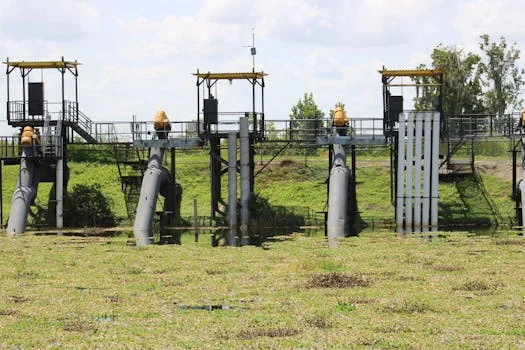
Buffalo City Municipality wastewater discharge limits require TSS <25 mg/L, BOD <20 mg/L, and COD <75 mg/L under the 2025 IDP framing used for local permitting. The National Water Act (No. 36 of 1998) governs water use and discharge nationally. Any package wastewater treatment plant discharging more than 10 m³/day needs a Water Use License or General Authorisation from the Department of Water and Sanitation (DWS).
NEMA (No. 107 of 1998) still frames environmental authorisation. 2023 amendments describe EIA exemptions for package plants below 50 m³/day, which shortens approval for small decentralized units; larger schemes still need a full EIA. Teams tracking none compliance of wastewater treatment in south africa should treat Green Drop and municipal audit findings as early warning, not as a substitute for site-specific licences.
Reuse duties lean on SANS 241:2015 drinking-water quality parameters when effluent is aimed at irrigation, process water, or other non-potable uses. A Chlorine dioxide generator for compliant disinfection in Eastern Cape’s package plants is often paired with MBR or polished A/O effluent to meet microbiological targets. Hospital and clinic loads need pathogen control written into the O&M plan from day one.
Five practical permit steps used on Eastern Cape package jobs:
- Pre-application Consultation: Engage Buffalo City Municipality and DWS on capacity, discharge point, and monitoring.
- Site-Specific Assessment: Map receiving water quality, flood lines, and sensitive receptors.
- Water Quality Testing: Submit influent and expected effluent data against municipal limits.
- System Design & Documentation: File process design, hydraulic profile, and maintenance schedules.
- Operator Certification & Training: Confirm trained operators before commissioning samples are logged.
How Should Hospitals Treat Wastewater in South Africa?
Hospital water South Africa projects—clinics, district hospitals, and private wards—need package trains that handle pathogen risk, variable laundry and kitchen peaks, and strict on-site discharge rules. Eastern Cape clinic upgrades after septic failures, including the Gonubie path to a 500 m³/day package plant, show why medical campuses outgrow soakaways quickly. Size for peak day occupancy, not average bed count alone, and keep disinfection online even when biological load drops overnight.
Most hospital package plants we commission stay inside 50–200 m³/day until laundry expansion or new wards arrive. MBR helps when reuse for toilet flushing or irrigation is planned under SANS 241:2015 non-potable criteria. Simpler A/O plus chlorine dioxide or UV can meet municipal discharge if reuse is not required. Keep pharmaceutical and ward waste segregation upstream so the biological train is not shocked by uncontrolled dumps.
Cost Breakdown Drivers Beyond the Sticker Price
CAPEX of R80,000–R450,000 per 100 m³/day (2025 ZAR) already includes installation and commissioning in the benchmark range above, yet civils, power upgrades, and access roads still move the final invoice. Phased modular expansion limits early capital when housing occupancy ramps over several years. Conventional twins at R150,000–R750,000 per 100 m³/day remain harder to stage on constrained plots.
Energy share near 30% of package OPEX means blower turndown and VSD pumps repay themselves on Eskom tariffs. Chemical share near 20% rises when influent COD spikes or reuse disinfection tightens. Sludge at 0.1–0.3 kg/m³ still needs a licensed hauler; remote Eastern Cape sites often pay more per tonne-kilometre than metro plants.
Supplier Selection Framework for Eastern Cape
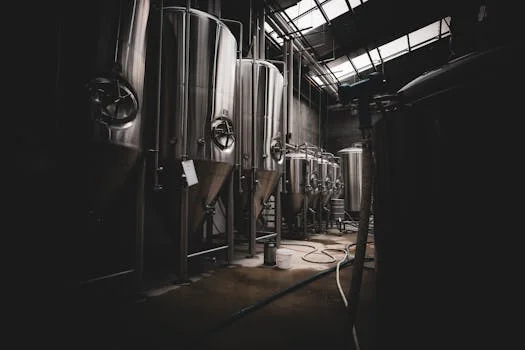
Supplier selection for an Eastern Cape package wastewater treatment plant should weight local references, compliance evidence, and spare-parts response time ahead of brochure features. Influent strength, rainfall peaks, and municipal sampling practice vary across Buffalo City, OR Tambo, and inland towns, so generic national case studies are not enough.
Use a five-point decision matrix:
- Eastern Cape Experience: Named installations and operators who know provincial stakeholders.
- Compliance Track Record: Proof against Buffalo City limits, National Water Act duties, and NEMA filings.
- After-Sales Support & Service: Local technicians, parts stock, and documented response times.
- Cost Transparency: CAPEX, OPEX, and consumables without hidden civils exclusions.
- Lead Time & Delivery: Realistic design-to-commissioning schedule tied to funding windows.
Active Eastern Cape market names in 2025 briefings include Scarab South Africa, Veolia Water Technologies, WEC Water, Big Red Wastewater, and HydropureWater. Scarab’s multi-unit Verloren Game Estate work and Veolia’s larger Gonubie-scale municipal deliveries illustrate different capacity bands. Technology focus differs: trickling filter and bioreactor packages versus MBR/A/O hybrids. Cross-check claims with the MBR wastewater treatment systems for South Africa’s water reuse applications guide when reuse is on the critical path.
Red flags include no Buffalo City approval trail, missing NEMA exemption or EIA files for the stated capacity, and no Eastern Cape service presence. Buyers typing “Roibridge plant South Africa” into search usually need a modular package specification, not a brand-only shortlist—ask for hydraulic design, effluent guarantees, and local references instead of a name match alone.
Ten RFP questions that surface weak bids early:
- Provide 3 references for Eastern Cape projects completed in the last 24 months, including contacts and scope.
- State the proposed process (MBR, A/O, trickling filter) and why it fits our influent and effluent limits.
- Show compliance history with Buffalo City Municipality and DWS authorisations.
- Break CAPEX and OPEX into equipment, installation, chemicals, energy, and labor.
- Describe after-sales support, local presence, response times, and spare-parts lead time.
- Give lead time from order to commissioning for our stated capacity.
- Detail operator training and ongoing technical assistance.
- Explain seasonal flow and shock-load handling for Eastern Cape rainfall patterns.
- State sludge production rates and disposal routes.
- Confirm effluent quality guarantees and sampling protocol.
| Criteria | Scarab South Africa | Veolia Water Technologies | WEC Water | Big Red Wastewater | HydropureWater |
|---|---|---|---|---|---|
| Eastern Cape Experience | High (Multiple small to medium scale) | High (Large municipal projects) | Medium (Specific project focus) | Medium (Modular, 'plug & play') | High (Industrial & municipal solutions) |
| Compliance Track Record | Excellent | Excellent | Good | Good | Excellent |
| After-Sales Support | Good (Dedicated teams) | Excellent (Extensive network) | Medium (Project-based) | Good (Remote support) | Excellent (Local & remote support) |
| Cost Transparency | Good | Medium (Complex projects) | Good | Excellent (Modular pricing) | Excellent |
| Lead Time | Standard | Longer (Large projects) | Standard | Short (Modular) | Standard |
| Technology Focus | Bio-reactor, Trickling Filter | MBR, Trickling Filter, A/O | A/O, MBR, Custom solutions | Bio-reactor, Aerobic | MBR, A/O, WSZ Integrated |
Selection Checklist for Eastern Cape Package Plants
Before you sign, confirm these seven items on paper:
- Design flow and peak factor match measured or conservatively estimated occupancy.
- Effluent guarantee covers Buffalo City TSS <25 mg/L, BOD <20 mg/L, and COD <75 mg/L.
- DWS Water Use License or General Authorisation path is clear above 10 m³/day.
- NEMA EIA or <50 m³/day exemption file is complete.
- Energy and sludge OPEX are modelled at 0.3–0.8 kWh/m³ and 0.1–0.3 kg/m³ where applicable.
- Local spare parts and technician response are named for the Eastern Cape site.
- Disinfection hardware—such as a second-path Chlorine dioxide generator for compliant disinfection in Eastern Cape’s package plants—is included when reuse or hospital pathogen control is required.
Operational Notes for Eastern Cape Package Trains
Operators should log influent COD and flow daily during the first 90 days. Eastern Cape rainfall can double peak instantaneous flow within hours, so equalization volume and blower turndown matter as much as nameplate capacity. Keep spare diffuser membranes and one duty/standby feed pump on site when the nearest supplier depot is more than a day away.
Sampling against Buffalo City TSS <25 mg/L, BOD <20 mg/L, and COD <75 mg/L should follow the licence schedule, not only after alarms. Most plants we size for housing estates run stably near 0.3–0.6 kWh/m³ on A/O duty when MLSS is controlled. MBR packages trend toward 0.5–0.8 kWh/m³ because of membrane scour, which is acceptable when reuse credits offset power.
Sludge at 0.1–0.3 kg/m³ still needs contracts before commissioning. Remote clinics often underestimate haul frequency after the first wet season. Write disposal routes into the O&M manual with emergency contacts, and confirm the hauler can take the expected cake solids from your dewatering choice.
Who This Is For / Who Should Look Elsewhere / Next Step
This guide is for Eastern Cape municipal engineers, EPC contractors, clinic and estate developers, and industrial EHS managers selecting a wastewater treatment plant South Africa package in the 4–500 m³/day band. Centralized metro works above several thousand m³/day need a different design brief. Buyers who only need a Gauteng industrial deep-dive should use dedicated regional pages such as the industrial wastewater treatment solutions for South Africa’s regulatory environment brief instead.
If you already have influent data and a discharge target, request a sized proposal with CAPEX/OPEX split rather than a generic brochure pack. Share your Eastern Cape flow, effluent limits, and site constraints for a package plant quotation so engineering can match process, footprint, and compliance path before tender.
For a side-by-side process and cost frame, Compare package vs conventional wastewater treatment plants for Eastern Cape projects before locking civil scope.
Frequently Asked Questions
How do package and conventional plants differ on Eastern Cape sites?
Package plants are factory-built modular trains; conventional plants are largely site-built with heavier civils. Package footprint is typically 10–50 m² per 100 m³/day versus about 100–200 m² for conventional layouts. CAPEX benchmarks sit near R80,000–R450,000 versus R150,000–R750,000 per 100 m³/day (2025 ZAR). Commissioning is usually faster because mechanical works arrive pre-piped and pre-tested.
How do package plants handle Eastern Cape rainfall and floods?
Package plants handle Eastern Cape seasonal rainfall by design hydraulic peaks into 0.5–2.0 m³/m²/hr loading and by elevating skids above flood lines. Sealed electrics and relocatable modules reduce downtime after storms. Conventional open works lost 37% of facilities in the 2022 KwaZulu-Natal flood set (DWS report), which is why modular resilience is specified on Eastern Cape flood plains.
What maintenance does an Eastern Cape package plant need?
Maintenance centers on daily checks, chemical dosing, sludge removal, and scheduled servicing of pumps and blowers. MBR sites add membrane cleaning cycles; all sites need trained operators for sampling against Buffalo City limits. Sludge at 0.1–0.3 kg/m³ must go to licensed disposal. Disinfection gear requires calibration whenever reuse or hospital discharge rules apply.
Can Eastern Cape package plants support water reuse?
Yes—MBR packages with disinfection can meet SANS 241:2015 non-potable reuse targets for irrigation, process water, toilet flushing, and dust control. A/O trains usually need extra polishing before direct reuse. Always confirm the municipal reuse permission path separately from the discharge licence. Reuse savings improve ROI inside the common 3–7 year payback window when potable tariffs are high.
What permits are required for an Eastern Cape package plant?
Discharge above 10 m³/day needs a DWS Water Use License or General Authorisation under the National Water Act (No. 36 of 1998). Buffalo City TSS, BOD, and COD limits still apply at the sampling point. Plants below 50 m³/day may use NEMA EIA exemption routes from the 2023 amendments; larger plants need a full EIA. Operator competence evidence is commonly requested at commissioning.