Why Kansas City’s Wastewater Infrastructure Is at a Crossroads
Kansas City’s proposed $2 billion wastewater treatment plant—slated to add 60–240 million gallons per day (MGD) capacity—highlights the city’s urgent need to modernize aging infrastructure and meet demand from data centers and population growth. For industrial and municipal stakeholders, understanding the true cost of wastewater treatment in Kansas City requires breaking down capital expenditures ($/MGD), operational costs (energy, chemicals, labor), and funding mechanisms (grants, bonds, public-private partnerships). This 2025 guide provides Kansas City-specific cost benchmarks, engineering specs, and ROI calculations to inform your investment or compliance strategy.
The scale of KC Water’s $600M–$2B plant proposal is driven by a convergence of technological shifts and infrastructure fatigue. The primary catalyst is the approval of four hyperscale data centers in the Northland, which are expected to consume millions of gallons of water daily for cooling operations, according to KSHB 41’s "Data, Dollars and Demand" series. This surge in demand coincides with the critical need to replace or supplement the 100-year-old Briarcliff plant, which currently maintains a capacity of 240 MGD but faces increasing maintenance liabilities. Platte County Commissioner Scott Fricker notes that this expansion raises significant concerns regarding resource scarcity and the secondary impacts on the regional power grid, forcing stakeholders to evaluate decentralized or on-site treatment alternatives.
Regulatory pressures from the Missouri Department of Natural Resources (DNR) further complicate the investment landscape. By 2025, effluent standards for nitrogen and phosphorus are expected to tighten significantly, with total phosphorus limits potentially dropping to 1.0 mg/L or lower for major dischargers. These mandates, coupled with the EPA’s Clean Water Act enforcement trends in the Midwest, mean that simply maintaining existing capacity is no longer an option. Whether comparing national cost benchmarks or designing a site-specific industrial facility, the technical requirements for nutrient removal and water reuse are now the primary cost drivers in the Kansas City metro area, particularly when evaluating national cost benchmarks or implementing high-efficiency DAF systems.
Wastewater Treatment Plant Costs in Kansas City: Municipal vs. Industrial Breakdown
Municipal wastewater treatment plants in the Kansas City region currently require a capital investment ranging from $3 to $8 per gallon of daily capacity. For a large-scale municipal facility, such as the proposed 60–240 MGD plant, these costs translate to the $600 million to $2 billion range cited by city officials. Land acquisition in areas like the East Bottoms is currently priced between $5 and $15 per square foot, significantly inflating the "all-in" project cost. Recent benchmarks, such as the $34 million Wolcott plant expansion managed by Garney Construction, demonstrate that even mid-sized municipal upgrades require substantial budgeting for civil works and specialized equipment.
Industrial wastewater treatment costs in Kansas City are typically higher on a per-gallon basis, ranging from $10 to $30 per gallon of daily capacity. This premium is due to the necessity of intensive pretreatment technologies, such as high-efficiency DAF systems, which are essential for food processing facilities. While a municipal plant handles a relatively consistent influent of sanitary waste, industrial plants must manage high chemical oxygen demand (COD), fats, oils, and grease (FOG), and variable pH levels, necessitating more robust materials and sophisticated automation.
Operational and maintenance (O&M) costs also diverge sharply between these two sectors. Municipal plants benefit from economies of scale, with O&M costs typically falling between $0.50 and $2.00 per 1,000 gallons. In Kansas City, energy costs for these facilities average $0.10 to $0.30/kWh, while labor rates for certified operators range from $30 to $50 per hour. Conversely, industrial facilities often see O&M costs that are two to three times higher due to heavy chemical dosing requirements and the escalating costs of sludge disposal, which currently range from $50 to $150 per ton in the KC metro area.
| Cost Parameter | Municipal (Large Scale) | Industrial (Pretreatment) |
|---|---|---|
| CAPEX ($/Gallon Capacity) | $3.00 – $8.00 | $10.00 – $30.00 |
| Land Acquisition (KC Avg) | $5 – $15 / sq. ft. | Variable (Site-integrated) |
| O&M ($/1,000 Gallons) | $0.50 – $2.00 | $1.50 – $5.00 |
| Design Life (Years) | 30 – 50 Years | 15 – 25 Years |
| Primary Tech Driver | Nutrient Removal (N/P) | COD/FOG Reduction |
A comparison of municipal and industrial wastewater treatment costs reveals significant differences in capital expenditures, operational costs, and design life.
Engineering Specs for Kansas City Wastewater Treatment Plants: Footprint, Energy, and Compliance
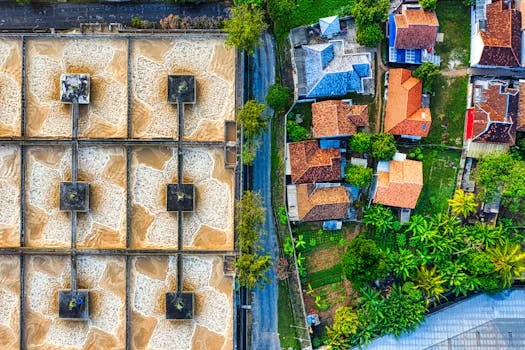
Conventional activated sludge (CAS) plants in Kansas City typically require a physical footprint of 1 to 3 acres per MGD of capacity. For industrial users or developers with limited space, modern alternatives like compact underground sewage treatment plants can reduce the required area by 50% to 70%. These integrated systems are particularly effective for commercial developments or satellite industrial sites where land value is at a premium and aesthetic impact must be minimized.
Energy consumption is the second largest O&M expense for KC facilities, following labor. According to KC Water’s 2023 energy audit data, conventional systems consume between 0.5 and 1.5 kWh per 1,000 gallons treated. Facilities aiming for higher effluent quality may see energy requirements rise to 2.0–4.0 kWh per 1,000 gallons. This increase is often offset by the ability to reuse treated water for industrial processes or cooling towers, a critical strategy for the data centers currently expanding in the Northland.
Compliance with Missouri DNR effluent limits is the non-negotiable baseline for any engineering design. Current standards for major dischargers in the Kansas City region typically mandate Biological Oxygen Demand (BOD) below 10 mg/L, Total Suspended Solids (TSS) below 15 mg/L, and Total Phosphorus (TP) below 1 mg/L. Achieving these levels requires precise chemical dosing of coagulants like alum or ferric chloride, which cost between $0.05 and $0.20 per 1,000 gallons.
| Engineering Parameter | Conventional (CAS) | Membrane Bioreactor (MBR) |
|---|---|---|
| Footprint (Acres/MGD) | 1.0 – 3.0 | 0.2 – 0.5 |
| Energy Use (kWh/1,000 gal) | 0.5 – 1.5 | 2.0 – 4.0 |
| Effluent TSS (mg/L) | 10 – 15 | < 1.0 |
| Effluent Phosphorus (mg/L) | 1.0 – 2.0 | < 0.1 (with dosing) |
| Automation Level | Medium | High |
Funding Your Wastewater Treatment Plant in Kansas City: Grants, Bonds, and PPPs
Securing capital for wastewater infrastructure in Kansas City requires a multi-tiered approach, leveraging federal, state, and private resources. The EPA’s Clean Water State Revolving Fund (CWSRF) remains the most significant source of low-interest financing; in 2023, KC Water secured approximately $120 million through this program. These 0% to 2% interest loans are highly competitive and require detailed environmental impact statements and engineering reports.
For smaller communities or industrial parks in the KC metro area, the Missouri DNR’s Water Protection Program offers grants of up to $500,000 for planning and construction. KC Water is projected to issue up to $800 million in municipal bonds by 2025 to fund the East Bottoms expansion. Industrial users can often negotiate "capacity buy-in" agreements or partner with the city on shared infrastructure to reduce their own upfront capital requirements.
Public-private partnerships (PPPs) are an emerging model in the region, particularly for projects requiring rapid delivery. Following the CMAR (Construction Manager at Risk) delivery method used by Garney Construction for the Wolcott expansion, many stakeholders are looking at 30-year concession models. In these scenarios, a private entity designs, builds, and operates the plant, while the municipality or industrial group pays a fixed service fee.
ROI Calculator: How to Justify Your Wastewater Treatment Investment in Kansas City
Calculating the Return on Investment (ROI) for a wastewater treatment plant in Kansas City depends on three primary factors: avoided sewer surcharges, water reuse savings, and risk mitigation. For industrial facilities, the payback period is often surprisingly short. A hypothetical industrial plant in the Northland with a $10 million capital cost for an on-site treatment system can reduce its discharge fees and potentially reuse 60% of that water for cooling, leading to a payback period of approximately 8.3 years.
Water reuse provides a direct hedge against rising utility rates. Data centers and heavy manufacturers can utilize treated effluent for cooling towers, reducing their demand for potable water and lowering their total water footprint. Every gallon of reused water represents a dual saving: once on the intake side and once on the discharge side. When evaluating how package plants compare to conventional systems, the ability to integrate reuse technology becomes a decisive factor in the lifecycle cost analysis.
Risk mitigation must be factored into the ROI equation. The cost of non-compliance is significant; EPA fines for Clean Water Act violations in the Kansas City region can reach up to $56,460 per day. Industrial dischargers who exceed KC Water’s pretreatment standards face heavy surcharges that can double or triple their monthly utility bills.
| ROI Factor | Estimated Annual Impact (KC Benchmarks) |
|---|---|
| Avoided Sewer Fees | $6.50 per 1,000 gallons discharged |
| Water Reuse Savings | $3.00 – $5.00 per 1,000 gallons intake |
| Nutrient Credit Revenue | $5 – $20 per lb of Phosphorus removed |
| Avoided Compliance Fines | Up to $56,460 per day (EPA Max) |
| Payback Period | 5 – 12 Years (Typical for Industrial) |
Frequently Asked Questions
How much does it cost to set up a sewage treatment plant in Kansas City?
Costs range from $3 to $30 per gallon of daily capacity. Municipal plants typically average $5–$8 per gallon due to scale, while industrial pretreatment plants range from $10–$30 per gallon.
Do wastewater treatment plants in Kansas City make money?
While municipal plants are primarily cost centers funded by taxes and fees, industrial plants can generate revenue or offset costs through water reuse and participation in Missouri’s nutrient trading program.
What is the cost of a residential sewage treatment plant in Kansas City?
A residential or small commercial package plant (500–1,500 GPD) typically costs between $15,000 and $