Why Liverpool’s Wastewater Treatment Costs Are Rising (And How to Control Them)
The operational expenses for wastewater treatment in Liverpool are under increasing pressure, driven by a confluence of factors including aging infrastructure, escalating energy prices, and more stringent environmental regulations. For instance, Liverpool’s municipal wastewater treatment plant, a facility serving approximately 50,000 population equivalents (PE), incurred over $1.4 million in energy costs alone in the past year. This significant expenditure is largely attributed to its 40-year-old sludge heat treatment system, which is notoriously inefficient. Compounding these challenges, UK-wide sludge disposal costs have seen a substantial 30% increase since 2020, now averaging £120 per tonne, according to recent Environment Agency data. Industrial zones within Liverpool, such as Knowsley and Speke, are encountering stricter trade effluent discharge permits, leading to an estimated 15-25% rise in necessary pretreatment expenses. Addressing these rising costs requires a strategic shift towards modern, energy-efficient technologies. Implementing solutions like Membrane Bioreactors (MBRs) or advanced anaerobic digestion systems can potentially reduce overall operational costs by 20-40%, offering a compelling return on investment despite a higher initial capital outlay.
Wastewater Treatment Plant Cost Breakdown: Capital vs. Operational Expenses
Understanding the financial architecture of a wastewater treatment plant (WWTP) is crucial for effective budgeting and procurement. Costs are broadly categorised into two main areas: capital expenditure (CAPEX) and operational expenditure (OPEX). CAPEX encompasses the upfront investment in equipment, civil works, and installation, while OPEX covers the recurring costs of running the plant, including energy, labour, chemicals, and sludge management. For conventional WWTPs in the UK, capital costs typically range from £500 to £1,200 per population equivalent (PE). However, for advanced systems like Membrane Bioreactors (MBRs), which offer superior effluent quality and a smaller footprint, the CAPEX can increase to £800–£1,800 per PE. Operational costs form a significant portion of the total lifecycle expenditure, often accounting for over 40%. Energy consumption typically represents 30-50% of OPEX, with sludge disposal following closely at 20-30%. Labour and chemical inputs usually make up the remaining 15-20% and 5-10%, respectively. In Liverpool, the median energy cost is approximately £0.12 per kilowatt-hour (kWh), a figure that can be significantly higher, as evidenced by the Medina County plant's experience with its older sludge heat treatment system, which pushed energy costs towards £0.18/kWh. A comparative breakdown for different plant capacities illustrates these cost dynamics:
| Capacity (PE) | Estimated Capital Cost (Conventional) | Estimated Capital Cost (MBR) | Estimated Annual Operational Cost (Conventional, excl. Sludge) | Estimated Annual Operational Cost (MBR, excl. Sludge) |
|---|---|---|---|---|
| 10,000 | £5M – £12M | £8M – £18M | £150,000 – £300,000 | £120,000 – £250,000 |
| 50,000 | £25M – £60M | £40M – £90M | £750,000 – £1.5M | £600,000 – £1.25M |
| 100,000 | £50M – £120M | £80M – £180M | £1.5M – £3M | £1.2M – £2.5M |
Technology Comparison: MBR vs. Conventional Activated Sludge vs. DAF for Liverpool Projects
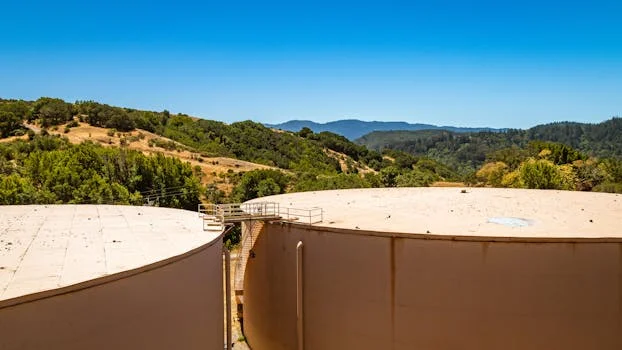
Selecting the optimal wastewater treatment technology for Liverpool projects hinges on a careful evaluation of effluent quality requirements, available site space, and budget constraints. Membrane Bioreactors (MBRs) represent a significant advancement, offering a compact and highly efficient solution. With capital costs ranging from £1,200 to £1,800 per PE, MBRs are more expensive upfront than conventional systems. However, their primary advantage is a drastically reduced footprint – up to 60% smaller – making them ideal for space-constrained urban environments like Liverpool city centre. MBRs consistently deliver near-reuse quality effluent, with suspended solids below 1 mg/L. Conventional activated sludge (CAS) systems, while more affordable at £500–£900 per PE in capital costs, demand significantly more land due to the requirement for large aeration basins and secondary clarifiers. CAS also tends to be more energy-intensive, consuming between 0.3–0.6 kWh/m³ of treated wastewater. For industrial applications, particularly in Liverpool’s food processing or pharmaceutical sectors, Dissolved Air Flotation (DAF) systems excel. DAF units are highly effective at removing fats, oils, grease (FOG), and suspended solids, achieving over 95% removal rates. While they require chemical dosing, with associated costs of £0.05–£0.15/m³, their targeted performance for specific industrial pollutants makes them a cost-effective pretreatment solution.
| Technology | Capital Cost/PE (Approx. £) | Operational Cost/m³ (Approx. £) | Footprint | Effluent Quality (TSS, mg/L) | Best Use Case |
|---|---|---|---|---|---|
| MBR Systems | 1,200 – 1,800 | 0.20 – 0.40 | Small | < 5 (often < 1) | Space-constrained sites, high-quality effluent requirements, water reuse |
| Conventional Activated Sludge | 500 – 900 | 0.15 – 0.30 | Large | < 30 | Standard municipal treatment, ample land availability |
| DAF Systems | 300 – 700 (for industrial pretreatment) | 0.05 – 0.15 (chemicals) + energy | Medium | < 100 (variable, target specific pollutants) | Industrial pretreatment, FOG removal, primary clarification |
For those seeking detailed information on advanced solutions, exploring MBR systems for Liverpool’s space-constrained sites or understanding the application of DAF systems for Liverpool’s industrial pretreatment needs can provide further insight. A comprehensive detailed MBR process breakdown for Liverpool engineers is also available.
Liverpool-Specific Cost Drivers: Permits, Sludge Disposal, and Energy Efficiency
The Environment Agency (EA) imposes permit fees that can range from £5,000 to £50,000 annually, with the exact amount dictated by the volume of discharge and the ecological sensitivity of the receiving water body, such as the Mersey Estuary.Beyond the core technology costs, several Liverpool-specific and UK-wide factors significantly influence the overall expenditure of wastewater treatment projects. Sludge disposal remains a substantial expense; Liverpool-based plants typically face costs between £120–£150 per tonne for landfilling or incineration, reflecting the UK average. While anaerobic digestion can halve these costs, it requires a substantial upfront investment of £2 million to £5 million. However, opportunities for cost reduction exist. The Liverpool City Region often provides energy efficiency grants, offering up to 30% matching funds for projects demonstrating a reduction in energy consumption of 20% or more. For example, upgrades at the Medina County Liverpool plant are expected to yield significant energy savings. The proximity to advanced sludge treatment facilities, such as SUEZ's Widnes facility, can reduce transport costs by 15-25%, a factor that should be carefully considered in logistical planning.
ROI Calculator: How to Justify Your Liverpool Wastewater Treatment Investment
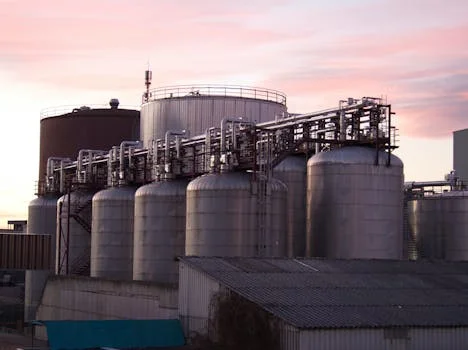
Justifying a significant investment in wastewater treatment infrastructure requires a clear demonstration of Return on Investment (ROI). For a Liverpool-based project, this involves quantifying expected savings and revenue streams against the initial capital outlay. The process begins with estimating annual savings derived from operational efficiencies, such as a 50,000 PE plant switching to an MBR system, which could yield annual energy savings of approximately £200,000. It’s crucial to also factor in the avoidance of potential fines levied by the Environment Agency for non-compliance, which can range from £10,000 to £100,000 per year. For plants incorporating anaerobic digestion, revenue generation from byproducts like biogas can provide a further financial benefit, potentially equivalent to £0.05–£0.10 per kWh. The payback period is calculated by dividing the net capital cost (Capital Cost – Grants) by the sum of Annual Savings and Annual Revenue. For instance, a £5 million system with £300,000 in annual savings would have a payback period of 16.7 years, a figure that improves significantly with grant funding.
ROI Calculation Framework:
- Estimate Annual Savings: Quantify reductions in energy, chemical usage, and labour.
- Factor in Avoided Costs: Include potential savings from avoiding EA penalties.
- Include Revenue Streams: Account for income from biogas or treated water reuse.
- Calculate Payback Period: (Net Capital Cost) / (Annual Savings + Annual Revenue) = Payback Period (Years).
Download our Liverpool WWTP ROI Calculator Template to input your figures.
Frequently Asked Questions
How much does a wastewater treatment plant cost in Liverpool for 10,000 PE?
A wastewater treatment plant for 10,000 PE in Liverpool typically costs between £5 million and £12 million for conventional systems. MBR systems, offering enhanced performance and a smaller footprint, can cost approximately 30% more, around £8 million to £18 million.
What are the main operational costs for a WWTP in Liverpool?
The primary operational costs for a WWTP in Liverpool are energy consumption (30-50% of OPEX), sludge disposal (20-30%), labour (15-20%), and chemical inputs (5-10%).
Are there grants available for wastewater treatment upgrades in Liverpool?
Yes, the Liverpool City Region often provides grants for projects that improve energy efficiency by 20% or more.
What is the typical lifespan of a wastewater treatment plant in the UK?
The operational lifespan of a modern wastewater treatment plant in the UK is generally designed to be 20-30 years.
How does MBR technology compare to conventional activated sludge in terms of energy use?
MBR systems are generally more energy-efficient per cubic meter of treated water than conventional activated sludge systems.
What are the key considerations for Environment Agency permits in Liverpool?
Key considerations for Environment Agency permits in Liverpool include the volume and quality of effluent discharged, the sensitivity of the receiving water body, and compliance with specific pollutant limits.
Can I reuse treated wastewater from a Liverpool plant?
Yes, treated wastewater, particularly from advanced systems like MBRs, can be reused for non-potable purposes.
Related Equipment
The following HydropureWater products are engineered for the wastewater challenges discussed above:
- precision chemical dosing for Liverpool’s trade effluent compliance — view specifications, capacity range, and technical data
Need a customized solution? Request a free quote with your specific flow rate and pollutant parameters.