In Sharm El Sheikh, a wastewater treatment plant (WWTP) costs between EGP 12–45 million ($250,000–$950,000) for capacities of 500–5,000 m³/day, depending on technology and compliance requirements. For example, a 1,000 m³/day MBR system with 95% BOD removal and reuse-grade effluent costs ~EGP 22 million ($460,000), while a conventional activated sludge plant for the same capacity costs ~EGP 15 million ($315,000). Egypt’s 2024 regulations (Law No. 48/1982 and Prime Minister Decree 1095/2019) mandate tertiary treatment for coastal areas like Sharm El Sheikh, adding 20–30% to capital costs but enabling water reuse for irrigation or cooling towers.
Why Sharm El Sheikh Needs Wastewater Treatment Plants: Water Scarcity, Tourism, and Compliance Risks
Sharm El Sheikh faces a significant water deficit, with daily demand reaching 250,000 m³/day in 2024 against a supply of only 180,000 m³/day, as reported by the Egyptian Ministry of Water Resources in 2023. This gap is exacerbated by the region's booming tourism sector, which accounts for 60% of water demand, serving approximately 3.5 million visitors annually (CAPMAS 2023). The reliance on desalinated seawater and imported water makes water resources costly and vulnerable, highlighting the critical need for efficient wastewater treatment and reuse to ensure sustainable growth.
Regulatory frameworks in Egypt impose strict requirements for wastewater discharge, particularly in ecologically sensitive coastal zones like Sharm El Sheikh. Egypt’s Law No. 48/1982 and Prime Minister Decree 1095/2019 mandate that coastal cities treat wastewater to tertiary standards, requiring effluent quality with TSS below 10 mg/L and BOD below 10 mg/L before discharge or reuse. Non-compliance carries severe penalties, with fines ranging from EGP 50,000–500,000 ($1,000–$10,500) per violation as of 2024. For instance, a 5-star hotel in Naama Bay was fined EGP 300,000 in 2023 for discharging inadequately treated wastewater into the Red Sea. Subsequently, retrofitting a 300 m³/day MBR system for high-salinity wastewater in Sharm El Sheikh cost the hotel EGP 8.5 million ($180,000) but resulted in a 40% reduction in water bills through reuse for landscaping, demonstrating both the financial risk of non-compliance and the economic benefits of advanced treatment.
Operating wastewater treatment plants in Sharm El Sheikh presents unique climate-driven engineering challenges. The region experiences high salinity in influent wastewater, often ranging from 40,000–45,000 mg/L TDS, due to the proximity to the Red Sea and potential infiltration. ambient temperatures can soar to 45°C in summer, significantly increasing membrane fouling rates in MBR systems and raising energy consumption for cooling. Local WWTPs adapt to these conditions by implementing robust pre-treatment stages, such as DAF pre-treatment for industrial wastewater in Sharm El Sheikh to remove suspended solids and fats, oils, and grease (FOG), and by integrating cooling towers or chilled water loops for MBR systems to maintain optimal biological activity and membrane longevity.
Wastewater Treatment Plant Cost in Sharm El Sheikh: 2025 Breakdown by Capacity and Technology
The capital expenditure (CAPEX) for a wastewater treatment plant in Sharm El Sheikh varies significantly based on capacity and the chosen treatment technology. Data aggregated from 2023–2024 tenders by the Egyptian Holding Company for Water and Wastewater (EHCWW) and HydropureWater’s recent Egypt installations provides clear benchmarks. For conventional activated sludge systems, CAPEX ranges from $250,000 for a 500 m³/day plant to $6.5 million for a 10,000 m³/day facility. Membrane Bioreactor (MBR) systems, which offer higher effluent quality suitable for reuse, typically incur higher upfront costs, starting from $350,000 for 500 m³/day and reaching up to $8 million for 10,000 m³/day.
| Capacity (m³/day) | Technology | CAPEX (2025 USD) | OPEX (2025 USD/m³) |
|---|---|---|---|
| 500 | Conventional Activated Sludge | $250,000–$450,000 | $0.15–$0.30 |
| 500 | MBR | $350,000–$600,000 | $0.25–$0.50 |
| 1,000 | Conventional Activated Sludge | $450,000–$800,000 | $0.15–$0.30 |
| 1,000 | MBR | $600,000–$1.1M | $0.25–$0.50 |
| 5,000 | Conventional Activated Sludge | $2M–$3.5M | $0.15–$0.30 |
| 5,000 | MBR | $2.8M–$4.5M | $0.25–$0.50 |
| 10,000 | Conventional Activated Sludge | $4M–$6.5M | $0.15–$0.30 |
| 10,000 | MBR | $5.5M–$8M | $0.25–$0.50 |
Operational expenditure (OPEX) per cubic meter of treated water also varies by technology. Conventional systems typically cost $0.15–$0.30/m³, with energy consumption at 0.4–0.6 kWh/m³ and chemical costs around $0.05–$0.10/m³. MBR systems, while providing superior effluent, have higher OPEX at $0.25–$0.50/m³ due to increased energy requirements (0.8–1.2 kWh/m³) and membrane replacement costs ($0.10–$0.20/m³ every 5–8 years). For industrial pre-treatment, Dissolved Air Flotation (DAF) systems incur OPEX of $0.20–$0.40/m³, primarily driven by chemical consumption ($0.10–$0.15/m³) and sludge disposal ($0.05–$0.10/m³).
Several Sharm El Sheikh-specific factors inflate these costs. The high salinity (40,000+ mg/L TDS) in influent wastewater necessitates the use of corrosion-resistant materials like stainless steel 316L for piping, adding an estimated 15–20% to CAPEX. Frequent sandstorms require specialized external equipment coatings and robust enclosures, which can add 5–8% to CAPEX. Sharm El Sheikh’s remote location compared to major hubs like Cairo means logistics for equipment and materials can increase overall equipment costs by 10–15%. For Giza’s WWTP cost benchmarks for Egypt-wide comparisons, these remote logistics costs are often lower.
To mitigate these investments, Egypt offers various financing options. The 2024 Green Finance Program provides loans with attractive interest rates of 5–7% for WWTPs that incorporate more than 30% water reuse. Additionally, the EHCWW offers up to 30% subsidies for municipal wastewater treatment projects, easing the financial burden on local authorities and developers.
Engineering Specs for Sharm El Sheikh WWTPs: Parameter Tables and Climate Adaptations
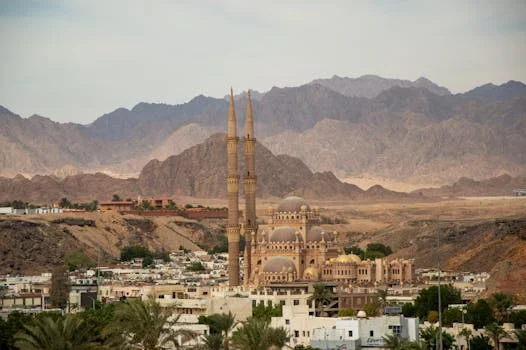
Selecting the appropriate wastewater treatment technology in Sharm El Sheikh requires a detailed understanding of local influent characteristics, stringent discharge standards, and unique climate challenges. Municipal wastewater in Sharm El Sheikh typically presents BOD levels of 250–400 mg/L, TSS of 300–500 mg/L, and notably high TDS ranging from 40,000–45,000 mg/L, with a pH between 7.2–8.5. Hotel and resort wastewater often shows higher BOD (300–600 mg/L) and FOG (50–150 mg/L) due to laundry and dishwashing, with TDS between 35,000–42,000 mg/L. Industrial facilities, such as food processing plants, can have influent with BOD 800–1,500 mg/L, TSS 600–1,200 mg/L, and salinity as high as 30,000–50,000 mg/L due to brine discharge.
Egypt’s Prime Minister Decree 1095/2019 sets strict discharge standards for coastal areas like Sharm El Sheikh, mandating tertiary treatment. Effluent must meet BOD levels below 10 mg/L, TSS below 10 mg/L, and COD below 50 mg/L. For reuse in irrigation, E. coli must be less than 1,000 CFU/100 mL. While there is no specific TDS limit for discharge, water reuse applications, such as for cooling towers, typically require TDS below 500 mg/L, often necessitating Reverse Osmosis (RO) as a post-treatment step.
The following table provides a comparison of key wastewater treatment technologies relevant for Sharm El Sheikh, considering their performance and operational parameters:
| Technology | BOD Removal | TSS Removal | Footprint (m²/1,000 m³/day) | Energy (kWh/m³) | OPEX ($/m³) | Best For |
|---|---|---|---|---|---|---|
| Conventional Activated Sludge | 85–92% | 80–90% | 120–180 | 0.4–0.6 | 0.15–0.30 | Municipal, low-salinity influent |
| MBR | 95–98% | 99%+ | 40–60 | 0.8–1.2 | 0.25–0.50 | Hotels, water reuse |
| DAF (pre-treatment) | 50–70% | 90–95% | 20–30 | 0.3–0.5 | 0.20–0.40 | Industrial, high FOG |
| RO (post-treatment) | 99%+ | 99%+ | 15–25 | 1.5–2.5 | 0.50–1.00 | Reuse (cooling towers, irrigation) |
Specific climate adaptations are crucial for the long-term viability of Sharm El Sheikh WWTPs. High ambient temperatures, often exceeding 45°C, necessitate cooling solutions for MBR systems, which can add 10–15% to CAPEX for cooling towers or specialized submerged membranes with chilled water loops. Frequent sandstorms require external equipment like pumps and blowers to be housed in climate-controlled enclosures, adding 5–8% to CAPEX to prevent abrasion and extend equipment lifespan. high influent salinity (e.g., in MBR systems for high-salinity wastewater in Sharm El Sheikh) often requires pre-treatment with DAF pre-treatment for industrial wastewater in Sharm El Sheikh or lime dosing to reduce scaling and protect downstream MBR or RO membranes, adding another 5–10% to CAPEX.
ROI Calculator: How to Justify Your Sharm El Sheikh WWTP Investment
Justifying a wastewater treatment plant investment in Sharm El Sheikh requires a clear Return on Investment (ROI) calculation that accounts for water savings, compliance avoidance, and potential revenue from water reuse. The fundamental ROI formula is: (Annual Savings + Revenue) / (CAPEX + Annual OPEX) × 100%. For municipal projects, break-even periods typically range from 5–10 years, while industrial projects, particularly those leveraging significant water reuse, can achieve break-even in 3–7 years.
Key sources of annual savings include substantial reductions in water bills. Sharm El Sheikh’s municipal water costs between EGP 12–18/m³ ($0.25–$0.38/m³). A 1,000 m³/day plant reusing 50% of its treated wastewater can save EGP 2.2–3.3 million/year ($46,000–$70,000). Avoiding compliance fines, which range from EGP 50,000–500,000/year ($1,000–$10,500) per violation, represents another critical saving. Additionally, advanced systems like MBR reduce sludge production (0.1–0.2 kg/m³ vs. 0.3–0.5 kg/m³ for conventional systems), lowering disposal costs of EGP 800–1,200/ton ($17–$25/ton).
Revenue generation significantly enhances ROI. Selling treated wastewater to golf courses at EGP 5–8/m³ or for cooling towers at EGP 3–5/m³ can generate EGP 1.8–3.6 million/year ($38,000–$76,000) for a 1,000 m³/day plant. Egypt’s 2024 carbon trading scheme offers EGP 200–400/ton CO₂e ($4–$8/ton) for WWTPs that incorporate energy recovery systems, such as biogas capture.
| Parameter | Value (EGP) | Value (USD) |
|---|---|---|
| Case Study: 500 m³/day MBR System for Sharm El Sheikh Resort | ||
| CAPEX | 12,000,000 | 250,000 |
| Annual OPEX | 2,500,000 | 52,000 |
| Annual Savings (Water Reuse) | 1,800,000 | 38,000 |
| Annual Savings (Avoided Fines) | 300,000 | 6,300 |
| Annual Revenue (Water Sales) | 1,200,000 | 25,000 |
| Projected ROI (Break-even) | 6.2 years | |
For a 500 m³/day MBR system installed at a Sharm El Sheikh resort, the CAPEX was EGP 12 million ($250,000), with an annual OPEX of EGP 2.5 million ($52,000). This system generated EGP 1.8 million ($38,000) in annual water bill savings through reuse, EGP 300,000 ($6,300) from avoided fines, and EGP 1.2 million ($25,000) in revenue from selling treated water to a nearby golf course. The projected ROI for this project is 6.2 years (2025 projection). To assist with your specific calculations, you can download our ROI calculator, an Excel template pre-filled with Sharm El Sheikh-specific cost data, water prices, and fine rates.
Compliance Checklist: How to Permit Your Sharm El Sheikh WWTP in 2025
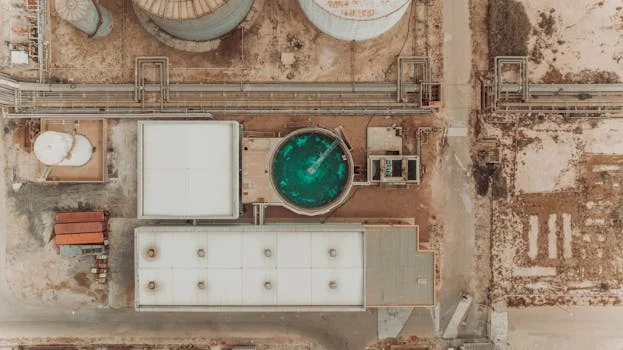
Navigating Egypt’s regulatory landscape for wastewater treatment plants in Sharm El Sheikh requires a structured approach to permitting, typically spanning 12–24 months. The process begins with a mandatory Environmental Impact Assessment (EIA), which is required for all WWTPs exceeding 500 m³/day under Law No. 4/1994. This step usually takes 3–6 months and involves submitting a detailed assessment to the Egyptian Environmental Affairs Agency (EEAA), incurring costs of EGP 50,000–200,000 ($1,000–$4,200). A common pitfall here is submitting incomplete baseline water quality data; using accredited labs, such as the Central Laboratory for Environmental Quality Monitoring, is crucial.
Following a successful EIA, the next step is Design Approval, which typically takes 2–4 months. Engineering drawings, process flow diagrams, hydraulic calculations, equipment specifications, and a comprehensive water reuse plan (if applicable) must be submitted to the EHCWW for municipal projects or the Industrial Development Authority (IDA) for industrial facilities. A frequent challenge is non-compliance with Decree 1095/2019's tertiary treatment standards, requiring specific consideration for MBR systems for high-salinity wastewater in Sharm El Sheikh or RO technology for coastal applications. After design approval, a Construction Permit is required, taking 1–3 months to obtain from the local governorate (South Sinai Governorate). This requires EIA and design approvals, along with a detailed construction timeline. Planning for a 20% buffer time is advisable due to potential delays from sandstorm-related construction halts.
The final stage is obtaining an Operational License, which typically takes 1–2 months. This involves submitting as-built drawings, commissioning reports, and demonstrating compliance through a 30-day performance test measuring BOD, TSS, and E. coli levels, submitted to the EEAA and relevant authorities. A critical pitfall is failing performance tests due to Sharm El Sheikh’s high salinity or temperature spikes, underscoring the need for robust design with redundancy, such as backup blowers for MBR systems. Ongoing annual compliance includes monthly self-monitoring reports (BOD, TSS, pH, E. coli) to the EEAA and an annual third-party audit, costing EGP 100,000–200,000 ($2,100–$4,200).
Frequently Asked Questions
Q: How much does it cost to set up a sewage treatment plant in Sharm El Sheikh?
A: For a 1,000 m³/day plant, capital expenditure (CAPEX) ranges from EGP 15–22 million ($315,000–$460,000) for conventional systems to EGP 22–33 million ($460,000–$700,000) for MBR technology. Operational expenditure (OPEX) is typically EGP 0.30–0.50/m³ ($0.06–$0.10/m³). Refer to the cost breakdown table in the "Wastewater Treatment Plant Cost in Sharm El Sheikh: 2025 Breakdown by Capacity and Technology" section for more details.
Q: Which technology is best for Sharm El Sheikh’s high-salinity wastewater?
A: MBR systems with appropriate pre-treatment, such as DAF pre-treatment for industrial wastewater in Sharm El Sheikh or lime dosing, are ideal for influent salinity exceeding 35,000 mg/L TDS. They achieve over 95% BOD removal and enable water reuse. However, to manage high ambient temperatures, MBR systems require cooling towers, which can add 10–15% to CAPEX. Conventional activated sludge systems often struggle with high salinity and may necessitate additional Reverse Osmosis (RO) post-treatment, adding 20–30% to CAPEX, to meet reuse standards.
Q: Can treated wastewater be reused in Sharm El Sheikh?
A: Yes, treated wastewater can be reused in Sharm El Sheikh, provided it meets tertiary treatment standards: BOD <10 mg/L, TSS <10 mg/L, and E. coli <1,000 CFU/100 mL. MBR systems for high-salinity wastewater in Sharm El Sheikh or RO systems are typically required to achieve these levels. Common reuse applications include golf course irrigation (generating revenue of EGP 5–8/m³), cooling towers (EGP 3–5/m³), and toilet flushing. Egypt’s 2024 regulations (Prime Minister Decree 1095/2019) actively mandate water reuse for new WWTPs in coastal areas.
Q: What are the penalties for non-compliance with Egypt’s wastewater regulations?
A: Non-compliance with Egypt’s wastewater regulations in Sharm El Sheikh can result in significant fines ranging from EGP 50,000–500,000 ($1,000–$10,500) per violation, based on 2024 rates. Repeat offenders risk plant shutdowns or criminal charges for environmental damage. The South Sinai Governorate conducts unannounced inspections 2–4 times annually to ensure adherence to discharge standards.
Q: How long does it take to build a wastewater treatment plant in Sharm El Sheikh?
A: The entire process, from design and permitting to construction, typically takes 12–24 months. Permitting alone, including the Environmental Impact Assessment (EIA) and design approval, can take 6–12 months. Construction phases usually last 6–12 months, depending on the plant's capacity and complexity. Factors like sandstorms, remote logistics, and the need for specialized materials can add up to 20% to project timelines. Pre-fabricated package plants, such as HydropureWater’s WSZ series, can significantly reduce on-site construction time to 4–6 months.
Related Equipment
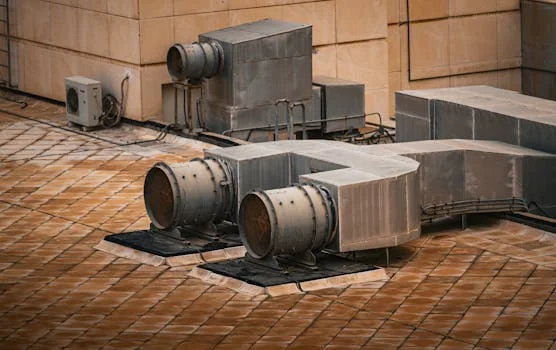
The following HydropureWater products are engineered for the wastewater challenges discussed above:
- chlorine dioxide disinfection for Sharm El Sheikh WWTPs — view specifications, capacity range, and technical data
Need a customized solution? Request a free quote with your specific flow rate and pollutant parameters.