The industrial wastewater treatment plant cost in Chhattisgarh runs from ₹1.2–2.5 crore for a 500 KLD single-process package to ₹3.5–5.0 crore for a full plant. High-TSS steel, power, and mining effluent sets the scope. CSPCB limits are <30 mg/L BOD and <100 mg/L TSS.
Industrial Wastewater Treatment Plant Cost in Chhattisgarh
A 500 KLD duty in Chhattisgarh sits at ₹1.2–2.5 crore for one process train and ₹3.5–5.0 crore for a full plant. Factories in Korba and Raigarh typically need 90-98% TSS removal and 85-95% BOD reduction to hold their consent, with DAF at ₹1.5 crore and MBR at ₹2.2 crore on the package side. Operating cost on these trains runs ₹0.8–1.5 per KL treated. Korba steel effluent often arrives above 1500 mg/L TSS, so DAF comes before biology.
Treat the industrial wastewater treatment plant cost in Chhattisgarh as two scopes, not one number. The ₹1.2–2.5 crore band is a single process package on a 500 KLD plant, with DAF at ₹1.5 crore and MBR at ₹2.2 crore. The capacity table below is the full civil, electrical and automation works. Plants sized here for a discharge-only mill land in the package band, while a reuse plant does not.
Capital cost does not grow in a straight line with flow. A 50 KLD plant typically needs ₹60–90 lakh, while a 500 KLD plant ranges from ₹3.5–5 crore once tanks, cabling and a building are included. Fully automated PLC controls from Raipur suppliers add about 15-20% to the base price. That extra spend is cheaper than a failed sample and a stopped Consent to Operate.
| Plant Capacity | Estimated CAPEX (₹) | Annual O&M (₹) | Typical Application |
|---|---|---|---|
| 50 KLD | 60–90 Lakh | 12–18 Lakh | Small Textile/Food Units |
| 200 KLD | 1.8–2.5 Crore | 35–50 Lakh | Medium Steel Rolling Mills |
| 500 KLD | 3.5–5.0 Crore | 80–110 Lakh | Large Power/Mining Sites |
| 1000 KLD | 6.0–8.0 Crore | 1.5–2.0 Crore | Distilleries/Paper Mills |
What annual O&M does each capacity carry?
Annual O&M from the same capacity table runs ₹12–18 lakh at 50 KLD, ₹35–50 lakh at 200 KLD, ₹80–110 lakh at 500 KLD and ₹1.5–2.0 crore at 1000 KLD. Small textile and food units sit in the first row. Medium steel rolling mills sit in the second. Large power and mining sites, then distilleries and paper mills, fill the last two rows.
Operating cost is driven by power at ₹6–8/kWh, chemicals at ₹10–20/kg of influent COD, and labour. Sludge is the line buyers forget. Under the 2024 CSPCB mandate, sludge must be tested every 6 months (₹5000/sample). Hazardous sludge from steel plants requires disposal at authorized Treatment, Storage, and Disposal Facilities (TSDF), which can cost up to ₹5000 per ton including transport.
Reuse is where the MBR premium comes back. A 500 KLD system costing ₹4.5 crore can save approximately ₹1.2 crore per year when treated water replaces municipal supply. The worked example is ₹50/KL municipal cost vs ₹1.5/KL treated cost. Run that tariff on your own bill before you reject MBR on capital alone.
Monsoon Shock Loading Wastewater Treatment Design
Steel and power plants in Korba generate effluent with TSS exceeding 1500 mg/L, far above the 200–500 mg/L typically found in municipal sewage (CPCB 2023). That solids load needs a primary stage such as high-efficiency DAF systems for Chhattisgarh steel and food processing plants, or the biological tanks foul. Standard municipal designs fail here. Coal fines and iron ore particles in the Raigarh and Raipur belts are abrasive, and they chew up fine-bubble diffusers.
Rain from June to September is the second design case, not a footnote. Factory managers in Raigarh food processing plants report that influent flow increases by 30–40% during heavy rainfall, from groundwater infiltration and surface runoff. A plant sized only for dry-weather flow will wash out its biomass and miss the limit that same week. Plants reviewed after a monsoon breach had no spare volume at all.
What equalisation time covers a monsoon surge?
A monsoon surge on these sites is handled by equalization basins with a 24-hour retention time, or by modular tanks that add volume without a new civil block. Flexible treatment capacity is mandatory if the dry-weather design already sits near the clarifier limit. The 24-hour basin also damps the first flush of yard solids. Size the basin on the wet-week peak, not on the annual average.
Distilleries and paper mills in the Raipur-Durg corridor face Biological Oxygen Demand (BOD) levels between 300–800 mg/L. Mining operations must manage heavy metals like Chromium (Cr), Nickel (Ni), and Iron (Fe). Oil and grease concentrations in steel rolling mills often range from 50–200 mg/L, so separation comes before biology. A 2023 audit of Raipur textile units by the CSPCB revealed that 60% of facilities were in non-compliance, primarily because pre-treatment could not handle dyes and fixatives (HydropureWater field data, 2025).
DAF System for High TSS Wastewater Korba
A DAF system for high TSS wastewater in Korba uses micro-bubbles, typically 20–50 μm in diameter, to lift solids and oil to a skimmer. Removal of TSS and Fat, Oil, and Grease (FOG) lands at 90–98% when chemistry matches the particle. For a steel plant in Korba, a DAF system can reduce influent TSS from 1500 mg/L to under 50 mg/L, protecting secondary filters. You can compare DAF and IAF systems for industrial wastewater treatment once the particle-size curve is in hand.
Korba skids sized on coal fines run DAF near 0.2–0.4 kWh/m³ once recycle pressure is stable. Pick DAF when the permit goal is particulate and oil, and add precipitation if metals are present. DAF BOD removal in the comparison table is only 20–30%, so it is not the organic-removal step.
When does Korba effluent need DAF before MBR?
Korba effluent needs DAF before an MBR when influent TSS exceeds 1000 mg/L. Above that load, membrane fouling drives extra chemical cleans and cuts membrane life, which is typically 3–5 years. DAF also buffers the monsoon solids slug before it reaches the biology. Coal-fine duties should keep this buffer even when the yearly average looks moderate.
MBR System for Zero Liquid Discharge Raipur
An MBR system for zero liquid discharge in Raipur combines biological digestion with submerged PVDF membranes at a nominal pore size of 0.1 μm. The membrane is a physical barrier to bacteria and suspended solids, so parks can hold <10 mg/L TSS and <5 mg/L BOD. That quality suits cooling-tower makeup and floor washing. Energy sits at 0.8–1.2 kWh/m³, which is the price of the reuse.
Footprint decides the Raipur choice as often as effluent quality does. Tight plots use compact MBR systems for Raipur industrial parks with space constraints because a clarifier plant of the same flow needs far more land. Start by learning how MBR systems achieve near-reuse-quality effluent before the zero-liquid-discharge flow sheet is frozen. Reuse plants sized for Raipur are run below the catalogue flux so chemical cleans stay infrequent.
Process Trains Compared for Chhattisgarh Effluent
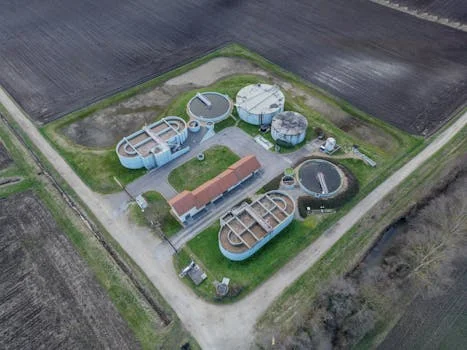
Conventional activated sludge remains the baseline at older mills: an aeration tank, then a gravity clarifier, with 80–90% BOD removal. Its footprint is approximately 50% larger than an MBR of the same capacity, and it is sensitive to sludge volume index. If the sludge does not settle, solids carry into the final discharge and the CSPCB sample fails. For high-strength distillery waste, a UASB reactor is the better first biological step.
| Parameter | DAF | MBR | ASP (Conventional) | Anaerobic (UASB) |
|---|---|---|---|---|
| Primary Target | TSS, Oil & Grease | BOD, TSS, Bacteria | BOD, COD | High-strength COD |
| TSS Removal | 90–98% | >99% | 70–85% | 50–70% |
| BOD Removal | 20–30% | 95–99% | 80–90% | 70–85% |
| Footprint | Small | Very Small | Large | Medium |
| Energy Use | Low | High | Medium | Low (Net Positive) |
Upflow anaerobic sludge blanket reactors cut BOD by 70–85% and generate 0.3–0.5 m³ of methane per kg of COD removed. That gas is why the energy row reads net positive. The reactor still needs a downstream aerobic step when the permit is <30 mg/L BOD, because 70–85% removal of a 300–800 mg/L influent can leave more than 30 mg/L. Check the arithmetic on your own COD, not on a catalogue removal rate.
Chemical treatment is the metal step. Hexavalent Chromium (Cr VI) must be reduced to Trivalent Chromium (Cr III) using sodium metabisulfite at a pH of 2.0–3.0 before it can be precipitated as a hydroxide at pH 8.5–9.0. Implementing precise chemical dosing for heavy metal removal in steel plant effluents holds 95%+ removal and limits hazardous sludge. That sludge currently costs ₹3000–5000/ton for disposal in India.
| Technology | TSS Removal (%) | BOD Removal (%) | Footprint (m²/100 KLD) | Energy (kWh/m³) | Capital Cost (₹/KLD) | O&M Cost (₹/KL) |
|---|---|---|---|---|---|---|
| DAF | 90–98% | 25% | 15–20 | 0.2–0.4 | 30,000–50,000 | 0.8–1.5 |
| MBR | >99% | 98% | 10–15 | 0.8–1.2 | 45,000–70,000 | 1.2–2.0 |
| Conventional ASP | 80% | 85% | 40–60 | 0.4–0.6 | 25,000–40,000 | 0.6–1.0 |
Technical limits show up at design, not after commissioning. MBR units need rigorous pre-treatment once influent TSS exceeds 1000 mg/L, or cleaning cycles erase the typically 3–5 years membrane life. Conventional ASP struggles with Chhattisgarh monsoon shock loads, where sudden dilution washes biomass out. In that week, DAF is the buffer that takes the solids before the reactor.
CSPCB Discharge Limits for Industrial Effluents
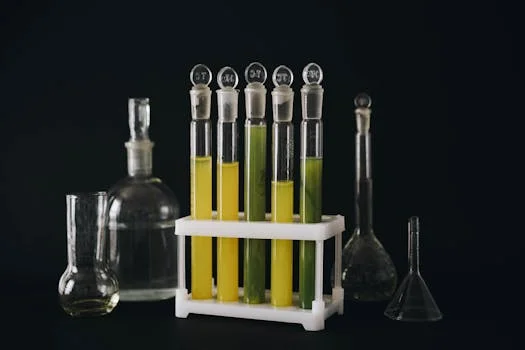
CSPCB discharge limits for industrial effluents that reach inland water sit on a national floor. The same column sets oil and grease at 10 mg/L, hexavalent chromium at 0.1 mg/L, total chromium at 2.0 mg/L, iron at 3 mg/L and nickel at 3.0 mg/L. A state consent may be tighter than that floor, which is why the local numbers below still matter.
General standards used for Mahanadi discharge in this guide are BOD <30 mg/L, TSS <100 mg/L, and COD <250 mg/L. Earlier project sheets used oil and grease below 20 mg/L for every steel outfall. Schedule VI sets 10 mg/L for inland water and 20 mg/L for public sewers, so design a river outfall to 10 mg/L unless the consent says otherwise. Hexavalent chromium at 0.1 mg/L matches the steel-sector number quoted in this guide.
Food processing units often face a TSS limit of <50 mg/L to prevent organic silting in local drainage networks. That 50 mg/L cap is tighter than the Schedule VI inland suspended-solids limit of 100 mg/L. Schedule VI also caps water quantity, not just quality: integrated iron and steel effluent is capped at 16 m³ per tonne of finished steel, and distillery effluent at 12 m³ per KL of alcohol produced. Those quantity caps size the recycle loops before any treatment technology is picked.
The permitting sequence is Consent to Establish (CTE), a trial run, then Consent to Operate (CTO), and the timeline typically spans 3–6 months. Fees range from ₹50,000 to ₹2 lakh depending on the capital investment of the project. Since 2024, the CSPCB has used a digital reporting portal, and plants with a capacity >500 KLD are required to install online continuous emission monitoring systems (OCEMS) for pH, COD, and flow. Failure brings automatic alerts to the regional office in Raipur and fines of ₹1–5 lakh per incident.
The boards themselves sit in one framework. According to Wikipedia's profile of the Central Pollution Control Board, it was established in 1974 under the Water (Prevention and Control of Pollution) Act, 1974, and it coordinates the activities of the State Pollution Control Boards by providing technical assistance and guidance. That is the same Act cited in Chhattisgarh enforcement actions, and the reason CSPCB sample results feed a national database.
Non-compliance data from 2023 indicates that the majority of violations in the Raipur textile sector were due to inadequate pre-treatment of dyes. To avoid a repeat, see how Chennai factories comply with similar discharge standards using advanced oxidation processes (AOP) and membrane filtration. Corrective actions mandated by the CSPCB often include a filter press for sludge dewatering and an aeration upgrade for higher organic loads. Upgrading only the aerator, and leaving the dye tank raw, repeats the same failure.
CPCB also publishes a state-wise OCEMS directory, a page of Online Real Time, Continuous Monitoring System data of SPCBs/PCCs listing each State Board's live dashboards, with the site footer last updated on 2026-09-24. Use that directory to see whether a unit is already reporting. Commissioning teams still fail the first month on the flow meter, not on the analyser.
How to Select a Supplier in Chhattisgarh
A supplier quote is not a process design. In this market, local presence decides whether a blower failure lasts a day or a month. Ask for at least three local references from similar industries, so a steel plant manager talks to another steel plant manager in Korba. Demand 24/7 technical support and a local stock of blowers, pumps and membrane modules.
Ask two design questions before the price is scored. What is the specified TSS removal efficiency for an influent with 2000 mg/L solids, and what is the turndown ratio for monsoon flow? A red flag is any supplier who skips pilot testing on complex effluent or writes a vague performance commitment. Standard contract terms should include a 30% advance, 40% on delivery, and 30% on successful commissioning and CSPCB approval.
Performance commitments must be explicit, and if the system fails to meet discharge standards, the supplier is liable for corrective actions at their own cost. Local suppliers like Amritwapi Enterprises and Greenhouse Aquatech are active in the region, but technical specifications vary widely. Always compare their proposals against international benchmarks for membrane life (MBR membranes should last 5 years) and aeration efficiency. A comprehensive warranty should cover the equipment for at least 1 year and the membranes for 3–5 years on a pro-rata basis.
Score the bid on six points before the advance is released. Three local references must come from the same industry, and the TSS commitment must name 2000 mg/L influent solids. Turndown must cover monsoon flow, not one dry-weather point. A pilot must be offered when the water carries dye or metal.
Spares for blowers, pumps and membranes must sit inside Chhattisgarh. The contract must put failed-sample repairs on the supplier, matching the liability already written into the performance clause. Buyers who skip either point usually pay for the same repair twice.
Who Should Use This Cost Guide
Plant engineers and EPC buyers at steel, power, mining, textile, distillery and food sites in Korba, Raipur, Raigarh and the Raipur-Durg corridor are the audience. Municipal sewage at 200–500 mg/L TSS, with no oil and no metals, belongs on a different design. Gulf industrial parks follow another permit style, set out in the Ajman Industrial Effluent Guide: 2026 Specs and Compliance. European municipal deadlines are collected in the EU Urban Wastewater Treatment Directive: Compliance, Deadlines & Tech.
Readers who need a non-Indian permit comparison can review industrial wastewater treatment as the Auckland case, then come back to the Chhattisgarh cost bands. That Auckland page uses a different sewer code and a different climate. Do not copy its assumptions into a Mahanadi consent.
Send the influent assay, the discharge point and the reuse target with the plant sizing request before the process train is frozen. A one-page mass balance with TSS, BOD, oil and the metal scan separates a ₹1.5 crore DAF package from a ₹4.5 crore reuse plant. Returned files are usually held up by a missing flow peak, not by the technology name.
Frequently Asked Questions
What are the three stages of factory effluent treatment?
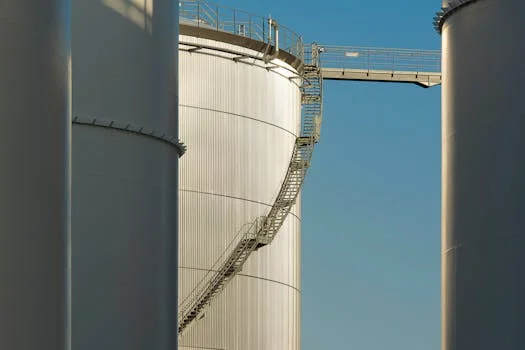
Factory effluent treatment uses three stages: primary separation, biological secondary treatment, and tertiary polishing. Primary work in Korba is usually DAF for solids and oil. Secondary treatment is MBR or ASP for organic load. Tertiary steps such as RO or UV are added when the water is reused. Raipur food plants often stop at MBR because the membrane already holds TSS under 10 mg/L and BOD under 5 mg/L.
What does a 200 KLD plant cost in Chhattisgarh?
A 200 KLD plant in Chhattisgarh is listed at ₹1.8–2.5 crore capital, with operating cost around ₹1–2/KL treated. Annual O&M in the same row is ₹35–50 lakh, which fits a medium steel rolling mill. MBR packages cost 30–50% more than a conventional train, and that premium is justified only when the water must be reused. A discharge-only mill can stay on DAF plus ASP and keep the lower band.
Which inland numbers does CSPCB apply?
CSPCB practice in this guide uses BOD <30 mg/L, TSS <100 mg/L, and pH 6.5–8.5, plus oil & grease (<20 mg/L) and Chromium (<0.1 mg/L) for steel. Schedule VI of the Environment (Protection) Rules sets inland pH at 5.5 to 9.0, oil and grease at 10 mg/L, and hexavalent chromium at 0.1 mg/L. The 20 mg/L oil figure matches the public-sewer column, not the inland column.
Can treated effluent be reused in Chhattisgarh?
Treated effluent can be reused in Chhattisgarh when it meets BOD <10 mg/L, TSS <5 mg/L. MBR is the train that holds those two numbers day after day, which is why Raipur parks use it for cooling-tower makeup and gardening. Floor washing is the other common sink. A conventional clarifier at 80% TSS removal will not hold 5 mg/L TSS, so do not promise reuse on an ASP-only plant.
What penalties follow a discharge breach in Chhattisgarh?
A discharge breach in Chhattisgarh draws fines of ₹1–5 lakh per violation, suspension of the Consent to Operate, and action under the Water (Prevention & Control of Pollution) Act, 1974. Plants above 500 KLD that drop offline on pH, COD or flow also trigger alerts to the Raipur regional office. Files that still have a logbook and a sample usually open with a show-cause, not with immediate closure.