The State of Industrial Wastewater in Medellín
Industrial wastewater treatment in Medellín must meet national and regional standards, with over 84% of Aburrá Valley wastewater now treated. Industries face strict effluent limits for BOD, COD, and TSS, requiring advanced systems like DAF or MBR to comply. The city’s expansion to 95% treatment capacity includes industrial dischargers, supported by regulations from CRA and Resolution 0631 of 2015. This transformation, spearheaded by the commissioning of the Aguas Claras treatment plant in Bello, has shifted the Medellín River from a historical "open sewer" to a recovering ecosystem. While municipal infrastructure has improved significantly, the burden of pre-treatment remains with the industrial sector to ensure that high-strength effluents do not compromise the public network.
The Aburrá Valley is home to a dense concentration of manufacturing, particularly in the textile, food processing, and chemical sectors. These industries contribute a significant portion of the total organic and chemical load entering the regional sewer system managed by Empresas Públicas de Medellín (EPM). As the city moves toward its 95% treatment goal, the integration of industrial inputs becomes more critical. Unlike domestic sewage, industrial effluent often contains non-biodegradable surfactants, heavy metals, and complex organic compounds that require specialized onsite processing before they are accepted into the municipal interceptors.
Regulation in the region is a multi-tiered effort involving the Ministry of Environment and Sustainable Development at the national level, and local authorities such as the Area Metropolitana del Valle de Aburrá (AMVA) and Corantioquia. These entities monitor the "Plan de Saneamiento y Manejo de Vertimientos" (PSMV), which mandates that every industrial facility must have a valid discharge permit and a verified treatment workflow. For plant engineers, this means that compliance is no longer a passive requirement but an active operational pillar that dictates production capacity and legal standing. Failure to meet these benchmarks can lead to significant surcharges from EPM or even the suspension of discharge rights, effectively halting factory operations.
Regulations and Compliance for Industrial Dischargers
Colombia’s Resolution 0631 of 2015 establishes the maximum permissible limits for industrial effluents discharged into public sewer systems and surface waters. This regulation moved from percentage-based removal requirements to fixed concentration limits, requiring industries to adopt more precise treatment technologies. For facilities in Medellín discharging into EPM’s network, the standards protect the biological processes of the city’s large-scale treatment plants. High concentrations of fats, oils, and grease (FOG) or extreme pH swings can inhibit the activated sludge processes used at the Bello and San Fernando plants, leading to strict enforcement at the source.
Key parameters for industrial dischargers typically include Biochemical Oxygen Demand (BOD5), Chemical Oxygen Demand (COD), and Total Suspended Solids (TSS). For most manufacturing sectors in the Aburrá Valley, the maximum permissible limit for COD when discharging to the sewer is 1,000 mg/L, while BOD5 is capped at 300 mg/L. These limits are significantly tighter if the industry discharges directly into a creek or the Medellín River, where COD limits may drop to 150–200 mg/L depending on the specific industrial activity. Monitoring is not a one-time event; facilities must perform composite sampling and submit laboratory results from accredited third parties to environmental authorities on a monthly or quarterly basis.
The following table outlines the typical effluent standards for industrial dischargers in Medellín under Resolution 0631 of 2015 for discharge into public sewage systems:
| Parameter | Maximum Permissible Limit (Sewer) | Significance for Medellín Industries |
|---|---|---|
| BOD5 (Biochemical Oxygen Demand) | 300 mg/L | Measures biodegradable organic matter; critical for food and beverage sectors. |
| COD (Chemical Oxygen Demand) | 1,000 mg/L | Indicates total organic load; high levels in textiles and chemical manufacturing. |
| TSS (Total Suspended Solids) | 350 mg/L | Prevents siltation and blockages in EPM interceptors. |
| Fats, Oils, and Grease (FOG) | 100 mg/L | Strictly enforced for food processing to prevent "fatbergs" in sewers. |
| pH Range | 5.0 – 9.0 | Protects infrastructure from corrosion and ensures biological stability. |
| Temperature | < 40°C | Prevents thermal shock to municipal biological treatment systems. |
Compliance workflows in Medellín also involve the "Caracterización de Vertimientos," a formal technical document that profiles the facility's wastewater. This data is used by AMVA to calculate environmental taxes (tasas retributivas), which are fees paid by the industry based on the amount of pollution they discharge. By implementing advanced industrial compliance strategies in regulated emerging markets, local factories can significantly reduce these taxes and avoid the legal risks associated with non-compliance. Pre-treatment is mandatory for any effluent that exceeds these limits, often requiring a combination of physical, chemical, and biological stages to reach the "acceptance window" defined by EPM.
Common Industrial Wastewater Challenges in Medellín
Textile and apparel manufacturing, a cornerstone of Medellín’s economy, generates wastewater with high color, fluctuating pH, and elevated COD levels due to synthetic dyes and surfactants. These dyes are often recalcitrant and do not break down easily in standard biological systems. For facilities in areas like Itagüí or Sabaneta, visible discharge of "colored water" into local creeks triggers compliance actions. Treatment requires specialized decolorization stages, often using advanced oxidation or chemical coagulation, to meet transparency requirements set by Corantioquia.
The food and beverage sector faces high organic loads and Fats, Oils, and Grease (FOG). Dairy processing, meat packing, and snack manufacturing in the Aburrá Valley produce effluents with BOD levels reaching 2,000–5,000 mg/L, far exceeding the 300 mg/L sewer limit. These facilities require robust primary treatment, such as grease traps and flotation units, to prevent clogging of onsite piping and reduce organic load before secondary treatment. Seasonal production variations in the beverage industry can cause "shock loads" that destabilize biological reactors if the system lacks adequate equalization capacity.
Pharmaceutical and chemical industries must manage persistent organic pollutants (POPs) and active pharmaceutical ingredients (APIs) that are toxic even at low concentrations. These compounds can pass through municipal plants untreated, contributing to environmental degradation of the Medellín River downstream. As a result, these sectors face increasing pressure to adopt "zero liquid discharge" or advanced membrane filtration. The tropical climate of Medellín, with heavy afternoon rainfall, often causes stormwater ingress into older factory sewer systems. This dilution can interfere with chemical dosing and biological treatment, requiring strict separation of process water and rainwater to maintain system stability.
Effective Treatment Technologies for Medellín Industries
Dissolved Air Flotation (DAF) systems remove 90–98% of FOG and suspended solids, making them the primary choice for food processing and metalworking industries in Medellín. A high-efficiency DAF system for FOG and TSS removal injects micro-bubbles into wastewater, which attach to solid particles and oil droplets, lifting them to the surface for mechanical skimming. This technology is particularly effective for meeting Resolution 0631 limits for fats and oils, often the most difficult parameters to control in food-related manufacturing. DAF systems also reduce total COD load, as much of the chemical demand is tied to the suspended solids being removed.
For industries needing high-quality effluent or aiming for circular water economies, Membrane Bioreactors (MBR) offer a superior solution. A compact MBR system for high-quality effluent and water reuse combines biological treatment with ultrafiltration membranes. This eliminates secondary clarifiers and produces effluent with less than 1 NTU turbidity. In water-stressed zones or for facilities pursuing LEED certification, MBR-treated water can be reused for cooling towers, floor washing, or irrigation, reducing reliance on EPM’s municipal supply. The small footprint of MBR systems is a key advantage for urban factories in Medellín, where land prices are high and expansion space is limited.
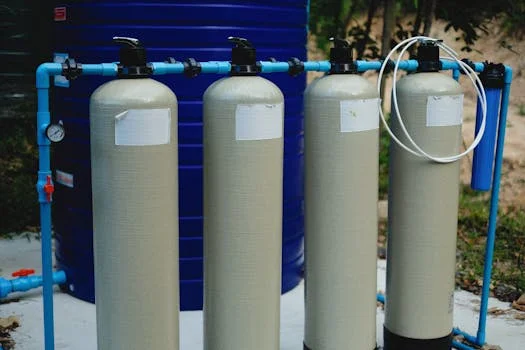
Chemical dosing and pH stabilization are essential components of any industrial pre-treatment plant in the Aburrá Valley. Because many industrial processes use acidic or alkaline cleaners, an automated neutralization system is required to keep effluent within the pH 5–9 range mandated by CRA standards. Integrated dosing skids enable the addition of coagulants and flocculants, critical for treating complex dyes in textile wastewater. These systems are often paired with how DAF systems remove oils and suspended solids in industrial settings to maximize physical separation efficiency.
In space-constrained urban environments like El Poblado or Guayabal, traditional large-scale concrete tanks are often impractical. Integrated underground systems, such as the WSZ series, provide a modular and odor-free alternative. These systems can be installed beneath parking lots or factory floors, using anaerobic and aerobic stages to treat wastewater to municipal standards without sacrificing valuable space. By selecting a system matched to the specific contaminant profile—whether high FOG from a food plant or high COD from a chemical facility—Medellín’s industrial managers can ensure long-term compliance and operational sustainability.
Frequently Asked Questions
What are the industrial wastewater discharge limits in Medellín? Per Resolution 0631 of 2015, most industrial dischargers to the public sewer must meet limits of 300 mg/L for BOD5, 1,000 mg/L for COD, and 350 mg/L for TSS. The pH must be maintained between 5.0 and 9.0, and the temperature must be below 40°C. Specific limits may vary depending on the industrial sector (e.g., dairy, textile, or metal finishing).
How does Medellín handle industrial sludge? Industrial sludge must be stabilized and dewatered before disposal. Most facilities use a sludge dewatering system to reduce volume. The resulting "cake" must be transported by licensed hazardous or non-hazardous waste handlers to authorized landfills or composting sites, depending on its chemical composition.
Can factories in the Aburrá Valley reuse treated wastewater? Yes, wastewater reuse is encouraged for non-potable applications such as industrial cooling, cleaning, and landscape irrigation. Systems utilizing MBR wastewater treatment technology provide the necessary filtration quality to ensure reuse is safe and does not damage industrial equipment.
What happens if an industry exceeds effluent limits in Medellín? Non-compliance typically results in "tasas retributivas" (pollution taxes) and potential fines from AMVA or Corantioquia. In severe or persistent cases, EPM may suspend the discharge permit, and the environmental authority may initiate a "Proceso Sancionatorio Ambiental," which can lead to factory closure.
Are there maintenance protocols for industrial DAF systems? To ensure consistent compliance, a DAF system maintenance guide should be followed, focusing on the saturation pump, air compressor, and chemical dosing accuracy. Regular cleaning of the skimmer blades and inspection of the micro-bubble size are essential for maintaining 90%+ removal efficiencies.
Are