Why Nature-Based Water Solutions Are Moving From Pilot to Plan by 2030
Nature-based water solutions (NBS) — constructed treatment wetlands, bioretention, bioswales, green roofs, and hybrid NBS-grey configurations — are forecast to grow at roughly 9–11% CAGR between 2026 and 2030, with the global market projected to exceed USD 80 billion by 2030. Croeser et al. (2021, npj Urban Sustainability) and the 2024 Springer chapter on NBS for stormwater define the category as engineered and natural systems that deliver water services alongside biodiversity, carbon, and amenity co-benefits. The strategic question for industrial buyers is no longer whether NBS enters the capex plan, but where it sits inside a hybrid treatment train.
Three demand drivers converge before 2030. First, climate-driven stormwater regulation: US MS4 permit revisions and the recast EU Urban Wastewater Treatment Directive (2024/3019) push cities and industrial sites to manage wet-weather flows that legacy grey infrastructure cannot absorb. Second, corporate water-stewardship commitments under CDP Water Security and the Science Based Targets for Nature (SBTN) freshwater guidance turn NBS co-benefits into auditable ESG metrics. Third, water-stress economics in manufacturing hubs from Mexico to Maharashtra raise the marginal cost of one cubic metre of fresh intake above USD 1.5–3.0 in stressed basins, which materially changes the OPEX math for any reuse-enabled system.
Yet Croeser et al. (2021) documented a stubborn implementation gap: NBS is policy-popular but delivery-poor, with the largest barriers being understaffing, missing intra-organisational processes, and risk-averse culture — not technology. That gap is the 2026–2030 opportunity for industrial procurement teams willing to specify hybrid systems with the same rigour they apply to MBR membrane bioreactor skids or DAF pre-treatment systems.
Where NBS Works, Where It Fails, and the Hybrid Middle Ground
Constructed treatment wetlands typically deliver BOD 15–30 mg/L, TSS 15–40 mg/L, NH3-N 5–15 mg/L, TN 10–25 mg/L, and TP 2–5 mg/L at the outlet (peer-reviewed wetland performance reviews, 2023–2024). Those numbers satisfy many surface-water discharge permits and MS4 stormwater quality targets, but they will not meet industrial reuse standards such as cooling-tower make-up (typically TDS <500 mg/L, hardness <100 mg/L as CaCO3) or strict categorical discharge limits under EPA 40 CFR Parts 405–471. NBS is a polish/pretreatment tier, not a primary workhorse for high-strength industrial wastewater.
NBS outperforms engineered treatment on five metrics: stormwater quantity attenuation (peak-flow reduction of 30–70% in well-designed bioretention), nutrient polishing, flow equalization during wet weather, carbon sequestration (2–10 tCO2e/ha/yr for well-designed wetlands), and biodiversity/amenity uplift that grey assets cannot deliver. NBS underperforms engineered treatment on four: footprint per m³/day is typically 5–20× higher, effluent predictability drops under cold-climate or toxic-shock loading, response time to influent changes is measured in days rather than hours, and pathogen removal is incomplete without UV or ClO2 polishing (typical wetland fecal coliform reduction 1–2 log versus the 4+ log required for reuse).
The dominant 2030 deployment pattern is hybrid NBS + grey: engineered primary/secondary treatment (MBR, DAF, SBR) handles the load; NBS handles polishing, stormwater, and co-benefits. Rusca et al. (2026, Nature Water, doi:10.1038/s44221-026-00595-z) argue that this hybrid model must also integrate non-Western and community knowledges — a relevant constraint for multinational projects in MENA, South Asia, and Sub-Saharan Africa where NBS sits inside broader water-justice and land-tenure frameworks rather than as a standalone engineered asset.
| Parameter | Constructed Wetland | Bioretention Cell | MBR | DAF | Conventional ASP | RO |
|---|---|---|---|---|---|---|
| BOD removal | 60–85% (to 15–30 mg/L) | 50–80% (stormwater) | >95% (to <5 mg/L) | 30–60% (primary) | 85–95% (to <20 mg/L) | >99% (to <2 mg/L) |
| COD removal | 50–75% | 40–70% | >95% | 30–50% | 80–90% | >99% |
| NH3-N removal | 40–80% (to 5–15 mg/L) | 30–60% | >95% (nitrification) | <20% | 85–95% (nitrifying) | 95%+ (with feed pH control) |
| TSS removal | 60–90% (to 15–40 mg/L) | 70–95% | >99% (to <5 mg/L) | 70–90% | 85–95% | >99% |
| Footprint (m²/m³/day) | 5–25 | 1–5 (stormwater) | 0.05–0.2 | 0.02–0.05 | 0.1–0.4 | 0.05–0.15 |
| OPEX (USD/m³) | 0.05–0.20 | 0.05–0.15 | 0.30–0.80 | 0.10–0.30 | 0.20–0.50 | 0.50–1.50 |
| CAPEX (USD/m³/day) | 50–200 | 80–300 | 250–600 | 100–250 | 150–400 | 400–900 |
| Climate resilience | High (stormwater), low (cold) | Medium | High (indoor) | High | Medium-high | High (membrane fouling risk) |
| Co-benefits (carbon, biodiversity) | High | Medium-high | None | None | None (energy positive) | None (energy intensive) |
NBS vs Engineered Treatment: 2026 Performance and Cost Comparison
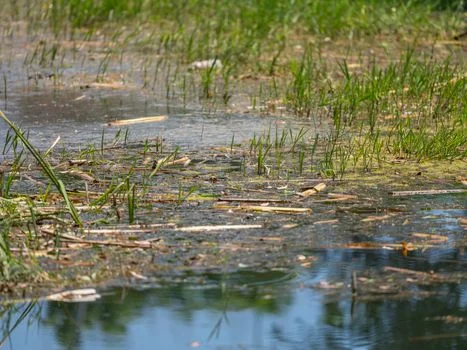
Comparing NBS and grey infrastructure on the same parameter sheet changes the procurement conversation. NBS CAPEX runs USD 50–200 per m³/day for a constructed wetland, which is materially below MBR at USD 250–600 per m³/day, but the OPEX advantage is conditional: NBS avoids aeration and chemical costs that drive grey-infrastructure OPEX into the USD 0.30–0.80/m³ band, yet NBS still requires periodic media replacement, vegetation management, and pre-treatment screening that often push effective 20-year lifecycle OPEX into the USD 0.10–0.30/m³ range.
On effluent quality, the gap is decisive. MBR delivers reuse-grade effluent (BOD <5 mg/L, TSS <5 mg/L, NH3-N <1 mg/L after nitrification) on a footprint of 0.05–0.2 m² per m³/day. A constructed wetland needs 5–25 m² per m³/day — roughly 50–200× the land area — to deliver a comparable hydraulic throughput, and the effluent will not meet reuse standards. RO closes the reuse gap for the strictest industrial cycles (boiler make-up, high-pressure process) but at USD 0.50–1.50/m³ OPEX and 400–900 USD/m³/day CAPEX (peer-reviewed RO cost benchmarks, 2024–2025).
Grey infrastructure is non-negotiable where discharge limits are tighter than BOD 20 mg/L or TN <10 mg/L, brownfield footprints are under 0.5 m² per m³/day, or influent contains heavy metals, solvents, or high TDS (>3,000 mg/L) that NBS biota cannot metabolise. NBS is defensible for tertiary polishing after DAF/MBR, MS4 stormwater compliance, biodiversity/carbon credits for ESG/CSRD reporting, and water reuse for non-contact applications (irrigation, cooling-tower drift, toilet flush) where the wetland effluent meets the spec. The water reuse market forecast to 2030 covers how these reuse grades are evolving alongside NBS.
Industrial Use Cases Where NBS Fits Through 2030
Food & beverage, pulp & paper, and textiles are the strongest industrial fits for hybrid NBS through 2030. NBS acts as tertiary polishing after DAF or MBR, reducing residual COD (often from 100–150 mg/L to <60 mg/L), color, and nutrients into surface-water discharge compliance. Paired with sludge-handling optimisation, documented OPEX reductions run 20–40% versus chemical-polish alternatives (HydropureWater field data, 2024–2025), driven by avoided coagulant and polymer dosing.
Mining and metals operations use NBS as passive mine-water treatment and stormwater polishing, leveraging natural alkalinity generation and metal sorption in reducing/oxidation wetlands. Engineered pre-treatment (lime dosing, high-density sludge) is required upstream to bring TDS and dissolved metals into the range the wetland biota can handle. Manufacturing parks and industrial estates can co-locate NBS to address both MS4 stormwater permits and process discharge polishing in a single landscape footprint, which materially reduces the permitting cost of a greenfield expansion. Logistics parks and data-centre campuses — where Science Based Targets for Nature freshwater commitments are now in scope — use NBS for stormwater management plus water-reuse polishing, often linked to net-zero water pledges. NBS is rarely a standalone solution for high-strength industrial wastewater; match the technology to the load, not to the marketing.
The 2026–2030 Buyer's Checklist: Specifying NBS Without Specifying Failure
Five questions separate a defensible NBS specification from a future retrofit: (1) What is the binding discharge or reuse standard, with the limiting parameter named? (2) What footprint is available, and at what opportunity cost in lost production area? (3) Does the influent contain toxic or non-biodegradable compounds — heavy metals, solvents, high TDS — that require engineered pre-treatment before NBS exposure? (4) Who will operate the NBS long-term, and does the owner have the institutional capacity to manage vegetation, hydraulic distribution, and mosquito/odour control? (5) How will NBS co-benefits — carbon sequestration, biodiversity uplift, community amenity — be quantified, monitored, and reported for ESG/CSRD audit trails?
Croeser et al. (2021) identified the largest NBS delivery barriers as organisational rather than technical: understaffing, missing intra-organisational processes, and risk-averse procurement culture. Specifying NBS without resolving question 4 reproduces that implementation gap inside an industrial setting. For hybrid designs, specify engineered treatment to the strictest effluent quality contractually required and NBS to the highest receiving-water-quality uplift the site can credibly claim; do not double-spec redundancy that inflates CAPEX without lifting effluent quality. The