Helsinki industrial wastewater treatment plant costs in Finland run €500K–€2M CAPEX for MBR (50–200 m³/day) versus €150K–€800K for DAF. OPEX spans €0.80–€1.50/m³ for MBR and €0.50–€1.20/m³ for DAF. Centralized sewer fees of €1.20–€2.50/m³ set the benchmark.
Industrial Wastewater Treatment Plant Cost Finland: The Helsinki Baseline
Helsinki buyers face three numbers that set the budget: €1.20–€2.50/m³ centralized sewer fees for 2026, €0.80–€1.50/m³ MBR OPEX, and €0.50–€1.20/m³ DAF OPEX. Above roughly 1,000 m³/day discharge, on-site treatment usually undercuts the sewer bill. UWWTD micropollutant mandates add 20–40% to large-plant CAPEX by 2030.
Costs are rising for three compounding reasons: stricter compliance standards, increasing centralized fees, and the impending mandates of the UWWTD 2024. The Helsinki Region Environmental Services Authority (HSY) enforces specific effluent limits for industrial discharge to protect the Baltic Sea and local waterways. Energy recovery systems capable of offsetting 30–50% of operating costs can shorten payback to 3–5 years, which keeps on-site plants competitive despite the CAPEX.
HSY Industrial Wastewater Discharge Limits 2026: What Permits Require
HSY industrial wastewater discharge limits 2026 require COD ≤ 125 mg/L and TSS ≤ 35 mg/L for centralized discharge into the municipal sewer. Heavy metal limits are particularly stringent, with copper (Cu) capped at ≤ 0.5 mg/L. These limits often necessitate advanced pre-treatment before discharge, and the exact mix is set permit by permit. The quick-reference subset below covers the parameters most industrial sites ask about first; the full table follows.
| Parameter | Limit (mg/L) |
|---|---|
| COD | ≤ 125 |
| TSS | ≤ 35 |
| pH | 6.5 – 9.0 |
| Copper (Cu) | ≤ 0.5 |
Table 1: HSY Industrial Wastewater Discharge Limits (Selected Parameters, 2026 Projections)
| Parameter | Limit (mg/L) | Notes |
|---|---|---|
| COD | ≤ 125 | Chemical Oxygen Demand |
| TSS | ≤ 35 | Total Suspended Solids |
| pH | 6.5 – 9.0 | |
| Total Phosphorus | ≤ 1.0 | Dependent on discharge location sensitivity |
| Total Nitrogen | ≤ 15 | Dependent on discharge location sensitivity |
| Copper (Cu) | ≤ 0.5 | Specific heavy metal limit |
| Lead (Pb) | ≤ 0.05 | Industry-specific; requires consultation |
| Mercury (Hg) | ≤ 0.005 | Industry-specific; requires consultation |
| Nickel (Ni) | ≤ 0.5 | Industry-specific; requires consultation |
Centralized sewer fees in Helsinki are projected at €1.20–€2.50/m³ by 2026, up from €0.90–€1.80/m³ observed in 2020. The rise reflects heavy investment in municipal infrastructure, exemplified by the Blominmäki WWTP, a €400M project. For large-volume industrial dischargers, these fees increasingly make on-site treatment the economical alternative. Permitting vocabulary is worth getting right early: our guide to industrial waste water discharge requirements in Australia frames the same discharge-permit structure HSY applies.
The Urban Waste Water Treatment Directive (UWWTD) 2024 adds the next cost layer. According to the European Commission, the revised directive "entered into force on 1 January 2025" and obliges member states to "Collect and treat wastewater in all urban areas of more than 1,000 inhabitants". Plants serving over 150,000 PE must implement micropollutant removal by 2033, a rule that touches Helsinki's Viikinmäki WWTP. An Extended Producer Responsibility (EPR) system will require pharmaceutical and cosmetics producers to cover at least 80% of micropollutant removal investment and operating costs, adding an estimated 20–40% to CAPEX for large dischargers in those sectors by 2030. Cold-climate energy economics differ from other markets — see how Helsinki compares with Ottawa.
Decentralized Wastewater Treatment in Helsinki: Technology Cost Breakdowns
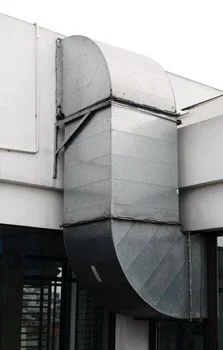
Decentralized on-site systems give Helsinki industrial facilities a direct path to compliance and long-term savings, especially for high-strength or high-volume discharges. Granular cost data for MBR, DAF, and chemical dosing separates a defensible business case from a guess. The three technology blocks below carry the numbers procurement teams need.
MBR System CAPEX OPEX for Industrial Wastewater in Helsinki
MBR system CAPEX OPEX for industrial wastewater runs €500K–€2M and €0.80–€1.50/m³ respectively, with membrane filtration layered onto conventional activated sludge biology. On Helsinki's high-strength industrial streams, MBR plants typically deliver COD ≤ 50 mg/L and TSS < 10 mg/L, meeting or exceeding HSY discharge limits with margin. OPEX is driven by membrane fouling rates, aeration and pumping energy, and sludge disposal. Footprint is the quiet advantage: membrane tanks hold roughly half the volume of clarifier-based designs, which matters on constrained Helsinki sites.
Table 2: MBR System CAPEX and OPEX by Capacity (Helsinki Industrial)
| Capacity (m³/day) | Estimated CAPEX (€) | Estimated OPEX (€/m³) | Typical Effluent Quality (COD, TSS) |
|---|---|---|---|
| 50 | €500,000 – €800,000 | €1.20 – €1.50 | COD ≤ 50 mg/L, TSS < 10 mg/L |
| 100 | €800,000 – €1,200,000 | €0.90 – €1.30 | COD ≤ 50 mg/L, TSS < 10 mg/L |
| 200 | €1,200,000 – €2,000,000 | €0.80 – €1.00 | COD ≤ 50 mg/L, TSS < 10 mg/L |
For more detailed specifications, explore our MBR systems for Helsinki's high-strength industrial wastewater.
DAF and Chemical Dosing Economics for Pre-Treatment
Dissolved Air Flotation (DAF) systems remove fats, oils, and grease (FOG) plus suspended solids efficiently, particularly in food processing. DAF units typically achieve 90–98% FOG removal and 85–95% TSS removal. CAPEX ranges from €150K–€800K, with OPEX generally below MBR at €0.50–€1.20/m³ — a line that includes chemical coagulants and flocculants, air compressor energy, and sludge handling.
Table 3: DAF System CAPEX and OPEX by Flow Rate (Helsinki Industrial)
| Flow Rate (m³/h) | Estimated CAPEX (€) | Estimated OPEX (€/m³) | Typical Removal Efficiency (FOG, TSS) |
|---|---|---|---|
| 4 | €150,000 – €250,000 | €0.90 – €1.20 | FOG 90-95%, TSS 85-90% |
| 15 | €250,000 – €400,000 | €0.70 – €1.00 | FOG 95-98%, TSS 90-95% |
| 30 | €400,000 – €600,000 | €0.60 – €0.90 | FOG 95-98%, TSS 90-95% |
| 100 | €600,000 – €800,000 | €0.50 – €0.70 | FOG 95-98%, TSS 90-95% |
Learn more about our DAF systems for FOG and TSS removal in Helsinki's food processing plants.
Chemical dosing systems handle pH adjustment and heavy metal precipitation, either as pre-treatment or integrated with DAF and MBR. CAPEX is modest at €50K–€200K, with OPEX between €0.30–€0.80/m³ driven by chemical consumption — acids, alkalis, coagulants, flocculants. Dosing holds wastewater inside HSY's 6.5–9.0 pH window and removes heavy metals to meet limits like Cu ≤ 0.5 mg/L. Alternative routes for Helsinki's heavy metal limits appear in our overview of resin adsorption for heavy metal removal, and you can discover solutions for chemical dosing for pH adjustment and heavy metal precipitation in Helsinki.
Specification Checklist for On-Site Treatment
- Discharge permit in hand. Get the HSY permit parameters, including the industry-specific metal limits, before sizing anything, because the permit sets the treatment train.
- Verified flow profile. Insist on measured daily and peak flows, not nameplate figures, since weekend shutdowns and batch dumps change tankage and equalization needs.
- Full effluent fingerprint. Sample across production campaigns for COD, TSS, FOG, pH swing, and metals so the design sees the worst case it must treat.
- Reuse water quality target. Define which reuse duties the treated water must serve, because reuse value is what pulls payback down.
- Space and frost plan. Confirm the plot, plus heated enclosures or buried vessels for winter, before the vendor locks the layout.
- Energy recovery option study. Ask for a heat-recovery case alongside the treatment case, given how strongly it moves cold-climate economics.
Decentralized Wastewater Treatment Payback Period Industrial Buyers Can Expect
The decentralized wastewater treatment payback period industrial buyers should model compares annual savings from avoided sewer fees against initial CAPEX. For a facility discharging 500 m³/day:
- Annual centralized sewer fees (at €1.80/m³) = 500 m³/day × 365 days/year × €1.80/m³ = €328,500/year.
- Annual on-site OPEX (MBR at €1.20/m³) = 500 m³/day × 365 days/year × €1.20/m³ = €219,000/year.
- Annual OPEX savings = €328,500 − €219,000 = €109,500/year.
- With MBR CAPEX of €1.5M, the payback period = €1,500,000 / €109,500 ≈ 13.7 years.
Scale changes the answer sharply. For a larger facility discharging 2,000 m³/day:
- Annual centralized sewer fees (at €1.80/m³) = 2,000 m³/day × 365 days/year × €1.80/m³ = €1,314,000/year.
- Annual on-site OPEX (MBR at €1.00/m³ at larger scale) = 2,000 m³/day × 365 days/year × €1.00/m³ = €730,000/year.
- Annual OPEX savings = €1,314,000 − €730,000 = €584,000/year.
- With MBR CAPEX of €3M, the payback period = €3,000,000 / €584,000 ≈ 5.1 years.
Larger discharge volumes therefore shorten payback dramatically, and energy recovery pulls it further into the 3–5 year range. The same capex and opex framework drives our capex and opex breakdown for India when a multi-market comparison is needed.
Centralized vs Decentralized: Which Option Saves Money for Your Facility?
The centralized-versus-decentralized decision hinges on discharge volume, effluent strength, and compliance requirements, with a calculable crossover point. The break-even daily volume follows the formula: Break-even (m³/day) = CAPEX / ((Sewer fee − On-site OPEX) × 365). For an MBR system with €1M CAPEX and €1.00/m³ OPEX against a €1.80/m³ sewer fee, break-even sits near 3,650 m³/day. Facilities above that volume realize substantial long-term savings on-site; below it, centralized discharge often stays cheaper initially, though rising fees keep shifting the balance.
Table 4: Cost Comparison: Centralized vs. Decentralized Treatment (Illustrative)
| Factor | Centralized Sewer Discharge | Decentralized On-site Treatment (e.g., MBR/DAF) | Optimal Facility Size / Effluent Type |
|---|---|---|---|
| Daily Discharge Volume | Low to Moderate (<300 m³/day) | Moderate to High (>300 m³/day) | Crossover point around 300-500 m³/day for average effluent |
| Effluent Strength (COD) | Low to Moderate (<1,000 mg/L) | High (>1,000 mg/L) | Decentralized MBR excels for high COD industrial wastewater |
| FOG/TSS Load | Moderate | High (e.g., food processing) | DAF + chemical dosing is cost-effective for FOG-heavy streams |
| Compliance Flexibility | Limited; reliant on HSY | High; potential for water reuse, tailored treatment | Decentralized allows for cooling water, irrigation reuse |
| Initial Investment (CAPEX) | Low (connection fees) | High (€150K - €2M+) | Centralized for low CAPEX preference |
| Operating Costs (OPEX) | High (€1.20 - €2.50/m³) | Moderate (€0.50 - €1.50/m³) | Decentralized for long-term OPEX savings |
| Micropollutant Readiness | Dependent on HSY upgrades | Proactive integration of advanced technologies possible | Decentralized offers control over future UWWTD compliance |
Effluent strength is the second differentiator. Decentralized MBR is particularly cost-effective for wastewater with COD above 1,000 mg/L, where centralized high-strength surcharges turn punitive. DAF combined with chemical dosing is usually the most economical route for high FOG and TSS streams common in food processing and manufacturing.
Compliance flexibility adds value beyond direct cost. On-site systems allow reuse of treated water for cooling, process washdown, or irrigation, cutting freshwater consumption and discharge volumes together. Centralized discharge demands strict adherence to HSY permit conditions, which can be less flexible for specific industrial processes. A hypothetical 150 m³/day food plant in Pitäjänmäki could cut annual wastewater costs by roughly 40% with an MBR system versus centralized discharge alone. For an EU comparison under equally strict UWWTD rules, see how Helsinki compares to Portugal.
Who Should Stay on the Sewer
Not every site should build. Facilities with weak, steady effluent and modest volumes usually stay cheaper on centralized discharge, because HSY's permit structure tolerates that load without surcharges. Sites with strong seasonal swings should equalize first and re-run the numbers, since a plant sized for the peak is a plant paid for but idle half the year.
Renters and short-horizon occupants should also pause. A treatment asset only pays back when the discharger stays long enough to collect the sewer-fee savings, so confirm the site commitment before signing equipment contracts. Where the horizon is short, pre-treatment that cuts surchargeable load is often the better buy than full on-site treatment.
How the UWWTD 2024 Micropollutant Mandate Will Impact Helsinki's Wastewater Costs by 2030
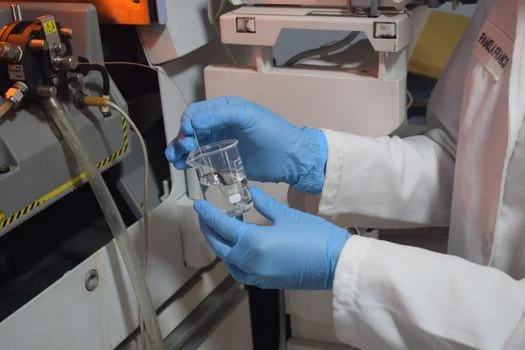
The UWWTD 2024 micropollutant mandate requires all plants serving over 150,000 PE to implement micropollutant removal by 2033, with phased implementation starting earlier. In Finland, the obligation affects seven major plants, including Helsinki's Viikinmäki WWTP. The European Commission confirms the directive obliges member states to "Remove micropollutants with quaternary treatment, financed through extended producer responsibility". Under the EPR principle, pharmaceutical and cosmetics producers will cover at least 80% of the investment and operating costs for that removal — an estimated 20–40% CAPEX increase for large industrial dischargers in those sectors who must pre-treat or contribute to municipal upgrades.
Three advanced technology options carry distinct cost profiles:
- Activated Carbon Filtration: adsorbs a wide range of organic micropollutants. CAPEX €200K–€1M at industrial scale, OPEX €0.10–€0.50/m³ for media replacement and regeneration.
- Ozonation: ozone degrades many micropollutants directly. CAPEX €300K–€1.5M, OPEX €0.10–€0.40/m³ driven by ozone generation energy.
- Advanced Oxidation Processes (AOPs): UV/H2O2 or Fenton processes generate hydroxyl radicals against persistent compounds. CAPEX €500K–€2M, OPEX €0.20–€0.50/m³ depending on chemical and energy inputs.
Table 5: Micropollutant Removal Technologies CAPEX and OPEX Estimates (Helsinki Industrial, 2026-2030)
| Technology | Estimated CAPEX (€) | Estimated OPEX (€/m³) | Key Mechanism |
|---|---|---|---|
| Activated Carbon | €200,000 – €1,000,000 | €0.10 – €0.50 | Adsorption |
| Ozonation | €300,000 – €1,500,000 | €0.10 – €0.40 | Oxidation |
| Advanced Oxidation Processes (AOPs) | €500,000 – €2,000,000 | €0.20 – €0.50 | Radical Oxidation |
The scale of that obligation is measurable. Wikipedia's directive reference puts EU-wide quaternary treatment for plants "with a capacity of at least 10,000 person equivalents" at "around €2.6 billion per year". The same Commission page also sets two further horizons: member states must "Make treatment plants energy-neutral and reduce their greenhouse gas emissions by 2045". Energy recovery remains Helsinki's best offset — heat pumps like Turku's 1.5 MW installation capture thermal energy from treated wastewater, cutting plant energy consumption 30–50% with 3–5 year paybacks. In cold-climate Finland, that strategy matters more than anywhere else in the EU.
Commissioning an On-Site Plant
Start commissioning with clean water and prove the mechanical plant first: pumps, valves, dosing skids, and instrumentation all checked under flow before any effluent arrives. Seed the biology from a compatible plant, ramp the load in steps, and hold each step until effluent quality settles. Bring membrane flux up last, in graded steps, watching differential pressure as the guide.
Keep the sewer connection live through startup. It serves as the fallback while the plant proves it can hold permit values on production wastewater, and cutting it early turns every commissioning hiccup into a compliance event. Require witnessed performance runs at design flow as part of acceptance.
Monitoring and Operator Log Routine
Winter operation rewards discipline. Log flows, pH, COD results, chemical consumption, and membrane or flotation performance every shift in a fixed format, so drift shows as a trend rather than a surprise. Reconcile delivered chemicals against dosing totals weekly, and calibrate online pH and metal sensors on a standing schedule.
Review the log monthly against the sewer-fee bill it replaced. That review is where OPEX creep is caught — a slowly rising dosing rate or energy draw is a maintenance cue, not a budget fact. Keep the same log through audits, since it doubles as the compliance record HSY will ask to see.
Who this guide serves: industrial site engineers and procurement leads in Helsinki and wider Uusimaa evaluating on-site treatment against rising HSY fees, plus EPC estimators pricing Finnish projects. Facilities under 100 m³/day with weak effluent will usually stay on the sewer. For a site-specific budget, request a quotation through our industrial wastewater treatment quotation page with flow data and permit limits attached.
Frequently Asked Questions
What are the HSY limits for industrial wastewater discharge in Helsinki?
HSY's industrial discharge limits require COD ≤ 125 mg/L, TSS ≤ 35 mg/L, and pH within 6.5–9.0. Copper (Cu) is capped at ≤ 0.5 mg/L, while lead, mercury, and nickel carry industry-specific limits that require direct consultation with HSY. Most sites also face phosphorus (≤ 1.0 mg/L) and nitrogen (≤ 15 mg/L) targets depending on discharge location sensitivity.
How much does an MBR system cost for a 100 m³/day facility in Helsinki?
A 100 m³/day industrial MBR system in Helsinki typically costs €800K–€1.2M in CAPEX. OPEX runs €0.90–€1.30/m³, with membrane replacement, aeration energy, and sludge disposal as the main lines. The effluent quality justifies it for reuse-duty sites: COD ≤ 50 mg/L and TSS < 10 mg/L.
Is it cheaper to use centralized sewer or install an on-site DAF system for a 500 m³/day facility?
An on-site DAF system is significantly cheaper annually for a 500 m³/day facility. Centralized fees at €1.80/m³ cost €328,500/year, while DAF at €0.62/m³ OPEX plus €40K/year amortized CAPEX (€400K over 10 years) totals roughly €153,300/year. The gap widens further each time HSY raises the sewer tariff.
What are the UWWTD 2024 micropollutant removal requirements for Helsinki's WWTPs?
The UWWTD 2024 requires plants serving over 150,000 PE to implement micropollutant removal by 2033, including Helsinki's Viikinmäki WWTP among seven affected Finnish plants. An Extended Producer Responsibility system makes pharmaceutical and cosmetics producers cover at least 80% of the associated investment and operating costs. Large industrial dischargers in those sectors face an estimated 20–40% CAPEX increase by 2030.
Can energy recovery reduce wastewater treatment costs in Helsinki?
Yes, energy recovery can cut Helsinki treatment costs substantially. Heat pumps capture thermal energy from wastewater and offset 30–50% of plant energy consumption, as at Turku's 1.5 MW installation. Paybacks typically run 3–5 years, a decisive advantage in Finland's cold climate where heating value is highest.
When does on-site treatment beat HSY sewer fees economically?
Above roughly 1,000 m³/day of discharge, on-site OPEX usually undercuts Helsinki's projected €1.20–€2.50/m³ sewer fees. The modeled break-even for a €1M MBR at €1.00/m³ OPEX against €1.80/m³ fees sits near 3,650 m³/day, and high-COD streams favor on-site even earlier. Falling OPEX with scale is what drives the 13.7-year payback at 500 m³/day down to 5.1 years at 2,000 m³/day.