Why Düsseldorf Hospitals Need On-Site Wastewater Treatment
Düsseldorf’s local ordinance §12.3 mandates on-site pretreatment for all healthcare facilities exceeding 200 beds to mitigate the risk of pharmaceutical and pathogen breakthrough into the municipal sewer system. While many facilities historically relied on the Stadtentwässerungsbetrieb Düsseldorf for primary treatment, 2025 regulatory updates require hospitals to address specific pollutants at the source. EU Directive 91/271/EEC Article 10 stipulates that wastewater must meet stringent limits—specifically COD <125 mg/L, BOD <25 mg/L, and TSS <35 mg/L—before reaching public infrastructure. Hospital effluent is unique; it contains 10–100× higher concentrations of specialized pharmaceuticals, such as cytostatic drugs (50–500 μg/L), compared to domestic sewage (per Procure4Health 2024 analysis).
The environmental urgency is underscored by the 2023 performance data from the University Hospital Düsseldorf. Their transition to a hybrid MBR-ozonation system demonstrated a 92% reduction in antibiotic residues, a feat unattainable by standard municipal activated sludge processes. For facility managers, failure to comply with these local and EU standards results not only in heavy fines but also in the potential revocation of discharge permits. Implementing MBR systems for hospital wastewater treatment in Düsseldorf provides a technical safeguard against these regulatory risks while ensuring the removal of multi-drug-resistant organisms (MDROs).
| Parameter | Düsseldorf Local Limit (§12.3) | EU Directive 91/271/EEC | Typical Raw Hospital Effluent |
|---|---|---|---|
| COD (mg/L) | <125 | <125 (Annex I) | 500–2,000 |
| BOD₅ (mg/L) | <25 | <25 | 200–800 |
| TSS (mg/L) | <35 | <35 | 150–500 |
| Pathogen Removal | 99.9% (Log 3) | Not specified (local mandate) | 10^5–10^7 CFU/mL |
| Pharma Residues | Monitoring required | Priority Substance List | 50–500 μg/L |
Contaminant Profile: What’s in Hospital Wastewater and Why It Matters
Hospital effluent contains pharmaceutical concentrations, such as antibiotics and cytostatic agents, at levels 10 to 100 times higher than those found in standard municipal wastewater streams. These substances, including X-ray contrast agents (e.g., iopromide) and analgesics, are often recalcitrant to biological degradation. According to WHO 2024 guidelines, hospital wastewater also serves as a primary reservoir for pathogens like Pseudomonas aeruginosa and E. coli, which are present at concentrations of 10^5–10^7 CFU/mL. Without specialized on-site treatment, these contaminants enter the Rhine river ecosystem, contributing to the rise of antibiotic-resistant bacteria.
Heavy metals also present a significant engineering challenge in Düsseldorf healthcare facilities. Mercury from older dental equipment and silver from traditional imaging departments can reach concentrations of 0.1–10 mg/L, violating the EU Industrial Emissions Directive 2010/75/EU. These metals require chemical precipitation or advanced filtration because they are toxic to the nitrifying bacteria used in standard biological treatment stages. Understanding these parameters is essential for procurement teams when evaluating whether a facility needs a simple disinfection unit or a complex multi-stage hybrid system to meet the German Wastewater Ordinance (AbwV) Annex 31 requirements.
| Contaminant Class | Concentration Range | Primary Risk Factor | Recommended Treatment |
|---|---|---|---|
| Antibiotics/Cytostatics | 50–500 μg/L | Endocrine disruption/Resistance | Ozonation / Advanced Oxidation |
| Pathogenic Bacteria | 10^5–10^7 CFU/mL | Nosocomial infection spread | MBR + UV / ClO₂ |
| Heavy Metals (Hg, Ag) | 0.1–10 mg/L | Bioaccumulation in Rhine sludge | Chemical Precipitation / Ion Exchange |
| Organic Load (COD) | 500–2,000 mg/L | Oxygen depletion in waterways | Membrane Bioreactor (MBR) |
Treatment Technologies Compared: MBR vs. Electrocoagulation vs. Hybrid Systems
Membrane Bioreactor (MBR) technology achieves Chemical Oxygen Demand (COD) removal rates of 92–97% while maintaining a footprint approximately 50% smaller than traditional activated sludge processes. MBRs utilize ultrafiltration membranes (typically 0.04 μm pore size) to physically separate solids and pathogens, producing an effluent that often exceeds EU discharge standards. For many Düsseldorf facilities, MBR serves as the core biological treatment stage, effectively handling the high organic loads typical of clinical environments. However, while MBR is excellent for COD and TSS removal, its efficiency for certain pharmaceutical residues remains limited to 60–70%.
To achieve the 90%+ pharmaceutical removal required for "Green Hospital" certifications, hybrid MBR-ozonation systems are the engineering gold standard. These systems follow the biological MBR stage with an ozone injection unit, which breaks down complex molecular structures of drugs like diclofenac. Alternatively, Electrocoagulation (EC) offers a lower CAPEX solution for pathogen and heavy metal removal, achieving 99%+ disinfection without the need for liquid chemical storage, though it requires precise pH adjustment to 6–8. For facilities with high dietary service output, DAF pretreatment for hospitals with high FOG loads is necessary to prevent membrane fouling in downstream MBR units. Facilities can also look at how UK hospitals handle similar EU compliance challenges through tiered treatment approaches.
| Technology | COD Removal | Pharma Removal | Footprint | OPEX (€/m³) |
|---|---|---|---|---|
| MBR (Standalone) | 92–97% | 60–70% | Low | 0.50–0.80 |
| Electrocoagulation | 70–85% | 40–60% | Medium | 0.40–0.70 |
| Hybrid MBR-Ozone | 95–99% | 90–98% | Medium | 1.00–1.50 |
| MBR + ClO₂ | 92–97% | 65–75% | Low | 0.60–0.90 |
Düsseldorf-Specific Compliance: EU Directives and Local Ordinances
The regulatory landscape for Düsseldorf hospitals is governed by a hierarchy of EU, national, and local mandates that require rigorous documentation and quarterly reporting. At the European level, the Water Framework Directive 2000/60/EC sets the stage by requiring the monitoring of "priority substances," which now includes several common hospital-administered drugs. Nationally, the German Wastewater Ordinance (AbwV) Annex 31 is the most critical document for engineers, as it explicitly defines limits for heavy metals and adsorbable organic halogens (AOX) specifically for the medical sector, such as mercury limits of <0.05 mg/L (per AbwV §7a).
Locally, the Stadtentwässerungsbetrieb Düsseldorf enforces ordinance §12.3, which mandates that hospitals with over 200 beds must operate on-site pretreatment. This local law is designed to protect the municipal biological treatment stages from the inhibitory effects of antibiotics. The permitting process in North Rhine-Westphalia typically spans 6 to 12 months and requires a full engineering plan, an environmental impact assessment, and a sludge disposal strategy. Procurement teams must ensure that any selected equipment is certified under the EU Biocidal Products Regulation 528/2012 if chemical disinfection, such as chlorine dioxide, is utilized.
Equipment Selection Framework for Düsseldorf Hospitals
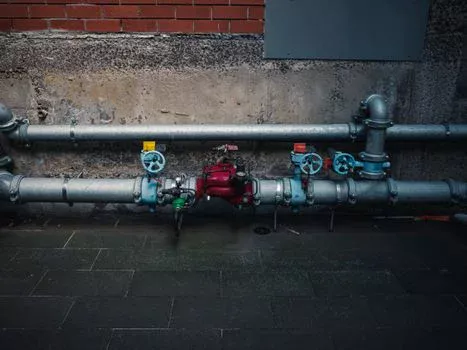
Selecting wastewater equipment for Düsseldorf hospitals requires a capacity calculation based on 0.5 to 1.5 m³ of effluent per bed per day, depending on the facility’s status as a general or teaching hospital. A 200-bed general hospital will typically generate 100–160 m³/day, whereas a large teaching hospital like the University Hospital Düsseldorf may exceed 1,500 m³/day. For smaller clinics or specialized wards (under 200 beds), compact medical wastewater treatment systems for small hospitals offer an all-in-one footprint of less than 0.5 m² per m³ of treated water, often utilizing ozone or UV for disinfection.
Medium-sized facilities (200–500 beds) should prioritize MBR systems paired with chlorine dioxide (ClO₂) disinfection to balance CAPEX and pathogen removal efficiency. For large-scale university hospitals (>500 beds) where pharmaceutical residue removal is a primary environmental KPI, the hybrid MBR-ozonation configuration is the only solution capable of meeting the 90%+ removal benchmarks. When designing these systems, engineers must also factor in the "peak factor"—usually 2.5× the average hourly flow—to account for morning sterilization and laundry cycles. You may compare this to how hospitals in arid climates reuse treated wastewater for irrigation, though in Düsseldorf, the focus remains on safe discharge to the Rhine.
| Hospital Size | Recommended System | Avg. Capacity (m³/day) | Est. CAPEX Range |
|---|---|---|---|
| Small (<200 beds) | Medical wastewater system (Compact) | 50–150 | €300k – €500k |
| Medium (200–500 beds) | MBR + ClO₂ Disinfection | 150–400 | €500k – €900k |
| Large (>500 beds) | Hybrid MBR-Ozonation | 400–1,500+ | €1.2M – €2.5M |
| Specialized (High FOG) | DAF + MBR Hybrid | Variable | Add €100k – €200k |
CAPEX and OPEX Breakdown: Cost Models for Düsseldorf Hospitals
Hybrid MBR-ozonation systems for large-scale hospital applications typically require a CAPEX investment of €1,500 to €2,500 per m³ of daily treatment capacity. While this is higher than conventional systems, the OPEX is offset by the reduction in municipal discharge surcharges, which in Düsseldorf are scaled based on the contaminant load (the "Starkverschmutzerzuschlag"). Operational costs generally range from €1.00 to €1.50 per m³ for hybrid systems, with energy consumption for ozone generation and membrane aeration being the primary drivers. Standalone MBR systems are more cost-effective for smaller budgets, with OPEX averaging €0.50–€0.80 per m³.
Financing these projects in Germany often involves leveraging EU grants or national subsidies. The EU LIFE Programme provides funding for "circular economy" water projects, while the KfW (Kreditanstalt für Wiederaufbau) offers low-interest loans (typically 2–3%) for environmental infrastructure upgrades. Leasing models are also becoming popular for Düsseldorf hospitals, allowing facility managers to treat wastewater as an operational expense (OPEX) rather than a large capital outlay. When calculating ROI, procurement teams should factor in the 20-year lifecycle of MBR membranes and the potential for reclaimed water use in non-potable applications like cooling towers.
| System Component | CAPEX (€/m³ Capacity) | OPEX (€/m³ Treated) | Maintenance Frequency |
|---|---|---|---|
| MBR Biological Stage | €1,000 – €1,500 | €0.50 – €0.80 | Quarterly |
| Ozonation Unit | €500 – €1,000 | €0.30 – €0.50 | Bi-Annual |
| Electrocoagulation | €600 – €1,000 | €0.40 – €0.70 | Monthly (Anodes) |
| DAF Pretreatment | €200 – €400 | €0.10 – €0.20 | Monthly |
Frequently Asked Questions
What are the discharge limits for hospital wastewater in Düsseldorf?
Hospitals must comply with EU Directive 91/271/EEC and local ordinance §12.3, targeting COD <125 mg/L, BOD <25 mg/L, TSS <35 mg/L, and a 99.9% reduction in pathogens. Heavy metals like mercury must be below 0.05 mg/L per AbwV Annex 31.
How much does a hospital wastewater treatment system cost in Düsseldorf?
Total investment ranges from €300,000 for small clinics to over €2.5 million for large university hospitals. OPEX varies between €0.40 and €1.50 per m³ of treated water depending on the level of pharmaceutical removal required.
Can hospital wastewater be treated by municipal systems without pretreatment?
No. Düsseldorf’s local regulations mandate on-site pretreatment for hospitals with >200 beds because municipal plants are not designed to remove high concentrations of antibiotics and cytostatic drugs, which can disrupt the municipal biological treatment process.
What is the best technology for removing pharmaceutical residues?
Hybrid MBR-ozonation is the most effective technology, achieving 90–98% removal of pharmaceutical micro-pollutants. Standalone MBR is highly effective for organic loads and pathogens but only removes about 60–70% of pharmaceuticals.
How long does it take to get a permit for a treatment system in Düsseldorf?
The permitting process through the local environmental authorities typically takes 6 to 12 months. This includes time for engineering audits, environmental impact assessments, and final approval by the Stadtentwässerungsbetrieb.