Why PEI’s Sewage Treatment Needs Are Unique: Climate, Compliance, and Cost Constraints
Prince Edward Island’s coastal geography introduces salinity levels where chloride concentrations often reach 250 mg/L in effluent, necessitating the use of 316L stainless steel and specialized coatings to prevent premature equipment failure. Unlike inland Canadian provinces, PEI’s industrial facilities—particularly those in the seafood and potato processing sectors—must contend with the corrosive effects of maritime air and high-salinity groundwater. Under the PEI Water Act §4.2, any discharge into coastal waters or municipal sewers must meet strict criteria that account for the island’s sensitive groundwater-dependent ecosystem. This requires sewage treatment equipment to be engineered with corrosion-resistant materials and insulated enclosures to withstand the rapid freeze-thaw cycles characteristic of the Atlantic coast.
The island’s economy, driven by tourism and food processing, creates extreme seasonal flow variations. For instance, a lobster processing facility may see hydraulic loading increase by 500% during the spring and fall seasons, while tourism-related facilities experience peaks during the summer months. Generic, fixed-capacity systems often fail under these conditions, either becoming overwhelmed during peaks or suffering from biological "starvation" during low-flow periods. Modular or expandable systems, such as solar-hybrid configurations, provide the necessary flexibility to scale operations without requiring a total overhaul of the facility’s infrastructure. land scarcity in PEI, where industrial lot sizes often range from only 0.5 to 2 acres, necessitates compact footprints. The underground WSZ Series for PEI’s freeze-thaw and salinity challenges offers a viable solution by utilizing subsurface space, thereby preserving valuable surface land for operations.
Compliance in Prince Edward Island is governed by both the PEI Water Act and Environment Canada’s Wastewater Systems Effluent Regulations (WSER). Notably, PEI often enforces stricter ammonia and phosphorus limits than federal standards to protect local watersheds. The following table illustrates the divergence between local and federal requirements for industrial discharge.
| Parameter | PEI Water Act Limit (Coastal) | Federal WSER Standard | Typical Industrial Influent (PEI) |
|---|---|---|---|
| BOD5 (mg/L) | ≤ 25 | ≤ 25 | 300 – 1,500 |
| TSS (mg/L) | ≤ 30 | ≤ 25 | 200 – 800 |
| Ammonia (mg/L) | ≤ 1.0 | ≤ 1.25 | 15 – 45 |
| Chloride (mg/L) | ≤ 250 | No Limit | 100 – 600 |
| FOG (mg/L) | ≤ 10 | N/A | 500 – 2,000 |
PEI-Specific System Specs: DAF, MBR, and Hybrid Solutions Compared
Dissolved Air Flotation (DAF) systems achieve Fats, Oils, and Grease (FOG) removal rates of 92–97% in seafood processing applications, reducing influent FOG from 2,000 mg/L to under 100 mg/L prior to secondary treatment. For PEI’s seafood processors, DAF is the primary defense against sewer surcharges and biological system fouling. These systems operate by introducing micro-bubbles (20–40 μm) into the wastewater, which attach to suspended solids and oil droplets, floating them to the surface for mechanical skimming. In the context of PEI’s climate, these units must be housed in temperature-controlled environments or equipped with heat-traced piping to ensure the air saturation system does not freeze during sub-zero temperatures. Utilizing DAF systems for PEI’s high-FOG wastewater ensures that downstream biological processes remain efficient even during peak processing seasons.
For facilities requiring high-quality effluent for coastal discharge or water reuse, Membrane Bioreactor (MBR) systems represent the gold standard. The DF Series MBR modules utilize PVDF membranes with a nominal pore size of 0.1 μm, effectively removing 99% of pathogens and reducing effluent BOD to ≤5 mg/L. This level of treatment exceeds the 2026 requirements of the PEI Water Act. MBR systems are particularly suited to PEI because they offer a 60% smaller footprint than conventional activated sludge plants. However, the energy intensity of MBR (typically 0.4–0.8 kWh/m³) requires careful integration with local utility rates. Engineers in PEI are increasingly specifying DF Series MBR modules for PEI’s compact, high-efficiency needs to ensure long-term compliance in sensitive coastal zones.
Hybrid systems—combining DAF for primary pretreatment and MBR for secondary/tertiary treatment—are the most resilient choice for high-strength industrial wastewater. By removing the bulk of the FOG and TSS via DAF, the organic loading on the MBR membranes is significantly reduced, extending membrane life by 30–50% and reducing chemical cleaning frequency. A case study of a PEI potato processing plant demonstrated that a hybrid 300 m³/day system reduced total CAPEX by 25% compared to a standalone, oversized MBR system designed to handle raw influent. The performance metrics below highlight the efficiency of these systems in a PEI industrial context.
| System Type | BOD Removal (%) | TSS Removal (%) | FOG Removal (%) | Energy Use (kWh/m³) |
|---|---|---|---|---|
| Standalone DAF | 30 – 50% | 85 – 95% | 92 – 97% | 0.2 – 0.4 |
| Standalone MBR (DF) | 95 – 99% | 99%+ | < 80% (Requires Pre) | 0.4 – 0.8 |
| Hybrid (DAF + MBR) | 98%+ | 99%+ | 99%+ | 0.5 – 0.9 |
| Conventional Activated Sludge | 85 – 90% | 80 – 90% | < 70% | 0.3 – 0.6 |
2026 Cost Models for PEI Sewage Treatment Projects: CAPEX, OPEX, and ROI
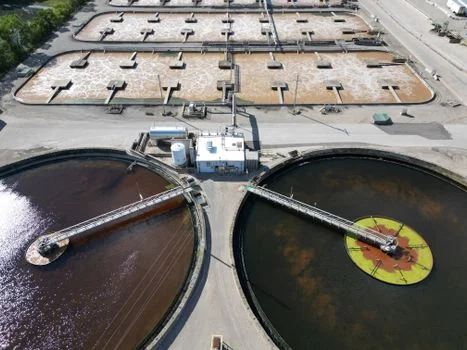
Capital expenditure (CAPEX) for industrial-scale Membrane Bioreactor (MBR) systems in Prince Edward Island for 2026 is projected between $3,500 and $4,500 per cubic meter of daily capacity, heavily influenced by insulation requirements for winter operation. For a standard 500 m³/day municipal or industrial project, this translates to a CAPEX range of $1.75M to $2.25M. Conversely, DAF systems, which are less mechanically complex, range from $120,000 to $450,000 depending on the automation level and material selection. When budgeting for PEI, it is essential to reference global cost benchmarks for modular wastewater systems while adding a "maritime premium" of 15–20% for site-specific adaptations like bedrock excavation and coastal wind-load reinforcement.
Operating expenditure (OPEX) in PEI is primarily driven by electricity, chemical dosing (coagulants/flocculants), and membrane replacement. Solar-hybrid systems are gaining traction in the Maritimes as a way to offset these costs; while they require a 20% higher initial investment, they can reduce annual OPEX by up to 30%. For a seafood processor, the return on investment (ROI) is often realized within 3 to 5 years through the elimination of municipal non-compliance surcharges, which in some PEI districts can reach $2.00 per cubic meter for high-strength effluent. The following table provides a detailed cost breakdown for different system capacities in 2026 USD.
| Capacity (m³/day) | DAF System CAPEX | MBR System CAPEX | Annual OPEX (Est.) | ROI Period (Years) |
|---|---|---|---|---|
| 50 | $120,000 | $350,000 | $12,000 - $18,000 | 4.5 |
| 200 | $280,000 | $850,000 | $35,000 - $55,000 | 3.8 |
| 500 | $450,000 | $1,800,000 | $80,000 - $120,000 | 3.2 |
Hidden costs in PEI projects frequently arise during the permitting and site preparation phases. Permitting through the Department of Environment, Energy and Climate Action can cost between $15,000 and $50,000 depending on the complexity of the environmental impact assessment. Additionally, PEI’s geology—characterized by shallow bedrock in certain regions—can increase excavation costs by 25% for underground installations. For procurement officers, evaluating cold-climate supplier selection strategies for Canadian buyers is critical to identifying vendors who include site-specific engineering in their turnkey quotes to avoid these budget overruns.
Local vs. Mainland Suppliers: A Zero-Risk Selection Framework for PEI Buyers
Selection of a sewage treatment equipment supplier in Prince Edward Island requires a dual-track verification of both provincial regulatory compliance (PEI Water Act) and mechanical resilience against the Atlantic region’s specific freeze-thaw cycles. Local suppliers are often preferred for their intimate knowledge of PEI’s permitting landscape and their ability to provide rapid on-site maintenance. They excel in "soft" services, such as coordinating with the Department of Environment for discharge permits and performing realty water testing. However, local providers may have limited manufacturing capabilities for large-scale industrial components, often acting as distributors for mainland or international technologies.
Mainland suppliers, by contrast, offer advanced engineering depth and economies of scale. Industrial-scale MBR and DAF systems (2,000+ m³/day) are typically sourced from larger manufacturers who provide PLC-controlled chemical dosing and remote monitoring capabilities. The risk with mainland suppliers is a potential lack of "boots on the ground" for emergency repairs or a failure to account for PEI’s specific salinity challenges in their standard material specs. A zero-risk framework involves selecting a mainland manufacturer with a proven track record in the Maritimes or one that partners with local service providers for installation and commissioning. This ensures the facility receives industrial-grade equipment while maintaining local support. The matrix below assists in evaluating these trade-offs.
| Evaluation Dimension | Local PEI Supplier | Mainland/International Supplier | Risk Mitigation Strategy |
|---|---|---|---|
| Compliance Support | High (Direct DEECA links) | Moderate (Requires consultant) | Require PEI-specific permit history |
| Technical Scalability | Moderate | High (Up to 5,000+ m³/day) | Verify modular expansion options |
| Cold-Climate Engineering | Excellent (Standard) | Variable (Must specify) | Demand 316L SS and heat tracing |
| Maintenance Response | < 24 Hours | 48 - 72 Hours (Remote) | Ensure local service partnership |
| CAPEX Efficiency | Moderate (Markup on tech) | High (Direct manufacturing) | Compare landed costs vs. local |
Red flags during the selection process include suppliers who cannot provide chloride-resistance data or those who lack case studies from the Atlantic provinces. Given the unique regulatory environment, it is also beneficial to understand how Alberta’s cold-climate wastewater regulations compare to PEI’s, as many mainland suppliers use Western Canadian standards as their baseline, which may not fully address PEI’s coastal salinity requirements.
Step-by-Step: Selecting Sewage Treatment Equipment for PEI in 2026
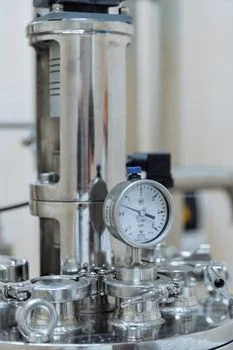
The initial phase of selecting sewage treatment equipment in Prince Edward Island involves a 72-hour composite sampling of influent to establish baseline chemical oxygen demand (COD) and salinity fluctuations. This data is critical because PEI’s groundwater can vary significantly in mineral content, affecting the coagulation and flocculation chemistry in DAF systems. Once the influent profile is established, facility managers should follow this five-step framework to ensure a zero-risk installation:
- Define Regulatory Limits: Consult the PEI Water Act to determine if your discharge is classified as "Coastal," "Inland Surface," or "Municipal Sewer." Each has different limits for phosphorus, ammonia, and chloride.
- Match Technology to Influent: If FOG is >500 mg/L, a DAF system is mandatory to protect downstream biological units. If BOD limits are <10 mg/L, an MBR system is the only reliable choice.
- Verify Material Specifications: Ensure all wetted parts are 316L stainless steel or high-density polyethylene (HDPE). Standard 304 stainless steel will likely pit and corrode within 24 months in PEI’s coastal air.
- Audit Cold-Climate Features: Request detailed drawings of tank insulation (minimum R-20 rating) and heat-tracing for all external chemical and sludge lines.
- Execute a Pilot Study: For large industrial projects, request a 30-day on-site pilot. Many reputable suppliers offer containerized pilot units to prove removal rates before full CAPEX commitment.
By following this structured approach, procurement officers can justify their decisions to stakeholders with empirical data, ensuring that the selected system provides both environmental compliance and long-term cost efficiency.
Frequently Asked Questions
What are PEI’s effluent limits for industrial sewage treatment?
Under the PEI Water Act, typical coastal discharge limits are BOD ≤25 mg/L, TSS ≤30 mg/L, and ammonia ≤1.0 mg/L. Industrial users must also monitor chloride levels, which are generally capped at 250 mg/L to protect local marine life.
How much does a 100 m³/day sewage treatment plant cost in PEI?
In 2026, a turnkey 100 m³/day MBR system costs approximately $550,000 to $750,000 USD, including cold-climate adaptations. A DAF system for the same flow rate would range from $180,000 to $250,000.
Can I use a mainland supplier for my PEI project?
Yes, provided the supplier has experience with PEI’s specific salinity and freeze-thaw requirements. It is recommended to choose a mainland manufacturer that has a service agreement with a local PEI-based mechanical contractor for emergency support.
What is the best system for a PEI seafood processing plant?
A hybrid system consisting of a DAF (for FOG and TSS removal) followed by a DF Series MBR (for biological polishing) is the most effective solution for meeting PEI’s strict coastal discharge standards.
Are there grants available for sewage treatment in PEI?
Yes, industrial and municipal projects in PEI may qualify for the Canada Infrastructure Bank’s green infrastructure loans or the PEI Environmental Trust Fund, which can provide grants for projects that significantly improve effluent quality.