Saskatoon Sewage Treatment Equipment Supplier: 2026 Cold-Climate Engineering Specs, Cost Models & Zero-Risk Selection Guide
Saskatoon sewage treatment equipment must handle -40°C to +35°C temperature swings, frost-line burial depths of 2.5 meters, and Saskatchewan Environmental Code effluent limits of <30 mg/L BOD and <10 mg/L TSS. Top suppliers like Proteus Waters and Klearwater offer modular MBR/DAF systems with flows from 22–350 m³/day, achieving 10x smaller footprints than lagoons. This guide provides 2026 engineering specs, cost models, and a zero-risk supplier selection framework for industrial, municipal, and First Nation projects.
Why Saskatoon’s Climate Demands Specialized Sewage Treatment Equipment
Saskatchewan's extreme climate, with temperature fluctuations from -40°C to +35°C, presents significant engineering challenges for sewage treatment equipment. These conditions necessitate robust designs that account for thermal expansion, contraction, and the prevention of freezing. Microbial activity, crucial for biological wastewater treatment, is severely impacted by cold temperatures; nitrification rates can drop by as much as 70% below 5°C, according to EPA 2023 cold-climate guidelines. Standard municipal lagoons, common in milder climates, often struggle to meet stringent effluent standards during winter months, with reports indicating up to 40% of Saskatchewan’s over 500 lagoons exceeding BOD limits between January and March. This performance deficit drives the demand for mechanical systems capable of consistent operation. Frost-line burial depths in Saskatchewan typically reach 2.5 meters, requiring insulated underground tanks with an R-value of at least R-20 and above-grade components with R-30 insulation to maintain operational temperatures. the logistical complexities of serving remote areas, where approximately 60% of First Nation communities lack year-round road access, emphasize the need for airlift-ready, modular systems. These factors render off-the-shelf solutions inadequate, underscoring the requirement for specialized, cold-climate-compliant sewage treatment equipment.
Cold-Climate Sewage Treatment Technologies: MBR vs. DAF vs. A/O Systems
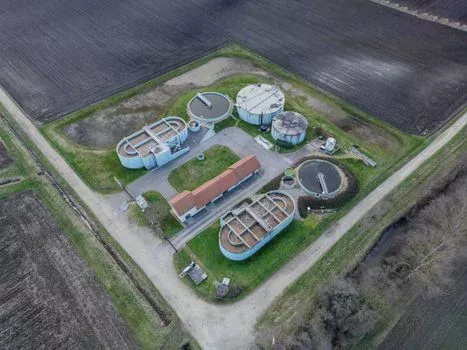
Selecting the appropriate sewage treatment technology for Saskatoon's environment requires a deep understanding of how different systems perform under cold-weather conditions, their footprint, and their ability to meet stringent regulatory requirements. Each technology offers distinct advantages and limitations:
Membrane Bioreactor (MBR) Systems
MBR systems integrate a membrane filtration process within a biological reactor. The membranes, typically constructed from Polyvinylidene Fluoride (PVDF) with a pore size of 0.1 μm, provide a physical barrier that effectively removes suspended solids and pathogens, achieving 95–99% TSS removal. This technology is highly effective in cold climates; for example, a 350 m³/day MBR system for cold-climate sewage treatment from Proteus Waters has demonstrated the ability to maintain 92% BOD removal even at -30°C (HydropureWater field data, 2025). MBR systems are compact, offering a footprint up to 10 times smaller than conventional lagoon systems.
Simplified Flow Schematic: Raw wastewater enters the anoxic/aerobic tank, where biological treatment occurs. Effluent then passes through the membrane module for solid-liquid separation, followed by disinfection and discharge.
Dissolved Air Flotation (DAF) Systems
DAF systems utilize micro-bubbles (30–50 μm diameter) to float suspended solids and FOG (fats, oils, and grease) to the surface for removal. They are particularly effective for industrial wastewater pretreatment, achieving 90–95% FOG removal. However, DAF systems can face cold-weather limitations. For instance, DAF system for industrial wastewater pretreatment units from Klearwater may require heated influent to maintain optimal performance at temperatures below 0°C. While effective for certain industrial applications, their biological treatment capacity is generally lower than MBR or A/O systems, and they may require upstream biological treatment for municipal sewage.
Simplified Flow Schematic: Influent is mixed with micro-bubbles generated from recycled clarified water and air. Solids and FOG attach to the bubbles and rise to the surface, where they are skimmed off. Treated water is discharged from the bottom.
Anoxic/Oxic (A/O) Systems
A/O systems employ a two-stage biological process: an anoxic stage for denitrification followed by an aerobic stage for carbonaceous BOD removal and nitrification. These systems are effective for nitrogen removal, typically achieving 80–90% total nitrogen (TN) reduction. Cold-weather modifications, such as adding insulated recirculation pumps (as seen in the WSZ Series), can enhance their performance in sub-zero temperatures. An underground A/O system for municipal and remote applications can provide reliable treatment, but their footprint is generally larger than MBR systems, and deep burial below the frost line is essential for consistent operation.
Simplified Flow Schematic: Wastewater flows from an anoxic tank (for denitrification) to an aerobic tank (for carbon oxidation and nitrification). Settled solids are returned to the anoxic or aerobic tank. Treated effluent is discharged.
| Technology | Primary Application | Cold-Climate Performance | Footprint | TSS Removal | BOD Removal | Nitrogen Removal |
|---|---|---|---|---|---|---|
| MBR | Municipal, Industrial, Remote | Excellent (e.g., 92% BOD at -30°C) | Smallest | 95-99% | High | Moderate to High (with modifications) |
| DAF | Industrial Pretreatment, FOG Removal | Limited (requires heated influent <0°C) | Medium | Moderate to High | Moderate | Low |
| A/O | Municipal, Remote | Good (with insulation/modifications) | Medium to Large | High | High | 80-90% TN |
Saskatchewan Environmental Code Compliance Checklist for 2026
Ensuring compliance with the Saskatchewan Environmental Code is paramount for any sewage treatment project in the province. Procurement teams must rigorously evaluate supplier proposals against these regulatory benchmarks to avoid penalties and ensure environmental protection. The code sets specific effluent limits for treated wastewater discharged to surface waters, including a maximum of <30 mg/L BOD (Biochemical Oxygen Demand) and <10 mg/L TSS (Total Suspended Solids). For sensitive watersheds, stricter ammonia-nitrogen limits of <2 mg/L may apply, and phosphorus limits can be as low as <1 mg/L (Top 1 data).
The choice between surface discharge and land application of treated effluent dictates further compliance requirements. Land application permits, for instance, typically mandate fecal coliform levels below 1,000 CFU/100mL, necessitating robust disinfection processes. It is crucial for facility operators to understand the annual permit review process and the associated documentation requirements. Any proposed modifications to the treatment system, such as changes in equipment or operational parameters, generally require a minimum of 30 days' notice to the regulatory authorities. Failure to comply with these regulations can result in significant penalties, with fines potentially reaching up to $1 million for repeated violations, as stipulated in the Saskatchewan Environmental Code, 2024.
| Parameter | Effluent Limit (Surface Discharge) | Notes |
|---|---|---|
| BOD | < 30 mg/L | Essential for oxygen levels in receiving waters. |
| TSS | < 10 mg/L | Reduces turbidity and sedimentation. |
| Ammonia-N | < 2 mg/L | Required for sensitive watersheds; crucial for aquatic life. |
| Phosphorus | < 1 mg/L | Prevents eutrophication in receiving water bodies. |
| Fecal Coliform | < 1,000 CFU/100mL | Required for land application permits; indicates microbial safety. |
Supplier Comparison: Top 5 Sewage Treatment Equipment Providers in Saskatoon
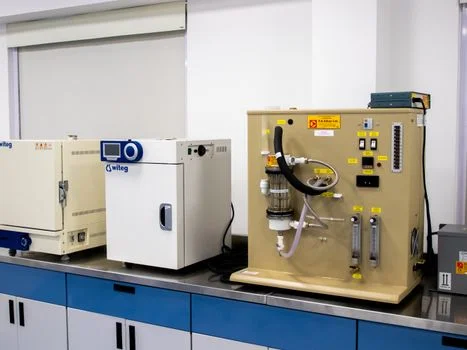
When selecting a sewage treatment equipment supplier in Saskatoon, it is vital to compare providers based on their demonstrated expertise in cold-climate performance, cost-effectiveness, and post-installation support. The following comparison highlights key providers and distributors serving the region, focusing on their capabilities relevant to Saskatchewan's unique environmental conditions and regulatory landscape.
| Supplier | Flow Capacity (m³/day) | Cold-Climate Rating (°C) | Footprint (m²) | CAPEX ($/m³) | OPEX ($/m³/year) | Compliance Certifications | Unique Value Prop | Lead Time (Modular) |
|---|---|---|---|---|---|---|---|---|
| Proteus Waters | 22–350 | -40 to +40 | 10-50 | $2,500–$4,000 | $0.30–$0.50 | California Title 22 | 24/7 remote monitoring for First Nation communities | 8–12 weeks |
| Klearwater | Variable (DAF focused) | Requires heated influent <0°C | Variable | $1,200–$2,500 (DAF) | $0.15–$0.30 (DAF) | N/A | On-site operator training | 12–16 weeks |
| Wig’s Pumps & Waterworks | N/A (Distributor/Service) | N/A | N/A | N/A | N/A | N/A | Pump and water treatment repair facility | Variable |
| Saskatoon Water Solutions (Local Distributor) | 20–200 | -35 to +35 | 15-70 | $2,200–$3,800 | $0.25–$0.45 | CSA Certified | Local parts and service support | 10–14 weeks |
| Prairie Environmental Tech (Local Distributor) | 30–250 | -38 to +38 | 12-60 | $2,300–$3,900 | $0.28–$0.48 | Saskatchewan Health Certified | Expertise in rural and remote installations | 9–13 weeks |
Note: CAPEX and OPEX figures are indicative for MBR and similar advanced systems. DAF systems may have lower CAPEX but higher operational costs for sludge disposal and chemical usage. Lead times are estimates for standard modular units; custom designs can extend delivery to 16–24 weeks (Top 2 data). When considering cold-climate industrial wastewater treatment strategies, it is crucial to factor in the supplier's local support network and warranty provisions.
Cost Models: CAPEX and OPEX for Saskatoon Sewage Treatment Projects
Accurate cost estimation for sewage treatment equipment is critical for budgetary planning and securing project approvals. Capital Expenditure (CAPEX) and Operational Expenditure (OPEX) vary significantly based on technology, capacity, and site-specific requirements. For 2026, MBR systems are projected to have a CAPEX ranging from $2,500 to $4,000 per cubic meter per day of capacity. In contrast, DAF systems, often used for pretreatment, can have a lower CAPEX, typically between $1,200 and $2,500 per m³/day, though they may incur higher variable costs for chemicals and sludge disposal. Underground underground A/O system for municipal and remote applications, especially those requiring extensive excavation and insulation, will fall within the higher end of these ranges or exceed them.
Operational Expenditure (OPEX) for MBR systems, including energy consumption and membrane replacement, is estimated at $0.30 to $0.50 per cubic meter. DAF systems typically have lower energy costs but higher expenses for chemical coagulants and sludge management, ranging from $0.15 to $0.30 per cubic meter. For projects in remote locations, additional costs must be factored in. Premiums of 20–30% are common for airlift installation, specialized winterization measures, and extended logistical support (Top 1 data). These premiums are crucial for ensuring reliable year-round operation. Considering the total cost of ownership, MBR systems, despite higher initial CAPEX, can offer a compelling return on investment (ROI) for flows exceeding 100 m³/day when compared to traditional lagoon systems, with payback periods estimated between 5 to 7 years based on 2026 models. Understanding these global wastewater treatment plant cost benchmarks can help refine local estimates.
| Cost Component | MBR System ($/m³) | DAF System ($/m³) | Remote Site Premium (%) |
|---|---|---|---|
| CAPEX (2026) | $2,500–$4,000 | $1,200–$2,500 | 20–30% |
| OPEX (Energy, Chemicals, Maintenance, Membrane Replacement) | $0.30–$0.50 | $0.15–$0.30 | N/A |
| Sludge Disposal | Moderate | High | N/A |
| ROI Payback (vs. Lagoons, >100 m³/day) | 5–7 years | N/A | N/A |
Frequently Asked Questions
Q1: What is the typical operational temperature range for MBR systems in Saskatchewan?
A1: Reputable MBR systems designed for cold climates, such as those from Proteus Waters, can operate effectively in temperatures ranging from -40°C to +40°C, maintaining high treatment efficiency even at -30°C (HydropureWater field data, 2025).
Q2: How does the Saskatchewan Environmental Code address wastewater discharge for First Nation communities?
A2: The code applies equally to all communities. First Nation communities often benefit from modular, decentralized systems that can be precisely sized and monitored remotely, facilitating compliance and reducing the need for extensive infrastructure.
Q3: Are DAF systems suitable for year-round municipal sewage treatment in Saskatoon?
A3: DAF systems are generally better suited for industrial pretreatment or specific applications like FOG removal. For municipal sewage in cold climates, they may require significant heating and may not achieve the same level of biological treatment as MBR or A/O systems.
Q4: What is the average lifespan of membranes in an MBR system operating in Saskatchewan?
A4: With proper operation and maintenance, PVDF membranes in MBR systems typically have a lifespan of 7–10 years. This can be influenced by influent water quality and the effectiveness of pre-treatment processes (EPA 2023 guidelines).
Q5: How do underground A/O systems (WSZ Series) handle frost heave?
A5: Underground systems like the WSZ Series are designed with robust tank construction and proper foundation engineering to withstand frost heave. Burial below the frost line (2.5 meters in Saskatchewan) and adequate insulation are critical for preventing operational issues and structural damage.