Why Food Processing Plants Are Switching to Automated Flocculant Dosing in 2026
A 120 m³/h poultry plant in Texas faced significant penalties in 2025 due to persistent TSS violations, with effluent averaging 45 mg/L. After implementing a PLC-controlled flocculant dosing unit for food processing, they achieved consistent TSS levels below 8 mg/L and reduced their annual polymer costs by 32%, as documented in EPA enforcement reports. The hidden costs of manual dosing are substantial: an estimated 15–20% polymer overuse, 5–10 hours of operator labor per week dedicated to preparation and adjustment, and a threefold higher risk of EPA violations, according to industry analyses. Food industry wastewater presents unique challenges, characterized by highly variable influent loads. Dairy plants can experience sudden FOG spikes, while meat processing facilities often see surges in protein content. Manual dosing systems struggle to adapt to these dynamic conditions, leading to inconsistent floc formation, suboptimal performance of downstream equipment like dissolved air flotation (DAF) systems, and eventual clarifier overload. With EPA 2024 regulations tightening discharge limits to below 10 mg/L TSS for plants discharging into sensitive watersheds, the pressure to adopt more precise and reliable treatment methods is immense. Fines for non-compliance can range from $10,000 to $50,000 per incident, making automated dosing not just an operational upgrade but a critical risk mitigation strategy.
Food-Specific Wastewater Challenges: How Flocculant Dosing Units Solve Them
Effective flocculant dosing in the food industry requires a nuanced understanding of sector-specific wastewater characteristics. Dairy wastewater, for instance, is typically high in Fats, Oils, and Grease (FOG), often ranging from 500–2,000 mg/L, along with significant lactose loads. This demands cationic polymers, such as polyacrylamide, at concentrations of 0.3–0.5%. Automated dosing units for dairy applications must incorporate heated mixing tanks to prevent polymer gelling when ambient temperatures drop below 10°C. Meat and poultry processing wastewater presents a different challenge, with high protein (300–1,500 mg/L) and blood content. Anionic polymers, like polyDADMAC, are generally more effective here, used at 0.1–0.2% concentration. These systems benefit from inline pH adjustment capabilities to maintain an optimal flocculation range of 6.5–7.5. Beverage and brewery effluents often exhibit high Chemical Oxygen Demand (COD), ranging from 2,000–8,000 mg/L, and significant yeast populations. Treating this effectively often requires a dual-polymer approach, employing both a coagulant and a flocculant. The dosing units must be capable of handling 0.5–1.0% polymer solutions to minimize shear damage to the polymer structure. Fruit and vegetable processing wastewater is characterized by seasonal solids spikes from materials like tomato skins or citrus pulp. For these applications, dosing units need variable-speed dosing pumps and maturation tanks with dwell times of 30–60 minutes to ensure complete polymer hydration and prevent premature degradation. The following table summarizes these key parameters:
| Sector | TSS (mg/L) | FOG (mg/L) | COD (mg/L) | Optimal Polymer Type | Concentration Range (%) | Mixing Time (min) |
|---|---|---|---|---|---|---|
| Dairy | 500-2,000 | 500-2,000 | 1,000-3,000 | Cationic Polyacrylamide | 0.3-0.5 | 30-45 |
| Meat/Poultry | 800-2,500 | 300-1,000 | 1,500-4,000 | Anionic PolyDADMAC | 0.1-0.2 | 30-45 |
| Beverage/Brewery | 300-1,000 | 100-500 | 2,000-8,000 | Dual (Coagulant + Flocculant) | 0.2-0.4 (Flocculant) | 45-60 |
| Fruit/Vegetable | 1,000-5,000 | 50-200 | 500-2,500 | Anionic/Cationic (Jar Test dependent) | 0.2-0.4 | 30-60 |
Optimizing flocculation for effective solids separation, particularly in conjunction with technologies like DAF systems optimized for food industry floc separation, is paramount for meeting stringent discharge standards.
How Flocculant Dosing Units Work: Process Flow, Engineering Specs, and Food Industry Adaptations
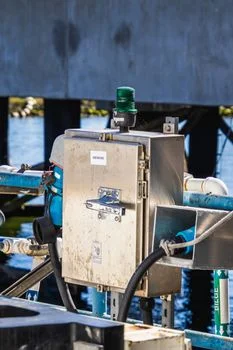
A flocculant dosing unit automates the critical process of polymer preparation and injection, typically comprising three core stages. First, the wetting stage involves the precise hydration of dry polymer powder into water, achieving a dilute solution concentration typically between 0.1% and 0.5%. This is followed by a maturation stage, where the polymer solution undergoes 30–60 minutes of gentle mixing, usually at 300–500 RPM, to ensure complete hydration and prevent polymer shear, which can significantly reduce its effectiveness. Finally, the dosing stage utilizes high-accuracy metering pumps, often with ±1% accuracy, to inject the prepared polymer solution into the wastewater stream. For food industry applications, these units are engineered with specific adaptations. Construction materials are often sanitary-grade 316L stainless steel to prevent corrosion and maintain product integrity. Tanks feature sloped bottoms and robust agitators to prevent FOG and solids buildup, and are designed for easy cleaning, often with CIP (Clean-In-Place) compatibility. For facilities handling alcohol-based products, explosion-proof components are essential. Dual polymer tanks are common, allowing for the sequential addition of a coagulant followed by a flocculant, a common requirement for treating complex food industry effluents. Critical operational parameters include the surface loading rate for downstream clarifiers, typically 20–40 m/h, and the desired floc size—1–3 mm for DAF systems and 3–5 mm for sedimentation tanks. The polymer solution's age is also crucial; it should ideally be used within 24 hours to avoid hydrolysis and loss of efficacy. A typical 'Flocculant Dosing Unit Flow for Food Plants' diagram would illustrate a hopper for dry polymer, a screw feeder, a wetting head for initial dispersion, a maturation tank with an agitator, a metering pump, an inline static mixer to ensure homogeneous distribution, and finally, the injection point into the main wastewater flow leading to a clarifier or DAF system. These sophisticated PLC-controlled flocculant dosing systems for food processing are designed for reliability and precision.
Dry vs. Liquid Polymer Systems: Which Flocculant Dosing Unit is Right for Your Food Plant?
The choice between dry and liquid polymer systems for flocculant dosing is a critical decision for food processing plants, impacting capital expenditure, operational complexity, and maintenance requirements. Dry polymer systems, with capital costs typically ranging from $18,000 to $65,000 for flow rates up to 100 m³/h, offer advantages such as a longer shelf life for the polymer (12–24 months), lower shipping costs due to reduced weight, and no risk of freezing. However, they require more maintenance, involving screw feeders and bag breakers, and necessitate dust control measures. The startup process also takes longer, typically 30–60 minutes for proper polymer hydration. Liquid polymer systems, on the other hand, represent a higher initial investment, ranging from $45,000 to $95,000 for flow rates up to 300 m³/h. Their key benefits include a faster startup time (5–10 minutes), lower maintenance needs, and easier integration with automated control systems. The drawbacks include a shorter polymer shelf life (3–6 months), higher shipping costs, and a significant risk of freezing, often requiring heated storage solutions. For specific food industry applications, dry systems are often preferred for smaller plants (<50 m³/h) due to their compatibility with high FOG content. Liquid systems are better suited for high-flow plants (100–300 m³/h), especially in meat processing, where rapid response to protein surges is necessary. Beverage plants, frequently requiring dual-polymer dosing, also benefit from the ease of automation and sequencing offered by liquid systems. The following table provides a comparative overview:
| Feature | Dry Polymer System | Liquid Polymer System | Best For |
|---|---|---|---|
| Capital Cost | $18K - $65K | $45K - $95K | N/A |
| Polymer Shelf Life | 12-24 months | 3-6 months | N/A |
| Shipping Cost | Lower | Higher | N/A |
| Freezing Risk | None | High (requires heated storage) | N/A |
| Maintenance | Higher (feeders, bag breakers) | Lower | N/A |
| Startup Time | 30-60 min | 5-10 min | N/A |
| Dust Control | Required | Not applicable | N/A |
| Automation Ease | Moderate | High | N/A |
| Application | Small plants (<50 m³/h), general industrial | High-flow plants (>100 m³/h), complex applications | N/A |
Cost Breakdown: Flocculant Dosing Units for Food Processing Plants (2026 Models)
When budgeting for a flocculant dosing unit, understanding both the capital expenditure (CAPEX) and operational expenditure (OPEX) is crucial. For dry polymer systems, CAPEX typically ranges from $18,000 for smaller units (around 10 m³/h) to $65,000 for larger capacities (up to 100 m³/h). Liquid polymer systems command a higher initial investment, from $45,000 for 50 m³/h units up to $95,000 for 300 m³/h capacity. Opting for skid-mounted, turnkey units can add a 20% premium but significantly reduce installation time by up to 40%. OPEX is primarily driven by polymer cost, which can range from $2.50–$5.00/kg for dry polymers versus $1.50–$3.00/L for liquid polymers. Energy consumption for mixing and pumping generally falls between 0.5–1.5 kWh/m³. Labor costs are also a factor; dry systems may require 1–2 hours of operator attention per week, while liquid systems typically need 0.5–1 hour. The return on investment (ROI) for automated dosing units is compelling. Chemical savings alone can range from 30–35% compared to manual dosing, coupled with labor savings of 5–10 hours per week. Avoiding EPA fines, which can be $10,000–$50,000 annually, significantly bolsters the financial case. For a 150 m³/h meat processing plant, the total annual savings can reach approximately $68,000, leading to a CAPEX payback period of as little as 14 months. Additionally, consider hidden costs such as polymer storage requirements (climate-controlled rooms for dry, heated tanks for liquid) and annual spare parts budgets ($2,000–$5,000 for pumps and valves), as well as operator training (8–16 hours). Understanding these elements allows for a comprehensive financial assessment and a more accurate ROI projection.