Hospital Wastewater Treatment in Athens: 2025 Engineering Specs, Compliance & Zero-Risk Equipment Guide
Athens hospitals must treat wastewater to meet Greek effluent limits of ≤125 mg/L COD, ≤35 mg/L BOD&sub5;, and ≤10⁴ CFU/100 mL fecal coliforms (per Joint Ministerial Decision 145116/2011). On-site systems like MBR (membrane bioreactors) achieve 95%+ removal of pharmaceuticals and pathogens, while DAF-RO (dissolved air flotation + reverse osmosis) systems reduce TSS to <5 mg/L. Chlorine dioxide generators provide 99.9% disinfection but require residual monitoring. This guide covers 2025 engineering specs, compliance pathways, and cost-optimized equipment for Athens hospitals.
Why Athens Hospitals Need On-Site Wastewater Treatment
Greek Environmental Law 4014/2011 mandates that hospitals discharging into the Athens municipal sewer network or sensitive coastal areas must ensure their effluent does not exceed specific toxicity and pathogen thresholds. While the Psyttalia Wastewater Treatment Plant serves the greater Athens area, the facility is designed for municipal organic loads rather than the recalcitrant pharmaceuticals and multi-drug-resistant organisms (MDROs) found in medical waste. Relying solely on municipal infrastructure exposes hospital facility managers to significant legal risks, as recent monitoring initiatives—including the extensive COVID-19 tracking in Athens wastewater—demonstrate the municipal authority's increased capacity for detecting specific biological markers and contaminants at the point of discharge.
Athens’ wastewater infrastructure often faces challenges from combined sewer overflows (CSOs) during heavy Mediterranean rain events, which can cause backflow or surge issues for hospitals located in older districts. On-site treatment provides a critical buffer, ensuring that even during municipal system stress, the hospital remains compliant. Failure to meet the limits set by Joint Ministerial Decision 145116/2011 results in administrative fines ranging from €5,000 to €50,000 per violation. hospitals located near the Saronikos Gulf are subject to even stricter oversight due to the sensitivity of the coastal ecosystem under EU Directive 91/271/EEC.
Implementing a compact hospital wastewater treatment system for Athens clinics allows for the targeted removal of anesthetics, antibiotics, and disinfectants that biological municipal plants cannot fully degrade. By treating effluent at the source, Athens hospitals mitigate the risk of permit revocation and avoid the escalating "polluter pays" surcharges levied by the Athens Water Supply and Sewerage Company (EYDAP).
Athens Hospital Wastewater: Key Contaminants and Treatment Challenges
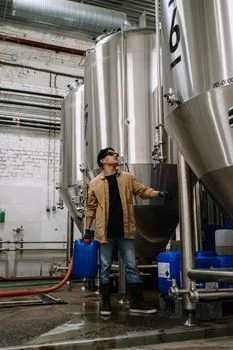
Hospital effluent in the Attica region typically exhibits Chemical Oxygen Demand (COD) concentrations between 300 and 1,200 mg/L and Biochemical Oxygen Demand (BOD&sub5;) ranging from 150 to 600 mg/L, requiring significant reduction before legal discharge. Beyond standard organic loads, Athens hospitals face unique challenges related to local water chemistry and climate. The city’s tap water is characterized by an average hardness of 250 mg/L CaCO³, which significantly increases the scaling potential for membrane-based systems such as Reverse Osmosis (RO) and Dissolved Air Flotation (DAF) units if proper anti-scalant protocols are not implemented.
The Mediterranean climate of Athens, with summer temperatures frequently exceeding 35°C, directly impacts the kinetics of biological treatment. While warmer temperatures generally increase the metabolic rate of bacteria in systems like MBR, they also reduce the solubility of oxygen, necessitating high-efficiency aeration systems to maintain dissolved oxygen (DO) levels. Conversely, winter performance must be stabilized to ensure that nitrification remains consistent when temperatures drop. A PubMed study on MBR/ozonation effectiveness highlights that for hospital-specific loads, the combination of biological degradation and advanced filtration is the only reliable method to achieve the ≤10⁴ CFU/100 mL fecal coliform limit required in Greece.
| Contaminant Category | Typical Concentration (Athens) | Greek Limit (JMD 145116/2011) | Treatment Challenge |
|---|---|---|---|
| COD (Chemical Oxygen Demand) | 300–1,200 mg/L | ≤125 mg/L | Requires high SRT (Sludge Retention Time) |
| BOD&sub5; | 150–600 mg/L | ≤35 mg/L | Oxygen transfer efficiency in summer |
| Total Suspended Solids (TSS) | 100–400 mg/L | ≤35 mg/L | Membrane fouling from medical fibers |
| Fecal Coliforms | 10⁶–10⁸ CFU/100 mL | ≤10⁴ CFU/100 mL | Requires >log 4 disinfection |
| Pharmaceuticals (Antibiotics) | 10–100 μg/L | Monitoring required | High resistance to standard activated sludge |
Treatment Technologies for Athens Hospitals: MBR vs. DAF-RO vs. Chlorine Dioxide
Membrane Bioreactor (MBR) systems represent the gold standard for Athens hospitals due to their ability to provide high-quality effluent within a footprint 50% smaller than conventional activated sludge plants. Using submerged PVDF membranes with a 0.1 μm pore size, MBR systems for Athens hospital wastewater effectively decouple hydraulic retention time (HRT) from sludge retention time (SRT). This allows for the cultivation of specialized nitrifying bacteria and the complete retention of suspended solids, achieving COD removal efficiencies of 90–95%. For space-constrained hospitals in central Athens districts like Ambelokipi, MBR eliminates the need for secondary clarifiers, making it the most viable on-site engineering choice.
Dissolved Air Flotation combined with Reverse Osmosis (DAF-RO) is an alternative often deployed when the wastewater contains high levels of Fats, Oils, and Grease (FOG) from hospital kitchens or heavy metals from laboratory departments. The DAF unit uses micro-bubbles to float solids to the surface for skimming, while the RO stage provides a physical barrier to ions and complex organic molecules. However, in Athens, the high CaCO³ content of the water requires the DAF-RO process to include rigorous pre-treatment and scale inhibition to prevent membrane flux decline. While DAF-RO produces the highest quality water (TSS < 5 mg/L), its OPEX is typically higher than MBR due to chemical consumption and membrane cleaning frequency.
Chlorine dioxide (ClO²) generators are essential for the final disinfection stage, especially for smaller clinics that may not require a full biological plant but must meet pathogen limits. Unlike traditional chlorine, ClO² does not produce trihalomethanes (THMs) and remains effective across a wide pH range (6–9), which is common in hospital effluent. Greek compliance requires residual chlorine levels to be monitored closely, typically aiming for ≤0.2 mg/L at the point of discharge into the municipal sewer to avoid pipe corrosion and biological upset at the municipal plant.
| Technology | Footprint | Removal Efficiency (COD/Pathogens) | Athens Suitability | Primary Advantage |
|---|---|---|---|---|
| MBR (Membrane Bioreactor) | Minimal | 95% / 99.99% | High (Ideal for urban hospitals) | Compact, superior effluent quality |
| DAF-RO | Moderate | 90% / 99.9% | Medium (Requires scale control) | Removes dissolved salts and FOG |
| Chlorine Dioxide | Small | Low / 99.9% | High (Disinfection only) | No carcinogenic by-products |
Athens Compliance Checklist: Meeting Greek and EU Effluent Standards
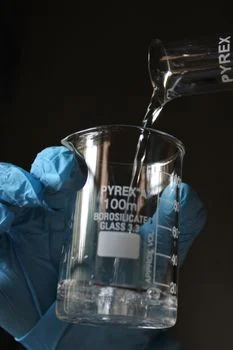
To ensure 2025 compliance, Athens hospital facility managers must align their operations with both the Greek Joint Ministerial Decision (JMD) 145116/2011 and the broader EU Urban Waste Water Directive 91/271/EEC. The following checklist provides the technical parameters required for a "zero-risk" discharge permit in the Attica region:
- Effluent Limits: COD ≤125 mg/L, BOD&sub5; ≤35 mg/L, TSS ≤35 mg/L, and pH between 6.0 and 9.0.
- Pathogen Control: Fecal coliforms must be ≤10⁴ CFU/100 mL. For hospitals near designated bathing waters or sensitive zones, this may be tightened to ≤10³ CFU/100 mL.
- Sampling Frequency: Monthly laboratory analysis for COD, BOD&sub5;, and TSS is standard; however, quarterly toxicity tests and pathogen screenings are often required by the Hellenic Ministry of Environment.
- Reporting: All results must be logged in the Electronic Environmental Registry (EMP) as per Law 4014/2011.
- Residual Monitoring: If using chemical disinfection, residual ClO² or chlorine must not exceed 0.2–0.5 mg/L to prevent downstream environmental toxicity.
Failure to adhere to these standards can lead to immediate administrative fines and, in cases of repeated negligence, the revocation of the hospital’s environmental permit (AEPO). Engineers should also reference hospital wastewater treatment in Tampere or hospital wastewater treatment in San Francisco to compare how other metropolitan areas manage similar pharmaceutical-heavy effluent profiles under different regulatory frameworks.
CAPEX and OPEX for Hospital Wastewater Treatment in Athens: 2025 Cost Benchmarks
Budgeting for hospital wastewater treatment in Athens requires a dual focus on initial capital expenditure (CAPEX) and the long-term operational costs (OPEX) influenced by local utility rates. For a mid-sized Athens hospital producing 100 m³/day, an integrated MBR system typically carries a CAPEX of €150,000 to €250,000. While the initial investment is higher than traditional systems, the OPEX is optimized through automated sludge management and high-efficiency blowers, averaging €0.70–€0.95 per cubic meter of treated water.
Operational costs in Athens are significantly impacted by electricity prices, which can fluctuate during peak summer demand. Energy use for MBR systems generally ranges from 0.8 to 1.2 kWh/m³. Maintenance costs must also account for the city’s water hardness; membrane cleaning (CIP - Clean In Place) cycles may need to be 15–20% more frequent than in soft-water regions, increasing chemical consumption. For smaller facilities, chlorine dioxide generators offer the lowest CAPEX (€15K–€40K) and extremely low OPEX (€0.10–€0.25/m³), but they do not address organic load (COD/BOD) requirements.
| Technology | CAPEX Range (€) | OPEX (€/m³) | Energy Use (kWh/m³) | Maintenance Needs |
|---|---|---|---|---|
| MBR (50–200 m³/d) | €120K – €450K | €0.65 – €1.10 | 0.8 – 1.5 | Bi-annual membrane inspection |
| DAF-RO (50–200 m³/d) | €180K – €550K | €0.90 – €1.60 | 1.5 – 2.5 | Monthly scale inhibition check |
| ClO² Generator | €15K – €80K | €0.10 – €0.30 | <0.1 | Quarterly sensor calibration |
Frequently Asked Questions
What are the specific effluent limits for hospitals in Athens?Under Greek Joint Ministerial Decision 145116/2011, hospitals must ensure effluent does not exceed 125 mg/L for COD, 35 mg/L for BOD&sub5;, and 35 mg/L for TSS. Additionally, fecal coliform counts must remain below 10⁴ CFU/100 mL. These limits are strictly enforced by EYDAP and regional environmental inspectors to protect the municipal infrastructure and the Saronikos Gulf.
How does Athens’ water hardness affect RO and MBR systems?Athens has an average water hardness of 250 mg/L CaCO³. In RO systems, this leads to rapid calcium carbonate scaling on membrane surfaces, necessitating robust anti-scalant dosing. In MBR systems, high hardness can contribute to inorganic fouling of the membrane pores, though this is typically managed through acidic CIP (Clean-In-Place) cycles during routine maintenance.
Which treatment technology is best for space-constrained Athens hospitals?The Membrane Bioreactor (MBR) is the most effective solution for space-constrained urban hospitals. Because it combines biological aeration and high-efficiency filtration into a single footprint—eliminating the need for large secondary clarifiers—it can be installed in basement levels or compact outdoor enclosures while still meeting all Greek effluent standards.
What are the penalties for non-compliance with Greek wastewater laws?According to Greek Environmental Law 4014/2011, administrative fines for discharging non-compliant wastewater range from €5,000 to €50,000. Beyond financial penalties, hospitals risk the suspension of their environmental operating permits and may face criminal liability if the discharge results in documented environmental degradation or public health risks.