Why Ajman Hospitals Need Dedicated Wastewater Treatment Systems
Hospital wastewater in Ajman requires specialized treatment to meet stringent UAE Federal Law No. 24/1999 and Ajman Sewerage’s strict discharge limits. Non-compliance can lead to substantial financial penalties, with fines ranging from AED 10,000 to AED 50,000 per violation, as Ajman Sewerage conducts quarterly compliance audits. For instance, an anonymized 50-bed hospital in Ajman faced AED 45,000 in fines in 2023 due to consistently exceeding permitted Biochemical Oxygen Demand (BOD) levels, with influent BOD reaching 400 mg/L and effluent consistently above the 20 mg/L limit. This highlights the critical need for robust on-site treatment systems to avoid such financial repercussions and ensure environmental stewardship.
Beyond financial penalties, the discharge of untreated or inadequately treated medical effluent poses significant environmental and public health risks. This wastewater can contain a cocktail of hazardous substances, including antibiotic-resistant bacteria (ARB), persistent pharmaceutical residues such as carbamazepine and diclofenac, and heavy metals like mercury originating from dental clinics. These contaminants can overwhelm municipal wastewater treatment plants, pollute local water bodies, and contribute to the spread of antimicrobial resistance, a growing global health concern. Therefore, dedicated wastewater treatment systems are not merely a regulatory requirement but a fundamental component of responsible healthcare facility management in Ajman.
UAE Federal Law No. 24/1999, specifically Article 12 concerning ‘Hazardous Waste,’ mandates the pretreatment of all medical wastewater before its discharge into municipal sewer systems. This ensures that the unique and often complex composition of hospital effluent is addressed at the source, preventing the introduction of harmful substances into the broader public infrastructure. Adherence to these regulations is paramount for hospitals operating in Ajman, safeguarding both the local environment and the health of the community.
Hospital Wastewater Characteristics: Influent Specs and Treatment Challenges
Hospital wastewater is distinct from domestic sewage due to its high concentration of diverse and often potent contaminants, presenting unique treatment challenges for engineers. For hospitals in Ajman with daily flow rates ranging from 50 to 500 m³/day, typical influent characteristics include elevated BOD levels between 200–800 mg/L and Chemical Oxygen Demand (COD) from 500–2,000 mg/L. Suspended solids (TSS) can range from 150–400 mg/L, and fecal coliform counts are exceptionally high, often reaching 10⁶–10⁸ CFU/100mL, as per World Health Organization (WHO) guidelines for hospital wastewater.
A significant challenge lies in the presence of pharmaceutical residues. Common medications found in medical effluent include carbamazepine (1–5 µg/L), diclofenac (0.5–3 µg/L), and various antibiotics like ciprofloxacin (0.1–1 µg/L). These compounds are often recalcitrant to conventional biological treatment and can pose risks to aquatic ecosystems and human health if not effectively removed. heavy metals such as mercury (0.01–0.1 mg/L from dental amalgam), silver (0.05–0.5 mg/L from X-ray film processing), and chromium (0.1–1 mg/L from laboratory reagents) require specialized removal processes. The load of pathogenic microorganisms, including viruses like norovirus and rotavirus, and antibiotic-resistant *E. coli* (ARB), necessitates a disinfection process capable of achieving a 4–6 log reduction, as recommended by UAE Ministry of Health guidelines.
Temperature and pH fluctuations also impact treatment efficacy. Influent temperatures can range from 25–40°C due to heat generated by equipment and processes, while pH can vary widely between 6–9 due to the discharge of laboratory waste, disinfectants, and cleaning chemicals. These variations can disrupt biological treatment processes, requiring robust and adaptable treatment systems. Understanding these specific influent characteristics is crucial for selecting an appropriate and effective wastewater treatment technology.
| Parameter | Typical Influent Range (Hospital, Ajman) | Treatment Challenge |
|---|---|---|
| BOD | 200–800 mg/L | High organic load requires efficient biological degradation. |
| COD | 500–2,000 mg/L | Presence of non-biodegradable compounds necessitates advanced oxidation or membrane processes. |
| TSS | 150–400 mg/L | Requires effective primary treatment (e.g., DAF, screening) and secondary clarification. |
| Fecal Coliform | 106–108 CFU/100mL | High microbial load demands robust disinfection to achieve 4-6 log reduction. |
| Pharmaceutical Residues (e.g., Carbamazepine, Diclofenac) | µg/L levels | Recalcitrant compounds require advanced treatment like ozonation or RO. |
| Heavy Metals (e.g., Hg, Ag, Cr) | mg/L levels | Requires specific removal techniques (e.g., chemical precipitation, ion exchange). |
| Temperature | 25–40°C | Can affect microbial activity in biological treatment; requires stable operating conditions. |
| pH | 6–9 | Fluctuations can disrupt biological processes; requires pH neutralization. |
Ajman Compliance Standards: What Hospitals Must Achieve
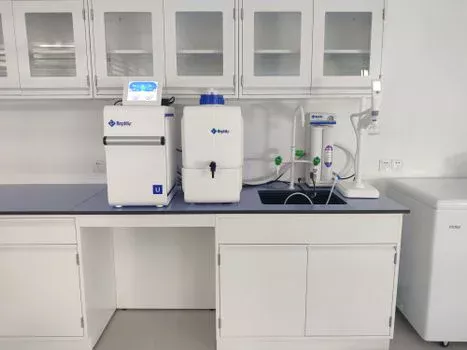
Hospitals in Ajman must rigorously adhere to the environmental regulations set forth by the UAE Federal Law No. 24/1999 and the specific discharge limits stipulated by Ajman Sewerage. Federal Law No. 24/1999, particularly Article 12, explicitly prohibits the discharge of untreated medical wastewater into public sewer systems, classifying it as hazardous waste that requires proper management and pretreatment. This overarching legislation forms the foundation for all local environmental compliance efforts.
Ajman Sewerage’s 2024 discharge limits for hospitals are critical benchmarks for designing and operating effective wastewater treatment systems. These limits are detailed and cover a range of parameters to ensure the protection of the municipal sewer network and the environment. Key parameters include BOD ≤ 20 mg/L, COD ≤ 100 mg/L, and Total Suspended Solids (TSS) ≤ 30 mg/L. For microbial control, fecal coliform counts must be reduced to ≤ 200 CFU/100mL. specific limits are imposed on heavy metals, such as mercury (Hg) ≤ 0.01 mg/L, silver (Ag) ≤ 0.05 mg/L, and chromium (Cr) ≤ 0.1 mg/L. The stringent limits for pharmaceutical residues, such as carbamazepine ≤ 0.1 µg/L, underscore the advanced treatment capabilities required for medical effluent.
Effective disinfection is a crucial aspect of meeting compliance standards. Ajman Sewerage mandates specific disinfection residuals, typically requiring free chlorine levels of 0.5–1 mg/L or chlorine dioxide levels of 0.2–0.8 mg/L, as per the Ajman Sewerage 2023 manual. To verify compliance, sampling protocols are strictly defined. Composite samples, collected over a 24-hour period, are required for BOD and COD analysis, ensuring a representative measure of the average pollutant load. Grab samples are used for fecal coliform and other instantaneous parameters. Ajman Sewerage conducts quarterly inspections, and facilities are typically given a 30-day notice to rectify any non-compliance issues identified during these audits, based on enforcement data from 2023.
| Parameter | Ajman Sewerage Discharge Limit (2024) | Sampling Method | Compliance Implication |
|---|---|---|---|
| BOD | ≤ 20 mg/L | 24-hour Composite | High BOD indicates incomplete organic breakdown, risking oxygen depletion in receiving waters. |
| COD | ≤ 100 mg/L | 24-hour Composite | High COD suggests the presence of persistent organic pollutants requiring advanced treatment. |
| TSS | ≤ 30 mg/L | 24-hour Composite | High TSS can cause sedimentation and habitat degradation in receiving water bodies. |
| Fecal Coliform | ≤ 200 CFU/100mL | Grab Sample | Indicates potential fecal contamination and presence of pathogens, posing public health risks. |
| Mercury (Hg) | ≤ 0.01 mg/L | Grab Sample | Heavy metal toxicity affects aquatic life and can bioaccumulate in the food chain. |
| Silver (Ag) | ≤ 0.05 mg/L | Grab Sample | Silver ions are toxic to aquatic organisms. |
| Chromium (Cr) | ≤ 0.1 mg/L | Grab Sample | Chromium can be toxic to aquatic life and human health. |
| Carbamazepine | ≤ 0.1 µg/L | Grab Sample | Persistent pharmaceutical, difficult to remove, potential endocrine disruptor. |
| Free Chlorine Residual | 0.5–1 mg/L | Grab Sample | Ensures effective disinfection; insufficient residual means inadequate pathogen kill. |
| Chlorine Dioxide Residual | 0.2–0.8 mg/L | Grab Sample | Alternative disinfection residual for effective pathogen control. |
Hospital Wastewater Treatment Technologies: MBR vs. DAF-RO vs. Ozone-UV
Selecting the appropriate wastewater treatment technology for a hospital in Ajman involves a careful evaluation of compliance requirements, operational efficiency, footprint, and cost. Three prominent technologies—Membrane Bioreactor (MBR), Dissolved Air Flotation coupled with Reverse Osmosis (DAF-RO), and Ozone-UV disinfection—offer distinct advantages and disadvantages for medical effluent treatment.
MBR (Membrane Bioreactor): MBR systems integrate biological treatment with membrane filtration, using submerged membranes with pore sizes typically around 0.1 µm. This configuration achieves a very high level of effluent quality, consistently meeting stringent discharge limits and enabling 99.9% pathogen removal, with COD levels often below 50 mg/L. A key advantage of MBR is its compact footprint, requiring approximately 0.5 m²/m³/day of treatment capacity, which is about 60% smaller than conventional activated sludge systems. For a 50–500 m³/day system, the Capital Expenditure (CAPEX) ranges from AED 500,000 to AED 1.2 million. The Operational Expenditure (OPEX) is typically AED 1.5–3/m³, primarily driven by energy consumption and membrane replacement, which is required every 5–7 years and can cost AED 50,000–100,000 for a 50 m³/day system. HydropureWater’s medical wastewater system offers a compact MBR solution ideal for hospitals in Ajman. For hospitals seeking a compact MBR system for their facilities in Ajman, HydropureWater’s /product/12-medical-wastewater-treatment.html is a prime example.
DAF-RO (Dissolved Air Flotation + Reverse Osmosis): DAF-RO systems are often employed as a multi-stage approach. DAF is effective in removing up to 90% of TSS and fats, oils, and grease (FOG), making it an excellent pre-treatment step, particularly for wastewater with high suspended solids, such as from dental clinics. The subsequent Reverse Osmosis (RO) stage provides advanced tertiary treatment, capable of removing over 95% of COD and dissolved salts. The CAPEX for DAF-RO systems typically ranges from AED 350,000 to AED 800,000. However, the OPEX can be higher than MBR, ranging from AED 2–4/m³, largely due to the significant cost of RO membrane replacement, which can be as high as AED 80,000 annually for a 50 m³/day system. For high-efficiency DAF systems suitable for hospital wastewater pretreatment, HydropureWater’s /product/4-dissolved-air-flotation-daf-machine.html is a relevant option.
Ozone-UV: This technology combines ozonation (0.5–2 mg/L) with Ultraviolet (UV) irradiation (40 mJ/cm²) for disinfection. It is highly effective in achieving a 6-log pathogen reduction without introducing chemical residuals into the treated water, which can be advantageous for sensitive environments. The CAPEX for Ozone-UV systems typically falls between AED 400,000 and AED 900,000. OPEX can be substantial, ranging from AED 2.5–5/m³, primarily due to the high energy consumption (0.1–0.3 kWh/m³) required for ozone generation and UV lamps. This technology is often best suited for smaller facilities, such as individual clinics or specialized departments (≤50 m³/day), where space is a significant constraint and a chemical-free disinfection process is prioritized. For on-site chlorine dioxide generation as an alternative disinfection method, HydropureWater’s /product/11-chlorine-dioxide-generator.html is available.
| Feature | MBR (Membrane Bioreactor) | DAF-RO (Dissolved Air Flotation + Reverse Osmosis) | Ozone-UV |
|---|---|---|---|
| CAPEX (50-500 m³/day) | AED 500K–1.2M | AED 350K–800K | AED 400K–900K |
| OPEX (/m³) | AED 1.5–3 | AED 2–4 | AED 2.5–5 |
| Footprint (m²/m³/day) | 0.5 | 1.0–1.5 (DAF + RO unit) | 0.7–1.0 |
| Pathogen Removal | 99.9% (Microfiltration) | High (RO stage) | 6-log reduction (Ozone + UV) |
| COD Removal | > 90% | > 95% (RO stage) | Limited (primarily disinfection) |
| Maintenance Frequency | Moderate (membrane cleaning/replacement) | High (RO membrane replacement, DAF cleaning) | Moderate (lamp replacement, ozone generator maintenance) |
| Compliance Risk | Low (consistent high effluent quality) | Medium (depends on RO performance and DAF efficiency) | Low (effective disinfection, but doesn't address dissolved contaminants) |
| Ideal Use Case | High-quality effluent, space-constrained sites | High TSS/FOG influent, need for water reuse (RO) | Small clinics, space-critical, chemical-free disinfection |
Cost Breakdown: CAPEX and OPEX for Hospital STPs in Ajman
Estimating the Capital Expenditure (CAPEX) and Operational Expenditure (OPEX) for hospital wastewater treatment systems (STPs) in Ajman is crucial for accurate budgeting and long-term financial planning. For systems with capacities ranging from 50 to 500 m³/day, CAPEX benchmarks in 2027 are projected to be between AED 350,000 and AED 1.2 million, reflecting the varying complexity and technology chosen. These figures are based on current market analyses and are adjusted for projected inflation, drawing from insights similar to those found in UAE-wide cost benchmarks for wastewater treatment. The OPEX breakdown for these systems typically sees energy costs accounting for 30–40%, chemicals for 20–30%, labor for 15–20%, and membrane replacement (where applicable) for 10–15% of the total operational budget, according to Ajman Sewerage’s 2023 OPEX report.
Analyzing specific technologies provides a clearer picture of cost implications. MBR systems generally have a CAPEX of AED 10,000–20,000 per m³/day and an OPEX of AED 1.5–3/m³. The significant OPEX component here is the recurring cost of membrane replacement, which can range from AED 50,000 to AED 100,000 every 5–7 years for a 50 m³/day system. DAF-RO systems exhibit a CAPEX of AED 7,000–15,000 per m³/day, with OPEX between AED 2–4/m³. The high OPEX for DAF-RO is heavily influenced by RO membrane replacement costs, which can be substantial, potentially reaching AED 80,000 annually for a 50 m³/day installation. Ozone-UV systems have a CAPEX of AED 8,000–18,000 per m³/day, and their OPEX is around AED 2.5–5/m³, with energy costs alone contributing AED 0.5–1/m³ due to the power demands of ozone generation and UV lamps.
Beyond the direct equipment costs, several hidden costs must be factored into the total project budget. These include civil works, which can range from AED 50,000 to AED 200,000, especially for underground installations or complex site preparations. Permitting and regulatory approval fees can add another AED 20,000 to AED 50,000. Finally, operator training, essential for ensuring the long-term efficient operation of any STP, can cost between AED 10,000 and AED 30,000. A comprehensive understanding of these CAPEX and OPEX components, including hidden costs, is vital for making informed investment decisions for hospital STPs in Ajman. For further details on UAE-wide cost benchmarks, refer to articles such as /blog/4311-wastewater-treatment-plant-cost-in-uae-2025-capex-opex-tech-specific-breakdown-for-industrial-buyers.html.
| Cost Component | Range (50-500 m³/day) | Notes |
|---|---|---|
| CAPEX (Total System) | AED 350,000 – 1,200,000 | Varies by technology, capacity, and complexity. |
| OPEX (Per m³) | AED 1.5 – 5 | Includes energy, chemicals, labor, maintenance. |
| Energy Costs (OPEX %) | 30–40% | Highest for Ozone-UV and MBR. |
| Chemical Costs (OPEX %) | 20–30% | Higher for DAF-RO (pre-treatment chemicals). |
| Labor Costs (OPEX %) | 15–20% | Consistent across most technologies. |
| Membrane Replacement (OPEX %) | 10–15% | Significant for MBR and RO (in DAF-RO). |
| Civil Works | AED 50,000 – 200,000 | Site preparation, tank construction, piping. |
| Permits & Approvals | AED 20,000 – 50,000 | Regulatory fees for construction and operation. |
| Operator Training | AED 10,000 – 30,000 | Essential for efficient and compliant operation. |
How to Select the Right Hospital Wastewater Treatment System for Ajman
Selecting the optimal hospital wastewater treatment system in Ajman requires a systematic approach that aligns technical requirements, regulatory mandates, and financial considerations. The first critical step is to accurately assess the influent characteristics of the hospital's wastewater. This involves conducting a comprehensive 24-hour composite sampling to determine average concentrations of BOD, COD, TSS, and pathogen loads, as well as identifying the presence of specific contaminants like pharmaceuticals and heavy metals. Understanding these influent parameters is the foundation for all subsequent technology selection decisions.
The next step is to match the identified influent characteristics and the required effluent quality to the capabilities of different treatment technologies. For instance, if the wastewater has a very high pathogen load and requires near-complete removal, an MBR system would be a strong contender due to its inherent disinfection capabilities. If the influent is characterized by high TSS and FOG, a DAF system as a pre-treatment stage, possibly followed by RO for advanced polishing, might be more suitable. For smaller facilities prioritizing chemical-free disinfection, Ozone-UV offers a viable solution. It is also crucial to evaluate the footprint constraints of the hospital site; MBR systems are known for their compact design, making them ideal for space-limited urban environments, whereas other systems might require a larger footprint.
A vital part of the decision-making process is calculating the Total Cost of Ownership (TCO) for each shortlisted technology over a 10-year period. This involves summing the initial CAPEX with the projected OPEX, including costs for energy, chemicals, maintenance, and eventual component replacements (e.g., membranes). This comprehensive financial analysis provides a true comparison of the long-term economic viability of each system. Finally, it is imperative to verify that any chosen vendor and their proposed equipment are compliant with all relevant UAE environmental standards and have the necessary approvals from local authorities like Ajman Sewerage. Considering global benchmarks for hospital wastewater treatment, as discussed in articles like /blog/4315-hospital-wastewater-treatment-in-bras-lia-2027-engineering-specs-local-compliance-zero-risk-equipment-guide.html, can also provide valuable context.
Decision Framework:
Start with Flow Rate:
- If Flow Rate ≤ 50 m³/day: Consider Ozone-UV or a compact MBR.
- If Flow Rate > 50 m³/day: Consider MBR or DAF-RO.
Next, Evaluate Footprint:
- If Footprint is Severely Limited: Prioritize MBR.
- If Footprint is Ample: DAF-RO or a larger MBR installation are options.
Finally, Assess Budget & OPEX:
- If Lowest CAPEX is Priority: DAF-RO may be initial choice, but evaluate long-term OPEX.
- If Lowest OPEX is Priority: MBR typically offers lower long-term OPEX despite higher CAPEX.
- If Water Reuse is a Goal: RO component of DAF-RO is essential.
Frequently Asked Questions
Q: What are the penalties for non-compliance with Ajman Sewerage’s discharge limits?
A: Penalties for non-compliance with Ajman Sewerage’s discharge limits can be substantial, ranging from AED 10,000 to AED 50,000 per violation. For repeated or severe offenses, Ajman Sewerage reserves the right to terminate sewer connections, as indicated by their 2023 enforcement data.
Q: Can hospital wastewater be discharged directly to Ajman’s municipal sewer without pretreatment?
A: No, hospital wastewater cannot be discharged directly to Ajman’s municipal sewer without pretreatment. UAE Federal Law No. 24/1999 mandates that all medical wastewater must be pretreated to meet specific discharge limits, such as BOD ≤ 20 mg/L and fecal coliform ≤ 200 CFU/100mL, as set by Ajman Sewerage.
Q: How often do MBR membranes need replacement in hospital STPs?
A: The lifespan of MBR membranes in hospital STPs typically ranges from 5 to 7 years. This duration depends heavily on the influent quality and the effectiveness of the maintenance and cleaning protocols. For a 50 m³/day system, replacement costs can range from AED 50,000 to AED 100,000, based on HydropureWater data.
Q: What disinfection residuals are required for hospital wastewater in Ajman?
A: Ajman Sewerage’s 2023 manual specifies that effective disinfection residuals for hospital wastewater typically require free chlorine levels between 0.5–1 mg/L or chlorine dioxide levels between 0.2–0.8 mg/L. These levels ensure the inactivation of pathogens before discharge.
Q: Are there subsidies available for hospital wastewater treatment systems in Ajman?
A: Yes, there may be subsidies available for hospital wastewater treatment systems in Ajman. The UAE Ministry of Climate Change and Environment periodically offers financial incentives, such as 30–50% subsidies, for systems that comply with the UAE Green Building Regulations (as updated in 2024) and demonstrate advanced environmental performance.