Why Packaging Wastewater Demands Advanced Treatment (Not Conventional Systems)
Advanced packaging wastewater treatment systems combine MBR, DAF, and chemical precipitation to meet strict effluent limits (COD ≤50 mg/L, TSS ≤10 mg/L, color ≤30 Pt-Co). For example, MBR systems achieve 95–98% COD removal for corrugated board effluent (influent COD 2,000–5,000 mg/L), while DAF systems remove 90–95% of ink solids in flexographic printing wastewater. CAPEX ranges from $2M for 50 m³/h DAF systems to $20M for 500 m³/h MBR + ZLD systems, with OPEX of $0.50–$2.00/m³ treated.
Packaging and printing facilities produce high-strength wastewater that quickly overwhelms conventional activated sludge (CAS) systems due to extreme chemical oxygen demand (COD) fluctuations and non-biodegradable pollutants. Flexographic ink wastewater often presents COD levels between 5,000 and 20,000 mg/L, while starch-based adhesives contribute total suspended solids (TSS) of 1,000 to 3,000 mg/L. These high concentrations, combined with heavy metals like Chromium and Lead from specialty coatings, require a multi-stage approach that conventional municipal-style plants cannot provide.
Conventional systems typically fail in packaging environments for three primary reasons. First, the high BOD:COD ratio, often exceeding 0.5, triggers filamentous bulking in secondary clarifiers, leading to poor sludge settling and biomass loss. Second, synthetic dyes and pigments used in modern printing are resistant to biological degradation, resulting in color pass-through that violates discharge permits. Third, the high concentration of surfactants in inks and cleaning agents causes excessive foaming, which disrupts oxygen transfer and creates operational hazards. Regulatory drivers such as EPA 40 CFR Part 430 for pulp and paper and EU Directive 2010/75/EU now mandate COD limits as low as 250 mg/L for indirect discharge and strict color removal for surface water discharge, making advanced treatment a technical necessity.
| Parameter | Conventional Activated Sludge (CAS) | Advanced Packaging Treatment (MBR/DAF) | The "Packaging Gap" |
|---|---|---|---|
| COD Removal Efficiency | 60–75% | 95–98% | CAS leaves >1,000 mg/L COD untreated |
| Color Removal | Minimal (<20%) | High (>90%) | Dyes pass through CAS biological stages |
| TSS Effluent | 20–50 mg/L | <10 mg/L | Starch solids bypass CAS clarifiers |
| Footprint | Large (Clarifiers required) | Compact (60% smaller) | CAS requires extensive land for settling |
Influent vs. Effluent Specs: What Your System Must Handle
Engineering a system for packaging effluent requires precise characterization of the waste stream, as influent loads vary significantly between corrugated board production and flexible packaging printing. Corrugated facilities deal primarily with starch-based adhesives and high fiber content, whereas flexible packaging plants generate complex solvent-based or water-based ink washes containing high organic loads and metallic pigments. A robust system must be designed for peak loads rather than average flows to prevent process upsets during wash-down cycles.
Effluent targets are increasingly dictated by water reuse goals or stringent municipal pretreatment standards. To achieve a "zero-fines" status, systems must target a COD of ≤50 mg/L using MBR technology and a TSS of ≤10 mg/L via advanced DAF systems for printing ink wastewater. color must be reduced to ≤30 Pt-Co units to prevent visible plumes in receiving waters. Managing influent variability is achieved through oversized equalization tanks (EQ tanks) equipped with automated pH adjustment and nutrient dosing, ensuring the biological or chemical stages receive a consistent feed regardless of production shifts (HydropureWater field data, 2025).
| Packaging Type | Influent COD (mg/L) | Influent TSS (mg/L) | Color (Pt-Co) | Heavy Metals (mg/L) |
|---|---|---|---|---|
| Corrugated Board | 2,000 – 5,500 | 1,000 – 3,000 | 200 – 500 | <0.5 |
| Flexographic Printing | 5,000 – 20,000 | 800 – 2,500 | 2,000 – 10,000 | 1.0 – 5.0 (Cr, Cu) |
| Flexible Packaging | 3,000 – 8,000 | 500 – 1,500 | 500 – 2,000 | <1.0 |
| Folding Carton | 1,500 – 4,000 | 400 – 1,200 | 300 – 800 | <0.5 |
MBR vs. DAF vs. Chemical Precipitation: Head-to-Head for Packaging Wastewater
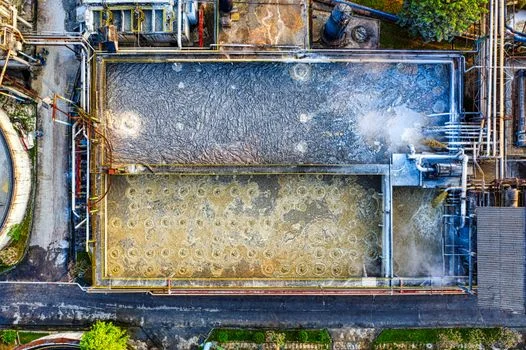
Membrane Bioreactors (MBR) offer the highest level of organic removal by combining biological treatment with ultrafiltration, effectively replacing the secondary clarifier of a conventional plant. In packaging applications, MBR systems for packaging wastewater achieve 95–98% COD removal and produce effluent suitable for direct reuse in cooling towers or boiler feed. However, MBR technology requires rigorous pre-treatment; high solids loading (>500 mg/L) can lead to rapid membrane fouling if not addressed by upstream screening or primary clarification.
Dissolved Air Flotation (DAF) is the industry standard for removing suspended solids, fats, and oils, making it ideal for the initial treatment of printing ink wastewater. By injecting micro-bubbles into the wastewater, DAF units float ink pigments and starch solids to the surface for mechanical skimming. Case studies, such as those involving the Flex-O-Star® configuration, show that 200 gpd systems can reduce TSS from 1,200 mg/L to under 50 mg/L with proper polymer dosing. While DAF is excellent for solids, it typically only removes 30–50% of dissolved COD, often necessitating a downstream biological stage for full compliance. For more details on equipment selection, consult a DAF clarifier selection guide.
Chemical precipitation remains the primary method for heavy metal removal and significant color reduction in packaging effluent. By utilizing lime, alum, or specialized polymers, engineers can precipitate dissolved metals to levels ≤0.1 mg/L. The trade-off is sludge production; chemical precipitation generates 20–30% more sludge by volume than MBR or DAF systems, increasing disposal costs. For facilities with high heavy metal concentrations, a hybrid approach—DAF for solids, followed by chemical precipitation for metals, and MBR for final polishing—is the most technically sound configuration.
| Feature | MBR (Membrane Bioreactor) | DAF (Dissolved Air Flotation) | Chemical Precipitation |
|---|---|---|---|
| Primary Removal | Dissolved COD / Organics | TSS / Inks / Pigments | Heavy Metals / Color |
| COD Removal | 95–99% | 30–50% | 40–60% |
| Footprint | Very Small | Medium | Large (Sedimentation) |
| CAPEX | High ($$$$) | Medium ($$) | Low ($) |
| OPEX | $0.80–$2.00/m³ | $0.40–$0.90/m³ | $0.60–$1.20/m³ |
Zero-Fouling Design: How to Extend Membrane Life and Cut OPEX by 30%
Membrane fouling is the single largest contributor to unplanned downtime and high OPEX in packaging wastewater MBRs, primarily due to the adhesive nature of starches and ink resins. To achieve a zero-fouling environment, engineering protocols must prioritize automated Clean-In-Place (CIP) systems. A standard protocol for packaging effluent involves a 0.5% NaOH wash followed by a 200 ppm NaOCl solution at 40°C for 30 minutes. This cycle effectively breaks down organic biofilms and proteinaceous matter, extending membrane life from the industry average of 3 years to over 7 years.
Mechanical prevention is equally critical. Implementing air scouring at a rate of 10–15 L/m²/min for MBR module installations creates sufficient shear force to prevent the formation of a permanent cake layer. high-solids wastewater must pass through a fine screen before reaching the membranes. Utilizing a pre-treatment for MBR systems with a mesh size of <1 mm can remove up to 90% of coarse fibers and starch clumps that would otherwise cause irreversible clogging. A HydropureWater installation at a major corrugated plant demonstrated that integrating automated CIP with 1mm rotary screening reduced manual cleaning frequency from weekly to once per month, cutting chemical costs by 22% (HydropureWater Engineering Report, 2024).
"Zero-fouling is not the absence of fouling, but the presence of an automated system that manages it before it impacts flux." — HydropureWater Lead Engineer
CAPEX and OPEX Breakdown: What to Budget for Your System
Capital expenditure (CAPEX) for advanced packaging wastewater systems is driven by flow volume and the degree of automation required. A standard 50 m³/h DAF-based system for a medium-sized printing plant typically starts at $1.2M, while a large-scale 500 m³/h MBR system integrated with Zero Liquid Discharge (ZLD) components can exceed $20M. These costs include engineering, equipment fabrication, installation, and commissioning. When evaluating costs, it is essential to consider the long-term savings associated with high-efficiency equipment. For example, a pre-treatment equipment for high-solids wastewater can reduce the size and CAPEX of the downstream biological unit by 15%.
Operating expenditure (OPEX) is dominated by energy consumption and chemical dosing. MBR systems consume between 0.3 and 0.8 kWh/m³ treated, largely due to air scouring and permeate pumping. Chemical costs for pH adjustment and coagulation range from $0.10 to $0.50/m³, depending on the influent COD. Despite the higher initial investment, MBR systems often provide an ROI of 3–5 years when the treated effluent is reused for non-potable applications, such as floor wash-downs or cooling tower makeup, which significantly reduces municipal water procurement costs.
| System Capacity | DAF CAPEX ($) | MBR CAPEX ($) | Hybrid (DAF+MBR) CAPEX ($) | Avg. OPEX ($/m³) |
|---|---|---|---|---|
| 50 m³/h | 1.2M – 1.8M | 2.0M – 3.5M | 2.8M – 4.5M | $0.65 |
| 100 m³/h | 2.2M – 3.0M | 4.5M – 6.5M | 6.0M – 8.5M | $0.75 |
| 300 m³/h | 4.5M – 6.0M | 9.0M – 12.0M | 12.0M – 15.5M | $0.90 |
| 500 m³/h | 7.5M – 10.0M | 14.0M – 20.0M | 18.0M – 25.0M | $1.10 |
Decision Framework: How to Choose the Right System for Your Plant
Selecting the optimal treatment system requires a systematic evaluation of your facility's specific waste profile and long-term operational goals. Follow this five-step engineering framework to ensure the selected technology aligns with both regulatory requirements and budget constraints.
- Characterize Influent: Conduct 24-hour composite sampling over a full production week to capture COD, TSS, color, and heavy metal peaks. Do not rely on "average" data, as packaging plants are prone to high-strength wash-down spikes.
- Define Effluent Targets: Determine if the goal is municipal discharge (less stringent), surface water discharge (more stringent), or internal reuse (most stringent). This dictates whether you need a DAF-only system or a DAF+MBR hybrid.
- Evaluate Footprint Constraints: If land is limited, MBR is the preferred choice as it eliminates the need for large secondary clarifiers. For modular expansion in large open areas, DAF units are often more cost-effective.
- Compare CAPEX/OPEX vs. ROI: Use the cost tables above to estimate the Total Cost of Ownership (TCO). Factor in water reuse savings; a system that costs 20% more in CAPEX may pay for itself in 3 years through reduced water bills.
- Pilot Test: For facilities treating over 100 m³/h, a 6-month pilot trial of the top two technology options (e.g., MBR vs. DAF) is recommended to verify removal efficiencies and membrane flux stability under real-world conditions.
Frequently Asked Questions
How much COD can an MBR system remove from corrugated board wastewater?
MBR systems typically remove 95–98% of COD from corrugated board effluent. Given an average influent COD of 2,000–5,000 mg/L, an MBR can consistently produce effluent with COD levels below 100 mg/L, often reaching as low as 30 mg/L with proper pre-treatment and nutrient balancing. This performance exceeds EPA 2024 benchmarks for industrial discharge.
What is the typical lifespan of membranes in a packaging wastewater environment?
With a zero-fouling design that includes automated CIP (NaOH/NaOCl) and fine pre-screening (<1 mm), membranes can last 5 to 7 years. Without these protections, the high starch and resin content in packaging wastewater can cause irreversible fouling within 12 to 18 months, significantly increasing OPEX.
Can DAF systems handle solvent-based ink wastewater?
Yes, DAF systems are highly effective for solvent-based ink wastewater when paired with appropriate coagulants and flocculants. The micro-bubbles attach to the hydrophobic solvent-ink particles, floating them to the surface for removal. However, dissolved VOCs and high COD may still require a secondary biological stage or activated carbon polishing for full compliance.
What is the average OPEX for a 100 m³/h hybrid treatment system?
The average OPEX for a hybrid DAF+MBR system at 100 m³/h capacity is approximately $0.75 per cubic meter treated. This includes electricity for aeration and pumping, chemical costs for coagulation and CIP, and a sinking fund for membrane replacement every 5–7 years. Energy accounts for roughly 40% of this cost.
Is chemical precipitation necessary if I already have an MBR?
Chemical precipitation is necessary if your wastewater contains heavy metals (Cr, Pb, Cu) above local discharge limits. While MBRs are excellent for organic removal, they are not designed to remove dissolved metals. In such cases, a chemical precipitation stage is installed upstream of the MBR to protect the biomass and ensure metal compliance.