Industrial wastewater treatment in Sharm El Sheikh for hotels must meet Egypt Law 48/1982 limits of BOD <30 mg/L and TSS <50 mg/L. Coastal reuse under Decree 1095/2019 often needs TSS <10 mg/L. A 1,000 m³/day MBR plant typically costs about EGP 22M ($460K)—about 20% more CapEx than conventional activated sludge—yet uses roughly 30% less footprint and can recycle about 60% of treated water. DAF units for high-TSS laundry effluent commonly consume 0.5–1.2 kWh/m³ and remove 92–97% of TSS before biological treatment.
Why Sharm El Sheikh Hotels Need Specs-First Treatment Design
Hotel and resort effluent in Sharm El Sheikh must meet Law 48/1982 BOD below 30 mg/L and TSS below 50 mg/L. Coastal reuse under Decree 1095/2019 often needs TSS below 10 mg/L. A 1,000 m³/day MBR costs about EGP 22M ($460K) at 0.8–1.5 kWh/m³ with about 60% recycle potential.
Tourism uses about 60% of the city's 250,000 m³/day water supply, and hotels generate roughly 80% of wastewater (CAPMAS 2023). Sharm El Sheikh’s tourism load sits on a scarce water balance. Hotels and resorts produce most of the industrial-strength effluent that reaches coastal outfalls and irrigation networks. Egypt’s Law 48/1982 and Decree 1095/2019 set the compliance floor. EEAA coastal inspections have been scheduled to intensify through 2026 (EEAA enforcement data). Non-compliance can bring fines up to EGP 500K, plus permit risk and seasonal shutdown exposure when occupancy peaks.
Desalinated water in South Sinai still runs about EGP 12–18/m³ (Ministry of Water Resources 2024). Treated wastewater for non-potable reuse is often 30% cheaper than buying desalinated make-up for irrigation and cooling towers. That price gap is why most plants we size for Red Sea resorts put reuse yield next to discharge limits on the same design sheet. For the national limit tables that feed local permits, see the Egypt wastewater discharge standards guide.
Procurement teams should treat CapEx, kWh/m³, and reuse yield as one decision set. A cheaper secondary-only plant that fails Decree 1095/2019 reuse limits still forces tanker water or desalinated make-up during peak season. Spec the discharge path first, then lock process units to that path. Operators who reverse that order usually retrofit tertiary filters within two peak seasons.
Industrial Wastewater Treatment in Sharm El Sheikh: Influent You Must Design For
Hotel, kitchen, and workshop streams in this coastal market are not interchangeable. Each sets different pretreatment needs before any biological stage can hold Law 48/1982 limits. Hotel laundry wastewater typically shows TSS 300–800 mg/L, FOG 150–400 mg/L, and pH 9–11 from strong detergents (EEAA 2024 benchmarks). Most plants we size for laundry first install a high-efficiency DAF system for laundry and food processing effluent, or chemical coagulation, before the bioreactor.
Food-processing effluent from resort kitchens usually carries BOD 800–2,000 mg/L and COD 1,500–3,500 mg/L. That organic load needs a robust biological step—often an MBR system for reuse-grade effluent and coastal compliance, or activated sludge with nutrient removal. Metalworking wastewater from maintenance shops can contain Cr⁶⁺ at 5–50 mg/L and Ni at 2–20 mg/L, so ion exchange or chemical precipitation must run before biology (Egyptian Standards ES 893/2020).
Seasonal tourism spikes during Ramadan or Eid can swing influent 30–50%. Fixed-capacity trains without equalization fail first on FOG and TSS, then on BOD. Design equalization and peak factors into the hydraulic model before you lock reactor volume. Composite sampling across laundry shifts and banquet days beats a single grab sample every time. Where banquet kitchens share a sewer with laundry, measure both peaks on the same day before you freeze tank volumes.
Hydraulic retention time for the biological stage should be set from measured COD, not brochure averages. Most plants we size for 150–400 room Red Sea resorts run toward the lower end of aeration intensity when FOG pretreatment is stable. If DAF skimmings are poorly managed, operators raise blower output and still miss BOD limits during banquet weeks.
Sludge handling is another CapEx item buyers underestimate. MBR trains produce less sludge than conventional activated sludge, but membrane cleaning chemicals and spare modules still belong in the five-year OPEX model. Budget haulage for DAF float and biosolids before the civil tender closes.
Workshop drains deserve a separate sample point. Hexavalent chromium and nickel at the ranges above will poison biomass if they bypass pretreatment. Even small maintenance shops serving dive-boat fleets can spike metals after hull work. Keep that sidestream on its own pretreatment skid.
| Wastewater Source | Key Characteristics | Typical Ranges | Primary Treatment Need |
|---|---|---|---|
| Hotel Laundry | TSS, FOG, High pH | TSS: 300-800 mg/L FOG: 150-400 mg/L pH: 9-11 |
DAF, Chemical Coagulation/Flocculation |
| Food Processing (Kitchens) | BOD, COD, Organic Load | BOD: 800-2,000 mg/L COD: 1,500-3,500 mg/L |
MBR, Activated Sludge with Nutrient Removal |
| Metalworking (Workshops) | Heavy Metals (Cr⁶⁺, Ni) | Cr⁶⁺: 5-50 mg/L Ni: 2-20 mg/L |
Ion Exchange, Chemical Precipitation |
How Much Does a Hotel WWTP Cost in Sharm El Sheikh?
A 1,000 m³/day MBR system in Sharm El Sheikh typically costs about EGP 22M ($460K). A conventional activated-sludge plant of the same capacity sits near EGP 15M ($315K). CapEx alone does not pick the process. Coastal reuse rules, plot area, and energy use all move the decision.
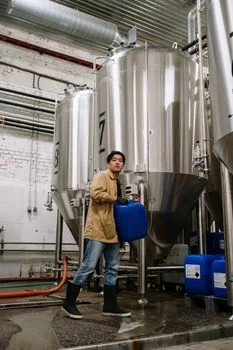
MBR systems reach COD removal above 95% and TSS typically below 5 mg/L, which matches coastal reuse targets. Footprint is often about 60% smaller than conventional activated sludge—useful on cramped resort plots. Membrane scouring and cleaning raise OPEX through energy and chemicals. That trade-off is why many 200–400 room properties accept higher CapEx to keep tertiary filters off the plot plan. Energy for MBR aeration and scouring typically lands at 0.8–1.5 kWh/m³ under normal mixed-liquor conditions.
DAF systems remove 92–97% TSS and about 90% FOG at 0.5–1.2 kWh/m³. They are strong primary stages for laundry and kitchen streams. DAF alone rarely meets full BOD limits without secondary biology. Comparing DAF vs API separator cost and performance still matters for oily workshop streams. Hotel laundry usually favors DAF over gravity API units because surfactant-laden FOG floats more readily with dissolved air.
Conventional activated sludge offers lower CapEx near EGP 15M ($315K) for 1,000 m³/day. It needs a larger footprint and produces 30–50% more sludge than MBR. Effluent typically lands BOD <30 mg/L and TSS <50 mg/L, then needs sand filtration or equivalent tertiary polish for coastal reuse. Secondary-only energy is often 0.3–0.6 kWh/m³ before tertiary polishers. Global WWTP cost benchmarks for industrial buyers still show the same pattern: biology CapEx falls, tertiary CapEx rises, when reuse is mandatory. Parallel Red Sea coastal economics appear in the Hurghada industrial wastewater treatment cost models.
| Feature | MBR System | DAF System | Conventional Activated Sludge |
|---|---|---|---|
| CapEx (1,000 m³/day) | ~EGP 22M ($460K) | (Primary Treatment Only) | ~EGP 15M ($315K) |
| Energy Consumption (kWh/m³) | 0.8–1.5 | 0.5–1.2 | 0.3–0.6 (Secondary only) |
| COD Removal | >95% | Minimal (Primary) | 70-90% |
| TSS Removal | <5 mg/L effluent | 92–97% | <50 mg/L effluent |
| Footprint | Compact (60% smaller) | Moderate (Primary) | Large |
| Sludge Production | Moderate | High (Primary) | High (30-50% more than MBR) |
| Effluent Quality for Reuse | Excellent (compliant with Decree 1095/2019) | Requires secondary/tertiary | Requires tertiary |
Decentralized vs Centralized Systems: Which Fits Your Hotel or Resort?
Decentralized package plants for Sharm El Sheikh hotels typically cost EGP 5M–15M at 50–500 m³/day. Municipal connection OPEX often lands near EGP 2–5/m³ when a reliable sewer exists. Scale, reuse goals, and EEAA permitting time decide the split more than brochure preference.
A decentralized package plant for hotels and resorts suits properties under about 200 rooms or sites without stable municipal access. On-site control supports irrigation reuse, but OPEX can run 20–30% higher from staffing, chemicals, and membrane or blower maintenance (Top 2 page data). EEAA approval for decentralized plants in Sharm El Sheikh commonly takes 6–12 months and needs complete design files.
Centralized municipal connections lower day-to-day operating burden. Connection fees vary by site. Municipal CapEx for a 1,000 m³/day node can exceed EGP 30M for the authority side (EEAA 2024 data). Operators lose direct control of reuse quality once flow leaves the property. A 150-room Naama Bay resort cut water costs by about 40% after installing a decentralized MBR (WSZ series) with 60% recycling capacity (HydropureWater 2025 project data). That pattern repeats when desalinated make-up is the alternative water source.
Hybrid layouts also appear on larger campuses. Laundry and kitchen drains stay on a package plant for reuse, while low-strength guest-room sewage connects to the municipal line when capacity is guaranteed. Confirm both hydraulic and legal boundaries before splitting streams.
| Feature | Decentralized (Package Plant) | Centralized (Municipal Connection) |
|---|---|---|
| CapEx (Typical) | EGP 5M–15M (50–500 m³/day) | Connection fees (variable), higher overall municipal CapEx (EGP 30M+ for 1,000 m³/day) |
| OPEX (Per m³) | 20–30% higher (due to maintenance, staffing) | EGP 2–5/m³ (lower operational burden) |
| Suitability | Hotels under 200 rooms, remote locations, desire for reuse | Large hotels/resorts with municipal access, preference for off-site management |
| Control over Effluent/Reuse | High (on-site management) | Low (dependent on municipal plant) |
| Permitting | EEAA approval (6–12 months) | Municipal connection permits (simpler) |
Compliance Checklist: Meeting Law 48/1982 and Decree 1095/2019
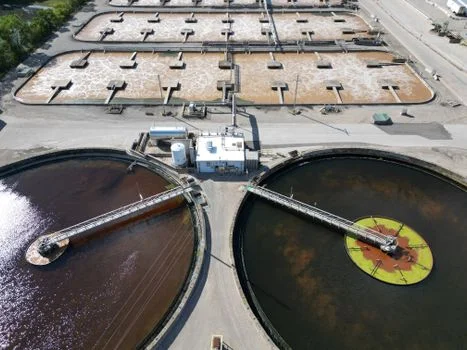
Egypt Law 48/1982 sets BOD below 30 mg/L, TSS below 50 mg/L, COD below 100 mg/L, and pH 6–9 for typical public-network or non-sensitive discharges. Decree 1095/2019 tightens coastal reuse in places like Sharm El Sheikh to TSS below 10 mg/L for irrigation or aquifer recharge paths. That tertiary bar is why MBR or post-secondary sand filtration appears on most coastal permit packages.
Permits usually require continuous logging of pH, TSS, and flow for EEAA audits (EEAA 2024 guidelines). Common failures we still see on Red Sea sites include FOG limits ignored on laundry trains. Seasonal peaks that overrun undersized equalization are the next failure mode. Build peak factors and FOG removal into the P&ID before civil bids freeze. Parameter-by-parameter industrial limits are summarized in the Egypt effluent compliance limits reference.
Selection checklist for Sharm El Sheikh hotel and light-industrial trains:
- Confirm discharge vs reuse path (Law 48/1982 vs Decree 1095/2019 TSS <10 mg/L).
- Characterize laundry FOG/TSS, kitchen BOD/COD, and any workshop metals separately.
- Size equalization for 30–50% holiday influent swings.
- Choose DAF + biology vs MBR based on plot area and reuse yield.
- Budget energy at the process-specific kWh/m³ range, not a single plant average.
- Plan EEAA documentation for a 6–12 month decentralized approval window.
- Install continuous pH, TSS, and flow monitoring with auditable logs.
Can Recycled Wastewater Cut Hotel Water Costs in South Sinai?
Desalinated water in South Sinai averages about EGP 12–18/m³. Recycled wastewater after advanced treatment often costs EGP 3–5/m³ to produce (Ministry of Water Resources 2024). That spread drives payback on MBR and tertiary trains when irrigation and cooling towers can take reclaimed water.
A 200-room hotel generating about 150 m³/day and recycling 60% can save on the order of EGP 1.2M per year in some operating cases cited in prior site data. That can reach about 30% of the water budget when desalinated make-up is displaced. Using the mid-range unit costs below (EGP 15/m³ desalinated vs EGP 4/m³ recycled), daily savings calculate to about EGP 990. Annual savings land near EGP 361,350 at 90 m³/day reused.
CapEx for a 150 m³/day MBR is typically about EGP 4.5M–7M when scaled from the EGP 22M benchmark at 1,000 m³/day. Payback often falls in the 4–6 year band (Top 2 page data). Lower dependence on desalinated supply during peak season also reduces operational risk when tourist occupancy spikes. Those are practical water-scarcity responses that show up on the OPEX sheet, not only in sustainability reports.
Sensitivity still matters. If desalinated water falls toward EGP 12/m³ and recycle OPEX rises toward EGP 5/m³, annual savings shrink and payback stretches past six years. Run both price edges before you approve CapEx. Keep the same boundary conditions in the lender model and the EEAA water-balance sheet.
| Parameter | Value | Notes |
|---|---|---|
| Average Desalinated Water Cost | EGP 15/m³ | Mid-range for South Sinai (Ministry of Water Resources 2024) |
| Average Recycled Wastewater Cost | EGP 4/m³ | Includes OPEX for advanced treatment (HydropureWater estimate) |
| Daily Wastewater Generation (200-room hotel) | 150 m³/day | Typical estimate for hotel wastewater treatment Egypt |
| Recycling Rate | 60% | Achievable with MBR systems |
| Daily Water Savings (Recycled) | 90 m³/day | 150 m³/day * 60% |
| Daily Cost Savings | EGP 990 | 90 m³/day * (EGP 15 - EGP 4)/m³ |
| Annual Cost Savings | EGP 361,350 | EGP 990 * 365 days |
| CapEx for 150 m³/day MBR System | ~EGP 4.5M - EGP 7M | Estimated based on 1000 m³/day CapEx (EGP 22M) |
| Estimated Payback Period | ~4-6 years | Varies with specific system and operating conditions |
Who This Is For / Next Step
Hotel and resort engineers, EPC contractors, and procurement managers sizing on-site or hybrid treatment in Sharm El Sheikh and wider South Sinai are the primary readers. Look elsewhere if you only need inland Nile-delta factory limits without coastal reuse—start with inland factory models such as Giza instead. If you already have flow, BOD/COD, FOG, and discharge-vs-reuse targets, send them through our request a project quote form so the train can be sized against Law 48/1982 and Decree 1095/2019 in one pass.
Frequently Asked Questions
What are the key differences between MBR and DAF for hotel wastewater treatment?
MBR systems deliver reuse-grade effluent with TSS typically below 5 mg/L and COD removal above 95%, at about 0.8–1.5 kWh/m³ including aeration and membrane scouring. DAF systems remove 92–97% TSS and about 90% FOG at 0.5–1.2 kWh/m³, which suits laundry and kitchen pretreatment. DAF alone rarely meets full BOD limits, so hotels usually pair it with secondary biology when coastal discharge or irrigation reuse is required.
How much does a 500 m³/day WWTP cost in Sharm El Sheikh, including installation?
A 500 m³/day decentralized WWTP in Sharm El Sheikh typically costs about EGP 10M–18M ($210K–$380K) including equipment, civil works, and installation. MBR packages sit toward the top of that band because membranes and scour blowers raise CapEx. Final price still moves with foundation conditions, equalization volume, and whether tertiary reuse polishing is inside the scope.
What permits are required for a decentralized wastewater treatment plant in South Sinai?
Operators typically need EEAA environmental impact assessment approval, a local construction permit, and an operating permit that states effluent limits under Law 48/1982 and Decree 1095/2019. EEAA review for decentralized plants commonly takes 6–12 months when drawings, water balances, and monitoring plans are complete. Incomplete FOG or peak-flow data is the usual cause of resubmission delays.
Can recycled wastewater be used for hotel irrigation and cooling towers under Egyptian law?
Yes. Under Prime Minister Decree 1095/2019, treated wastewater meeting tertiary standards such as TSS <10 mg/L can serve non-potable uses including grounds irrigation, golf courses, and cooling towers in coastal zones such as Sharm El Sheikh. Potable reuse is outside this pathway. Keep online monitoring records ready for EEAA audits of the reuse train.
What are the energy consumption differences between MBR, DAF, and conventional systems?
MBR trains typically use 0.8–1.5 kWh/m³ for aeration plus membrane scouring. DAF primary units generally use 0.5–1.2 kWh/m³ for pressurized recycle and skimming. Conventional activated-sludge secondary stages often use 0.3–0.6 kWh/m³ before any tertiary filters required for coastal reuse, so whole-plant energy must include those polishers when comparing OPEX.