Rosario’s sewage treatment equipment market is projected to grow 6.2% annually through 2026, driven by Ley 25.688’s stricter effluent limits (e.g., COD < 250 mg/L for industrial discharge). Local suppliers like AquaTec and EcoPro offer systems with 92–98% TSS removal, but engineering specs vary widely—MBR systems (e.g., HydropureWater’s DF Series) achieve <1 μm filtration for reuse, while DAF systems handle high-FOG influents (up to 5,000 mg/L). This guide compares 2026 specs, costs, and compliance readiness for Rosario buyers.
Rosario’s Sewage Treatment Regulations: What Buyers Must Know in 2026
Ley 25.688 (Argentina’s Water Code) establishes that industrial effluent discharge into water bodies must maintain a Chemical Oxygen Demand (COD) below 250 mg/L to prevent ecosystem degradation. In the Santa Fe Province, and specifically within the Rosario municipal jurisdiction, enforcement has intensified. The Secretaría de Ambiente now mandates real-time monitoring for facilities discharging over 100 m³/day. Failure to comply with these benchmarks results in tiered penalties, with 2024 enforcement reports citing three major fines issued to textile mills specifically for Fats, Oils, and Grease (FOG) violations where levels exceeded 50 mg/L.
Municipal Ordinance 9245/2023 further complicates the landscape for large-scale developers and municipal planners. Any plant processing more than 500 m³/day is now required to implement tertiary treatment. This usually involves advanced disinfection (UV or Ozone) and nutrient removal (Nitrogen and Phosphorus). For industries like food processing, which are prevalent in the Greater Rosario area, the limit for FOG is strictly capped at 10 mg/L for sewer discharge. Meeting these standards requires a shift from simple sedimentation to advanced technologies such as MBR systems for water reuse in Rosario’s industrial zones or high-efficiency DAF units.
The permitting process in Rosario typically spans 6 to 12 months. It begins with an Environmental Impact Assessment (EIA), followed by the submission of detailed engineering specs. A common pitfall for procurement managers is underestimating the "Sludge Management Plan" required for permit approval. In Santa Fe, sludge disposal costs have risen, making equipment that minimizes sludge volume—such as aerobic digesters or high-pressure filter presses—more economically viable in the long term.
| Parameter | Industrial Discharge Limit (Ley 25.688) | Municipal Sewer Limit (Ord. 9245/2023) | Typical Food Processing Influent |
|---|---|---|---|
| COD (mg/L) | < 250 | < 500 | 2,000 – 8,000 |
| TSS (mg/L) | < 30 | < 300 | 500 – 2,500 |
| FOG (mg/L) | < 10 | < 50 | 500 – 5,000 |
| pH | 6.0 – 9.0 | 5.5 – 10.0 | 4.0 – 11.0 |
Sewage Treatment Equipment Types for Rosario: Specs, Costs, and Use Cases
Dissolved Air Flotation (DAF) systems are the industry standard for Rosario’s robust food processing and petrochemical sectors. The DAF system for high-FOG wastewater in Rosario utilizes a micro-bubble generation system (30–50 μm bubbles) to achieve 92–97% TSS removal and up to 95% FOG removal. With a footprint of 0.5–2 m²/m³/h, DAF is ideal for pre-treatment before biological stages. CAPEX for these units ranges from $80,000 to $300,000 for flows between 10 and 100 m³/h, depending on material construction (SS304 vs. SS316L).
Membrane Bioreactor (MBR) systems represent the peak of effluent quality, combining biological treatment with ultrafiltration. MBRs are increasingly favored for wastewater reuse in Rosario’s urban sites, as the effluent quality (TSS < 5 mg/L, COD < 50 mg/L) is suitable for cooling towers or landscape irrigation. While the OPEX is higher ($0.20–$0.35/m³) due to membrane aeration and periodic chemical cleaning, the 60% reduction in footprint compared to conventional activated sludge makes it the only viable option for space-constrained industrial parks.
For residential developments and hotels along the Paraná River, the WSZ Series underground systems for Rosario’s space-constrained sites offer a "set-and-forget" solution. These package plants utilize an Anoxic/Oxic (A/O) process flow: influent → anaerobic acidification → aerobic oxidation → sedimentation → disinfection. Because they are buried, they eliminate odor complaints and aesthetic issues. CAPEX for a 50 m³/h underground plant typically sits between $350,000 and $500,000.
Chemical dosing skids are essential peripherals for textile mills in Rosario, where dye removal requires precise coagulant and flocculant injection. These PLC-controlled units ensure that pH levels remain within the 6–9 range required by law. Integrating a dosing skid with a DAF unit can significantly lower the organic load before it reaches municipal sewers, often paying for itself via reduced "high-load" surcharges from utility providers.
| Equipment Type | Primary Use Case | TSS Removal Rate | Footprint (m²/m³/h) | 2026 CAPEX Range (USD) |
|---|---|---|---|---|
| DAF | Food Processing / FOG | 92–97% | 0.5 – 2.0 | $80K – $300K |
| MBR (DF Series) | Water Reuse / Urban | > 99% | 0.2 – 0.8 | $150K – $600K |
| Underground (WSZ) | Residential / Hotels | 85–90% | 0.1 – 0.3 (surface) | $120K – $500K |
| Chemical Skid | Textiles / Chemical | Variable | < 5.0 total | $20K – $80K |
Top 5 Sewage Treatment Equipment Suppliers in Rosario: 2026 Spec Comparison
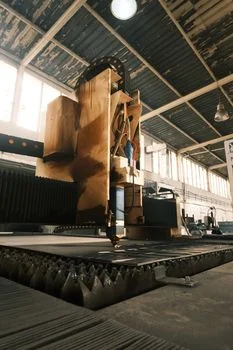
Comparison of the top 5 sewage treatment equipment suppliers in Rosario reveals a 15–20% variance in CAPEX for systems with identical flow capacities, primarily driven by membrane quality and automation levels. While local assemblers offer lower upfront costs, international-spec manufacturers provide significantly higher verifiable removal rates and lower long-term OPEX through energy-efficient blower designs and PLC optimization.
In the Rosario market, the ability to provide on-site pilot testing is a critical differentiator. High-FOG influents from local slaughterhouses or high-TDS (Total Dissolved Solids) wastewater from chemical plants often behave unpredictably. Only two of the top five suppliers currently offer mobile pilot units that allow engineers to verify chemical consumption and effluent quality before committing to a multi-million dollar CAPEX investment. Buyers should also scrutinize the availability of local IRAM-certified maintenance teams, as downtime in a 24/7 production facility can lead to immediate regulatory non-compliance.
| Supplier Name | Core Technology | Max COD Removal (%) | Pilot Testing? | Compliance Focus |
|---|---|---|---|---|
| AquaTec Solutions | Conventional Biological | 85% | No | Municipal General |
| EcoPro Industrial | DAF & Chemical | 90% | Yes | Textile / Dye |
| HydroCycle Trading | Modular Package | 88% | No | Remote Sites |
| Puraqua Engineering | Filtration/RO | 95% | Yes | High-Purity Reuse |
| Saneamiento Industrial | MBR / Specialized | 98% | Yes | Zero-Discharge (ZLD) |
How to Choose the Right System for Your Rosario Project: A Decision Framework
Selecting a sewage treatment system in Rosario requires a multi-stage characterization of influent, where Chemical Oxygen Demand (COD) and Fats, Oils, and Grease (FOG) concentrations dictate the necessity of primary versus tertiary treatment. Engineers must first perform a 24-hour composite sampling to account for production spikes, common in food processing cycles. If the influent COD exceeds 2,000 mg/L, a single-stage biological system will likely fail during peak loads, necessitating a DAF unit for pre-treatment.
The second step involves mapping your project goals against Rosario's utility costs. If your facility pays high rates for potable water, an MBR system offers a compelling ROI by enabling water reuse. See how Phoenix’s industrial wastewater compliance compares to Rosario’s to understand how global water scarcity is driving similar MBR adoption in industrial hubs. Conversely, if space is the primary constraint, integrated underground systems are the standard choice for urban Rosario developments.
To calculate the total cost of ownership, use the following budgeting formula: Total Annual Cost = [CAPEX / Amortization Years] + [Flow (m³/day) × 365 × OPEX ($/m³)]. In Rosario, OPEX must include the Santa Fe Province sludge disposal fee, which currently averages $100 per ton. For a 50 m³/h plant, a system that reduces sludge volume by 20% can save a facility over $30,000 annually in disposal costs alone.
- Step 1: Characterize Influent (COD, TSS, FOG, pH).
- Step 2: Define Effluent Goal (Sewer discharge vs. River discharge vs. Reuse).
- Step 3: Evaluate Space (Surface area available vs. Underground requirements).
- Step 4: Model OPEX (Energy $0.15/kWh, Sludge $100/ton, Chemicals).
- Step 5: Verify Supplier Support (Local spare parts and pilot testing availability).
2026 Cost Benchmarks for Sewage Treatment Plants in Rosario
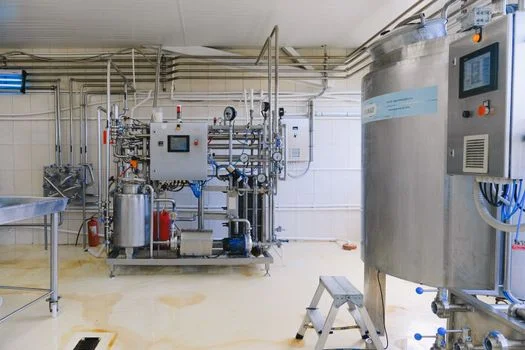
CAPEX for a 50 m³/h MBR-based sewage treatment plant in Rosario is estimated between $400,000 and $600,000 USD for 2026, reflecting localized logistics and engineering labor rates. These figures include the membrane modules, aeration systems, PLC controls, and stainless steel tankage. For simpler DAF-plus-biological configurations, the budget can be reduced to $280,000–$420,000, though this setup rarely meets the stringent requirements for high-end water reuse without additional polishing stages.
Operational expenditures (OPEX) in Rosario are heavily influenced by industrial energy tariffs, currently projected at $0.15/kWh for 2026. MBR systems consume more energy (0.6–1.2 kWh/m³) compared to DAF systems (0.2–0.5 kWh/m³), but they eliminate the need for secondary clarifiers and tertiary sand filters. Compare DAF vs. API separators for Rosario’s industrial wastewater to see how different pre-treatment choices affect these downstream biological costs.
Sludge disposal remains the most volatile cost driver in the Santa Fe region. With landfill fees reaching $120/ton for non-hazardous industrial sludge, dewatering equipment (such as screw presses or decanter centrifuges) has become a mandatory high-ROI add-on. A typical 50 m³/h plant generates 1–3 tons of sludge daily; reducing the moisture content from 98% to 80% via mechanical dewatering can reduce disposal traffic and costs by nearly 75%.
| System Type (50 m³/h) | CAPEX (2026 USD) | OPEX ($/m³) | Major Cost Driver |
|---|---|---|---|
| DAF + Biological | $280,000 – $420,000 | $0.12 – $0.20 | Chemical Coagulants |
| MBR (Membrane) | $400,000 – $600,000 | $0.20 – $0.35 | Energy & Membrane Replacement |
| Underground Package | $350,000 – $500,000 | $0.08 – $0.15 | Maintenance Labor |
| Chemical Dosing Skid | $20,000 – $80,000 | $0.05 – $0.15 | Chemical Consumables |
Frequently Asked Questions
Q: What are the most common compliance violations for sewage treatment plants in Rosario?
A: According to the Rosario Secretaría de Ambiente 2024 report, FOG concentrations exceeding 10 mg/L account for 35% of industrial violations, followed by COD levels over 250 mg/L (28%) and pH imbalances (22%).
Q: How long does it take to get a sewage treatment plant permit in Rosario?
A: The timeline is generally 6 to 12 months. Delays are most frequently caused by incomplete influent characterization data or the lack of a certified sludge disposal plan in the initial Environmental Impact Assessment (EIA).
Q: Which sewage treatment system is best for a small food processing plant in Rosario?
A: A combination of a DAF system followed by an A/O biological stage is recommended. This setup handles high FOG (up to 5,000 mg/L) effectively and ensures effluent meets the COD < 250 mg/L limit for industrial discharge.
Q: Can I reuse treated sewage water in Rosario for industrial processes?
A: Yes, provided the system includes tertiary treatment. MBR effluent meets Argentina’s reuse standards for non-potable applications such as cooling tower make-up water and irrigation, offering a significant reduction in municipal water bills.
Q: How do I verify a supplier’s compliance claims?
A: Always request third-party lab results (IRAM-certified) from existing installations in the Santa Fe region. prioritize suppliers that offer on-site pilot testing, as this is the only way to guarantee performance on your specific influent profile.