A pressure flotation system (e.g., Dissolved Air Flotation, DAF) removes 95%+ of suspended solids (TSS), oils, and grease from industrial wastewater by dissolving air under 3–6 bar pressure, then releasing it as 30–100 μm microbubbles. These bubbles attach to contaminants, reducing their density and floating them to the surface for skimming. Typical retention times of 10–30 minutes and influent TSS loads of 500–5,000 mg/L achieve effluent quality below 30 mg/L, meeting EPA and EU discharge limits for food processing, pulp/paper, and petrochemical applications.
How Pressure Flotation Works: From Soda Cans to Industrial Wastewater
The fundamental physics of a pressure flotation system can be understood by observing a freshly opened soda can. Under the sealed pressure of the can, carbon dioxide remains dissolved in the liquid; once the tab is pulled and pressure drops to atmospheric levels, the gas becomes insoluble and forms bubbles. In industrial wastewater treatment, we replicate this phenomenon using atmospheric air and high-pressure saturation tanks to generate the "white water" effect necessary for clarifying contaminated streams.
The process relies on Henry’s Law, which states that the amount of dissolved gas in a liquid is proportional to its partial pressure. By saturating a portion of the treated effluent with air at 3–6 bar, the system creates a supersaturated solution. When this solution is injected into the main flotation tank through a pressure-reducing nozzle, the sudden drop in pressure causes the air to nucleate into 30–100 μm microbubbles. These bubbles are significantly smaller than those produced by traditional aeration, providing a massive surface area-to-volume ratio that facilitates intimate contact with suspended particles.
Attachment between the microbubble and the contaminant is governed by surface tension and the contact angle. When a hydrophobic particle (like an oil droplet or a chemically conditioned floc) encounters a microbubble, the air-water interface is replaced by an air-solid interface. This reduces the overall density of the particle-bubble aggregate to less than that of water, causing it to rise to the surface at a velocity of 0.1–0.3 m/min. This "attach-float-skim" mechanism is the primary reason why pressure flotation outperforms gravity sedimentation for lightweight materials like Fats, Oils, and Grease (FOG) and fibrous pulp solids.
Pressure Flotation System Design Specs: Engineering Parameters for 2025
Engineering a pressure flotation system requires precise alignment between the wastewater’s chemical characteristics and the system’s hydraulic design. For 2025, modern facilities are moving toward higher surface loading rates and tighter pressure control to minimize energy waste. A critical design factor is the Recycle Ratio, which typically ranges from 10% to 50% of the total flow, ensuring there is enough dissolved air to lift the specific mass of influent solids.
The microbubble size distribution is perhaps the most vital metric for performance. Bubbles larger than 100 μm possess too much buoyancy, creating turbulence that can shear delicate chemical flocs. Conversely, bubbles smaller than 30 μm lack the lift required to move heavy TSS loads quickly. Maintaining a stable pressure of 3–6 bar in the saturation vessel is the industry standard for achieving this optimal 30–100 μm range. the flotation tank must be sized to accommodate a surface loading rate of 5–10 m³/m²/h, ensuring that the upward velocity of the aggregates exceeds the downward hydraulic pull of the effluent discharge.
| Parameter | Engineering Specification (Range) | Impact on Performance |
|---|---|---|
| Operating Pressure | 3.0 – 6.0 bar | Determines air solubility and bubble size (Henry's Law) |
| Microbubble Size | 30 – 100 μm | Optimal size for particle attachment without floc shear |
| Retention Time | 10 – 30 minutes | Provides sufficient time for flotation and skimming |
| Surface Loading Rate | 5.0 – 10.0 m³/m²/h | Prevents solids carry-over into the effluent stream |
| Air-to-Water Ratio | 10% – 15% (by volume) | Ensures saturation levels meet TSS removal requirements |
| Influent TSS Limit | 500 – 5,000 mg/L | Standard range for DAF pretreatment applications |
Chemical conditioning is a prerequisite for successful pressure flotation. Most industrial wastewater contains stable colloidal suspensions that will not naturally adhere to air bubbles. The addition of coagulants (such as Polyaluminum Chloride at 50–200 mg/L) neutralizes particle charges, while flocculants (anionic or cationic polymers at 1–5 mg/L) bridge these particles into larger, floatable structures. Systems like PLC-controlled chemical dosing for optimal floc formation in DAF systems ensure these parameters are met automatically, preventing effluent spikes during influent surges.
DAF vs. IAF vs. Electroflotation: Which Pressure Flotation System Fits Your Wastewater?
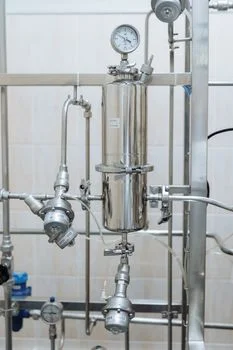
Choosing the correct flotation technology depends on the particle size, concentration, and available footprint. While Dissolved Air Flotation (DAF) is the industry standard for high-solids applications, other variants like Induced Air Flotation (IAF) and Electroflotation offer specific advantages for niche sectors like mining or pharmaceuticals.
DAF systems are characterized by their use of a pressure vessel to dissolve air, producing the finest bubbles and the highest removal efficiencies (95%+ TSS). IAF systems, by contrast, use mechanical impellers or eductors to "induce" air into the water. While IAF has a lower initial CAPEX, the resulting bubbles are larger (100–500 μm), making them less effective for removing fine particles (<50 μm). Electroflotation is a specialized method where electrolysis produces hydrogen and oxygen microbubbles at the electrodes. This eliminates the need for chemical additives but is generally limited to low-flow applications (<50 m³/h) due to high electricity costs and electrode maintenance.
| Feature | Dissolved Air Flotation (DAF) | Induced Air Flotation (IAF) | Electroflotation |
|---|---|---|---|
| Bubble Size | 30 – 100 μm | 100 – 500 μm | 10 – 30 μm |
| TSS Removal | 90% – 99% | 70% – 85% | 95% – 99% |
| Energy Use | 0.1 – 0.3 kWh/m³ | 0.3 – 0.5 kWh/m³ | 0.5 – 1.5 kWh/m³ |
| Chemical Need | High (Coagulants/Flocs) | Moderate | Very Low |
| Best Use Case | Food, Paper, Petrochem | Mining, Oil/Water Sep | Pharma, Heavy Metals |
For procurement teams, a detailed cost comparison of DAF and IAF systems is essential. Generally, if your TSS exceeds 1,000 mg/L and your flow rate is above 100 m³/h, DAF provides the best ROI through lower operational energy costs and superior discharge compliance. If space is extremely limited and the primary goal is simple oil/water separation, IAF may be the more practical choice.
Step-by-Step Pressure Flotation Process: From Influent to Effluent
The operational sequence of a pressure flotation system is a continuous loop of chemical reaction and physical separation. Failure in any single step can lead to "burping" in the tank or solids carry-over in the effluent.
- Chemical Conditioning: Wastewater enters a reaction tank where coagulants (PAC or alum) are flash-mixed for 1–2 minutes. This is followed by slow-speed mixing with polymers to build flocs. Proper flocculation is the foundation of flotation; without it, bubbles will simply pass through the water without capturing contaminants.
- Air Dissolution: A side-stream of 20–50% of the clarified effluent is diverted to a saturation tank. A high-pressure pump compresses this water to 3–6 bar while an air compressor injects atmospheric air. The tank's internal design ensures maximum gas-liquid interface for 90%+ saturation.
- Pressure Release and Nucleation: The saturated recycle water meets the chemically treated influent at the inlet of the flotation tank. As the mixture passes through a pressure-reducing valve, the air precipitates out of the solution, forming millions of microbubbles that instantly "carpet" the flocs.
- Flotation and Separation: The bubble-floc aggregates rise to the surface. In a DAF systems for 4–300 m³/h industrial wastewater treatment, the laminar flow design ensures that the rising sludge layer remains undisturbed by the incoming flow.
- Mechanical Skimming: A chain-and-flight or rotary skimmer moves across the surface at 0.5–1.0 m/min, pushing the thickened scum layer into a discharge hopper. The scum typically reaches a solids concentration of 2–5%, which may require further sludge dewatering solutions for DAF scum disposal.
- Clarified Effluent Discharge: The clean water flows under a baffle and over an adjustable weir. This design prevents any floating scum from exiting the system, ensuring TSS levels remain consistently below 30 mg/L.
Pressure Flotation System Costs: 2025 CAPEX, OPEX, and ROI Calculations
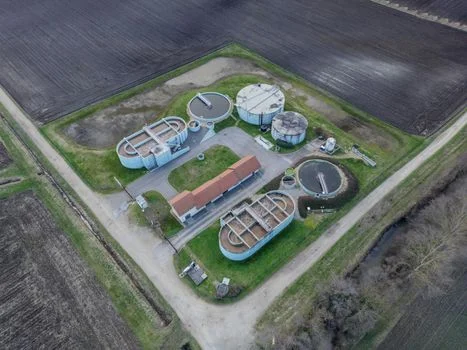
For industrial plants, the justification for a pressure flotation system often rests on its compact footprint and high efficiency compared to traditional clarifiers. A DAF system requires approximately 60% less space than a circular gravity clarifier for the same flow rate, which significantly reduces civil engineering and land costs.
The CAPEX for a DAF system varies based on material (e.g., 304 vs. 316 stainless steel) and automation level. A standard 50 m³/h system typically costs between US$80,000 and US$150,000. However, the true cost of ownership lies in the OPEX, which is dominated by chemical consumption. In a food processing scenario, chemical costs can range from US$0.10 to US$0.50 per cubic meter of treated water, depending on the influent's fat and protein load. Energy consumption is relatively low, averaging 0.1–0.3 kWh/m³, making the DAF one of the most energy-efficient ways to remove high-concentration solids.
| Cost Category | Typical Range (USD) | Notes |
|---|---|---|
| CAPEX (System) | $50,000 – $500,000 | Scales with flow rate (10 – 300 m³/h) |
| Energy (OPEX) | $0.02 – $0.05 / m³ | Based on 0.2 kWh/m³ and $0.15/kWh |
| Chemicals (OPEX) | $0.10 – $0.50 / m³ | PAC and Polymer usage (HydropureWater field data) |
| Maintenance | 5% – 8% of CAPEX / Year | Includes pump seals, skimmer blades, and sensors |
| ROI Period | 12 – 24 Months | Savings from sewer surcharges and sludge volume reduction |
A real-world example involves a poultry processing plant that implemented a DAF system to replace an aging settling pond. By reducing influent TSS from 1,200 mg/L to 25 mg/L, the plant avoided US$15,000 per month in municipal surcharge penalties. Additionally, the recovered solids were sold as rendering material, creating a secondary revenue stream that shortened the ROI to just 14 months.
Common Pressure Flotation Problems and How to Fix Them
Maintaining a pressure flotation system requires vigilant monitoring of the "white water" quality and the scum layer consistency. Operators should perform hourly visual checks to ensure the recycle water looks like milk; if it appears clear, the air dissolution system has failed.
"The most common failure point in DAF systems is not the tank itself, but the air-liquid equilibrium. If the pressure drops below 3 bar, the bubbles become too large, and the flotation efficiency plummets."
- Problem: Poor Flotation (Cloudy Effluent): This is usually caused by insufficient air saturation or incorrect chemistry. Check the pressure gauge on the saturation tank; if it is below 3 bar, inspect the air compressor or check for leaks in the recycle pump seals. If pressure is fine, perform a "jar test" to verify that the chemical dosage matches the current influent characteristics.
- Problem: Excessive Scum Layer (>20 cm): A thick, heavy scum layer can strain the skimmer motor. This is often caused by overdosing flocculants (polymer), which creates overly large, sticky flocs. Reduce the polymer dosage by 10–20% and increase the skimmer speed to maintain a layer thickness of 5–10 cm.
- Problem: High Energy Consumption: If the system is drawing more than 0.4 kWh/m³, the recycle rate may be set too high. Reducing the recycle ratio from 50% to 30% can save significant energy without sacrificing TSS removal, provided the solids load is within design limits.
- Problem: Bubbles Breaking at the Surface: This indicates the presence of surfactants or soaps in the wastewater that are lowering the surface tension. Adjusting the pH to a range of 6.5–7.5 or adding a specialized de-foaming agent can stabilize the bubble-particle bond.
Frequently Asked Questions
Q: What is the difference between DAF and IAF?
A: DAF dissolves air under high pressure (3–6 bar) to create 30–100 μm microbubbles, which are ideal for fine solids and oils. IAF uses mechanical agitation to create larger 100–500 μm bubbles. DAF is generally more efficient for industrial pretreatment, while IAF is used for coarser separations in the oil and gas industry.
Q: How much does a DAF system cost?
A: For 2025, a complete DAF system ranges from US$50,000 for small 10 m³/h units to over US$500,000 for 300 m³/h municipal-grade systems. Operational costs typically average US$0.15–$0.60 per cubic meter depending on chemical needs.
Q: What chemicals are used in pressure flotation?
A: The most common are inorganic coagulants like Polyaluminum Chloride (PAC) or Ferric Chloride, and organic flocculants (polymers). These chemicals are essential to aggregate small particles into flocs that air bubbles can easily lift.
Q: What is the optimal bubble size for flotation?
A: The industry-standard "sweet spot" is 30–100 μm. Bubbles in this range have enough buoyancy to lift solids but are small enough to provide a high surface area for maximum particle attachment.
Q: Can DAF systems handle high-salinity wastewater?
A: Yes, but high salinity (>10,000 mg/L) can affect bubble stability and corrosion rates. In these cases, 316L stainless steel construction is required, and chemical dosages may need adjustment to account for the increased ionic strength of the water.