Why Casablanca’s Wastewater Treatment Market is Booming in 2025
Casablanca has 10 planned wastewater treatment plants (2023–2028), and Morocco’s NM 03.7.200 discharge limits require equipment with ≥95% TSS removal and ≤50 mg/L COD. Local suppliers, such as EcoTreat Solutions Maroc, deliver 40% capacity upgrades, but lack modular scalability. Chinese manufacturers offer 30% lower CAPEX ($800–$1,200/m³/day for MBR) but longer lead times (12–16 weeks). This guide provides engineering specs, cost benchmarks, and a selection framework for industrial buyers.
Morocco’s National Liquid Sanitation and Wastewater Treatment Program (PNA) targets 80% wastewater reuse by 2030, driven by the Ministry of Equipment and Water. In Casablanca, this means a massive infrastructure overhaul, with 10 new municipal plants scheduled for completion by 2028. Industrial procurement managers face a regulatory mandate. The NM 03.7.200 standard limits Biological Oxygen Demand (BOD₅) to ≤30 mg/L and Chemical Oxygen Demand (COD) to ≤50 mg/L, making legacy systems obsolete. In textile and food processing hubs, aging effluent systems frequently violate these limits, resulting in fines and shutdowns.
A recent case study from the Fez plant upgrade, managed by EcoTreat, demonstrates the stakes: replacing legacy clarifiers with modern modular units achieved a 40% capacity increase while cutting energy consumption by 15%. Many buyers in the Casablanca region report 30–50% cost overruns due to vague supplier quotes that omit secondary costs. To mitigate these risks, procurement must focus on "lowest total cost of ownership" (TCO), anchored in precise engineering specifications.
Sewage Treatment Equipment Options for Casablanca: Engineering Specs by Technology
Technology selection requires a comparison of influent characteristics against Moroccan reuse standards. For industrial plants in Casablanca with limited real estate, footprint and removal efficiency drive technology selection.
Dissolved Air Flotation (DAF) Systems: The DAF systems for industrial wastewater in Casablanca are optimized for high-fat and high-solids influent. These systems utilize microbubble physics to achieve 92–97% Total Suspended Solids (TSS) removal. DAF units offer a 30–50% smaller footprint than traditional gravity clarifiers, making them ideal for urban industrial sites.
Membrane Bioreactors (MBR): For projects requiring near-potable reuse quality, MBR systems for near-reuse-quality effluent in Morocco are the standard. Utilizing PVDF membranes with a 0.1 μm pore size, MBR systems achieve ≤10 mg/L TSS and 99% pathogen removal. While CAPEX is 20–30% higher than conventional systems, energy use has stabilized at 0.4–0.6 kWh/m³ in 2025 models, making them viable for large-scale municipal projects.
Conventional Anoxic/Oxic (A/O) Systems: The WSZ series underground integrated sewage treatment represents the lowest CAPEX option ($500–$800/m³/day). These systems focus on biological nitrogen removal through a standard anoxic/aerobic process flow. While they achieve 85–90% BOD removal, they require secondary clarifiers and tertiary filtration to meet the strict NM 03.7.200 industrial limits.
| Parameter/Tech | DAF | MBR (DF Series) | Conventional (A/O) |
|---|---|---|---|
| TSS Removal Rate | 92–97% | >99% (≤10 mg/L) | 80–85% |
| COD Removal Rate | 70–85% (w/ Coagulants) | 90–95% | 75–85% |
| Footprint Requirement | Low (30m² for 100m³/h) | Minimal (Modular) | High (Requires Clarifiers) |
| Energy Consumption | 0.2–0.4 kWh/m³ | 0.4–0.6 kWh/m³ | 0.3–0.5 kWh/m³ |
| Moroccan Compliance | Pre-treatment/Industrial | Direct Reuse/High-Spec | Basic Municipal |
Supplier Archetypes in Casablanca: Capabilities, Costs, and Trade-Offs
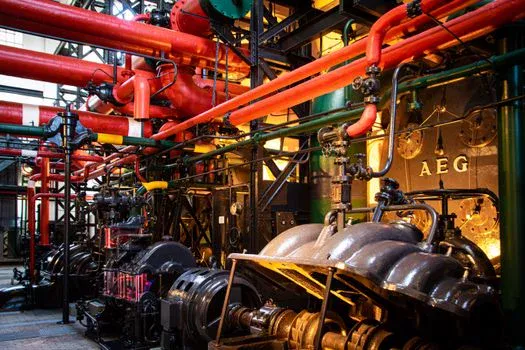
The Casablanca market is served by three distinct supplier archetypes, each with its capabilities, costs, and trade-offs. Choosing between them depends on the project’s technical complexity and the buyer’s internal engineering capacity.
Local Engineering Firms (e.g., EcoTreat): These suppliers excel in project management and after-sales support, with lead times of 4–8 weeks. However, their equipment is often limited to conventional biological processes. The Fez plant upgrade proves their capability in optimizing existing infrastructure, but for advanced membrane technology, they often act as integrators for foreign OEMs.
Chinese Manufacturers: Suppliers like HydropureWater offer 90% customization and modular MBR/DAF systems that comply with EU standards (EN 12566). The primary advantage is a 30% reduction in CAPEX compared to European peers. While lead times are longer (12–16 weeks), the modular "plug-and-play" nature of these systems reduces on-site civil works costs.
European Manufacturers (e.g., HB Boscarini): These firms provide high-end, turnkey solutions with Italian or German engineering standards (UNI EN ISO 14001). They offer the highest reliability but at a premium price ($1,200–$1,800/m³/day) and lead times of 20–24 weeks. They are typically selected for large-scale municipal projects where long-term sovereign financing is available.
| Supplier Type | CAPEX (per m³/day) | Lead Time | Compliance Strength | Best For... |
|---|---|---|---|---|
| Local (EcoTreat) | $700–$1,100 | 4–8 Weeks | Moroccan NM 03.7.200 | Maintenance & Rapid Retrofits |
| Chinese (HydropureWater) | $600–$1,200 | 12–16 Weeks | EN 12566 / ISO 9001 | Industrial ROI & Modular Scale |
| European (Boscarini) | $1,200–$1,800 | 20–24 Weeks | EU 91/271/EEC | Large Municipal Turnkey |
2025 Cost Breakdown: CAPEX, OPEX, and ROI for Casablanca Projects
Budgeting for a wastewater project in Casablanca requires a detailed look at both the initial investment and the 10-year operational costs. Technology choice is the single largest variable in CAPEX, but energy and chemicals dominate OPEX.
OPEX in Morocco is heavily influenced by the cost of electricity and imported flocculants. Energy consumption ranges from 0.3 to 0.6 kWh/m³. Chemical dosing typically accounts for 10–20% of total OPEX. Labor costs are relatively stable, requiring 1–2 Full-Time Equivalents (FTEs) for a standard 500 m³/day MBR plant. The ROI is calculated by comparing the cost of treated water against Casablanca’s industrial water tariffs, which range from $0.50 to $1.20/m³.
| Project Scale | Tech Type | Est. CAPEX | Annual OPEX | ROI (Payback) |
|---|---|---|---|---|
| 100 m³/day (Small Ind.) | DAF + Filtration | $75,000 | $12,000 | 3.2 Years |
| 500 m³/day (Med. Ind.) | MBR (Integrated) | $450,000 | $48,000 | 4.5 Years |
| 2,000 m³/day (Municipal) | Conventional A/O | $1,400,000 | $110,000 | 6.1 Years |
Hidden costs often derail Casablanca projects. Permitting and environmental impact assessments (EIA) can take 6–12 months. Civil works, including concrete tanks and piping, typically add 20–30% to the equipment CAPEX. Many buyers opt for containerized systems where civil works are limited to a flat concrete pad.
Compliance Checklist: Meeting Morocco’s NM 03.7.200 and EU Standards
Compliance in Casablanca requires continuous monitoring. The NM 03.7.200 standard is the baseline, but sector-specific limits (NM 03.7.201) are often stricter.
- BOD₅ & COD: Standard biological treatment achieves ≤30 mg/L BOD₅, but MBR is required for the ≤50 mg/L COD limit in high-strength industrial effluent.
- Total Suspended Solids (TSS): Must be ≤30 mg/L. DAF systems are preferred for fats, oils, and grease (FOG), while MBR handles colloidal solids.
- Nitrogen & Phosphorus: Limits of ≤10 mg/L NH₄-N require anoxic stages in the biological process to ensure denitrification.
- EU Alignment: Many plants adopt the EU Urban Waste Water Directive 91/271/EEC to ensure "green" supply chain certification.
To maintain these levels, PLC-controlled chemical dosing for Moroccan compliance is essential. These systems use real-time sensors to adjust coagulant and polymer flow, preventing "slug" loads from causing discharge violations. This is particularly critical for the electronics and chemical sectors, where heavy metal limits are as low as 1 mg/L, as detailed in global wastewater compliance standards for industrial plants.
Frequently Asked Questions
What are the lead times for sewage treatment equipment in Casablanca?
Lead times vary by supplier origin: local suppliers provide equipment in 4–8 weeks; Chinese manufacturers average 12–16 weeks; and European suppliers typically require 20–24 weeks. Buyers should factor in an additional 2 weeks for customs clearance at the Port of Casablanca.
How much does a 500 m³/day MBR plant cost in Casablanca?
For a 500 m³/day facility, Chinese-manufactured MBR systems range from $400,000 to $600,000. European turnkey solutions for the same capacity range from $700,000 to $900,000. These figures exclude civil works,