A baghouse dust collector is an air pollution control device that removes 99%+ of particulates from industrial exhaust streams using fabric filters. Engineered for gas temperatures up to 350°F (177°C), these systems run at air-to-cloth ratios of 2:1 to 6:1 to balance filtration efficiency against footprint. Cleaning options include pulse jet (99.5% efficiency) and reverse air (98.5% efficiency), making baghouses the most common solution for power plants, cement kilns, and metallurgical facilities that must meet strict emissions rules.
Why Baghouse Dust Collectors Are Critical for Industrial Emissions Compliance
A baghouse dust collector cuts particulate emissions to below 10 mg/Nm³ when properly sized, which is the threshold the EPA NSPS and the EU Industrial Emissions Directive 2010/75/EU set for coal-fired boilers and heavy industrial processes. For plant managers, the baghouse is the primary safeguard against regulatory intervention, not an auxiliary component. Electrostatic precipitators (ESPs) hold 90–95% efficiency but lose performance when gas chemistry or particle resistivity shifts; a fabric filter holds its rating through those fluctuations.
The financial stakes of emissions management are substantial. Under the EPA's Clean Air Act, non-compliance can trigger civil penalties of up to $37,500 per day per violation. Beyond fines, inadequate dust control causes unplanned production shutdowns and accelerated wear on induced-draft fans. In one 2023 enforcement data review, a steel mill justified the CAPEX of a high-efficiency pulse jet baghouse for industrial furnaces and boilers by demonstrating a reduction in environmental fines plus recovered material value totaling $250,000 per year.
Compared with wet scrubbers, baghouses win on water conservation and waste handling. Wet scrubbers reach about 95% efficiency but generate large wastewater volumes that need secondary treatment. Baghouses are dry, so captured dust can be recycled directly back into the production line or sent to a sludge dewatering solution for baghouse dust disposal if the downstream circuit is wet. Dry collection matters most in cement and lime plants, where the recovered product is saleable rather than waste.
How a Baghouse Dust Collector Works: Step-by-Step Engineering Process
Dust-laden air enters the baghouse through ductwork at transport velocities of 3,000 to 4,500 FPM, per ASHRAE 2024 guidelines, to keep particles in suspension. At the housing, the stream hits a baffle plate or expands into the hopper, dropping velocity so heavier "primary" particles fall out by gravity. Pre-separation cuts the abrasive load that the filter media would otherwise see.
Filtration happens as air passes through the fabric. Particles as small as 0.1 µm are captured by four physical mechanisms:
- Inertial Impaction: Larger particles that cannot follow the gas streamlines collide directly with the filter fibers.
- Interception: Medium particles following the streamline come within one particle radius of a fiber and stick.
- Diffusion: Submicron particles moved by Brownian motion collide with fibers; this mechanism dominates at low face velocities.
- Electrostatic Attraction: Charges on dust and fibers pull particles to the media surface.
As the dust cake thickens, filtration efficiency rises, but so does pressure drop. According to Donaldson's 2023 technical data, a healthy system holds 4–6 inches water column (w.c.) differential; cleaning kicks in at 8–10 in. w.c. Dislodged dust falls into the hopper, which is built with a minimum 45° angle (60° for sticky cement dust) to prevent bridging before discharge through a rotary valve or screw conveyor.
Baghouse Filter Media: Engineering Specs and Selection Criteria
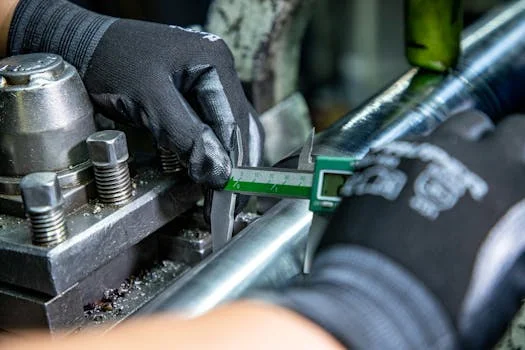
Industrial filter media must survive gas temperatures up to 550°F (288°C) and resist acid or alkali attack from the flue gas. The wrong substrate blinds quickly—pores plug permanently—or fails early, and bag replacement can raise OPEX by 300%. Bag construction (woven versus needle-punched felt) sets the air-to-cloth ratio the system can sustain.
| Material | Max Temp (°F) | Acid Resistance | Alkali Resistance | Abrasion Resistance | Relative Cost ($/ft²) |
|---|---|---|---|---|---|
| Polyester | 250 | Moderate | High | High | $0.80–$1.50 |
| Fiberglass | 500 | High | Low | Moderate | $2.00–$3.50 |
| PTFE (Teflon) | 550 | Very High | Very High | Very High | $5.00–$8.00 |
| PPS (Ryton) | 375 | High | Moderate | High | $3.00–$5.00 |
Surface treatments refine performance further. Oleophobic coatings shed oils and moisture so the cake does not turn into an uncleanable slurry. For submicron dust, ePTFE membranes are laminated to the base fabric, providing surface filtration that releases easily and holds a lower operating pressure drop. In one cement plant burning high-sulfur fuel, switching from standard polyester to PPS bags cut annual bag replacement cost by 40% by eliminating acid-induced fiber degradation.
Baghouse Cleaning Mechanisms Compared: Efficiency, Energy Use, and Maintenance
The cleaning method sets the system's footprint and energy bill. Pulse jet is the modern standard because it cleans bags while the unit stays online; reverse air and shaker systems usually need isolated compartments for offline cleaning.
| Mechanism | Efficiency (%) | Energy (kW/1k CFM) | Maintenance | CAPEX ($/CFM) | OPEX ($/CFM/yr) |
|---|---|---|---|---|---|
| Pulse Jet | 99.5 | 0.5–1.0 | 3–6 Months | $50–$120 | $0.15–$0.25 |
| Reverse Air | 98.5 | 0.2–0.5 | 6–12 Months | $40–$100 | $0.10–$0.20 |
| Shake/Deflate | 98.0 | 0.3–0.7 | 1–3 Months | $30–$80 | $0.12–$0.22 |
Pulse jet cleaning fires a 60–100 psi burst of compressed air for 0.1 to 0.2 seconds. The shockwave travels down the bag, flexes the fabric, and snaps the cake off. The trade-off is gentler bags and longer life, but the housing must be larger to hold the offline compartments. A coal-fired power plant recently cut cleaning-related energy cost by 30% by switching its low-dust secondary exhaust stream to a reverse air configuration.
Air-to-Cloth Ratio: The Critical Parameter for Baghouse Sizing and Efficiency
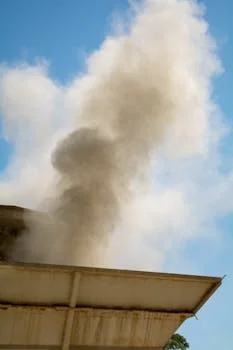
The air-to-cloth (A/C) ratio, or filtration velocity, divides actual gas flow (CFM) by active filter area (ft²) and is the single biggest driver of housing size and long-term reliability. Push it too high and dust gets forced into the fabric, blinding the media and lifting pressure drop; run it too low and you have paid for steel you do not need.
| Industry | Recommended A/C Ratio | Technical Notes |
|---|---|---|
| Cement | 3:1–4:1 | High loading; requires abrasive-resistant media. |
| Power Plants | 2:1–3:1 | Fine fly ash; requires low velocity for capture. |
| Woodworking | 4:1–5:1 | Larger particles; moisture can be a factor. |
| Metalworking | 3:1–4:1 | Fumes and oily dust may require lower ratios. |
| Food Processing | 2:1–3:1 | Sanitary requirements; prevents material packing. |
The sizing formula is simple: Total CFM ÷ Target A/C Ratio = Required Filter Area (ft²). A wood pellet plant moving 40,000 CFM at a 4:1 ratio needs 10,000 ft² of fabric. If that plant tried to save CAPEX by stepping up to a 5:1 ratio (8,000 ft²), fan energy would climb 15–20% because the denser cake holds a higher pressure drop. Most plants we size this way run at the lower end of the recommended range to keep total cost of ownership down.
Baghouse Dust Collector Selection Guide: Decision Framework for Industrial Buyers
Selecting a baghouse requires a structured review of process variables and economic trade-offs. Procurement teams should work through this six-step framework before issuing a purchase order:
- Define Process Parameters: Document gas flow, peak temperature, moisture content, and particle size distribution (for example, 50,000 CFM at 300°F with 5 gr/ft³ loading).
- Select Filter Media: Match the substrate to the chemical and thermal profile of the exhaust. If SO₂ is present, learn how FGD scrubbers complement baghouse systems for emissions compliance by stripping acid gases that would otherwise attack the filters.
- Choose Cleaning Mechanism: Pick pulse jet when space is tight and efficiency must be high; pick reverse air for very high-volume, low-loading utility streams.
- Calculate Sizing: Apply the industry-standard A/C ratio to set bag count and housing size.
- Evaluate CAPEX vs. OPEX: A pulse jet unit may run $100,000 upfront with $15,000 per year in energy and maintenance, while a shaker unit might cost $70,000 upfront but $25,000 per year in maintenance and downtime.
- Assess Compliance: Verify the manufacturer's performance guarantee against the local EPA or EU standard that applies.
One foundry running fine metallurgical fumes installed a pulse jet baghouse with PTFE-membrane filters at a conservative 3:1 A/C ratio. Stack emissions dropped from 25 mg/Nm³ to 5 mg/Nm³, avoiding roughly $120,000 per year in potential fines and clearing the next environmental audit with zero citations.
Who This Guide Is For and How to Move Forward
This guide fits plant engineers, EPC contractors, and procurement managers selecting dry particulate control for processes above 200°F or above 5 gr/ft³ dust loading. If you are sizing ambient-temperature collectors below 2 gr/ft³, a cartridge unit is usually the better fit and worth a separate review.
Send your gas flow, temperature, dust loading, and target outlet concentration to our engineering team, and we will return a sized baghouse proposal with media and cleaning-mechanism recommendations matched to your process. Request a baghouse sizing quote with your operating data to receive a CAPEX/OPEX estimate within two business days.
Frequently Asked Questions

What is the typical lifespan of baghouse filter bags?
Most industrial bags last 1 to 5 years. Polyester bags in ambient service typically run 1–2 years; high-performance PTFE or PPS bags in power plant service can reach 3–5 years when the cleaning cycle is properly tuned and gas temperatures stay within the media rating.
How much does a baghouse dust collector cost?
CAPEX generally runs $30 to $200 per CFM. A mid-sized 50,000 CFM pulse jet system typically requires $2.5M to $6M of investment, depending on ductwork complexity and materials of construction. OPEX for that size averages $0.05–$0.25 per CFM per year.
What are the signs that a baghouse is failing?
The three indicators to watch are sustained differential pressure above 10 in. w.c., visible stack dust pointing to a torn bag, and "bleeding," where fine dust passes through the media. Monitoring the differential pressure gauge is the fastest way to spot performance drift.
Can baghouses handle explosive dust?
Yes, when designed to NFPA 68. That requires explosion relief vents, spark detection systems, and chemical suppression units, all of which are mandatory for grain, sugar, and certain metallic powders.
How do baghouses compare to cartridge dust collectors?
Baghouses win for high-temperature (up to 550°F) and high-dust-loading service. Cartridge collectors are more compact and run lower pressure drops (2–3 in. w.c.), but they are usually limited to temperatures below 200°F and lower particulate concentrations.
Related Equipment
- integrated FGD scrubber for combined SO₂ and particulate removal — view specifications, capacity range, and technical data
Need a customized solution? Request a free quote with your specific flow rate and pollutant parameters.