Why Texas Industries Are Rethinking Wastewater Treatment in 2025
Industrial water demand in Texas grew 22% between 2020 and 2024, according to the Texas Water Development Board, with the Permian Basin alone accounting for 40% of new industrial water permits. This surge in demand, coupled with increasingly frequent drought cycles, has forced a shift from simple disposal to sophisticated on-site treatment and reuse. The pressure on plant managers is not merely environmental but legal; the Texas Commission on Environmental Quality (TCEQ) issued 187 enforcement actions for industrial wastewater violations in 2023, representing a 15% year-over-year increase. These enforcement actions often carry heavy financial penalties and mandatory corrective action plans that can disrupt production for months.
The frustration for many Texas facilities lies in the gap between aging centralized infrastructure and tightening discharge limits. A Houston-based food processing plant recently illustrated this challenge when its legacy clarification system failed to meet new local limits. By integrating modular DAF systems for Texas industrial wastewater, the facility reduced Total Suspended Solids (TSS) from 450 mg/L to less than 20 mg/L, effectively avoiding $250,000 in projected annual surcharges and fines, based on 2024 GCA Bayport Facility data. This shift toward modularity is driven by the need for scalability in Texas’s three primary industrial waste streams: oil and gas produced water, high-BOD food processing effluent, and heavy-metal-laden manufacturing discharge.
In the Permian Basin, the focus has shifted toward treating produced water for hydraulic fracturing reuse, a necessity as Disposal Well (SWD) capacity becomes limited by seismic activity regulations. Along the Gulf Coast, manufacturing and food processing plants are grappling with high Chemical Oxygen Demand (COD) and nutrient levels that exceed municipal "headworks" limits. The transition from large-scale centralized treatment to decentralized, skid-mounted units is becoming the standard for maintaining compliance while controlling operational expenditures (OPEX) in 2025.
TCEQ vs. EPA: Key Permit Requirements for Texas Industrial Discharges
TCEQ Chapter 307 surface water quality standards are frequently more stringent than federal EPA baseline limits, particularly regarding parameters that impact Texas’s sensitive river basins and coastal estuaries. The EPA provides a federal floor for industrial discharges, while the TCEQ’s "Texas Pollutant Discharge Elimination System" (TPDES) adds layers of regional specificity. For example, while federal standards might allow TSS limits of 45 mg/L for certain categories, TCEQ often mandates less than 30 mg/L to protect local turbidity levels. Similarly, ammonia limits in Texas are often capped at 2.0 mg/L, compared to the 4.0 mg/L frequently seen in broader federal guidelines.
For facilities discharging to Publicly Owned Treatment Works (POTW), TCEQ Chapter 217 dictates strict pre-treatment criteria. If an industrial discharge exceeds a COD of 500 mg/L or TSS of 250 mg/L, the facility is typically required to install on-site pre-treatment equipment before the waste enters the municipal sewer. Navigating the permit application process requires a 30-day public comment period and may involve contested case hearings under Chapter 55 if local stakeholders raise environmental concerns. Water quality fees under Chapter 21 are calculated based on the volume and pollutant load, meaning higher efficiency treatment directly reduces annual regulatory costs.
| Parameter | TCEQ Chapter 307 Limit (Typical) | EPA Federal Baseline (Typical) | Texas Compliance Impact |
|---|---|---|---|
| Total Suspended Solids (TSS) | < 30 mg/L | < 45 mg/L | Requires high-efficiency DAF or MBR |
| Chemical Oxygen Demand (COD) | < 125 mg/L | < 150-200 mg/L | Mandates advanced oxidation or biological stages |
| Ammonia (NH3-N) | 2.0 mg/L | 4.0 mg/L | Requires nitrifying biological systems |
| Oil & Grease | < 15 mg/L | < 25 mg/L | Secondary separation usually required |
| pH Range | 6.0 – 9.0 | 6.0 – 9.0 | Continuous monitoring and neutralization required |
Common permit violations in Texas often stem from pH excursions and chlorine residuals. TCEQ 2023 enforcement data indicates that pH levels falling outside the 6–9 range and chlorine residuals exceeding 0.1 mg/L are the primary triggers for administrative orders. To avoid these, engineers are increasingly specifying automated dosing and real-time monitoring suites. The TCEQ’s "Wastewater Permit Applications Participating in the Review Process" portal provides a transparent look at pending benchmarks and public feedback cycles that must be managed to ensure timely project commencement.
Modular vs. Centralized Systems: Engineering Specs for Texas Facilities
Modular Dissolved Air Flotation (DAF) systems, such as HydropureWater’s, are engineered to achieve 92–97% TSS removal even when influent concentrations fluctuate between 50 and 500 mg/L. These units offer a footprint approximately 60% smaller than conventional gravity clarifiers, making them ideal for space-constrained refineries and manufacturing plants along the Houston Ship Channel. Centralized activated sludge plants are capable of handling massive volumes (up to 10,000 m³/day), but they often require 2 to 3 times the land area and significantly higher initial capital investment, often exceeding $5 million for mid-sized operations.
In the Texas oil and gas sector, MBR systems for Texas oil and gas produced water have become a preferred technical solution for high-salinity waste. These systems utilize membrane filtration to reduce Total Dissolved Solids (TDS) and organic loads, allowing produced water to be reused in completions rather than injected into disposal wells. For food processing facilities, compact A/O systems for Texas food processing plants leverage Anoxic/Oxic biological processes to remove up to 95% of BOD from influent streams as high as 2,000 mg/L, ensuring the final effluent meets the TCEQ’s <30 mg/L discharge requirement.
| System Type | Removal Efficiency (TSS/BOD) | Typical Footprint (per 100 m³/h) | Hydraulic Retention Time (HRT) | Primary Texas Application |
|---|---|---|---|---|
| Modular DAF | 92-97% TSS / 60% BOD | 40 - 60 m² | 20 - 40 Minutes | Food Processing, Refinery Pre-treatment |
| Integrated MBR (DF Series) | >99% TSS / 95% BOD | 80 - 120 m² | 6 - 10 Hours | Oil & Gas Produced Water, Reuse |
| Underground A/O (WSZ Series) | 85-95% BOD & Nitrogen | Sub-surface (Minimal) | 12 - 24 Hours | Small Mfg, Rural Industrial Parks |
| Centralized Activated Sludge | 90-95% TSS / 90% BOD | 500+ m² | 18 - 36 Hours | Municipal-Industrial Regional Hubs |
Engineering specifications for these systems must account for Texas’s high ambient temperatures, which affect dissolved oxygen (DO) transfer rates in biological basins. For instance, an MBR system in West Texas may require higher aeration blower capacity to maintain a Mixed Liquor Suspended Solids (MLSS) concentration of 8,000–12,000 mg/L during summer months. Understanding how secondary clarifiers work in industrial wastewater treatment is also essential for plants utilizing centralized biological stages, as sludge settleability (SVI) remains a critical variable in meeting TCEQ effluent clarity standards.
Cost Breakdown: Modular vs. Centralized Wastewater Treatment in Texas
The capital expenditure (CAPEX) for modular DAF systems in Texas typically ranges from $200,000 to $2 million, depending on flow rates (4–300 m³/h) and the level of automation required. Operational expenditure (OPEX) for these systems generally falls between $0.50 and $1.20 per cubic meter, covering chemical coagulants, power for the saturation pump, and routine labor. In contrast, centralized plants require a much higher initial investment—often between $5 million and $20 million—but can achieve lower OPEX ($0.30–$0.80/m³) due to economies of scale in chemical purchasing and 24/7 staffing efficiencies.
Return on Investment (ROI) calculations for Texas facilities favor modularity for flows under 500 m³/day. According to 2024 Texas Water Development Board benchmarks, modular systems typically reach a break-even point in 3 to 5 years by eliminating municipal surcharges and reducing freshwater procurement costs. Centralized systems, due to their massive infrastructure requirements (concrete basins, extensive piping), often require a 7 to 10-year horizon to realize a positive ROI. The TCEQ’s Clean Water State Revolving Fund offers 2% interest loans for compliance-related projects, with approximately $120 million in funding allocated for 2025.
| Financial Metric | Modular Skid-Mounted System | Centralized Permanent Plant |
|---|---|---|
| Initial CAPEX | $200,000 – $2,000,000 | $5,000,000 – $20,000,000+ |
| Installation Time | 4 – 8 Weeks | 12 – 24 Months |
| OPEX (per m³) | $0.50 – $1.20 | $0.30 – $0.80 |
| ROI Period | 3 – 5 Years | 7 – 10 Years |
| Compliance Risk Mitig. | High (Rapid deployment) | Medium (Long lead times) |
A recent case study from a Midland-based oilfield operator demonstrated the financial viability of this approach. By deploying a modular MBR system to treat produced water for local agricultural irrigation and frac-blending, the operator reduced water disposal costs by 65%. This saved the facility approximately $1.1 million in its first year of operation, effectively paying for the equipment in less than 18 months. Such rapid payback is increasingly common as Texas disposal fees rise and "fresh" water becomes a premium commodity.
How to Select Wastewater Treatment Equipment for Texas Industries
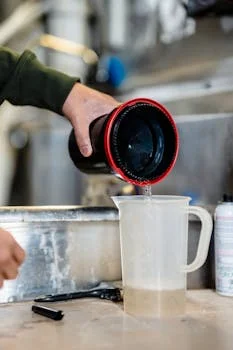
Equipment selection begins with a comprehensive characterization of the waste stream. Engineers should utilize the "TCEQ Industrial Wastewater Sampling Guide" to establish a baseline for flow variability, peak organic loads, and specific contaminants like heavy metals or long-chain hydrocarbons. Because Texas regulations are basin-specific, a system that works for a plant in the Eagle Ford Shale may not meet the stricter nutrient standards required for discharge into the Edwards Aquifer recharge zone. Matching influent quality to the desired TCEQ permit limit is the most critical step in avoiding "gold-plating" a system or, conversely,