Turkey will enforce tighter industrial wastewater discharge standards from 1 January 2025. BOD falls to 45 mg/L (from 60), COD to 120 mg/L (from 150), TSS to 40 mg/L (from 50) and phenol to 0.3 mg/L (from 0.5). Factories can meet these discharge standards in Turkey with MBR (COD <80 mg/L) or DAF+ClO₂ polishing (TSS <30 mg/L). Separate 2026 marine pollution tariffs reach 31,898.91–63,803.22 TRY for small-vessel garbage and sewage bands.
2025 Regulatory Snapshot: What Changes on 1 January
Turkey's revised industrial wastewater discharge standards take effect on 1 January 2025. They apply to every facility discharging to a municipal sewer or receiving water body. The headline changes are a 25% reduction in BOD (60 to 45 mg/L), a 20% reduction in COD (150 to 120 mg/L) and a 20% reduction in TSS (50 to 40 mg/L). Phenol drops from 0.5 to 0.3 mg/L. Cr+6 (0.1 mg/L), NH₃-N (20 mg/L) and colour (280 Pt-Co) stay unchanged. The Ministry of Environment, Urbanization and Climate Change has signalled that inspection frequency for high-risk industrial sectors will roughly double.
Earlier draft wording treated 31,898 TRY and 63,803 TRY as plant fines with food, textile and petrochemical coefficients. Those amounts match Turkey's 2026 marine pollution tariffs for vessel garbage and sewage. The up-to-18 GT band is 31,898.91 TRY; the 18–50 GT band is 63,803.22 TRY.Land-based Environment Law No. 2872 Article 20 administrative fines are republished each year. Notification 2025/1 (Official Gazette No.
| Parameter | 2020 Limit (mg/L) | 2025 Limit (mg/L) | Change (%) |
|---|---|---|---|
| BOD | 60 | 45 | -25% |
| COD | 150 | 120 | -20% |
| TSS | 50 | 40 | -20% |
| Phenol | 0.5 | 0.3 | -40% |
| Cr+6 | 0.1 | 0.1 | 0% |
| NH₃-N | 20 | 20 | 0% |
| Colour (Pt-Co) | 280 | 280 | 0% |
Parameter-by-Parameter Compliance Matrix
Targeted process units give the safety margin a designer needs to stay below the new discharge limits even when influent spikes. For BOD, an MBR delivers 8–15 mg/L against a 45 mg/L limit. A trickling filter plus secondary clarifier gives 25–35 mg/L, still compliant but with a thinner cushion. COD removal usually starts upstream. A DAF unit cuts up to 60% of COD from textile sizing wastewater before biological treatment. An MBR then polishes the balance to 60–80 mg/L versus the 120 mg/L ceiling. Lamella clarifiers at 30 m/h hydraulic loading produce 15–25 mg/L TSS overflow. MBR membranes hold TSS below 5 mg/L against the 40 mg/L limit. Phenol at 0.3 mg/L is met by chlorine dioxide oxidation dosed at a 1.2:1 mass ratio to phenol. That step routinely reaches <0.05 mg/L after a 95% reduction. Colour at 280 Pt-Co is cleared by ozonation at 20 mg/L with 15 minutes of contact. Colour drops about 70% to below 100 Pt-Co (HydropureWater field data, 2025).
| Effluent Parameter | 2025 Limit (mg/L, unless specified) | HydropureWater Technology | Typical Effluent Performance | Compliance Margin |
|---|---|---|---|---|
| BOD | 45 | MBR System | 8–15 mg/L | High |
| BOD | 45 | Trickling Filter + Clarifier | 25–35 mg/L | Medium |
| COD | 120 | DAF Unit (Pre-treatment) | 60% removal (upstream) | High |
| COD | 120 | MBR System | 60–80 mg/L | High |
| TSS | 40 | Lamella Clarifier | 15–25 mg/L | High |
| TSS | 40 | MBR System | <5 mg/L | Very High |
| Phenol | 0.3 | ClO₂ Oxidation | <0.05 mg/L | Very High |
| Colour | 280 Pt-Co | Ozonation | <100 Pt-Co | High |
Technology Selection: MBR vs DAF+Lamella vs Hybrid
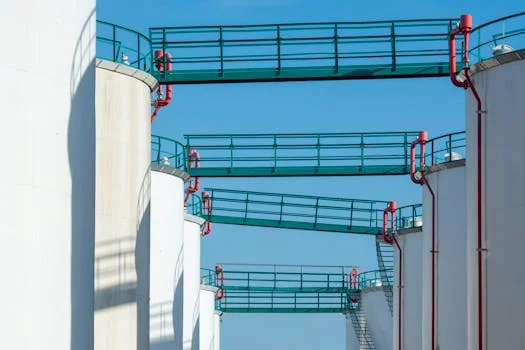
The right treatment train depends on flow rate, footprint, energy and how much sludge the site can haul. MBR systems take about 60% less footprint than conventional extended aeration. That footprint cut is decisive on cramped urban sites. MBR still draws roughly 0.8 kWh/m³ from aeration and membrane scouring. A DAF plus lamella clarifier train uses only 0.15 kWh/m³ and trims footprint by 40%. A hybrid DAF+MBR sits in the middle at about 0.45 kWh/m³. Below 500 m³/h, DAF+Lamella CAPEX runs about 30% lower than MBR. Above 1,000 m³/h, modular MBR cassette pricing pulls MBR ahead on CAPEX per m³. Sludge yield drives OPEX: MBR produces around 0.3 kgDS/kgBOD. DAF on food effluent can drop to 0.05 kgDS/kgBOD, cutting hauling cost. A 120 m³/h Turkish textile plant reached COD 78 mg/L, TSS 18 mg/L and phenol 0.04 mg/L with DAF plus ClO₂ polishing (HydropureWater field data, 2025). MBR is not always required. Most plants we size for textile work run DAF+Lamella first. If colour or residual COD is still high, an MBR polish is added. More detail is on HydropureWater's MBR system page and the HydropureWater DAF unit page. For high-rate settling, see HydropureWater's lamella clarifiers.
| Feature | MBR System | DAF + Lamella Clarifier | Hybrid DAF + MBR |
|---|---|---|---|
| Footprint Reduction (vs. Conventional) | 60% smaller | 40% smaller | 50% smaller |
| Energy Consumption (kWh/m³) | 0.8 | 0.15 | 0.45 |
| CAPEX (<500 m³/h) | Higher | 30% Lower than MBR | Medium |
| CAPEX (>1,000 m³/h) | More competitive (modular) | Less competitive | Competitive |
| Sludge Yield (kgDS/kgBOD) | 0.3 | 0.05 (for DAF) | 0.2 |
| Key Advantage | High effluent quality, small footprint | Lower CAPEX, low energy, low sludge (DAF) | Optimized balance of quality & cost |
Permit Application Checklist: What the Ministry Wants
The Turkish Ministry of Environment, Urbanization and Climate Change requires a baseline monitoring campaign before the application. Take 24-hour composite samples every 6 hours for five consecutive days within the preceding quarter. Measure flow continuously with electromagnetic meters or V-notch weirs outputting 4–20 mA into SCADA. The submission must include a modelled discharge impact assessment. Show at least 10× dilution for inland receivers and 100× for coastal outfalls. The emergency-response procedure must close valves in under 30 minutes. Notify the provincial environment directorate within 2 hours. All raw laboratory data must be ISO 17025 compliant and uploaded through the e-ÇED portal. Our wastewater treatment plant permit checklist walks through each item in the order the Ministry reviews them.
Cost & ROI: Turkish Plants That Already Upgraded
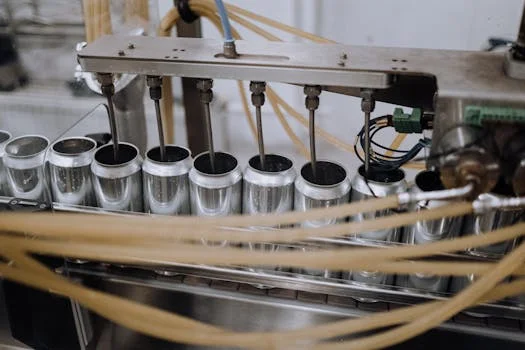
Upgrading to meet the 2025 limits is driven less by payback calculations than by avoided fines and unlocked reuse. An Ankara dairy plant running 150 m³/h installed an MBR retrofit at a CAPEX of 1.8 million TRY. Reusing 60% of polished effluent for CIP and boiler feed cut water purchase by roughly 320,000 TRY per year. BOD stayed below 15 mg/L (HydropureWater field data, 2025). A Bursa metal-finishing shop paid 0.9 million TRY CAPEX for DAF plus ClO₂ polishing on 60 m³/h. That train eliminated two non-compliance events worth about 90,000 TRY in fines. Cr+6 stayed below the 0.1 mg/L limit on every monthly composite. Payback periods cluster between 18 and 30 months once avoided fines and reuse credits are counted. Flow rate swings CAPEX hardest: each extra 100 m³/h adds roughly 0.7–1.0 million TRY. Every 1,000 mg/L influent COD bump needs an extra aerobic stage. Sludge disposal cost is why low-yield DAF trains are often favoured on food lines.
Who This Is For and Who Should Look Elsewhere
This guide fits EPC contractors, plant engineers and procurement managers in Turkish food, textile, dairy, metal-finishing and petrochemical sites. It covers plants discharging to municipal or natural receivers. It does not cover ZLD for semiconductor fabs, Hungarian effluent limits, or India's CPCB framework. Those topics sit on separate pages. If you only need a permit checklist without technology sizing, start at our wastewater treatment plant permit checklist. For sizing and budgeting, send the influent profile and target flow to HydropureWater for a sized proposal.
Frequently Asked Questions
What are the new Turkish wastewater discharge limits in 2025?
The 2025 Turkish industrial wastewater discharge limits are BOD 45 mg/L, COD 120 mg/L, TSS 40 mg/L and phenol 0.3 mg/L. Cr+6 stays at 0.1 mg/L, NH₃-N at 20 mg/L and colour at 280 Pt-Co. The rules take effect on 1 January 2025 under the Ministry of Environment, Urbanization and Climate Change.
Which treatment technology reliably meets the 45 mg/L BOD limit?
An MBR delivers 8–15 mg/L BOD, giving a comfortable margin under the 45 mg/L ceiling. A trickling filter with secondary clarifier reaches 25–35 mg/L, which still passes but leaves a thinner cushion when influent spikes. For most food and textile plants, an MBR polish is added after DAF or activated sludge to lock in compliance.
How much does it cost to upgrade a Turkish wastewater plant?
Reported 2025 retrofit CAPEX ranges from about 0.9 million TRY for a 60 m³/h DAF plus ClO₂ train to 1.8 million TRY for a 150 m³/h MBR. OPEX is driven by energy (0.15–0.8 kWh/m³ depending on train) and sludge hauling. Most upgraded Turkish plants we have seen recover CAPEX in 18–30 months once fines and reuse savings are counted.
What fine does a Turkish factory pay for non-compliance?
Land-based wastewater penalties follow Environment Law No. 2872 Article 20 and the annual MoEUCC fine notification. Notification 2025/1 applies from 1 January 2025. The 31,898.91 TRY and 63,803.22 TRY figures often quoted are 2026 marine pollution tariffs for vessel garbage and sewage (up to 18 GT and 18–50 GT). They are not sector-coefficient plant fines. Marine tariffs rose 25.49% from 2025 levels on 1 January 2026.
What documents does the Turkish Ministry require for a discharge permit?
Applicants must submit five days of 6-hourly 24-hour composite samples and a SCADA-logged continuous flow record. Include a modelled dilution-factor assessment (10× inland, 100× coastal). Add an emergency-response plan with 30-minute shutdown and 2-hour notification clauses. Upload ISO 17025 laboratory data to the e-ÇED portal.