Thailand’s wastewater treatment plants generate over 2.5 million tons of sludge annually, with disposal costs exceeding 1,200 THB per ton (PCD 2024). Sludge dewatering equipment—such as multi-disk screw presses, belt presses, and plate-and-frame filter presses—can reduce sludge volume by 70-90%, cutting transportation and landfill costs by up to 60%. For Thailand’s industrial and municipal sectors, selecting the right equipment depends on influent sludge characteristics (e.g., 1-5% solids content), target dry solids output (20-40%), and compliance with PCD’s 2025 landfill restrictions. This guide provides engineering specifications, cost benchmarks, and a supplier decision framework tailored to Thailand’s market.
Why Thailand’s Wastewater Plants Need Advanced Sludge Dewatering
Thailand generates approximately 2.5 million tons of sewage and industrial sludge annually, with disposal costs for untreated sludge ranging from 1,200 to 1,800 THB per ton depending on the distance to the disposal site. Urbanization in the Bangkok Metropolitan Region and industrial expansion in the Eastern Economic Corridor (EEC) continue, and the volume of sludge is projected to increase by 4% annually. The high water content (95-99%) makes sludge management economically unsustainable for most operators without mechanical dewatering.
Regulatory pressure from the Pollution Control Department (PCD) is the primary driver for equipment upgrades in 2025. New mandates require that sludge destined for sanitary landfills must have a moisture content of less than 60%. Non-compliance can result in administrative fines ranging from 50,000 to 200,000 THB and potential suspension of operating licenses. These restrictions are designed to reduce leachate generation and extend the lifespan of Thailand’s limited landfill capacity.
The technical requirements differ significantly between sectors. Municipal sludge typically has a solids content of 1-3% with high organic loads, requiring equipment that can handle biological flocculants effectively. Industrial sludge, particularly from Thailand’s textile and food processing sectors, often features 3-5% solids with high fiber or oil content. For example, textile sludge in Samut Prakan requires specific filtration media to prevent blinding caused by synthetic fibers, whereas food processing sludge in Pathum Thani necessitates high-torque screw presses to manage fats and greases.
A recent case study of a food processing plant in Bangkok illustrates the impact of modernizing dewatering systems. The facility previously utilized drying beds, which were inefficient during the monsoon season. By installing a multi-disk screw press, the plant reduced its sludge volume by 85%, achieving a cake moisture content of 75%. This transition resulted in a 55% reduction in monthly disposal fees, providing a clear pathway to operational cost recovery within 30 months.
Sludge Dewatering Equipment Types: How They Work and When to Use Each
Multi-disk screw presses consume 70-80% less energy than traditional centrifugal systems while maintaining a dry solids output of 20-40% for most Thai municipal applications. The mechanism involves a central screw rotating through a series of fixed and moving disks. As the sludge moves through the cylinder, the gap between the disks and the screw pitch narrows, gradually increasing pressure to squeeze out water. This technology is ideal for food processing and municipal plants due to its compact footprint and low energy consumption (0.2–0.5 kWh/m³).
Belt presses operate using a continuous process where sludge is sandwiched between two tensioned porous belts. The sludge passes over a series of rollers that apply increasing pressure, forcing water through the belt fabric. While belt presses offer high throughput (5–300 m³/h), they require a larger footprint and higher polymer consumption. Energy use is higher, typically between 0.8 and 1.2 kWh/m³. These are best suited for large-scale municipal operations where floor space is not a primary constraint.
The high-efficiency plate-and-frame filter press for Thailand’s industrial sludge remains the standard for achieving the highest possible dry solids content. This batch process uses high-pressure pumps to force sludge into chambers between recessed plates. Once the chambers are full, the pressure is maintained to expel filtrate through filter cloths. While it requires more manual intervention or complex automation for cake discharge, it can achieve 30–50% dry solids, which is essential for meeting the PCD 2025 landfill moisture requirements for difficult industrial wastes.
| Equipment Type | Dry Solids Output (%) | Energy Use (kWh/m³) | Filtrate Quality (TSS) | Primary Advantage |
|---|---|---|---|---|
| Multi-Disk Screw Press | 20–40% | 0.2–0.5 | <50 mg/L | Low OPEX & Footprint |
| Belt Filter Press | 15–30% | 0.8–1.2 | 100–300 mg/L | High Throughput |
| Plate & Frame Filter Press | 30–50% | 1.0–2.0 | <20 mg/L | Maximum Dehydration |
Emerging trends in Thailand include the adoption of hybrid systems, such as combining a lamella clarifier for pre-thickening sludge before dewatering with a screw press. This configuration allows for higher influent solids concentrations, which significantly improves the efficiency of the dewatering stage and reduces polymer demand.
Engineering Specifications: Matching Equipment to Your Sludge Characteristics
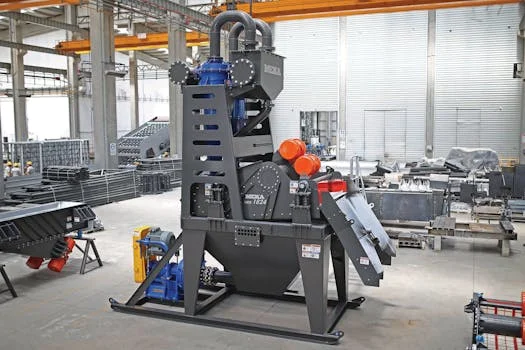
Influent solids concentration directly dictates the required torque and polymer dosing rates for all mechanical dewatering equipment in Thai industrial zones. Most equipment is rated based on a standard influent of 1-5% total solids (TS). If the sludge is thinner than 1%, pre-thickening is mandatory to prevent excessive hydraulic loading and polymer waste. Particle size distribution is also critical; for instance, belt presses struggle with fine, gelatinous biological sludge, whereas screw presses excel in these conditions due to their self-cleaning disk mechanism.
Target dry solids (DS) output is the most important performance metric for compliance. To meet the 2025 landfill mandate of <60% moisture (40% DS), a plate-and-frame filter press is often the only viable option for certain chemical sludges. Municipal plants, which can sometimes utilize "beneficial reuse" programs for agriculture, typically aim for 20-30% DS. Engineering specifications must also account for the organic load (VS/TS ratio); higher volatile solids content usually requires higher polymer dosing to maintain cake stability.
| Technical Parameter | Screw Press (MDSP) | Belt Press (BFP) | Filter Press (PFFP) |
|---|---|---|---|
| Capacity (m³/h) | 0.5 – 50 | 5 – 300 | 1 – 20 (per batch) |
| Polymer Use (kg/ton DS) | 2 – 5 | 5 – 10 | 3 – 8 |
| Installation Area (m²) | 2 – 10 | 20 – 50 | 10 – 30 |
| Noise Level (dB) | <65 | 75 – 85 | 70 – 80 |
Maintenance requirements should be factored into the engineering selection process. Multi-disk screw presses require quarterly disk inspections and annual gearbox lubrication. Belt presses demand more frequent attention, including weekly belt tracking adjustments and high-pressure wash-downs to prevent cloth blinding. Filter presses require periodic cloth replacement, which can vary from 6 to 18 months depending on the abrasiveness of the sludge and the cleaning frequency.
Cost Analysis: CAPEX, OPEX, and ROI for Thailand’s Market
CAPEX for sludge dewatering equipment in the Thai market typically ranges from 1.5 million to 6 million THB depending on throughput capacity and automation level. Multi-disk screw presses generally fall in the 1.5–4M THB range for capacities up to 50 m³/h. Belt presses are more expensive for large-scale municipal installations, often reaching 6M THB. Plate-and-frame presses are the most cost-effective for small-to-medium batch operations, with prices starting as low as 1M THB for manual units.
OPEX is dominated by chemical costs and energy consumption. In Thailand, polymer (flocculant) costs average between 80 and 120 THB per kg. Since a belt press may use twice as much polymer as a screw press, the long-term chemical costs can outweigh the initial CAPEX savings. Electricity rates in Thailand (approx. 4–5 THB/kWh) further favor low-energy technologies like the screw press. Labor costs, while lower in Thailand than in Europe, still impact the ROI for manual filter presses, which require 1–2 dedicated operators per shift.
| Cost Component | Estimated Cost (THB) | Frequency/Unit |
|---|---|---|
| Polymer (Flocculant) | 80 – 120 THB | per kg |
| Electricity | 4.5 – 5.0 THB | per kWh |
| Manual Labor | 15,000 – 25,000 THB | per month/operator |
| Belt Replacement | 50,000 – 100,000 THB | Annual (Belt Press) |
Calculating ROI involves comparing the "Do Nothing" scenario (high disposal costs) against the "Dewatering" scenario (CAPEX + OPEX + reduced disposal). For a 50 m³/h municipal plant, the annual savings from reduced transportation and landfill fees often exceed 2 million THB. In this scenario, a multi-disk screw press typically achieves a full ROI in 2.5 to 3.5 years. Hidden costs, such as the 1–2 days of downtime required for belt replacements or the permitting fees for new installations, should be included in the initial budget.
Supplier Decision Framework: How to Evaluate Vendors for Thailand’s Needs
Local technical support response times within 24-48 hours are the primary factor in preventing production stoppages for Thai industrial facilities. When evaluating suppliers, the distinction between local distributors and international manufacturers is critical. While European or US brands may offer superior longevity, the lead times for spare parts can exceed 8 weeks. Chinese manufacturers often provide a middle ground, offering 30-50% lower CAPEX and faster delivery, provided they have a dedicated service center within Thailand to manage warranty claims.
Compliance verification is the second pillar of the framework. Ensure the supplier provides documentation showing their equipment meets PCD standards and possesses ISO 14001 certification. For projects in the Eastern Economic Corridor, check if the equipment qualifies for Board of Investment (BOI) incentives, which can include import duty exemptions on machinery and corporate income tax breaks for environmental technology investments.
Requesting Thai-specific case studies is essential. A supplier should be able to provide contact details for at least two existing installations in Thailand that handle similar sludge types. During site visits, engineers should evaluate the actual dry solids achieved versus the theoretical specs provided in the catalog. Check the availability of trial periods; many reputable Thai distributors offer "pilot units" for 1-2 weeks of on-site testing to verify polymer consumption and cake dryness before final procurement.
Thailand’s Regulatory Landscape: Compliance and Future Trends
The Pollution Control Department (PCD) has mandated that all sludge destined for landfill must achieve a moisture content of less than 60% by the start of 2025. This regulation is part of a broader shift toward the "Bio-Circular-Green" (BCG) economic model promoted by the Thai government. Enforcement is expected to be strict in industrial provinces like Rayong, Chonburi, and