Chlorine dioxide needs 3 mg·min/L CT to reach 4-log virus inactivation, ozone only 0.5 mg·min/L, but ozone raises bromate >10 µg/L if bromide >50 µg/L; ClO₂ leaves no regulated DBPs, costs ≈ $0.35 kg⁻¹ on-site, ozone $0.88 kg⁻¹ plus 10 kWh power. Pick ClO₂ when DBP limits or corrosion are critical; ozone when instant kill or reuse without bromide is required.
Why Permit Officers Flag Ozone but Accept ClO₂
Disinfection byproduct (DBP) exceedance is a primary cause for discharge permit rejection in industrial wastewater treatment plants (WWTPs). Ozone (O₃) is a highly reactive oxidant, but its interaction with bromide-rich effluent—common in textile, pharmaceutical, and oil and gas streams—triggers the formation of bromate (BrO₃⁻). The EPA Stage 2 Disinfectants and Disinfection Byproducts Rule sets the Maximum Contaminant Level (MCL) for bromate at 10 µg/L. In a documented case, a textile WWTP in Surat, India, saw its discharge permit suspended after an ozone system produced a 14 µg/L bromate spike, necessitating a costly retrofit to chlorine dioxide.
Chlorine dioxide (ClO₂) operates via a single-electron transfer mechanism, which prevents the formation of halogenated organic compounds like trihalomethanes (THMs) or haloacetic acids (HAAs). While ClO₂ does produce inorganic byproducts—specifically chlorite (ClO₂⁻) and chlorate (ClO₃⁻)—the combined MCL for these is typically 1.0 mg/L. For most industrial discharge permits, maintaining a chlorite residual below 1.0 mg/L is significantly more manageable than keeping bromate below 10 µg/L, especially when the influent bromide concentration exceeds 50 µg/L. ClO₂ remains effective across a wider pH range (4 to 10) than ozone, which decomposes rapidly at pH > 8.5, often leading to inconsistent disinfection results that trigger compliance flags during peak flow periods.
Microbial Kill: CT Values You Can Spec
The Concentration x Time (CT) value is the definitive metric for specifying disinfection efficacy. Ozone is the more potent oxidant for rapid inactivation, but its short half-life in industrial wastewater—often less than 15 minutes due to high Chemical Oxygen Demand (COD)—requires high dosage rates or complex contact tank designs. Chlorine dioxide provides a more stable residual, which is critical for preventing microbial regrowth in long discharge lines or cooling towers. For industrial applications, a safety factor of 1.5 should be applied to these values to account for suspended solids and temperature fluctuations.
| Pathogen Target | Log Removal | Ozone CT (5 °C) | Ozone CT (20 °C) | ClO₂ CT (5 °C) | ClO₂ CT (20 °C) |
|---|---|---|---|---|---|
| Viruses | 4-log | 0.5 mg·min/L | 0.2 mg·min/L | 3.0 mg·min/L | 1.2 mg·min/L |
| Giardia cysts | 3-log | 1.9 mg·min/L | 0.6 mg·min/L | 26 mg·min/L | 11 mg·min/L |
| Cryptosporidium | 2-log | 25 mg·min/L | 8.0 mg·min/L | 450 mg·min/L | 210 mg·min/L |
| Fecal Coliforms | 3-log | 0.1 mg·min/L | 0.05 mg·min/L | 2.0 mg·min/L | 0.8 mg·min/L |
While ozone is superior for Cryptosporidium, chlorine dioxide is often the preferred choice for Legionella control in industrial cooling loops because it penetrates biofilms more effectively than ozone or chlorine. In high-COD wastewater, ozone is consumed by non-target organics almost instantly, whereas ClO₂ is more selective, reacting primarily with reduced sulfur compounds, amines, and phenols (HydropureWater field data, 2025).
Corrosion & Materials: What the P&ID Should Show
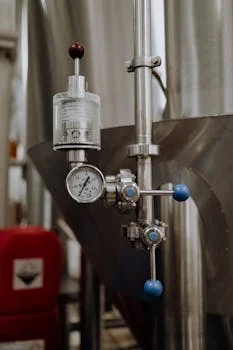
Material compatibility determines the long-term integrity of the disinfection skid and downstream piping. Ozone is a more aggressive oxidant toward metallic alloys and certain elastomers. At typical disinfection concentrations of 10 ppm, ozone induces a corrosion rate of approximately 0.05 mm/yr in SS316 stainless steel, whereas chlorine dioxide at the same concentration results in a more manageable 0.02 mm/yr. Engineers must be wary of "ozone-resistant" claims that do not specify the concentration; at 5 wt% ozone gas, standard 304L stainless steel will fail prematurely.
| Material | Ozone Compatibility | ClO₂ Compatibility | Engineering Note |
|---|---|---|---|
| SS316L | Good | Excellent | Passivation required for ozone use. |
| PTFE (Teflon) | Excellent | Excellent | Standard for gaskets and seals. |
| PVDF (Kynar) | Excellent | Excellent | Ideal for injection quills. |
| Viton-A | Good | Good | Monitor for hardening after 12 months. |
| EPDM | Excellent | Poor | ClO₂ causes >10% swell in EPDM. |
| PVC-C | Fair | Excellent | PVC-C handles ClO₂ up to 2,000 mg/L. |
When designing the P&ID, ensure that the injection point for ClO₂ uses PVC-C or PVDF piping if the local concentration exceeds 500 mg/L. For ozone, the off-gas destruct unit must be constructed of high-grade stainless steel to prevent atmospheric corrosion within the enclosure. Failure to specify the correct elastomer, particularly the use of EPDM in ClO₂ systems, is a common ClO₂ failure field fix that can be avoided at the design stage.
Energy & Chemical Consumption per m³ Treated
Operational expenses are dominated by power for ozone and precursor chemicals for chlorine dioxide. Ozone systems require high-voltage corona discharge; oxygen-fed generators consume between 10 and 12 kWh per kg of ozone produced, while air-fed units jump to 16–18 kWh/kg due to the energy required for nitrogen removal and air drying. For a typical 5 ppm dose in a 5,000 m³/d plant, ozone energy costs can reach $0.005 to $0.008 per m³ at a utility rate of $0.10/kWh.
Chlorine dioxide is generated on-site by reacting sodium chlorite (NaClO₂) with hydrochloric acid (HCl) or chlorine gas. An on-demand ClO₂ generator typically requires 1.7 kg of precursors to produce 1 kg of ClO₂ gas in solution. The electrical draw for the dosing pumps and control logic is negligible, often less than 0.05 kWh per kg produced. For engineers looking at post-disinfection membrane selection, it is important to note that ClO₂ residual must be quenched with sodium bisulfite if polyamide RO membranes are used downstream, adding a minor chemical cost to the OPEX.
| Parameter | Ozone (Oxygen-Fed) | Chlorine Dioxide (Acid-Chlorite) |
|---|---|---|
| Energy Consumption | 10–12 kWh/kg | <0.1 kWh/kg |
| Chemical Precursors | None (Oxygen from air) | 1.7 kg per kg ClO₂ |
| Typical Dosage (3-log Coliform) | 5.0 mg/L | 2.0 mg/L |
| Estimated OPEX per m³ | $0.012 - $0.015 | $0.008 - $0.011 |
Safety & Monitoring: OSHA Limits vs Real-Time Sensors

Both ozone and chlorine dioxide are toxic gases with a Permissible Exposure Limit (PEL) of 0.1 ppm over an 8-hour Time Weighted Average (TWA). However, ozone has a Short-Term Exposure Limit (STEL) of 0.3 ppm for 15 minutes, whereas ClO₂ does not have a federally mandated STEL but is generally treated with the same caution. Because ClO₂ is generated in an aqueous solution, the risk of a massive atmospheric release is lower than with ozone, which is generated as a gas under pressure.
Monitoring requires distinct technologies. Ozone is typically measured via UV photometers at the 254 nm wavelength for high concentrations and 185 nm for ambient leak detection. ClO₂ monitoring relies on electrochemical sensors. Engineers should note that electrochemical ClO₂ sensors often exhibit cross-sensitivity to chlorine gas; if the generator uses a chlorine-gas reaction path, dual-sensor arrays are required. Facilities producing more than 50 g/h of chlorine dioxide must include an emergency chemical scrubber and a minimum of 6 Air Changes per Hour (ACH) in the generator room to meet industrial safety codes.
Capital vs Life-Cycle Cost: 100 m³/h Case Study
To provide a defendable budget, we analyze a mid-sized industrial WWTP treating 100 m³/h (2,400 m³/d). The CAPEX for an ozone system is significantly higher due to the need for oxygen concentrators, air dryers, and specialized contact tanks. Chlorine dioxide systems are more compact, consisting of a precursor storage skid and a reaction chamber. Over a 10-year horizon, the Net Present Value (NPV) favors ClO₂ due to lower initial investment and reduced maintenance on mechanical components like compressors and dielectric tubes.
| Cost Component | ClO₂ System (2 kg/h) | Ozone System (3 kg/h) |
|---|---|---|
| System CAPEX | $38,000 | $65,000 |
| Annual Chemical/Power | $4,100 | $9,800 |
| Annual Maintenance | $1,200 | $3,500 (incl. membranes) |
| 10-Year NPV (7% discount) | $71,400 | $118,200 |
The ozone system maintenance includes a $2,400 annual provision for oxygen concentrator membrane replacement and dielectric cleaning. For the chlorine dioxide system, maintenance is largely limited to pump tube replacement and annual sensor calibration. For projects where capital is constrained, ClO₂ provides a lower barrier to entry while maintaining superior disinfection performance in high-demand wastewater matrices.
Decision Matrix: Which Oxidant for Your Wastewater Matrix

The final selection depends on the influent water chemistry and the specific discharge or reuse goals. Use the following matrix to justify the technology choice to procurement and regulatory bodies.
| If your condition is... | Choose ClO₂ | Choose Ozone | Primary Reason |
|---|---|---|---|
| Bromide > 0.1 mg/L | Yes | No | Avoids bromate formation. |
| High Biofilm/Slime in Pipes | Yes | No | ClO₂ is a superior penetrant. |
| Instant Inactivation Required | No | Yes | Ozone has lower CT values. |
| Water Reuse (Low Bromide) | No | Yes | Ozone removes color/micropollutants. |
| Chloride Discharge Limits | No | Yes | ClO₂ adds minor chloride/chlorite. |
| Stainless Steel Piping | Yes | No | Lower corrosion rate (0.02 mm/yr). |
Frequently Asked Questions
Does chlorine dioxide affect the pH of the treated effluent?
Unlike chlorine gas, which forms hypochlorous and hydrochloric acid, chlorine dioxide does not hydrolyze in water. It remains a dissolved gas. Consequently, it has a negligible effect on the pH of the wastewater, which eliminates the need for post-disinfection caustic dosing to meet discharge limits.
Can ozone be used for color removal in textile wastewater?
Yes, ozone is highly effective at breaking the double bonds in synthetic dyes, providing excellent decolorization. However, if the goal is both disinfection and color removal, the ozone dose must be sized for the color demand first. If bromide is present, this higher dose will almost certainly lead to bromate exceedance, making ClO₂ a safer alternative for disinfection even if color removal is handled by a separate coagulant step.
What is the maximum storage life of chlorine dioxide?
Chlorine dioxide cannot be stored as a compressed gas. It must be generated on-site as an aqueous solution. In a stabilized aqueous form, it can be stored for 24–48 hours in UV-protected tanks, but for industrial WWTPs, on-demand generation is the standard to ensure consistent potency and safety.
How does temperature affect the choice between O₃ and ClO₂?
Ozone solubility decreases significantly as temperature rises, and its half-life shortens. In industrial effluents exceeding 35 °C, ozone efficiency drops sharply. Chlorine dioxide remains relatively stable at higher temperatures, making it the preferred oxidant for hot process water or tropical WWTP environments.
Is an EPA-registered generator required?
In the United States, chlorine dioxide is regulated under FIFRA as a pesticide. The generator itself is considered a "pesticide-producing device," and the facility must be registered with the EPA. Most industrial-grade manufacturers provide the necessary documentation to ensure the site remains code-compliant.