Singapore buyers comparing sewage treatment equipment suppliers must meet NEA trade-effluent limits while controlling plot area, energy use, and sludge haulage. Earlier market guides often cited TSS <5 mg/L and BOD <10 mg/L as high-grade targets; the Environmental Protection and Management (Trade Effluent) Regulations set controlled-watercourse maxima at TSS 30 mg/L, BOD 20 mg/L, and COD 60 mg/L (NEA). Capex examples in this market still cluster around MBR systems from about S$120,000 for 50 m³/day and DAF units from S$80,000 to S$250,000 by capacity. This guide sets out specs, compliance numbers, supplier roles, and ROI ranges for industrial and municipal projects.
Singapore Wastewater Rules, Site Limits & 2030 Targets
Singapore trade-effluent discharge to controlled watercourses is capped at TSS 30 mg/L, BOD 20 mg/L, and COD 60 mg/L under the Environmental Protection and Management (Trade Effluent) Regulations, with grease and oil at 1 mg/L total on controlled watercourses and 10 mg/L total on other watercourses (NEA). Earlier guidance used TSS <5 mg/L and BOD <10 mg/L as stretch targets; those figures remain useful as industrial best-practice goals, not as the legal maxima. Procurement therefore still favors membrane and DAF trains over plain sedimentation when reuse or tight FOG control is required.
The Singapore Zero Waste Masterplan targets a 30% cut in waste sent to Semakau Landfill each day by 2030, not a sludge-only mandate (MSE). That landfill goal still pushes plants toward higher dry-solids dewatering before loads move through the Tuas Marine Transfer Station. Space pressure in Jurong and Tuas keeps modular and underground trains in demand. Systems like the WSZ Series underground plants free surface area for production while staying inside NEA land-use practice. Energy use is a bid filter: PUB-linked briefs often prefer trains that hold below 0.5 kWh/m³ once load is stable (HydropureWater field data, 2025).
MBR reuse trains help plants cut NEWater purchase volume. ClO₂ disinfection remains common on hospital and pharmaceutical trains when 99.99% microbial inactivation is specified. Both paths support closed-loop water aims in the Singapore Green Plan 2030.
| Parameter | NEA Standard (2025) | Industrial Best Practice | Typical Treatment Tech |
|---|---|---|---|
| Total Suspended Solids (TSS) | <5 mg/L (High Grade) | <2 mg/L | MBR / Ultrafiltration |
| BOD (5-day at 20°C) | <10 mg/L | <5 mg/L | Aerobic Digestion + MBR |
| COD (Chemical Oxygen Demand) | <60 mg/L | <40 mg/L | Advanced Oxidation / MBR |
| Fats, Oil & Grease (FOG) | <10 mg/L | <2 mg/L | DAF Systems |
| Sludge Reduction Target | 30% by 2030 | 45% Reduction | Filter Press / Centrifuge |
Key Sewage Treatment Systems: Engineering Specs & Use Cases
Membrane Bioreactor (MBR) trains remain the default for high-quality non-potable reuse in Singapore. HydropureWater's MBR systems for water reuse in Singapore use 0.1 μm membranes to reach over 95% COD removal in a footprint about 60% smaller than conventional activated sludge. That density suits microelectronics and pharma sites with tight plot ratios. Most MBR plants we size for electronics clients run at <0.6 kWh/m³ once influent BOD is stable.
Food processing and petrochemical sites with emulsified oils need primary FOG capture before biology. high-efficiency DAF systems for FOG removal cover 4 to 300 m³/h and routinely remove over 90% FOG. Versus competitor frames like the AquaFlow 5000, micro-bubble generators that hold a stable air-to-solids ratio often cut coagulant use by 15–20% (HydropureWater technical audit, 2024).
Hotels, remote yards, and compact industrial pads often select the Underground Package Sewage Treatment Plant (WSZ Series). The WSZ Series is a plug-and-play package from 1–80 m³/h with PLC remote monitoring and no full-time onsite operator. Plate-and-frame filter presses then lift sludge to 20–30% dry solids, which cuts haul tickets and keeps disposal contractors inside local acceptance rules.
| System Type | Key Spec (Capacity/Efficiency) | TSS/COD Removal | Primary Use Case |
|---|---|---|---|
| MBR (DF Series) | 0.1 μm membrane; <0.6 kWh/m³ | 99% TSS / 95% COD | Water reuse, electronics, pharma |
| DAF | 4–300 m³/h; 90% FOG removal | 85% TSS / 70% COD | F&B, slaughterhouses, oil & gas |
| WSZ Underground | 1–80 m³/h; Fully automated | 90% TSS / 85% COD | Hotels, small industrial parks |
| Filter Press | 1–500 m² filtration area | 20-30% Dry Solids | Sludge dewatering for all sectors |
| ClO₂ Generator | 50–20,000 g/h output | 99.9% Microbial kill | Hospital & medical effluent |
Which Sewage Treatment Equipment Suppliers Serve Municipal Sites?
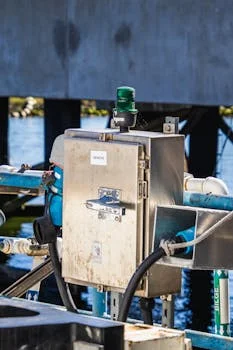
Reliable wastewater treatment plant equipment suppliers in Singapore are scored on process fit, not brand count, from modular industrial skids to large municipal packages. Singapore WaterTech Solutions (SWTS) is often shortlisted for its AquaFlow Series, which pairs aerobic digestion with membrane filtration. Those trains typically target about 92% COD removal on mid-sized industrial loads that may expand later.
Ion Exchange Asia Pacific focuses on RO membranes and resin systems for ultrapure make-up alongside wastewater duty. With over 30 years in Singapore, it is a frequent pick for pharma and microelectronics. Xylem covers a wider municipal scope through Flygt pumps and Sanitaire aeration. Its parts network lowers long-term risk on PUB-linked plants where downtime is costly.
Andritz leads large sludge drying packages, with drum dryers rated up to 11 tons of water evaporated per hour—useful where landfill diversion targets bite. HydropureWater supplies MBR, DAF, and underground integrated trains up to 2,000 m³/day with local engineering support aimed at NEA/PUB compliance and shorter industrial lead times.
| Supplier | Core Technology | Compliance Focus | Est. Cost Range (500 m³/day) |
|---|---|---|---|
| SWTS | Modular AquaFlow (Aerobic) | NEA Trade Effluent | S$350,000 – S$600,000 |
| Ion Exchange | RO Membranes / Resins | Ultrapure / Reuse | S$500,000 – S$900,000 |
| Xylem | Aeration / Pumping | PUB Municipal | S$400,000 – S$750,000 |
| Andritz | Sludge Drying / Dewatering | Zero Waste Masterplan | S$600,000+ (Drying focus) |
| HydropureWater | MBR / DAF / Underground | NEA/PUB Hybrid | S$300,000 – S$550,000 |
Cost Benchmarks & ROI: 2025 Singapore Market Data
MBR capital cost in Singapore commonly runs S$2,400 to S$4,000 per m³/day of design capacity, set by influent strength and membrane duty. DAF primary packages usually sit at S$1,600 to S$3,200 per m³/day. Installation labour and SS304/SS316 materials for humid, saline coastal sites push both ranges upward versus regional peers.
Energy often makes up 40–60% of OPEX. On MBR trains, membrane replacement every 5–7 years plus routine service adds another 10–20%. Plants cut haul fees with sludge dewatering solutions for Singapore's wastewater projects; disposal currently runs about S$50 to S$100 per ton. Raising cake solids from 10% to 25% can cut annual disposal spend by more than half.
Reuse and grants shorten payback. Treating to NEWater-quality reuse can save about S$1.20 per m³ versus potable purchase. Earlier summaries described a flat 30% tax rebate; NEA’s Energy Efficiency Grant instead co-funds pre-approved equipment at up to 70% for SMEs and up to 30% for non-SMEs (NEA EEG). A Jurong Innovation District upgrade reported a 3-year payback after a 20% energy cut and a 15% chemical cut (Industry Report, 2024). For regional context, teams also review cost benchmarks for wastewater treatment projects in Southeast Asia.
| Cost Component | MBR System | DAF System | Integrated Underground |
|---|---|---|---|
| CAPEX (per m³/day) | S$2,400 – S$4,000 | S$1,600 – S$3,200 | S$2,000 – S$3,500 |
| Energy (kWh/m³) | 0.5 – 0.8 | 0.2 – 0.4 | 0.4 – 0.7 |
| Chemicals (% of OPEX) | 15% | 30% | 20% |
| Maintenance Annual % | 3-5% | 2-4% | 2-3% |
| Typical ROI (Years) | 3.5 – 5.0 | 2.0 – 4.0 | 4.0 – 6.0 |
How Do Wastewater Treatment Plant Equipment Suppliers Compare?
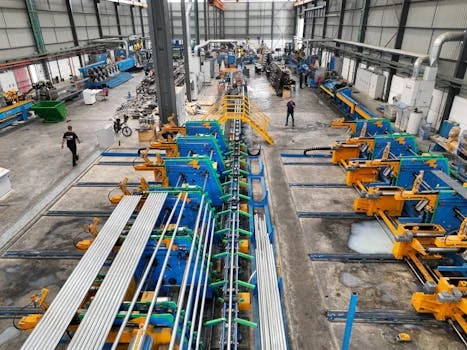
Trusted wastewater plant equipment suppliers for utilities in Singapore pass a five-stage check that maps influent data to PUB reuse goals and NEA discharge class. Start with peak flow (m³/day) and inhibitors such as metals or high-salinity brine that foul MBR membranes.
- Define Project Scope: Quantify average and peak flow. Set Target Effluent Quality for sewer discharge or watercourse discharge under NEA limits.
- Match System Type to Use Case: Choose MBR for reuse, DAF for high-grease F&B loads, and underground packages when surface area is scarce.
- Evaluate Supplier Capabilities: Confirm NEA/PUB project references, local engineers, and a 24/7 emergency line; Singapore downtime can trigger regulatory penalties.
- Compare Total Cost of Ownership (TCO): Model 10-year energy, membrane, and sludge costs. Include EEG grant support where equipment qualifies.
- Pilot Testing: Above 500 m³/day, request a containerized pilot. Xylem and HydropureWater often supply pilots to prove removal rates before full buy-out.
"The difference between a compliant plant and a high-performance plant lies in the automation and sensor integration. In Singapore's high-cost environment, reducing manual intervention through smart PLC controls is the only way to ensure long-term ROI." — Senior Environmental Engineer, Tuas Industrial Estate.
Who this is for: plant engineers and procurement managers in Jurong, Tuas, and Woodlands sizing MBR, DAF, or underground trains from 50 to 2,000 m³/day. Who should look elsewhere: PUB municipal packages above 50,000 m³/day usually go through dedicated EPC channels; sites under 10 m³/day typically use packaged bio-disks or septic upgrades outside this scope. Next step: send influent data and target effluent quality to request a sizing proposal and cost estimate.
Frequently Asked Questions
What are the NEA's 2025 discharge standards for industrial wastewater?
For controlled watercourses, NEA limits are TSS 30 mg/L, BOD 20 mg/L, and COD 60 mg/L under the Environmental Protection and Management (Trade Effluent) Regulations. Earlier market notes often cited TSS <5 mg/L and BOD <10 mg/L as stretch targets. Sewer discharge follows the separate Sewerage and Drainage (Trade Effluent) Regulations and may attract Trade Effluent Fees when BOD or TSS exceed 400 mg/L.
How much does it cost to set up a sewage treatment plant in Singapore?
A typical 50–500 m³/day package runs about S$80,000 to S$500,000 installed. MBR sits at the high end because of membranes and controls. DAF and simple aerobic packages cost less when only primary FOG or BOD reduction is required before sewer discharge.
Which sewage treatment system is best for food processing plants?
DAF systems such as HydropureWater's fit F&B plants because they remove high FOG loads that foul sewers and downstream biology. Pair DAF with polishing biology or MBR when reuse or watercourse discharge is the end point. Size on peak kitchen and washdown flows, not average daily volume alone.
What is the lifespan of an MBR system?
Structural and mechanical gear typically lasts 15–20 years in Singapore service. Membranes usually need replacement every 5–7 years, driven by CIP quality and influent fouling load. Plants that keep stable pretreat and air scour see membrane life at the longer end of that band.
Are there government incentives for energy-efficient wastewater treatment?
Yes. NEA’s Energy Efficiency Grant co-funds qualifying equipment at up to 70% for SMEs and up to 30% for non-SMEs, rather than a flat tax rebate. Projects that cut waste to Semakau Landfill also align with Zero Waste Masterplan goals and may access broader green financing channels.