Why German Wastewater Plants Upgrade Mechanical Dewatering
German plants select sludge dewatering equipment in Germany by cake solids, disposal route, and power cost. Screw presses typically reach 20–25% DS, centrifuges 25–35% DS, and filter presses 30–40% DS on municipal feeds. Disposal rose from €80–€120/ton in 2020 to €120–€180/ton in 2025 (Umweltbundesamt 2024). AbwV §57 land-application moisture below 5% usually still needs drying after mechanical dewatering.
Operators face rising sludge disposal costs and tighter environmental rules at the same time. Disposal costs for dewatered sludge have escalated from €80–€120/ton in 2020 to €120–€180/ton in 2025, according to data from the German Environment Agency (Umweltbundesamt 2024). The increase reflects shrinking landfill capacity for organic waste, a shift toward incineration, and higher transport costs. These pressures push plants toward mechanical systems that raise cake dry solids and shrink haul volumes before thermal treatment or land application.
Regulatory drivers matter as much as cost. The EU Urban Waste Water Directive 91/271/EEC, Article 14 on sludge reuse, sets expectations for pathogen and heavy-metal control that shape how sludge is treated and routed. German Abwasserverordnung (AbwV) §57 states a residual moisture content of less than 5% for sludge destined for agricultural land application. That benchmark sets performance goals for dewatering trains and for any thermal drying that follows. Meeting the pathway rules avoids fines and keeps disposal contracts viable over multi-year operating periods.
Naabtaler Milchwerke’s WWTP installed three HUBER Q-Press® 620 screw press units. The upgrade cut sludge disposal volume by 40% and saved about €45,000 per year on haul and tipping. In the German market for mechanical dewatering in 2025, screw presses hold roughly 60% share, filter presses about 25%, and centrifuges about 15%. Municipal plants favor continuous, lower-energy trains; filter presses stay strong where high cake solids or difficult industrial sludge dominate; centrifuges fit high-throughput sites with tight building footprints and skilled polymer control.
Most plants we size for municipal secondary sludge run at the lower end of each technology’s dry-solids band until polymer dose, feed solids, and cake handling are tuned on site. Brochure peaks are rarely the day-one operating point. Procurement teams should treat the ranges below as planning envelopes, then confirm with jar tests and a site trial where the disposal €/ton justifies the effort.
How Screw Presses, Filter Presses and Centrifuges Work
Mechanical dewatering uses three distinct principles, each matched to sludge type, staffing, and duty cycle. Matching mechanism to solids, polymer response, and attendance prevents soft cake and chronic overspend on energy.
A screw press runs continuously. A rotating screw inside a cylindrical screen or plate stack compresses sludge as flight volume shrinks and free water drains through the screen. Flocculation in a pre-thickening zone often helps capture. For municipal secondary sludge, cake typically reaches 20–25% dry solids. Low-speed drive keeps energy near 0.2–0.5 kWh/m³ of dewatered sludge and limits wear on flights and screens.
A filter press is a batch machine. Polymer-conditioned sludge is pumped into cloth-lined plate chambers at about 7–15 bar. Filtrate passes the cloths; cake often reaches 30–40% dry solids on municipal and many industrial feeds. A full cycle of fill, filtration, and discharge usually takes 2–4 hours. High pressure suits fine or hard-to-dewater solids when operations can cover batch cycles and cloth care.
A centrifuge separates solids by centrifugal force in a rotating bowl, typically at 2,000–4,000g. A scroll conveyor discharges cake while centrate overflows at the opposite end. Polymer dosing is almost always required to build shear-resistant flocs. Cake solids of 25–35% dry solids are common, with high throughput in a compact footprint when the bowl and backdrive are correctly set.
| Parameter | Screw Press | Filter Press | Centrifuge |
|---|---|---|---|
| Dewatering Principle | Progressive mechanical compression | Pressure filtration (batch) | Centrifugal force (continuous) |
| Typical Dry Solids Output | 20-25% | 30-40% | 25-35% |
| Energy Consumption | Low (0.2-0.5 kWh/m³) | Medium (0.1-0.3 kWh/m³ filtrate, higher overall due to auxiliary) | High (0.8-1.2 kWh/m³) |
| Polymer Dosing | Often required, lower dose | Almost always required, moderate dose | Always required, higher dose |
| Process Type | Continuous | Batch | Continuous |
Typical process trains look like this in the field once polymer and feed control are in place:
- Screw Press: Sludge feed → Polymer dosing (optional) → Flocculation tank → Screw press → Dewatered cake discharge / Filtrate collection.
- Filter Press: Sludge feed → Polymer dosing → Conditioning tank → Feed pump → Filter press (plates closed) → Filtration cycle → Plates open → Cake discharge → Filtrate collection.
- Centrifuge: Sludge feed → Polymer dosing → Centrifuge bowl → Dewatered cake discharge / Centrate collection.
Feed solids stability matters as much as the machine. Filter-press cycle time stretches when feed solids drop or when cloth blinding starts. Centrifuge capture collapses quickly if polymer age or dilution drifts outside the jar-test window. Operators who log feed %DS each shift catch those drifts before cake trucks leave soft.
Filtrate and centrate quality also feed back to the headworks. High solids recycle from a poorly tuned centrifuge can raise aeration demand. Cloudy filtrate from blinded filter cloths can load the plant’s return pumps. Design the return path and sampling points when you size the dewatering room, not after commissioning complaints start.
How do sludge dewatering technologies compare?
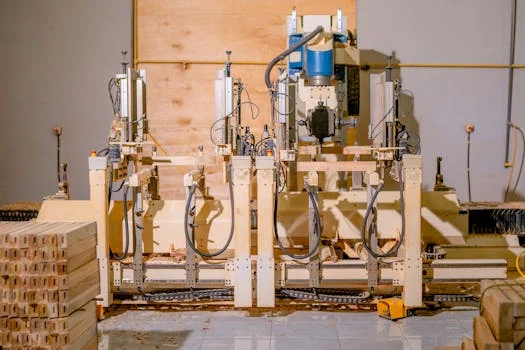
Sludge dewatering technologies differ most on cake dry solids, energy per cubic meter, polymer dose, footprint, and whether AbwV land-application moisture targets need a dryer after the press. German WWTP buyers should score each metric against sludge type, staffing, and disposal route, not against brand claims alone.
| Metric | Screw Press | Filter Press | Centrifuge |
|---|---|---|---|
| Dry solids content (%) | 20-25% (municipal), up to 30% (industrial) | 30-40% (municipal & industrial) | 25-35% (municipal & industrial) |
| Energy use (kWh/m³ dewatered sludge) | 0.2-0.5 | 0.1-0.3 (filtrate volume, but higher overall due to auxiliaries) | 0.8-1.2 (for 2,500-4,000g) |
| Footprint (m²/ton DS/day) | Small-Medium (e.g., 5-10 m² for 5 m³/h) | Medium-Large (e.g., 20-30 m² for 5 m³/h) | Small (e.g., 4-8 m² for 5 m³/h) |
| Polymer consumption (g/kg DS) | 2-6 | 4-10 | 6-12 |
| CAPEX (€/m³/h capacity) | €30,000–€150,000 | €50,000–€300,000 | €80,000–€250,000 |
| OPEX (€/ton DS) | €15-€30 | €20-€40 | €25-€50 |
| Maintenance interval (hours) | 500-1,000 (weekly cleaning, quarterly lubrication) | 200-500 (monthly plate inspection, annual cloth replacement) | 1,000-2,000 (daily polymer system checks, quarterly bowl balancing) |
| Noise level (dB) | <70 | 75-85 (during operation) | 80-95 |
| Meets AbwV §57 residual moisture? | Borderline; may require post-treatment or specific sludge types | Yes, consistently achieves <5% moisture with proper polymer dosing | No, typically 65-75% moisture |
Data sources: KUGLER’s screw press specs (e.g., EWC series), HydropureWater's plate-frame models, and general industry averages for centrifuges (assuming 2,500-4,000g).
For municipal secondary sludge with 3–5% initial solids, a screw press often fits continuous duty, low energy use, and light attendance. Cake at 20–25% DS may trail a filter press, yet OPEX stays attractive for many small and mid-size plants. Reaching AbwV §57 residual moisture below 5% for land application usually still needs post-treatment beyond the screw press alone.
A high-efficiency plate-frame filter press for German WWTPs reaches 30–40% dry solids more consistently. That cake cuts disposal volume and gives the strongest mechanical base before thermal drying when land application is planned. Filter presses also handle fine or variable industrial solids well. Batch operation and a larger footprint are the trade-offs most plants accept when disposal €/ton is high. For oily or hard industrial sludge, many specifications call for a Plate and Frame Filter Press for Sludge Dewatering after conditioning, rather than forcing a continuous low-pressure train on unbound oil.
Centrifuges such as GEA units often run near 2,500g on municipal duty. They deliver 25–35% dry solids with high throughput and a small core footprint, but energy and polymer use run higher than screw-press duty. They rarely meet the AbwV §57 residual moisture target for land application without further drying. Plants that prioritize peak hydraulic capacity inside an existing building often accept that trade. Noise at 80–95 dB also pushes many sites toward acoustic enclosures or remote rooms.
A filter press with neglected cloths underperforms a well-run screw press. A centrifuge with drifted polymer age loses capture faster than either press technology. Operating discipline is part of the equipment decision on every German site we audit.
Cost Breakdown: Sludge Dewatering Equipment in Germany
Capital cost, polymer, power, labor, and disposal savings decide which mechanical train wins over five years at German tip fees. CAPEX alone misleads when haul and incineration rates sit at €120–€180/ton for dewatered cake.
CAPEX ranges for 1–10 m³/h capacity are typical as follows. Screw presses run €30,000–€150,000 and often form the lowest entry cost, including some containerized packages. Filter presses run €50,000–€300,000 because of heavy frames, automated plate shifting, and larger auxiliaries. Centrifuges run €80,000–€250,000, reflecting high-speed bowls, gearboxes, and precision balance parts that must stay within vibration limits.
OPEX tracks four drivers that show up every month. Standard polyacrylamide (PAM) often costs €2–€5/kg; centrifuges at 6–12 g/kg DS and many filter-press duties use more polymer per kilogram dry solids than screw presses at 2–6 g/kg DS. Industrial power averages about €0.25/kWh, so 0.8–1.2 kWh/m³ centrifuge loads cost more than 0.2–0.5 kWh/m³ screw-press duty on the same feed volume. Filter presses commonly need 1–2 hours of operator time per day for cloth care and cake discharge; screw presses and centrifuges often need about 0.5 hours/day of supervision when polymer systems are stable. At roughly €40/hour labor, attendance differences add tens of thousands of euros per year. Cloths, scroll tips, seals, and lubrication fill the maintenance line item on the annual budget.
Disposal savings dominate long-term cash flow for most municipal sites. A plant near 20,000 population equivalents (PE) generating about 800 kg dry solids per day can save roughly €43,800 per year by moving cake from 20% to 25% dry solids at €150/ton disposal. Higher dry solids mean less wet mass on the truck and fewer trips to the incinerator or dryer gate.
| Metric | Screw Press | Filter Press | Centrifuge |
|---|---|---|---|
| Typical CAPEX (€) | €80,000 | €180,000 | €150,000 |
| Annual OPEX (€) (Energy, Polymer, Labor, Maint.) | €25,000 | €35,000 | €45,000 |
| Annual Disposal Savings (€) (vs. 15% DS baseline) | €30,000 (achieving 20% DS) | €60,000 (achieving 30% DS) | €45,000 (achieving 25% DS) |
| Payback Period (years) | ~3-4 | ~3-5 | ~4-6 |
| 5-Year TCO (€) (CAPEX + 5*OPEX - 5*Disposal Savings) | €155,000 | €205,000 | €255,000 |
Note: These figures are estimates and vary significantly based on sludge characteristics, local costs, and specific equipment models.
Main cost drivers to freeze in the bid sheet are cake dry solids at your sludge, polymer dose at your water chemistry, power at €0.25/kWh, operator hours, cloth or wear-part intervals, and the contracted disposal €/ton. Change any one of those inputs and the payback ranking in the table can flip between screw press and filter press within a single budget cycle. Containerized packages priced from €25,000–€80,000 can shorten install time, but they still need the same polymer, power, and disposal math after the skid arrives.
Keep filtrate sampling taps and cake %DS logs on the same shift sheet. Plants that only track wet tons shipped miss early cloth blinding or polymer under-dose until the disposal invoice arrives. A weekly trend of cake dry solids against polymer g/kg DS is enough to catch most drifts before they cost a full truck of soft cake.
Compliance and Permitting Under EU and German Rules
EU and German sludge rules shape which dewatering train a plant can defend at audit. Equipment choice changes cake solids, transport mass, and how much drying or hygienization still follows mechanical separation.
The EU Urban Waste Water Directive 91/271/EEC, Article 14, requires sludge reuse to limit environmental harm. It does not fix a dry-solids percentage, but it does set pathogen and heavy-metal expectations for agricultural use. Higher cake solids from a filter press cut transport for incineration and shrink the mass that later treatment must handle. That volume reduction is an economic lever even when the directive itself stays silent on percent dry solids.
German AbwV §57 is more numeric: sludge for land application must show residual moisture below 5%. Mechanical cake at 30–40% dry solids still holds 60–70% moisture, so thermal drying or equivalent post-treatment is usually required to hit the land-application moisture target. Filter presses give the best mechanical starting point before that dryer. Screw presses give a workable base but almost always need drying for that pathway. Centrifuge cake at typical 65–75% moisture needs substantial further drying before AbwV land application.
Polymer choice sits under chemical rules as well. PAM at €2–€5/kg remains common, while EU REACH scrutiny has raised interest in bio-based options such as chitosan or starch polymers at about €10–€20/kg. Higher unit cost shows up directly in OPEX and must be weighed against dose efficiency on the actual sludge. German record-keeping also expects dry solids, polymer dose, and treatment dates on the disposal file. Automated packages such as GEA Intellicant® can log setpoints continuously and shorten audit prep for plants that already run digital SCADA historians.
Permitting discussions with local authorities go smoother when the design file already shows expected cake %DS, polymer product and dose range, filtrate return path, and the disposal route (land application after drying versus incineration). Missing those four items is the most common delay we see on upgrade dossiers, not the brand of the press.
Which centrifuge suits municipal secondary sludge?
Centrifuges for municipal secondary sludge usually target 25–35% dry solids at 2,000–4,000g with polymer doses around 6–12 g/kg DS. Plants pick them when continuous high throughput and a small footprint outweigh higher energy and polymer cost versus a screw press on the same feed.
Secondary sludge with fine flocs needs stable polymer make-up, aging time, and bowl differential speed control. Daily polymer-system checks and quarterly bowl inspection are normal operating practice. If the disposal route is incineration, the centrifuge’s compact duty and 25–35% cake can be enough to hit transport budgets. If the route is agricultural land application under AbwV §57 residual moisture below 5%, plan drying after the centrifuge rather than expecting the bowl alone to finish the moisture target.
Oily industrial sludge is a different case. Oil can blind screw-press screens and cut capture within hours. Those streams usually need DAF pre-treatment for oily industrial sludge, then a filter press or centrifuge sized on the floated solids, not on raw oily feed. Skipping pre-treatment to save CAPEX often returns as chronic cleaning downtime and soft cake that fails the disposal contract.
For buyers comparing municipal centrifuge shortlists, rank units on guaranteed DS at your sludge, installed kW at design flow, polymer dose guarantee, noise, and spare-part lead times—not on maximum G-force alone.
For EPC packages, specify acceptance tests in writing: minimum cake %DS at an agreed feed %DS, maximum polymer dose, maximum installed power draw at design flow, and centrate or filtrate suspended solids limits. Without those four gates, vendors optimize for CAPEX and leave the plant carrying OPEX risk for ten years.
Decision Framework: Choosing Equipment for Your Plant
Plant engineers should select dewatering hardware from sludge data, peak capacity, footprint, compliance path, and five-year cash flow—not from a single CAPEX quote. A short checklist keeps EPC designers and operations aligned before the purchase order.
Selection checklist for German WWTPs
- Measure initial solids, volatile solids, particle size, pH, and temperature on the real feed.
- Size on average and peak m³/h, not nameplate marketing capacity alone.
- Map footprint for the machine plus polymer make-up, cake handling, and access clearances.
- Decide land application versus incineration before locking cake-solids targets.
- Score polymer and power at local €/kg and €0.25/kWh, not generic brochure OPEX.
- Confirm maintenance intervals against available staffing (cloth change vs. bowl balance).
- Run a 5-year TCO with disposal at the plant’s real €/ton contract rate.
Step 1: Sludge characterization. Primary sludge often starts at 5–8% solids; secondary biological sludge often sits at 0.5–3% before thickening. High volatile solids and fine particles usually raise polymer demand and lengthen filter-press cycles. Municipal secondary sludge at 3–5% after thickening often suits a screw press; oily industrial sludge may need DAF then a filter press before cake haul.
Step 2: Capacity. Estimate daily sludge volume and peak flow. A common municipal planning figure is PE × 0.15 m³/PE/day for sludge volume before site-specific thickening assumptions are applied. Match continuous or batch capacity to both average and peak loads so weekend storage does not become an unofficial thickener.
Step 3: Footprint. A screw press near 5 m³/h may need about 10 m² for the core unit. A filter press at the same hydraulic capacity may need about 30 m² including plate travel and cake drop. Centrifuges keep a small core footprint but still need polymer make-up, centrate return, and control-panel space.
Step 4: Compliance path. For AbwV §57 land application, prioritize the highest mechanical dry solids—typically a filter press—then budget thermal drying. For incineration, maximize dry solids to cut transport; ranking on cake dryness alone often runs filter press, then centrifuge, then screw press.
Step 5: Budget. Use the ROI table above. A screw press may win on CAPEX at about €80,000 typical for the worked example; a filter press at about €180,000 may win on disposal savings at 30% DS versus 20% DS. Recheck energy at €0.25/kWh and labor at local rates before freezing the award.
Decision tree (field use). Start with sludge type. Municipal primary or secondary sludge goes to capacity and footprint screening next. Industrial sludge with high oil goes to DAF plus filter press or centrifuge. Fine, difficult solids favor a filter press. Capacity above about 5 m³/h with tight buildings often favors a centrifuge or a large filter press. Limited space favors screw press or centrifuge. Land-application compliance favors filter press plus drying; incineration favors maximum DS at acceptable polymer and power cost.
Document the decision with the sludge lab sheet, the chosen %DS target, the disposal €/ton, and the staffing plan. That packet is what procurement and the authority both need. Without it, even a well-priced machine becomes a change-order risk during installation.
Spare-part lead times also belong on the decision sheet. Filter cloths are usually stocked locally; centrifuge scroll tips and bowl tiles can take longer. Screw-press screens sit between those extremes. Tie critical spares into the OPEX line for year one so the TCO table stays honest after award.
Noise and odor control are easy to under-budget. Centrifuges at 80–95 dB often need rooms or enclosures that change the civil package. Filter presses release cake odor in batches when plates open; ventilation design should match that pulse, not a continuous dilute source. Screw presses stay quieter below 70 dB in most municipal rooms we walk during commissioning.
Who this is for / Next step
This guide is for German municipal and industrial WWTP engineers, EPC contractors, and procurement teams comparing screw presses, filter presses, and centrifuges on cake solids, OPEX, and AbwV pathways. Plants that only need simple thickening without cake haul reduction should look at thickening-only options instead of full dewatering CAPEX. If you already have sludge analyses and a target m³/h, request sizing for a Plate and Frame Filter Press for Sludge Dewatering or an alternate continuous train against your disposal contract. Share feed solids, polymer type, and disposal €/ton when you request a project quote so capacity and five-year TCO can be checked against the tables above.
Frequently Asked Questions

What is the typical dry solids content for screw presses in Germany?
Screw presses on municipal sludge in Germany typically reach 20–25% dry solids under normal polymer conditioning. With strong conditioning, some industrial feeds can approach about 30% dry solids. KUGLER EWC-class units are commonly applied in that municipal band when continuous low-energy duty is the priority over maximum cake dryness.
How much does a sludge dewatering container cost in Germany?
A complete roll-off dewatering container with screw press, polymer dosing, and controls often costs €25,000–€80,000 in Germany, depending on capacity and automation. Used packages may start near €10,000, but buyers should verify mechanical condition and whether the train can support the plant’s AbwV §57 disposal pathway after installation.
What are the energy requirements for sludge dewatering equipment?
Screw presses typically use 0.2–0.5 kWh per cubic meter of dewatered sludge. Filter presses often use 0.1–0.3 kWh per cubic meter of filtrate, with higher total plant energy once auxiliaries and batch cycling are included. Centrifuges commonly use 0.8–1.2 kWh per cubic meter of dewatered sludge at 2,000–4,000g. At about €0.25/kWh industrial power in Germany, those gaps show up quickly in annual OPEX reports.
Can I use a screw press for industrial sludge with high oil content?
Screw presses are generally a poor fit for high oil or grease sludge because oil blinds screens and cuts capture. Prefer a filter press or centrifuge after oil removal, for example with DAF. HydropureWater plate-frame filter presses are frequently specified on petrochemical and food-processing solids once free oil is reduced upstream.
What maintenance is required for sludge dewatering equipment?
Screw presses need weekly screen cleaning and quarterly bearing lubrication to hold throughput. Filter presses need monthly plate checks and annual cloth replacement in typical municipal duty. Centrifuges need daily polymer-system checks plus quarterly bowl balancing and wear-part inspection to hold capture and vibration limits within manufacturer windows.