Orlando’s industrial facilities require sewage treatment equipment that meets Florida’s strict FDEP and EPA Region 4 discharge limits—typically <30 mg/L TSS and <25 mg/L BOD for most permits. Local suppliers offer systems ranging from compact package plants (1–80 m³/h) to advanced MBR systems (10–2,000 m³/day), with CAPEX costs averaging $120–$450 per m³/day capacity. This guide provides Orlando-specific compliance data, technical specs, and a supplier decision framework to help you select the right equipment for your facility’s flow rate, contaminant load, and budget.
Why Orlando Facilities Need Upgraded Sewage Treatment Equipment in 2025
Florida DEP (FDEP) enforces stricter limits in 2025, mandating industrial discharges to typically achieve <30 mg/L TSS, <25 mg/L BOD, and <10 mg/L TN for most permits, as outlined in FDEP Rule 62-600.420. Non-compliance with these evolving standards can lead to significant financial penalties and operational disruptions for Orlando facilities. According to the FDEP Annual Compliance Report, Orlando’s top violations in 2023 included 42% for TSS exceedances and 28% for BOD, highlighting a prevalent issue with current treatment capabilities. For instance, a local citrus processing plant faced $180,000 in fines in 2024 after its outdated primary clarifier failed to adequately pretreat high organic loads, resulting in repeated BOD and TSS violations. The plant ultimately upgraded to a Dissolved Air Flotation (DAF) system combined with an anaerobic digester, reducing its discharge parameters by over 85% and eliminating fines. Common outdated systems still found in Orlando include septic tanks, which are non-compliant for industrial flows exceeding 5,000 GPD, basic clarifiers that consistently fail to meet modern Total Nitrogen (TN) limits, and undersized package plants that become overloaded during peak production, leading to discharge permit violations.
Types of Sewage Treatment Equipment Available from Orlando Suppliers
Orlando suppliers offer a diverse range of sewage treatment equipment, each engineered to address specific wastewater characteristics and facility requirements. Understanding these technical differences is crucial for selecting a system that optimizes performance and compliance.
- Dissolved Air Flotation (DAF) Systems: These systems are highly effective for removing suspended solids (SS), fats, oils, and grease (FOG) from industrial wastewater, making them ideal for food processing, dairy, and meatpacking plants. Orlando suppliers typically offer DAF models with flow capacities ranging from 4 to 300 m³/h, achieving TSS removal rates of 92–97% and FOG removal often exceeding 95% (per EPA 2024 benchmarks). For high-FOG wastewater, an Orlando’s top-rated DAF system can significantly reduce pretreatment costs. Facilities can also compare DAF systems to lamella clarifiers and other alternatives for optimal selection.
- MBR (Membrane Bioreactor) Systems: MBR systems integrate biological treatment with membrane filtration, producing high-quality effluent suitable for discharge or water reuse. They are particularly beneficial for space-constrained sites due to their compact footprint, often 60% smaller than conventional activated sludge systems. Orlando suppliers provide MBR systems featuring membranes with <1 μm filtration, delivering 95–99% BOD removal and nearly 100% TSS removal. A space-saving MBR system for Orlando’s urban facilities can also meet stringent water reuse regulations.
- Package Sewage Treatment Plants: These pre-engineered, modular systems are designed for smaller to medium-sized flows, typically 1–80 m³/h, and are often used by commercial developments, hospitals, or remote industrial sites. Orlando suppliers offer various configurations, including A/O (anoxic/aerobic) for nitrogen removal and SBR (sequencing batch reactor) for flexible operation. Many models feature automated operation, minimal operator intervention, and options for below-grade installation to preserve aesthetics. A fully automated package plant for Orlando’s residential/commercial sites provides a complete treatment solution. Facilities can also learn about package plant compliance in other U.S. regions.
- Chemical Dosing Systems: Essential for pH adjustment, coagulation, flocculation, or disinfection, these systems ensure wastewater parameters meet discharge or pretreatment requirements. Orlando suppliers offer PLC-controlled chemical dosing skids, providing precise chemical injection. For Orlando’s moderately hard water (typically 120-180 mg/L CaCO₃), common dosing ranges include alum (10-50 mg/L) for phosphorus removal, caustic soda (5-20 mg/L) for pH elevation, and hypochlorite (2-10 mg/L) for disinfection.
- Sludge Dewatering Equipment: Managing sludge is a critical component of sewage treatment. Orlando suppliers offer plate/frame filter presses and belt presses. Plate/frame filter presses typically have 1–500 m² filtration areas, achieving 25–35% dry solids content, requiring more batch operation and labor but often yielding drier cake. Belt presses, with continuous operation, achieve 20–30% dry solids content, consume more energy (due to continuous motor operation), but offer lower labor costs and higher throughput for larger facilities.
| Equipment Type | Primary Application | Flow Capacity Range | Key Performance Metric | Footprint |
|---|---|---|---|---|
| DAF System | FOG/SS removal (food, meat) | 4–300 m³/h | 92–97% TSS removal | Medium |
| MBR System | High-quality effluent, water reuse | 10–2,000 m³/day | 95–99% BOD removal, <1 μm filtration | Compact (60% less than CAS) |
| Package Plant | Small-medium flows, remote sites | 1–80 m³/h | <30 mg/L TSS, <25 mg/L BOD | Small-Medium (often underground) |
| Chemical Dosing | pH adjustment, coagulation, disinfection | Variable (based on process) | Precise chemical injection, parameter control | Small (skid-mounted) |
| Sludge Dewatering | Sludge volume reduction | 1–500 m² filtration area | 20–35% dry solids content | Medium-Large |
Orlando-Specific Compliance Requirements for Sewage Treatment Equipment
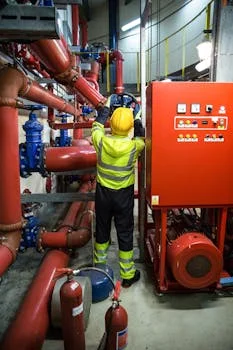
Navigating the regulatory landscape in Orlando is critical for industrial facilities to avoid penalties and ensure sustainable operations. Florida’s Department of Environmental Protection (FDEP) sets stringent standards that dictate equipment selection and operational protocols.
- FDEP Permitting: Industrial facilities discharging wastewater to surface waters or groundwater must obtain an NPDES permit under FDEP Rule 62-620 or a relevant generic permit (e.g., for food processing operations). The application process typically involves submitting detailed engineering plans, wastewater characterization data, and environmental assessments. The timeline for permit approval usually ranges from 6 to 12 months, with application fees varying from $500 to $5,000 depending on the complexity and scale of the discharge.
- Pretreatment Standards: For facilities discharging to Orlando’s municipal sewer system, local pretreatment limits apply, designed to protect the integrity of the public wastewater treatment plant. These limits are typically more stringent for specific industrial users; for example, food processors may face limits of <100 mg/L TSS, while restaurants often have <50 mg/L FOG limits. Facilities must ensure their sewage treatment equipment can consistently meet these local ordinances.
- Water Reuse Regulations: Florida’s Rule 62-610 actively promotes water reuse, allowing reclaimed water for beneficial purposes such as irrigation, industrial cooling, or toilet flushing. To qualify, wastewater must be treated to Level 1 (basic disinfection) or Level 2 (advanced disinfection and filtration) standards. Achieving Level 2 often necessitates advanced technologies like MBR or Reverse Osmosis (RO) systems, which can remove pathogens and nutrients to meet public access reuse criteria. Facilities considering water reuse should explore hospital wastewater treatment standards for comparison.
- Emergency Response: FDEP requires all permitted facilities to have comprehensive spill prevention and control plans. Any unauthorized discharge exceeding 1,000 gallons must be reported to FDEP within 24 hours. Orlando suppliers often provide emergency services, including 24-hour hotlines and rapid response teams, which are crucial for mitigating environmental impact and avoiding escalated fines.
- Inspection Frequency: FDEP conducts unannounced inspections for industrial facilities, typically 1–4 times per year. Common findings include inadequate record-keeping, maintenance deficiencies, and exceedances of discharge limits. Facilities can prepare by maintaining detailed operational logs, calibrating monitoring equipment regularly, and conducting internal audits to ensure continuous compliance.
| Compliance Area | Key Requirement | FDEP Rule/Standard | Typical Industrial Limit (Orlando) |
|---|---|---|---|
| Discharge Limits (NPDES) | TSS, BOD, TN, TP | 62-600.420, 62-620 | <30 mg/L TSS, <25 mg/L BOD, <10 mg/L TN |
| Pretreatment Limits | TSS, FOG, pH, heavy metals | Local Ordinances | <100 mg/L TSS (food), <50 mg/L FOG (restaurants) |
| Water Reuse | Level 1 or 2 Treatment | 62-610 | Pathogen & Nutrient Reduction (MBR/RO often required for Level 2) |
| Emergency Reporting | Spill Prevention Plan, 24-hr Reporting | 62-620.300 | Discharges >1,000 gallons reported to FDEP |
| Inspections | Operational logs, maintenance records | 62-620.300 | 1–4 unannounced inspections/year |
Cost Breakdown: Sewage Treatment Equipment in Orlando (2025 Data)
The total cost of sewage treatment equipment in Orlando involves significant capital expenditure (CAPEX), ongoing operational expenses (OPEX), and installation costs. Orlando suppliers typically quote CAPEX costs for industrial-scale systems ranging from $120 to $450 per m³/day capacity. For example, a 10 m³/h (240 m³/day) package plant might have a CAPEX of approximately $60,000, while a 100 m³/h (2,400 m³/day) MBR system could cost around $450,000 due to its advanced membrane technology and higher performance capabilities.
Operational Expenses (OPEX) represent the recurring costs of running the system. Energy consumption is a major component, typically ranging from $0.05 to $0.15 per m³ treated, depending on the technology (e.g., MBRs are more energy-intensive due to aeration and membrane scouring). Chemicals for pH adjustment, coagulation, or disinfection can add $0.02 to $0.10 per m³ treated. Labor for routine maintenance, monitoring, and sludge handling averages $30 to $80 per hour, varying with the system's complexity and automation level.
Installation costs are also a significant factor. Civil works, including concrete tanks, foundations, and extensive piping, can range from $50 to $150 per m³ of system capacity. Electrical and mechanical installation, encompassing power connections, control systems, and equipment assembly, typically adds another $20 to $50 per m³. These costs can fluctuate based on site-specific conditions and required infrastructure upgrades.
Several financing options are available to Orlando facilities. Suppliers may offer leasing agreements, often structured at $1.50 to $3.00 per m³ treated, which can help facilities manage upfront costs. PACE (Property Assessed Clean Energy) financing allows 100% upfront funding for eligible water efficiency and renewable energy projects, with repayment via property taxes over an extended period. Additionally, FDEP offers grants for water reuse projects that meet specific eligibility criteria, such as demonstrating significant water conservation or environmental benefits.
Calculating Return on Investment (ROI) is essential for justifying upgrades. Consider a 50 m³/h (1,200 m³/day) food processing plant investing in a new treatment system. With a CAPEX of $300,000 and annual OPEX of $50,000, if the system reduces annual non-compliance fines by $70,000 and generates $50,000 in savings from water reuse (total annual savings $120,000), the payback period would be approximately 2.5 years ($300,000 / $120,000 per year). This demonstrates a strong financial incentive beyond mere compliance.
| Cost Category | Typical Range (Orlando, 2025) | Notes |
|---|---|---|
| CAPEX (Equipment Purchase) | $120–$450 per m³/day capacity | Varies by technology (e.g., package plant vs. MBR) |
| OPEX (Energy) | $0.05–$0.15 per m³ treated | Higher for MBRs, lower for gravity-based systems |
| OPEX (Chemicals) | $0.02–$0.10 per m³ treated | Depends on wastewater characteristics and treatment goals |
| OPEX (Labor/Maintenance) | $30–$80 per hour | Varies by system complexity and automation |
| Installation (Civil Works) | $50–$150 per m³ capacity | Includes tanks, foundations, piping |
| Installation (Electrical/Mechanical) | $20–$50 per m³ capacity | Includes wiring, controls, equipment assembly |
Top 5 Sewage Treatment Equipment Suppliers in Orlando: Engineering Specs & Decision Framework
Orlando's market for sewage treatment equipment suppliers presents a diverse range of options, each with distinct specializations and service models. Evaluating these suppliers requires a structured approach focusing on technical capabilities, compliance support, and long-term value.
- Supplier 1: Modern Plumbing Industries (MPI) – This company primarily focuses on commercial plumbing integration. Strengths include their 24-hour service availability and free water testing, which can be valuable for initial assessments. However, their industrial experience is limited, largely serving restaurants and hotels rather than heavy industrial plants with complex wastewater streams.
- Supplier 2: Affordable Water Treatment, Inc. – With over 30 years in Central Florida, this supplier specializes in custom-built systems. Their strengths lie in servicing all makes and models of water treatment systems and offering military/senior discounts. A potential weakness is their typically higher CAPEX costs for industrial-scale systems compared to specialized industrial providers.
- Supplier 3: R2J Chemical Services – This firm focuses on industrial water treatment programs rather than equipment manufacturing. Their strengths include an emphasis on energy and water efficiency, alongside remote monitoring capabilities for ongoing optimization. A key weakness is that they do not manufacture equipment in-house, instead reselling third-party systems, which might impact customization options or direct technical support.
- Supplier 4: Home Supply & Services LLC – Operating as a local distributor for package plants, this supplier offers competitive pricing and quick delivery times. However, their technical support for complex industrial applications, such as integrating advanced controls or addressing unusual contaminant loads, is often limited.
- Supplier 5: HydropureWater (via Orlando distributors) – As a global manufacturer with established local partners in Orlando, HydropureWater offers custom-engineered systems including DAF, MBR, and package plants specifically designed to comply with FDEP and EPA standards. Their strengths include deep technical expertise and the ability to provide tailored solutions for challenging industrial wastewater. A potential weakness is longer lead times for highly customized orders due compared to off-the-shelf solutions.
A structured decision framework is essential for comparing these diverse suppliers. Evaluate each candidate against critical criteria using a scoring matrix:
| Criterion | Description | MPI (Score 1-5) | Affordable Water (Score 1-5) | R2J Chemical (Score 1-5) | Home Supply (Score 1-5) | HydropureWater (Score 1-5) |
|---|---|---|---|---|---|---|
| Technical Specs & Customization | Ability to meet specific flow rates, contaminant loads, and design custom solutions. | 2 | 4 | 3 | 3 | 5 |
| Compliance Support & Expertise | Knowledge of FDEP/EPA regulations, permitting assistance, and guarantees. | 2 | 3 | 4 | 2 | 5 |
| CAPEX/OPEX Competitiveness | Overall cost-effectiveness, including equipment, installation, and long-term running costs. | 3 | 2 | 3 | 4 | 4 |
| Service Response Time & Support | Availability of emergency service, routine maintenance, and technical troubleshooting. | 4 | 4 | 3 | 2 | 4 |
| Warranty & Performance Guarantees | Duration and scope of equipment warranty, and guarantees on effluent quality. | 2 | 3 | 3 | 2 | 5 |
How to Select the Right Sewage Treatment Equipment for Your Orlando Facility
Selecting the optimal sewage treatment equipment for an Orlando facility requires a systematic approach, starting with a thorough understanding of your specific needs and the regulatory environment. Following a structured checklist can streamline the evaluation and procurement process.
- Step 1: Assess Your Wastewater Characteristics – Begin by conducting a comprehensive wastewater analysis. Test for critical parameters such as Total Suspended Solids (TSS), Biochemical Oxygen Demand (BOD), Fats, Oils, and Grease (FOG), pH, and nitrogen/phosphorus levels. Accurately determine your average and peak flow rates. Many Orlando suppliers, including Affordable Water Treatment, Inc., offer free water testing services that can provide this crucial baseline data.
- Step 2: Determine Compliance Requirements – Identify all applicable FDEP permit limits (e.g., <30 mg/L TSS, <25 mg/L BOD, <10 mg/L TN) and any specific local pretreatment standards imposed by Orlando’s municipal utility (e.g., <100 mg/L TSS for food processors). Understand the permitting process, timelines, and reporting obligations to ensure your chosen equipment meets all legal mandates.
- Step 3: Evaluate Equipment Options – Match your wastewater characteristics and compliance goals to appropriate treatment technologies. For high FOG loads, a DAF system is typically effective. For stringent discharge limits or water reuse, an MBR system is often necessary. Consider package plants for smaller flows or modular needs. Factor in footprint constraints, automation levels, and energy efficiency.
- Step 4: Request Proposals from 3+ Suppliers – Solicit detailed proposals from multiple qualified sewage treatment equipment suppliers in Orlando. Ensure each proposal includes comprehensive technical specifications, explicit compliance guarantees for FDEP/EPA standards, a clear breakdown of CAPEX and OPEX costs, and robust warranty terms for equipment and performance.
- Step 5: Visit Reference Sites – Ask prospective suppliers for a list of Orlando-based reference sites where similar equipment has been installed, particularly facilities in the same industry (e.g., food processors, hospitals). Visiting these sites provides invaluable insight into real-world performance, operational complexity, and client satisfaction.
- Step 6: Negotiate Contracts – Finalize your selection by negotiating a comprehensive contract. Secure explicit performance guarantees (e.g., 90% TSS removal efficiency), service level agreements (e.g., 4-hour emergency response time), and detailed operator training programs to ensure your team can effectively manage the new system.
Frequently Asked Questions
Orlando facility managers and engineers often have specific questions regarding sewage treatment equipment selection and operation in the local regulatory environment.
Q: What is the typical lifespan of industrial sewage treatment equipment in Orlando?
A: The lifespan varies by equipment type and maintenance, but most industrial sewage treatment systems, like DAF units or MBRs, have a design life of 15-25 years for major components (tanks, piping) and 5-10 years for mechanical/electrical parts (pumps, blowers, membranes). Proper maintenance and timely part replacement are critical for maximizing longevity.
Q: Are there incentives for upgrading to water reuse systems in Orlando?
A: Yes, Florida’s Rule 62-610 encourages water reuse, and FDEP occasionally offers grants or low-interest loans for projects that demonstrate significant water conservation. Additionally, reducing potable water consumption through reuse can lead to substantial operational savings, contributing to a strong sewage treatment plant ROI calculation.
Q: How frequently should industrial wastewater be tested to ensure FDEP compliance?
A: FDEP permits specify testing frequencies, which can range from daily for critical parameters like pH and flow, to weekly or monthly for TSS, BOD, and nutrients (TN, TP). Quarterly or semi-annual testing for heavy metals or specific organics may also be required, depending on the industrial process and permit conditions.
Q: What are the key considerations for managing sludge from a sewage treatment plant in Orlando?
A: Sludge management involves dewatering to reduce volume and disposal. Key considerations include the type of sludge dewatering equipment Orlando suppliers offer (e.g., belt press vs. filter press), the cost of off-site disposal at approved landfills or composting facilities, and potential for beneficial reuse of biosolids if FDEP permits allow.