Understanding Commercial Greywater Recycling in Angola
Commercial greywater recycling systems collect water from sources like sinks and showers, filter and disinfect it, and reuse it for non-potable applications such as toilet flushing or irrigation. Case studies documented by Greywater Action show that implementing on-site reuse can reduce a building's fresh water intake by over 75% while cutting standard water consumption by 60% compared to conventional properties. Implementing a commercial greywater recycling system in Angola requires matching raw influent quality to treatment technologies like Ultrafiltration (UF) or Membrane Bioreactor (MBR) processes. Commercial projects with higher occupancy require sophisticated filtration and disinfection to reliably maintain non-potable supply.
At a commercial scale, greywater systems capture drain water from handwashing basins, showers, and laundries, directing it into dedicated temporary storage tanks before mechanical filtration and disinfection. The treated effluent is then pumped back through dual-plumbed pipe networks for toilet flushing or landscape drip irrigation (S2, S5). Diverting this greywater stream alleviates pressure on municipal freshwater reserves and lowers sewer discharge volumes. The U.S. Environmental Protection Agency’s published Onsite Non-Potable Water System Guidance Manual (2020)—developed with the National Blue Ribbon Commission for Onsite Non-potable Water Systems—confirms that on-site water reuse reduces community-wide energy demands and carbon emissions by minimizing the long-distance transport of treated water (S4).
Documented commercial projects illustrate the water savings achieved by on-site systems. The Solaris building in New York reduced municipal freshwater demand by over 75% by treating wastewater on-site for non-potable reuse, operating with 60% less water than comparable structures (S2). Similarly, residential multi-family projects have implemented dedicated shower and sink greywater filtration to supply toilet flushing across 96 individual units (S5). For commercial developments in Angola facing local water infrastructure constraints, recycling greywater provides a dependable method to stabilize utility performance and lower operating expenditures.
Key Technologies for Commercial Greywater Treatment
Selecting the correct engineering process for commercial greywater treatment depends on influent characterization, expected surge volumes, and whether greywater is segregated from blackwater. Because commercial properties involve high human traffic and public exposure, treatment systems must use multi-stage barriers (S2, S5). Physical separation via Ultrafiltration (UF) systems relies on membrane pore barriers to eliminate suspended solids, colloidal matter, and bacterial pathogens without relying heavily on chemical coagulation. UF systems operate effectively on segregated greywater streams where organic carbon (BOD) concentrations remain low.
When commercial facility plumbing combines greywater and blackwater into a single sewer line, biological treatment becomes mandatory before filtration. A multi-stage MBR membrane bioreactor system combines suspended-growth biological oxidation with micro- or ultra-filtration membranes (S2, S5). MBR configurations remove dissolved organic contaminants, nitrogen compounds, and particulate matter, producing clear effluent suitable for toilet flushing, cooling tower makeup, and sub-surface irrigation (S2, S5). To safeguard downstream pipe networks against biofouling, facilities often integrate a secondary dosing unit, such as a Chlorine Dioxide (ClO₂) Generator, after membrane separation.
| Discharge route or influent problem | Governing rule or process option | What data settles it |
|---|---|---|
| Segregated greywater from handwashing basins and showers with low organic loading | Ultrafiltration (UF) skid with automated backwash and inline disinfection | Influent oil and grease levels, total suspended solids (TSS), and daily peak flow rates |
| Combined greywater and blackwater stream from existing unified facility plumbing | Membrane Bioreactor (MBR) incorporating aerobic biological digestion and membrane filtration | Biochemical Oxygen Demand (BOD₅), Chemical Oxygen Demand (COD), and daily hydraulic surge profile |
Designing Your Commercial Greywater System for Angola
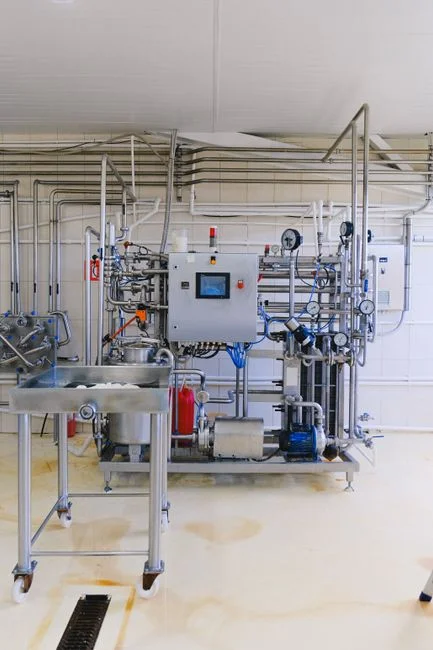
Designing an effective commercial greywater treatment plant for projects in Angola requires precise operational metrics to establish sizing and treatment intensity. System capacities must match maximum daily greywater generation against planned reuse demands, such as flushing requirements for 96 or more units, cooling tower loss replacements, or irrigation area coverage (S5, S4). While localized baseline regulatory parameters for Angola are not published in public technical frameworks, engineers apply risk-based design methodologies established in the Onsite Non-Potable Water System Guidance Manual (2020) to set water quality targets (S4).
Project success relies on compiling precise site measurements prior to system selection. Procurement teams should analyze comparative engineering assessments, such as lessons learned when comparing UF, MBR, and packaged systems for buildings, to evaluate spatial footprints against operational costs. Buyers in Angola must collect five critical site-specific parameters before finalizing equipment contracts:
- Raw Influent Quality: Measured values for turbidity, TSS, BOD₅, and surfactant concentrations.
- Target Effluent Standard: Customer or local permit specs for non-potable reuse.
- Physical Footprint & Elevation: Available floor area, clear height, and gravity collection points.
- Power Cost & Reliability: Local electrical tariffs and backup generation stability for pumping skids.
- Operator Capability: Technical skill level of on-site staff for routine membrane maintenance.
Procuring a Commercial Greywater Recycling System
Procuring a commercial greywater system for installations in Angola demands a detailed evaluation of technical proposals to avoid unexpected operating costs. Buyers must define the complete project boundary, detailing source collection fixtures, total daily production, surge storage requirements, and non-potable end uses (S2, S4). Evaluating international procurement approaches, such as evaluating UF, MBR, and package systems for greywater reuse or greywater recycling equipment for UK sites, demonstrates the importance of verifying spare parts availability and technical support before finalizing commercial terms.
When comparing vendor estimates, technical buyers must scrutinize equipment scope details rather than relying on initial capital expense figures alone. Membrane replacement cycles, specific energy consumption per cubic meter of treated water, and clean-in-place (CIP) chemical demands govern total life-cycle costs over a decade of operation.
| Quote line item | Technical scope to specify | Red flags to check before signing |
|---|---|---|
| Membrane Separation Module | Membrane material, nominal pore size (UF), operational flux rate, and CIP skid inclusion | Missing automated air-scour or backwash controls; non-standard membrane geometries with single-source supply risk |
| Disinfection & Storage Skid | Disinfectant dosing capacity, inline residual analyzer, and booster pump assembly | Unspecified chemical supply requirements or dosing systems non-compliant with local safety standards |
Further Reading
Frequently Asked Questions
What key cost factors determine the budget for a commercial greywater recycling system in Angola?
System pricing depends on daily treatment volume, feed stream contamination, and chosen technology. Simple Ultrafiltration for segregated greywater carries lower energy costs than an MBR required for high-BOD combined wastewater. Because localized Angolan civil and equipment costs vary by site, buyers must request vendor quotes detailing skid power draw (kWh/m³), membrane life guarantees, chemical cleaning consumption, and local spare parts availability to calculate total lifecycle costs.
How should an engineering team select and size a greywater treatment supplier for Angolan installations?
Selection begins by defining daily peak hydraulic flow and target non-potable applications, such as fixture counts or irrigation demands. Buyers must verify that the vendor provides robust pre-treatment screening, detailed engineering drawings, comprehensive spare parts lists, and local operational support. Suppliers must prove their system design maintains target effluent clarity and microbial safety under fluctuating raw water conditions.
When should a commercial project select Ultrafiltration instead of a Membrane Bioreactor?
Ultrafiltration is the preferred choice when facility plumbing separates greywater (showers, handwashing basins) from blackwater, yielding wastewater with low dissolved organic content. UF physically removes suspended solids and pathogens with lower power consumption. If greywater is mixed with kitchen waste or sewage, high organic loads necessitate an MBR system to biologically digest dissolved carbon before membrane separation.
Why is secondary chemical disinfection required after membrane filtration in commercial reuse systems?
While UF and MBR membranes remove bacteria and suspended solids, treated greywater stored in secondary tanks or distributed through long plumbing loops is vulnerable to microbial regrowth. Adding secondary disinfection, such as chlorine dioxide or sodium hypochlorite, maintains a residual disinfectant barrier throughout the non-potable distribution pipework and holding tanks.