Choose the Greywater Route from the End Use
Define the non-potable end use for a greywater recycling system in the United Kingdom, then match the eligible source water to treatment, storage, distribution and overflow. UF may suit a well-defined filtration duty; MBR may suit a more demanding biological treatment duty, but neither can be selected from nominal capacity alone. The decisive UK inputs are fixture flows, simultaneous demand, source quality, storage turnover, local approval requirements and the failed-system operating mode.
The intended destination should be recorded before equipment is specified. The UKWRA identifies toilet flushing and irrigation as standard examples and notes that laundry may be possible in some cases (S3). That does not establish that every source or reuse is permitted at a particular site. For each proposed fixture, require the supplier to show its route through collection, treatment, the greywater storage tank and final distribution.
Measure flows at the eligible fixtures and record the timing of use. The 2026 guidance states that annual reuse is the lesser of treated supply and eligible demand, and warns that annual totals can conceal storage, overflow and potable-backup requirements (S5). An hourly profile is more useful than an annual volume alone: shower flows may cluster in the morning, while irrigation demand may vary seasonally. Compare UF and MBR for greywater recycling with this source-and-demand profile rather than with a catalogue capacity.
Separate Eligible Greywater from Excluded Flows
Define source eligibility fixture by fixture, because an unsuitable branch can compromise both treatment performance and the commercial reuse case. The conventional light-greywater collection scope comprises baths, showers and hand-wash basins. UKWRA states that clothes-washing-machine water can be used, but it complicates treatment and produces a low yield; its inclusion therefore requires an explicitly approved treatment and reuse basis (S3).
Exclude kitchen sinks and dishwashers from the conventional light-greywater train. Their fat content and food solids make treatment more difficult (S3). This exclusion should appear in the plumbing drawings and the operational boundary rather than relying only on verbal instructions.
Ask for a fixture-by-fixture drainage drawing showing:
- the source branches included and excluded;
- isolation and non-return valves;
- accessible greywater filtration points;
- tank inlet controls and backflow protection;
- the overflow destination; and
- the potable-water makeup connection.
Also identify how detergent, lint, cleaning chemicals and contaminated garments will be managed if laundry is proposed. The relevant decision is not merely whether water can enter the tank, but whether the complete source and reuse route has an approved treatment and exposure-control basis (S3; S5).
Compare UF, MBR and Packaged Biological Treatment
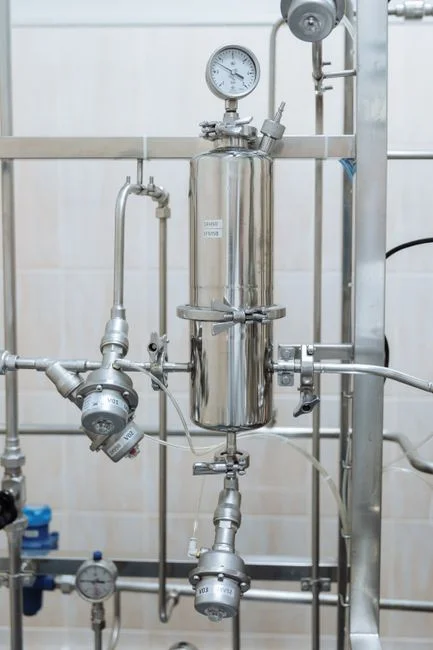
Select the process against the exact source water, required reuse quality, footprint, storage turnover and maintenance capability. If source segregation and pretreatment are weak, a more advanced membrane stage does not remove the need for a well-controlled collection system. A packaged biological route may be appropriate when the treatment basis supports it and its residuals, controls and servicing requirements fit the site.
| Discharge route or influent problem | Governing rule or process option | What data settles it |
|---|---|---|
| Bath, shower and hand-wash source with a simple filtration and non-potable reuse duty | Assess UF as the direct membrane option; confirm the required pretreatment and storage treatment. | Measured fixture flows, source characteristics, selected reuse quality, storage turnover and treatment objectives. |
| Source water requiring biological treatment before reuse | Assess an integrated MBR membrane bioreactor, including aeration, membrane maintenance and residual handling. | Influent organic and solids characteristics, duty profile, footprint, electricity availability, operator competence and service access. |
| Packaged biological treatment proposed for commercial greywater reuse | Compare the complete biological and disinfection train against UF and MBR rather than accepting a generic package claim. | Validated performance for the exact source and end use, control philosophy, critical limits, commissioning evidence and maintenance schedule. |
| Storage is full or the treatment plant is offline | Provide automatic diversion to the normal waste system and potable-water makeup where treated supply is insufficient (S3). | Overflow route, hydraulic conditions, cross-connection controls, failure-mode sequence and authority approval. |
For a preliminary UF-versus-MBR decision, use this sequence: if the approved duty is primarily filtration after controlled segregation, investigate UF; if biological treatment is required by the source and reuse basis, investigate MBR; if either route depends on an unverified generic performance claim, require validation for the actual source and destination. Review a UF water treatment system only against those duties, and use assess UF and MBR greywater equipment as a secondary process comparison rather than a substitute for site data.
Storage is part of the treatment decision. UKWRA warns that bath and shower wastewater may be unsuitable for storage even for short periods and that advanced filtration, disinfection and storage require a stronger maintenance regime (S3). Require the supplier to address stagnation control, turnover, odour, access, cleaning and the status of stored water during a treatment failure.
Build the UK Compliance and Commissioning Scope
Obtain confirmation of the applicable UK route from the local authority having jurisdiction before finalising equipment. The 2026 guidance says the project team must verify the locally adopted code, health rules, water-rights constraints, discharge requirements and permit path; an adopted code or published standard does not establish site-specific approval by itself (S5).
Require the supplier to identify which documents must be submitted, who will prepare them, and which approval must precede installation. Request the applicable local plumbing and water-quality requirements, the approved source definition, permitted end uses, any water-rights position, and the discharge or sewer-diversion conditions. Where requirements remain unresolved, make the quotation conditional and identify the party responsible for closing each item.
Make failure-mode operation part of the contractual scope. The system should divert automatically to the normal waste system when storage is full or treatment is offline, and use potable-water makeup when treated supply is insufficient (S3). Require controls to prevent cross-connection, indicate the active flow path and raise an alarm for critical operating conditions.
Commissioning acceptance should include:
- documented source and treated-water sampling;
- tests of filtration, disinfection and flow control;
- storage-level and turnover verification;
- a demonstration of overflow, shutdown and automatic diversion;
- potable-backup operation;
- critical-limit alarms and power-loss response;
- operating procedures, training and maintenance records; and
- results submitted in the form required by the authority having jurisdiction.
Do not accept appearance alone as evidence of suitability. S5 notes that safe reuse depends on barriers, controls, maintenance and exposure management, and that measured performance must be validated for the exact source and end use.
Turn the Selection into an RFQ Checklist
Compare bids only after every bidder is answering the same site-defined scope. A price is incomplete unless it separates the source collection system, treatment, storage, distribution, overflow, potable backup, controls, commissioning and ongoing service obligations. No supported universal price or savings percentage is available, so request the site inputs and current commercial inputs needed for a comparable quotation.
| Quote line item | Technical scope to specify | Red flags to check before signing |
|---|---|---|
| Source collection and greywater filtration | Fixture-by-fixture inclusion and exclusion, pipework, isolation, accessible filtration, backflow protection and labels. | Unstated assumptions about laundry, hand basins or kitchen flows; inaccessible filter locations; collection work omitted from price. |
| Treatment plant and storage | Documented peak-flow basis, treatment duty, validation for the source and reuse, qualified storage, turnover and disinfection basis. | Selection by nominal capacity alone; no storage-turnover assessment; no treatment-quality evidence for the actual source. |
| Distribution, overflow and potable backup | Reuse destinations, cross-connection controls, normal-waste diversion, storage-full response, offline response and potable makeup. | Overflow destination left undefined; potable backup treated as an uncontrolled supply; failure mode left to site staff. |
| Controls, alarms and telemetry | Critical limits, level and flow instrumentation, alarm notification, event history, power-loss response and manual operating states. | Controls listed without acceptance tests; no alarm interface; proprietary lock-in without supplied documentation or training. |
| Commissioning and handover | Performance samples, failure-mode demonstrations, authority submissions, as-built drawings, procedures, training and acceptance records. | Commissioning limited to powers-on testing; sampling method unspecified; permit or local-review responsibility excluded. |
| Maintenance and lifecycle costs | Inspection, consumables, membrane or media replacement, sludge or residual handling, service access, electricity and replacement-parts pricing. | No maintenance schedule; consumables excluded; inaccessible membranes or media; unsupported savings claim used to justify capital cost. |
Request treatment capacity based on documented peak flows rather than an annual average. Ask each bidder to state exclusions for collection, storage, pumps, disinfection, controls, overflow, building services, commissioning, training, maintenance and replacement parts (S5). Include electricity tariff, service access, operator assumptions and residual-disposal arrangements in the commercial comparison.
Use the MBR effluent quality specifications guide to structure the technical schedule, but verify every claimed standard against its adopted jurisdiction, application and required certification. A quoted standard cannot substitute for local approval.
Related Equipment
- integrated MBR membrane bioreactor — specifications, capacity range, and technical data
Frequently Asked Questions
Is UF or MBR more suitable for UK commercial greywater reuse?
Choose by duty: assess UF where controlled source segregation and filtration form the approved treatment basis, and assess MBR where biological treatment is required for the actual source and end use. Do not select either route from nominal capacity alone. Request a fixture-by-fixture process map, source-water data, storage-turnover assessment and validation for the proposed reuse.
What information does a supplier need to size a greywater treatment plant?
Request measured hourly and daily flows from each eligible fixture, simultaneous-use information, intended non-potable demand, seasonal demand where relevant, influent characteristics, storage-turnover requirements, available space and electricity conditions. Ask for the peak-flow and storage assumptions used in the quotation; annual totals alone do not resolve treatment peaks or overflow.
What commissioning evidence should the buyer require?
Require documented sampling, performance testing, storage and turnover checks, potable-backup operation, alarms, power-loss response and demonstrations of automatic diversion when storage is full or treatment is offline. Also require as-built drawings, operating procedures, training, maintenance records and any inspection or test submission required by the authority having jurisdiction.
How should compliance, maintenance and replacement costs be priced?
Ask the supplier to price the local code, health and permit work, discharge provisions, routine inspection, consumables, membrane or media replacement, residual handling, service access and replacement parts separately. Obtain the authority having jurisdiction’s written position where requirements are unresolved, and request current site-specific quotations rather than accepting an unsupported universal savings percentage.