Define the Niger Project Basis Before Selecting Equipment
A high-COD industrial wastewater system for Niger should be selected as a treatment train, not as a single standard machine. Characterize the wastewater and discharge route first; then choose pretreatment where suspended solids, oil or colloidal material would overload biological treatment, followed by anaerobic and aerobic stages as treatability supports. Add polishing when the required discharge or reuse standard demands it. Staged design is supported by research, while performance figures come from specific studies rather than a Niger site.
Begin by obtaining a representative wastewater characterization from the plant operator. Request COD, BOD, flow, pH, temperature, salinity, suspended solids, oil and grease, toxicity and peak-day data. Include the COD load calculation: average and peak daily mass loads, not concentration alone. Also obtain the BOD/COD ratio, seasonal variation and results from treatability testing.
Identify the receiving route before selecting equipment: direct discharge to a permitted outfall, discharge through a sewer or drainage system, water reuse, or another project-defined destination. Request the applicable limits for the specific Niger discharge point from the responsible authority or site compliance records. The research excerpts do not establish those limits, so a supplier should not substitute generic guidance for project-specific compliance verification.
Use treatability results to test whether direct biological treatment is appropriate. S4 identifies the BOD/COD ratio, inhibitory compounds, temperature, pH, salinity and hydraulic profile as selection factors. If toxicity, shock loads or a low BOD/COD ratio make direct aerobic treatment unreliable, use staged treatment rather than assuming a biological reactor will absorb the variability. The industrial wastewater treatment equipment selection guide is useful as a framework, but it does not replace site data.
Choose the Treatment Stage That Solves the Actual Constraint
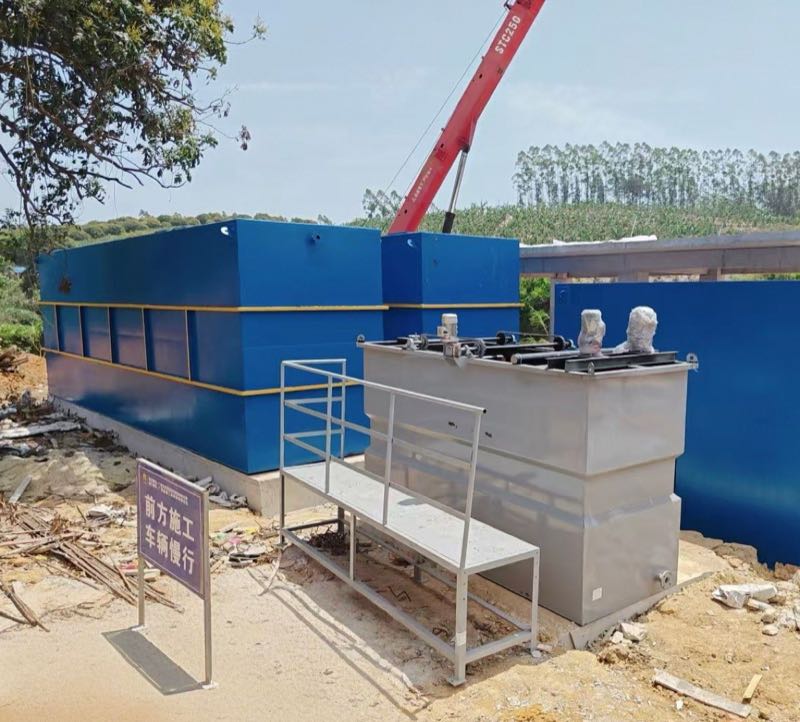
Treatment stages are selected based on the specific constraints blocking reliable biological treatment. Equalization, coagulation, flocculation or industrial DAF pretreatment system are candidates where suspended solids, oil and grease or colloidal material could interfere with downstream biology. An MBR wastewater treatment system is a possible aerobic stage when membrane biological treatment is justified by the confirmed effluent or reuse criteria.
Compare UASB, IC and EGSB reactors only after biodegradability and inhibition have been assessed. S4 states that anaerobic processes can suit high-strength, biodegradable wastewater and may produce biogas, while COD load, BOD/COD ratio, inhibitory compounds, temperature, pH, salinity, hydraulic profile, biogas objectives, operating cost and sludge yield must be evaluated project by project. Then compare A/O, SBR and MBR according to residual load, available footprint, effluent stability and reuse requirements. Reserve activated carbon, membranes or advanced oxidation for polishing where the confirmed discharge or reuse requirement justifies them.
The S1 adsorption results are laboratory evidence, not a transferable plant guarantee: TEA-functionalized anthill clay removed 95.82% of BOD and 96.98% of COD at the optimal dosage and reached equilibrium within 60 min. The same study reported more than 50% removal capacity after six consecutive regeneration cycles. These findings support experimental evaluation of advanced polishing; they do not establish performance for a Niger wastewater or operating plant.
| Discharge route or influent problem | Governing rule or process option | What data settles it |
|---|---|---|
| Suspended solids, oil and grease or colloidal material may overload biological treatment | Equalization and pretreatment; evaluate coagulation, flocculation or DAF before biological stages | Suspended-solids, oil-and-grease and colloid measurements, plus settleability or flotation observations |
| High-strength organic load with confirmed biodegradability | Evaluate UASB, IC and EGSB anaerobic reactors; decide separately whether biogas recovery is required | COD load calculation, BOD/COD ratio, inhibition testing, hydraulic profile and site utilities |
| Residual biodegradable organic load after anaerobic treatment | Compare A/O, SBR and MBR aerobic stages according to footprint, stability and reuse criteria | Anaerobic-stage effluent profile, target effluent quality, footprint and available power |
| Stringent discharge route or industrial water reuse | Add activated carbon, membranes or advanced oxidation only where the residual contaminant and required quality justify them | Applicable discharge or reuse criteria and characterization of residual COD and refractory organics |
Use Performance Evidence Without Turning It into a Guarantee
Evidence must be provided at the same scale as the purchase decision. The S1 study concerns batch adsorption by modified clay: it reports 95.82% BOD and 96.96% COD removal at the optimal dosage, equilibrium within 60 min, and Langmuir sorption saturation capacities of 125.07 mg/g for BOD and 131.29 mg/g for COD. Its pseudo-second-order kinetics fit had R² greater than 0.999, suggesting chemisorption under the tested conditions. These are source-specific laboratory results, not proof that the material will perform as a complete treatment train at the Niger site.
The regeneration result is also bounded evidence. S1 reported that the modified clay maintained more than 50% removal capacity after six consecutive regeneration cycles. That supports further investigation of regeneration potential, but it does not establish long-term capacity, chemical consumption, spent-media handling, labour or life-cycle cost.
Require site-specific treatability testing and pilot work where the wastewater variability, inhibition risk or proposed process combination justifies it. Define the acceptance test around the confirmed influent range, sample points, test methods and acceptance period. If the supplier relies on published adsorption or reactor performance, require the original report and a clear statement of how its test conditions differ from the Niger application.
S5 demonstrates the need to keep source-specific reactor claims within their stated scope. Its three-phase fluidized bed reactor was designed for 1,500 L/day of wastewater containing 5,000 mg/L COD and 230 mg/L ammonia, with an 8 h hydraulic residence time. That is a particular reactor and wastewater dataset; it does not establish the required Niger capacity or performance for another wastewater.
Set the RFQ Scope and Acceptance Criteria
The RFQ must be defined as a complete process and performance scope, not an equipment-only quotation. Require the supplier to state which influent data and assumptions were used, which equipment and treatment stages it supplied, and which civil, electrical, drainage, utility and sludge-handling works it excluded. The industrial effluent plant comparison for Ibadan can support scope questions, but the Niger supplier must price the actual site configuration.
Define COD performance against the confirmed discharge route and influent variability. Specify sample points, test methods, operating conditions, acceptance duration, retesting and remedy for failure. COD removal should not be detached from COD load, hydraulics, bypass prevention and proof that the stated sample represents the complete treatment train.
| Quote line item | Technical scope to specify | Red flags to check before signing |
|---|---|---|
| Wastewater characterization and basis of design | Submit the COD, BOD, flow, pH, temperature, salinity, suspended solids, oil and grease, toxicity, peak-day and treatability data used; include the COD load calculation | COD concentration is offered without flow or mass-load data; untested assumptions replace the plant operator’s records |
| Pretreatment and equalization | Define duty, controls, sludge withdrawal and the disposal route; specify DAF only where solids, oil, grease or colloidal loads justify it | DAF is presented as the complete treatment system or its sludge and ancillary packages are excluded |
| Anaerobic and aerobic stages | Specify reactor selection basis, biogas provisions, aeration, controls and aerobic effluent objectives; identify MBR only where confirmed criteria justify it | No biological process rationale, no influent envelope, or equipment substitution is allowed without engineering review |
| Polishing and reuse equipment | Define the residual contaminant target, membrane or media condition, backwash or regeneration requirements and replacement responsibilities | Advanced polishing is included without a required effluent target, or long-term operating costs are unallocated |
| Commissioning and acceptance | State pre-start inspection, utilities, training, spares, controls, remote or local support, test protocol, witnessing party and failure remedy | No site trial, no performance protocol, no training or no clear responsibility for failures |
| Civil, electrical, drainage and sludge interfaces | Provide battery limits, drawings, loads, connection points, safety requirements and sludge-handling and disposal responsibilities | Equipment supply is presented as turnkey without written scope boundaries or interface schedules |
| Regulatory compliance | Require project-specific verification against the confirmed Niger discharge route and evidence supplied by the responsible authority or site records | The supplier guarantees compliance without naming the applicable requirement, discharge point and evidence source |
Further Reading
Frequently Asked Questions
How should treatment capacity and the COD design load be calculated?
Calculate capacity from flow and concentration, then check both daily mass load and peak conditions. For example, the COD load calculation must distinguish an average daily load from the peak-hour and peak-day loads that determine equalization, reactor capacity and aeration. Confirm whether batch discharge, production shutdowns or seasonal variation change the hydraulic profile. Do not accept a reactor size based only on a single COD concentration.
Does the quotation cover a complete treatment train or only one equipment package?
Require the quotation to separate equipment, civil works, electrical works, piping, drainage, controls, utilities, commissioning, training, spares, sludge handling and regulatory documentation. Ask the supplier to identify every exclusion. A DAF unit, an MBR package or an anaerobic reactor should not be represented as a complete operating system unless the quoted boundaries demonstrate that all necessary stages and interfaces are included.
How is COD performance tested, and what happens if acceptance criteria are not met?
Define sample locations, test methods, influent operating envelope, sampling frequency, acceptance duration and witnessing responsibilities before signature. Require retesting and a stated remedy if the selected train does not meet the agreed criterion. A laboratory removal percentage from a separate adsorption study is not an acceptance test for the complete installed system.
Which Niger discharge requirements apply, and what evidence should the supplier provide?
Obtain the applicable requirement for the specific discharge point from the responsible authority or site compliance records, and identify any sewer connection condition separately from a direct-discharge limit. Require the supplier to state which project data, design assumptions and compliance evidence it used. If those project-specific documents are unavailable, compliance remains unverified and should not be guaranteed in the quotation.