Start with the discharge route and project duty
For a residential project in Guyana, select between a buried A/O package plant, an MBR system and a municipal sewer connection by matching the treatment route to daily flow, peak load, effluent use, receiving environment, footprint and local approval requirements. A packaged A/O unit may suit residential duties requiring compact, largely automated treatment; an MBR route warrants review where tighter solids separation or reuse is needed. The Georgetown proposal gives expected effluent parameters of pH 5 – 9, BOD ≤20mg/l, COD ≤250mg/l and Total Suspended Solids ≤30mg/l, but these are proposal values—not a universal permit standard. Obtain current EPA requirements, site data and written acceptance criteria before ordering.
The first decision is the receiving route. Confirm whether wastewater will be discharged to a drain or watercourse, reused on site, or conveyed to a municipal sewer. The Georgetown proposal states that treatment extent is guided by Environmental Protection Agency guidelines and the intended use of the final product, while its proposed effluent was to enter a drainage canal north of the plant site [S2]. A different residential site must establish its own receiving point and applicable approval.
Document the design population or housing-unit count, current and projected wastewater contributors, measured average flow and peak flow. Also state whether the plant will serve only homes or include apartments, communal facilities or another domestic user. These inputs control wastewater treatment plant sizing; equipment capacity advertised without the design duty is not a comparable basis.
Keep the Georgetown figures in their correct scope. Its expected effluent values—pH 5 – 9, BOD ≤20mg/l, COD ≤250mg/l, oil and grease ≤5mg/l and Total Suspended Solids ≤30mg/l—appear in that proposal for a Georgetown-area facility intended to collect household sewage and wastewater over twenty (20) to thirty (30) years [S2]. They are not established here as permit conditions for every Guyanese residential development. Request the current EPA discharge requirements and the written criteria applying to the specific receiving route.
Compare buried A/O, MBR and sewer options
Choose the route by resolving receiving capacity, land, ground conditions, maintenance access and power resilience before comparing headline treatment capacity. A sewer connection transfers treatment responsibility to the utility, but it is viable only if a network is available, connection approval is granted, capacity is confirmed and a responsible utility agreement is in place. None of those project-specific conditions is established for this development.
| Discharge route or influent problem | Governing rule or process option | What data settles it |
|---|---|---|
| No available municipal sewer or no confirmed connection capacity | Use an on-site treatment route rather than treating sewer availability as an assumption | Written network availability, approval route, connection capacity and utility agreement |
| Limited footprint with compact buried installation required | Evaluate a buried A/O package with biological contact oxidation, subject to soil, groundwater and access checks | Available footprint, excavation limits, groundwater depth, soil bearing information and maintenance access |
| Reuse objective or a need for tighter solids separation | Evaluate an MBR wastewater treatment system against required effluent performance | Intended reuse, project-specific effluent criteria, treatment and polishing requirements, operator capability and power plan |
| Variable residential flow and seasonal demand | Check hydraulic and biological turndown across the expected operating range; do not size from average flow alone | Measured peak and minimum flows, contributing population, seasonal variation and surcharge conditions |
| Uncertain soil, groundwater or flood exposure | Do not finalize an underground system until site risks and installation constraints are resolved | Site elevation, flood levels, geotechnical information, groundwater monitoring and drainage routes |
| Intermittent electrical supply or limited maintenance access | Assess standby power, manual operating capability and inspection access before selecting automation | Electrical supply records, outage exposure, backup-power expectation, access route and available operators |
Apply a simple decision rule: if sewer capacity and approval are confirmed, compare the utility route against life-cycle civil, power and operational obligations. If they are not confirmed, compare A/O and MBR against the receiving route, footprint, soil, groundwater, effluent objective and operating resources. The sewer, A/O and MBR route comparison may help structure that review, but Caribbean precedents do not establish approval for a Guyanese site.
Collect the inputs that control equipment selection
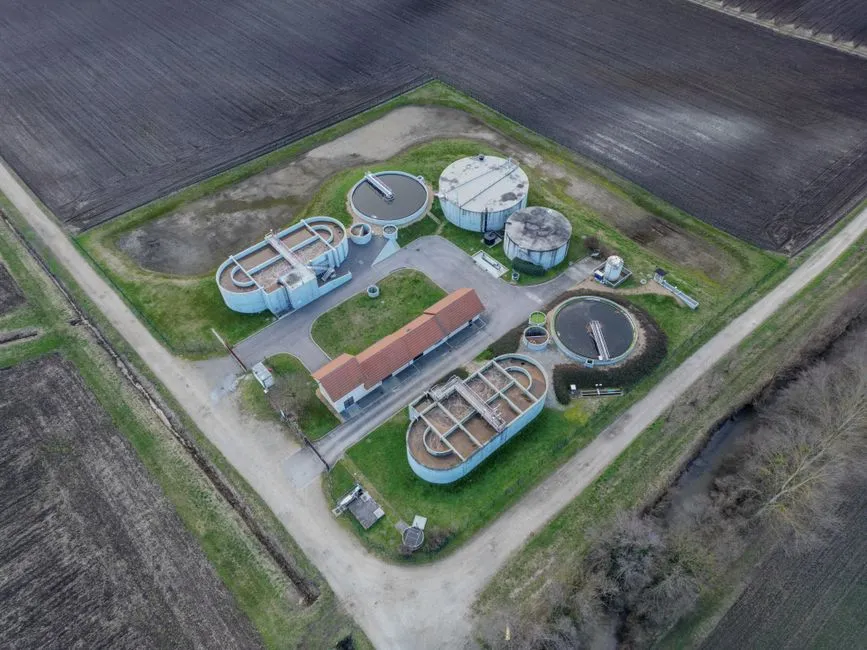
Issue one site-data request so every supplier prices the same design basis. Require measured average and peak residential sewage flows, current and projected population or housing units, and the expected proportion of wastewater contributors. A proposed unit count without flow evidence leaves the package underspecified.
Request representative influent sampling for BOD, COD, oil and grease, total suspended solids and pH. The Georgetown proposal identifies these contaminant categories as treatment and effluent considerations and lists treatment stages including screening, grit removal, skimming, sedimentation, aeration and polishing [S2]. Sampling should describe the domestic wastewater served, sampling points, laboratory identity and sampling period rather than provide isolated desk estimates.
Provide site elevation, groundwater depth, soil bearing information, available footprint, vehicle access, drainage routes and flood exposure. Also identify the discharge point and whether the effluent will be reused. These data determine excavation, lifting, buoyancy protection, access and installation constraints for a residential wastewater plant.
Confirm electrical supply, standby-power expectations, available operators and the required inspection or sampling schedule before finalizing controls. For any upstream screening requirement, identify grit, rags and solid-entry risks and obtain supplier confirmation of the pre-treatment boundary; a mechanical bar-screen arrangement should be specified only after the influent and access information is reviewed.
Set the quotation scope and acceptance criteria
A comparable quotation must identify the design duty, treatment process and responsibility boundary. Require the supplier to state design flow, treatment process, duty cycle, power demand, dimensions, installation method, civil-works boundary, controls scope and commissioning responsibility. Without these fields, apparent prices may cover different scopes and cannot be compared directly.
| Quote line item | Technical scope to specify | Red flags to check before signing |
|---|---|---|
| Design basis and process selection | Average and peak flow, contributing population, influent characteristics, receiving route and project-specific effluent criteria | Omitted design duty, generic capacity claim or treatment route selected without site data |
| Equipment and installation | Plant dimensions, duty cycle, power demand, excavation and installation method, civil works, connections and backfill | Unlimited civil-works exclusions or no defined delivery and offloading boundary |
| Controls, power and standby arrangements | Control philosophy, alarms, electrical requirements, backup-power interface and operator access | No power estimate, undefined automation scope or standby-power obligation omitted |
| Effluent and performance guarantee | Agreement on design flow, applicable permit or written discharge criteria, sampling method and laboratory responsibility | Undefined acceptance limits or substitution of another proposal’s expected values without approval |
| Commissioning and testing | Wet commissioning, stabilization, performance test, sampling protocol, training, defect response and warranty commencement | No commissioning protocol, undefined test duration or guarantee that ignores seasonal flow variation |
| Operations and handover | Inspection access, sludge or solids handling, spare parts, maintenance schedule, remote monitoring and documents | No maintenance plan, no spare-parts list or responsibility for long-term sludge handling left unassigned |
| Permits and client inputs | Named responsibility for site data, permits, excavation, power connection, discharge approval and laboratory testing | Unclear party approvals, assumed permit outcome or incomplete site-data responsibility |
Assign each permit and technical input to the client, engineer, supplier or operator. Tie performance guarantees to the agreed design flow and the permit or written criteria applicable to that project. The regional packaged sewage treatment comparison can help identify missing RFQ fields, but its expected effluent values should not be transferred automatically into another proposal.
Plan delivery, commissioning and long-term operation

Delivery scope should start at the site boundary. Include the transport route, crane or lifting requirements, offloading responsibility, installation method, backfill, landscape reinstatement and documentation for buried equipment. Access assumptions must be checked against the proposed plant dimensions and the site’s vehicle route.
Define handover as a sequence, not a single delivery event: wet commissioning, process stabilization, performance testing, representative sampling, laboratory review, operator training, defect correction and warranty commencement. State who collects samples, which laboratory performs the analysis, how results are interpreted and what happens when an acceptance parameter is not met.
Confirm maintenance access, sludge or solids handling, spare parts, remote monitoring and emergency-power behavior. Ask the supplier to identify routine inspections, control-system support, replenishment items and responsible operators. A package that cannot be inspected or operated at the site should not pass procurement review simply because its process description appears suitable.
Use nearby Caribbean package-plant precedents to expose missing site-data and RFQ fields, not as evidence that a Guyanese design has regulatory approval. Final approval depends on current local requirements, site-specific design information and the receiving route confirmed by the relevant authorities and utility.
Frequently Asked Questions
How much should be included in a packaged sewage treatment plant quotation for a Guyanese residential project?
The quotation should include the defined treatment package, design duty, installation inputs, power and controls interfaces, commissioning, performance testing, training, documentation and handover. It should also identify exclusions such as excavation, civil works, discharge approval, standby power, laboratory fees and long-term operator duties. No verified project price is available here, so request a priced quotation against the same site-data schedule and scope boundary used for every competing offer.
Which treatment route should be selected when a site has limited land, variable flows or a reuse objective?
Evaluate a buried A/O package where compact installation and the proposed treatment duty fit the site; evaluate an MBR where the required solids separation, polishing or reuse objective justifies it; and consider a sewer connection only after capacity, approval and a utility agreement are confirmed. Resolve the choice using measured peak and minimum flows, available footprint, soil and groundwater conditions, access, power reliability and project-specific effluent criteria—not an advertised capacity alone.
What should be tested before accepting delivery and commissioning of a residential sewage plant?
Require inspection of installation, leak or operational checks as applicable to the system, controls and alarms, power and standby-power interfaces, operator training, maintenance access, and commissioning records. Performance acceptance should follow the agreed design flow and use a defined sampling method, laboratory responsibility and written discharge or reuse criteria. Do not accept the Georgetown proposal’s expected values as the contract standard unless they are expressly incorporated into the project approval.
Should a supplier be chosen based on the lowest price, and what responsibilities must be assigned between supplier, client and operator?
No. Compare bids only after normalizing the design basis, civil-works boundary, delivery terms, commissioning obligations, guarantees and operating responsibilities. Assign site data and approvals to the client or engineer, equipment performance and commissioning to the supplier, and routine operation and maintenance to the named operator. Contractual acceptance should also specify what happens when the supplier’s guarantee does not match the permit criteria, the agreed design flow or observed site conditions.