Confirm the site rules before selecting equipment
The immediate decision is whether UF, MBR or packaged biological treatment fits the reuse endpoint and site constraints. New Zealand has no national guideline that comprehensively covers greywater reuse from end to end, so the local authority should be consulted before design. Check AS/NZS 3500.2.2021 section 7 for greywater plumbing and drainage, AS/NZS 1547:2012 for on-site domestic wastewater management, and NZBC clause G13 for connected sanitary plumbing. Compare all three routes using measured flow, required treatment, footprint, disinfection, bypass and maintenance inputs rather than selecting a generic system size.
Requirements vary between authorities: some New Zealand local authorities encourage greywater recycling, while others do not (S4). Ask the territorial authority to confirm the exact approval pathway, permitted reuse, connection or discharge route, inspection requirements and any conditions applying to the site address. The available evidence does not establish one national reuse permit that applies to every property or facility.
Include a certifying drainlayer in the implementation scope because S4 states that greywater recycling systems must be installed by one. The supplier can provide equipment and technical documentation, but the quotation should distinguish supplier obligations from the drainlayer’s local installation, testing and certification duties. Further background is available in the UF versus MBR greywater treatment comparison.
| Discharge route or influent problem | Governing rule or process option | What data settles it |
|---|---|---|
| Connection to a reticulated sewer | Confirm the authority-approved connection and any treatment required before discharge. | Written authority response, site drainage plan and confirmation of whether the sewer route remains available for bypass and overflow. |
| On-site disposal or treatment without sewer connection | Assess AS/NZS 1547:2012 for on-site domestic wastewater management together with the local authority’s direction. | Site address, soil and ground conditions, receiving-system capacity and the authority’s stated approval requirements. |
| Connected sanitary plumbing or toilet-flushing reuse | Check AS/NZS 3500.2.2021 section 7 and NZBC clause G13. | Plumbing configuration, reuse drawing, backflow-protection proposal and confirmation from the relevant approval authority. |
| Uncertain authority position | Do not finalise the treatment route until the local authority identifies the applicable route. | Exact site address, council or territorial authority, written pre-design response and named officer or approval reference. |
Define the reuse endpoint and source streams
Define the reuse endpoint before selecting equipment because each route has a different treatment objective. Garden irrigation requires the water to be distributed and used appropriately; toilet-flushing reuse requires filtration, odour treatment and disinfection (S4). The evidence supports non-potable reuse, not potable suitability, so any other application needs a separately confirmed treatment and compliance basis.
Confirm the included sources at fixture level. Greywater can include baths, showers, hand basins and, in some systems, laundry. Kitchen wastewater may be excluded because it contains fats and other organic matter, particularly where a food-disposal unit is present, and may carry contamination associated with raw-meat preparation (S4). The RFQ should identify excluded streams and the diversion arrangement for them.
Use household statistics only to frame the opportunity, not to size the plant. Water NZ reports that greywater from showers, baths, bathroom sinks and laundry can account for up to 75% of domestic household wastewater (S2). Environmental Science and Ecotechnology describes typical household greywater generation as 50–80% of daily wastewater (S3). Kapiti Coast District Council reported 68%, or 160 litres per person per day, as reusable greywater in residential water use (S4). Obtain the site’s measured daily flow and peak-hour flow, storage requirement and source composition.
| Discharge route or influent problem | Governing rule or process option | What data settles it |
|---|---|---|
| Garden irrigation | Set irrigation application, distribution and treatment objectives around the approved reuse route. | Intended irrigation area, application method, soil conditions, rainfall or seasonal demand and authority requirements. |
| Toilet flushing | Specify filtration, treatment for odour removal and disinfection as separate scope items. | Fixture demand, plumbing drawings, required operating flow and the authority’s required water-quality evidence. |
| Laundry included | Include the laundry stream only after assessing detergents and solids loading. | Laundry fixture list, detergent inventory, source samples and supplier confirmation of the selected process. |
| Kitchen wastewater included or excluded | Exclude kitchen wastewater where fats, food residues or contamination create unacceptable process or reuse risk. | Fixture-level flow data, food-disposal arrangements, contamination risks and a written diversion strategy. |
| Capacity planning | Do not size equipment from household percentages; use site-specific flow evidence. | Measured daily volume, peak-hour flow, operating profile, storage need and any future demand that the design must accommodate. |
For a wider view of commercial reuse routes, compare UF and MBR options for commercial greywater reuse against the same site inputs.
Compare UF, MBR and biological package treatment
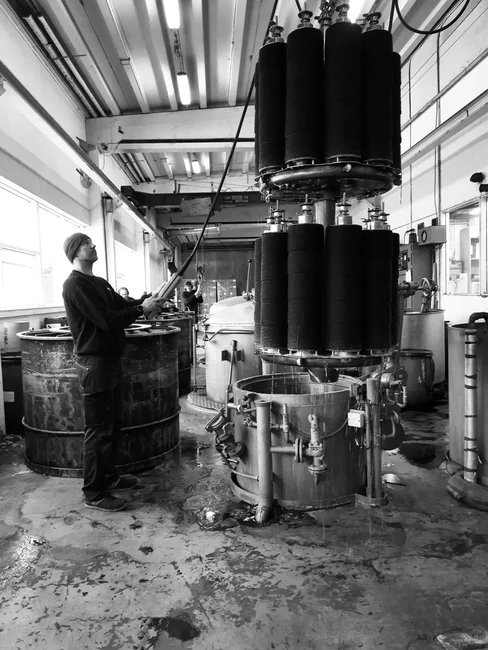
Compare treatment routes by treatment objective and operating burden, not by equipment category alone. UF is a membrane separation stage that removes bacteria, colloids and suspended solids. MBR combines activated-sludge treatment with submerged membrane filtration. A packaged biological route depends on biological process control and the associated reactor, solids handling and maintenance arrangements. The [ultrafiltration greywater treatment system](/product/17-ultrafiltration-uf-water-treatment-system.html) and [MBR greywater recycling system](/product/2-mbr-integrated-wastewater-treatment.html) should therefore be evaluated against the same measured flow, footprint and reuse requirements.
UF may be suitable where the objective is a defined solids and microbiological separation barrier before disinfection, subject to feed-water suitability and membrane maintenance. MBR may suit sites requiring combined biological treatment and membrane separation within one treatment route. A packaged biological system may suit an application where biological treatment is the specified process, provided the package includes the controls, solids management, odour control and maintenance access needed at the site.
Disinfection remains a separate issue. S4 states that greywater used for toilet flushing should be filtered, treated to remove odours and disinfected. Require suppliers to state whether their quotation includes disinfection, what residual or monitoring evidence they can provide, and whether UV or another disinfection method is appropriate. Do not infer potable suitability from either comparison; the supported reuse examples are non-potable.
Build the treatment train around failure and maintenance risks
Specify the failure pathways before selecting treatment capacity. S4 states that a greywater system should have a bypass switch allowing unwanted water to be sent directly to the sewer or on-site blackwater treatment system, and that provision should be made for overflow discharge to one of those destinations. The approved drainage route must therefore be confirmed before the bypass and overflow architecture is finalised.
Set storage around actual use. Most greywater systems use water immediately or within 24 hours, and untreated greywater should not be stored longer than this (S4). Ask each supplier to explain equalisation volume, storage-time controls and what happens when reuse demand stops or an unsuitable input enters the stream.
Include maintenance in the system architecture rather than treating it as an optional service. S4 says filters must be cleaned or replaced to keep greywater systems operating properly. Require the maintenance schedule to address incoming screening, filter cleaning or replacement, biological or membrane maintenance, odour control, instrumentation checks and treated-water monitoring. Ask how the supplier responds to water containing faecal matter from bathing very small children and to chemicals or unsuitable household inputs; S4 identifies faecal matter from bathing very small children as a diversion case.
Where disinfection is required, ask the supplier to define its place in the train and its operational dependencies. A [UV sterilizer within the treatment train](/product/22-uv-sterilizer-water-treatment.html) should be assessed against the required water-quality outcome, flow, controls and maintenance assumptions rather than added by default.
Prepare an RFQ-ready technical and commercial scope
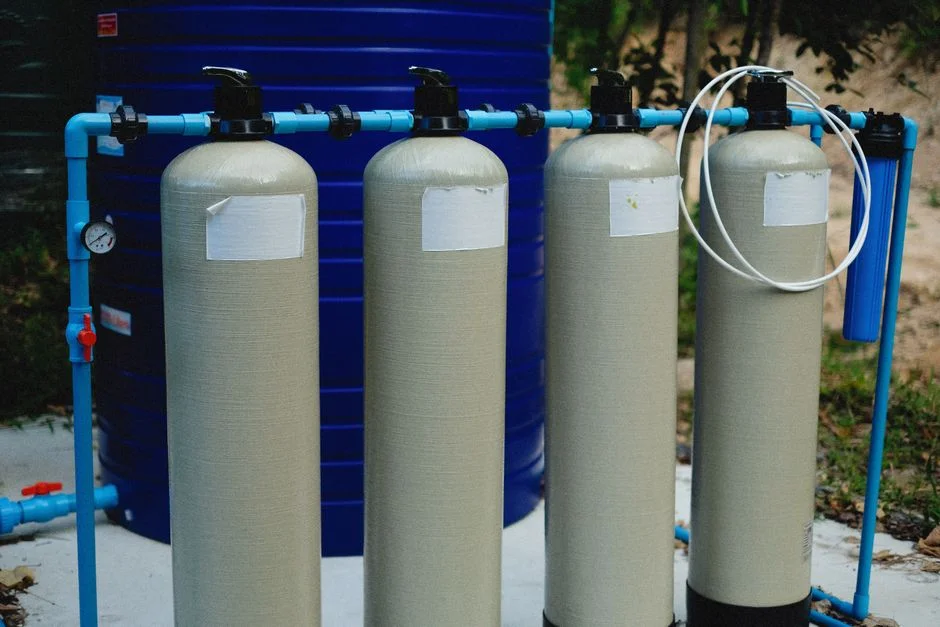
Request a complete, itemised quotation so treatment, disinfection, storage, overflow, commissioning and local obligations can be compared without double counting or exclusions. The evidence does not support a universal price or equipment capacity for greywater systems in New Zealand; pricing must follow a duty table based on measured daily and peak flow, source composition, intended reuse, available footprint and required treatment outcome.
| Quote line item | Technical scope to specify | Red flags to check before signing |
|---|---|---|
| Incoming screening and equalisation | Define the incoming solids-handling stage, equalisation basis, storage-time controls and required cleaning access. | Storage is not identified, or the quotation omits the consequences of unsuitable household inputs. |
| Selected treatment process | Identify biological treatment, UF or MBR as applicable, with flow duty, footprint, controls and treated-water outcome. | Only a generic “greywater unit” is offered without a process description or duty table. |
| Disinfection | Separate filtration, odour treatment, disinfection and any monitoring or residual-related service requirements. | Disinfection is assumed rather than specified, or potable-use claims are made without a separate compliance basis. |
| Storage, pumping and controls | Specify tanks, duty and standby arrangements, pump scope, sensors, automatic changeover and access requirements. | Flow rates, storage basis, power demand and alarm functions are absent from the offer. |
| Bypass and overflow | Define manual or automatic bypass, approved discharge destination, overflow routing and unsuitable-input diversion. | Overflow discharges to an unapproved destination, or the drainlayer cannot connect the arrangement to the site drainage system. |
| Commissioning and handover | Require commissioning, operator training, maintenance schedule, spare parts, warranty boundaries, handover documents and acceptance tests. | Commissioning excludes local installation, training, documentation or demonstration of bypass and overflow operation. |
Make acceptance criteria part of the supply scope. They should demonstrate automatic controls, bypass operation, overflow routing, treated-water availability at the specified flow, maintenance access and completion of handover documentation. The quotation should also identify which items require local authority or drainlayer approval and who holds each verification duty.
Obtain an itemised comparison between suppliers rather than comparing headline package prices. Useful commercial inputs include the complete bill of materials, local installation responsibilities, commissioning exclusions, replacement assumptions, spares, training, warranty and authority-verification responsibilities. The [integrated sewage treatment product context](/product/1-wsz-underground-integrated-sewage-treatment.html) can be used to test whether quotations clearly separate equipment from site works and external approvals.
Frequently Asked Questions
Which treatment route is suitable for non-potable greywater reuse?
Choose UF, MBR or biological treatment by starting with the intended reuse and required water-quality outcome. For toilet flushing, specify filtration, odour treatment and disinfection; for garden irrigation, identify the approved application and distribution requirements. Obtain supplier process descriptions and site samples so the selected route addresses the actual source composition rather than relying on a generic reuse classification.
How do daily and peak flows determine equipment size?
Require measured daily flow and peak-hour flow, together with the storage and operating profile, before sizing any treatment stage. Household percentages can frame the opportunity but do not establish a site’s design flow. Ask suppliers to show their duty calculation and identify any operating assumption that remains unverified.
What acceptance testing and handover evidence should be included?
Require tests that demonstrate treated-water availability at the specified flow, automatic controls, bypass operation, overflow routing and normal system operation. Handover should include as-built information, operation and maintenance instructions, training records, replacement assumptions, spare-parts lists and warranty boundaries. Ask the supplier to state exactly which tests are included and which require the certifying drainlayer or local authority.
How should compliance, installation responsibility and quote scope be allocated?
Ask each bidder to provide a responsibility matrix covering design verification, equipment supply, local installation, certifying-drainlayer work, authority liaison, commissioning, training, maintenance and acceptance documentation. Compare total installed scope, not equipment price alone. Obtain written confirmation from the territorial authority about the approval and discharge route, and reject quotations that leave these duties undefined.