Frame the Israeli greywater decision
For a greywater recycling system in Israel, the decision is usually between ultrafiltration (UF), membrane bioreactor (MBR) and packaged biological treatment. Israeli case-study research indicates that onsite greywater reuse can affect sewer and wastewater-plant performance, while field research shows that greywater must be characterized for its intended application. UF may fit a low-solids separation train; MBR combines biological treatment with membrane separation; packaged biological treatment may suit a simpler site. No verified nationwide Israeli limit was established here, so the final selection must follow the reuse endpoint, measured influent, permit and site constraints.
Start by separating two questions that are often merged. First, will the installation provide local reuse water? Second, does diverting or retaining that flow affect the sewer and downstream wastewater treatment plant? The UF versus MBR selection for regional greywater recycling provides a useful comparison framework, but its regional context cannot substitute for Israeli site data.
An Israeli case study modelled how onsite greywater reuse may affect urban sewer systems and wastewater treatment plants. That supports a sewer-impact assessment where the project changes what enters the drainage network; it does not establish a treatment-process preference or a universal legal requirement. Likewise, an academic title concerning standards and prospects is not proof of the applicable Israeli rule. Ask the project authority which document governs the proposed reuse application and discharge route.
Local acceptance also matters. A field study in the Sahel region used interviews with 240 rural households, 40 greywater samples and four locations; its findings relate to that study setting and cannot be transferred directly to every Israeli site. It did show why characterization and acceptance of a proposed reuse scheme should be considered separately. For an Israeli procurement, require the intended users and approving authority to define the reuse endpoint and applicable criteria in writing.
Screen the greywater route before choosing equipment
Choose a treatment route only after the source-separation arrangement, hydraulic profile and reuse endpoint are fixed. Generic capacity comparisons are not defensible without those inputs.
- Define the destination. State whether the treated water is intended for toilet flushing, irrigation, process use or another application. Obtain the corresponding reuse-water-quality specification and the authority having jurisdiction over that application.
- Map the source separation. Record whether greywater remains separate from blackwater, which household or building sources are included, and whether any mixed domestic wastewater enters the proposed train.
- Measure the flow regime. Request average and peak greywater flow rates, hourly and seasonal profiles, and the proposed peak-flow method for equipment sizing.
- Characterize the influent. Request incoming analysis covering contaminants relevant to the proposed route, including relevant cleaning chemicals and detergent inputs.
- Fix the discharge route. Identify where untreated overflow or rejected water will go and determine which authority controls that route.
These steps separate onsite reuse from a sewer-impact issue. They also prevent a treatment unit from being selected for a source that does not exist. The UF, MBR and package-plant greywater options should be read as a process comparison, not as permission to transfer overseas flows, standards or operating assumptions to an Israeli site.
Do not turn the Sahel study into an Israeli acceptance criterion. That study reported that its analyzed greywater did not comply with the legal discharge limits applicable to its own setting. For the project at hand, obtain the governing Israeli permit or written authority determination and specify the sampling method, parameters and compliance point. If the applicable criterion is unavailable, record that as an unresolved quotation assumption rather than inserting an unsupported limit.
| Discharge route or influent problem | Governing rule or process option | What data settles it |
|---|---|---|
| Reuse water discharges to a designated endpoint | Use the acceptance criteria issued for that endpoint and application | Written reuse specification, permit basis, sampling point and approving authority |
| Untreated or rejected flow remains connected to the sewer | Conduct a sewer-impact assessment where flow diversion changes sewer and wastewater-plant loading | Discharge destination, drainage plan, diverted flow profile and receiving-system details |
| Greywater is mixed with blackwater | Screen the train as mixed domestic wastewater treatment rather than a greywater-only application | Source-separation drawing, connected fixture list and incoming contaminant analysis |
| Cleaning chemicals or detergents are significant | Determine the pretreatment and membrane-compatibility implications before selecting UF or MBR | Product-use information, chemical inventory and supplier compatibility confirmation |
Compare UF, MBR and packaged biological treatment
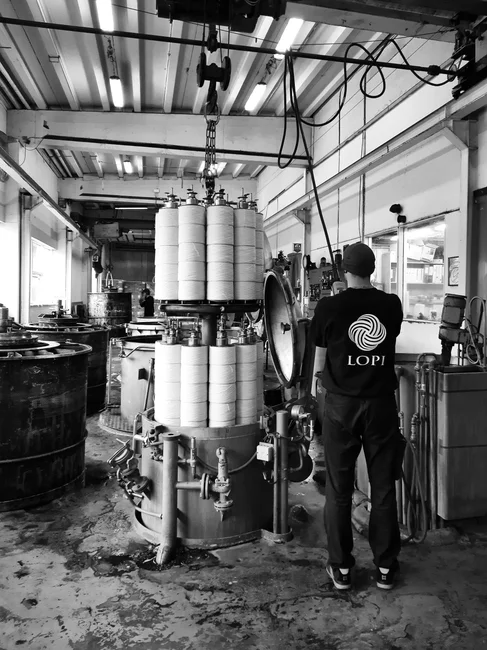
Select by function: UF for membrane separation where a predominantly physical separation train can meet the specification; MBR where biological treatment and membrane separation are both required; packaged biological treatment where its biological route and operating model fit the application and available footprint.
| Process option | Selection condition | Main procurement checks |
|---|---|---|
| Ultrafiltration (UF) | Pre-treatment requirements and required particle-removal performance are compatible with the measured influent | Influent turbidity and solids, membrane material and pore size, cleaning method, controls and required reuse-water-quality performance |
| Membrane bioreactor (MBR) | Both biological treatment and membrane separation are required for the specified endpoint | Biological design basis, membrane configuration, fouling controls, cleaning, solids handling, redundancy and operator capability |
| Packaged biological treatment | A simpler biological route and integrated maintenance model fit the site | Footprint, loading basis, aeration and utilities, sludge handling, odour control, controls, access and future expansion |
UF is a membrane separation option that does not itself provide the biological treatment implied by an MBR. Treat the hollow-fiber UF treatment system as one candidate configuration to evaluate against the measured influent, required particle-removal performance and pretreatment needs; the technology name alone does not establish compliance.
Choose MBR when the reuse specification requires both biological treatment and membrane separation. The integrated MBR wastewater treatment system should be assessed as a combined treatment train, with biological capacity, membrane fouling response and solids handling verified separately.
Choose packaged biological treatment when the required treatment can be delivered without the additional membrane-separation objectives associated with MBR, and when its integrated footprint, utilities and maintenance model suit the site. No reviewed field evidence establishes that UF, MBR or packaged biological treatment is universally preferred in Israel. The defensible decision is conditional: if the endpoint and measured influent support UF, screen UF; if biological treatment plus membrane separation is required, screen MBR; if a simpler biological route is sufficient and operationally appropriate, screen packaged biological treatment.
For every candidate, request the treatment objective, design flow and peak-flow method, footprint, utilities, sludge or solids handling, automation, redundancy and operator requirements. These measured inputs—not the process label—should determine the shortlist.
Build an RFQ scope that prevents equipment gaps
Make every quotation line traceable to an agreed design basis. If the supplier has assumed a flow, influent quality, permit basis or utility condition, require that assumption to appear explicitly rather than hiding it in the equipment price.
| Quote line item | Technical scope to specify | Red flags to check before signing |
|---|---|---|
| Design basis and sizing | Average and peak flow, hourly or seasonal profile, peak-flow method, hydraulic profile and incoming characterization | Flow stated only as a nominal average; no influent basis; undocumented safety factors |
| Treatment process | Treatment objective, reuse route, permit basis, process diagram and proposed acceptance testing | Equipment offered without a defined endpoint; “compliance” claimed without a cited criterion |
| UF or membrane scope | Membrane material, pore size, cleaning method, controls, redundancy, replacement basis and required utility conditions | Generic membrane description; cleaning chemistry excluded; replacement schedule and supply responsibility omitted |
| MBR or biological scope | Biological loading basis, aeration, sludge or solids removal, controls, access and operator requirements | Tank and aerator included but solids handling or odour control excluded |
| Installation and commissioning | Delivery, foundations or ancillaries, connections, utilities, electrical work, commissioning, training and performance testing | “Delivered and installed” excludes civil work, power supply, commissioning or site connections |
| Operations and support | Maintenance, spare parts, remote monitoring, controls support, membrane cleaning and warranty boundaries | No maintenance plan, support response or consumable-supply commitment |
| Regulatory verification | Responsible party, permit applications, authority correspondence and compliance documentation | Supplier disclaims all approvals, or buyer has no permit path |
Request installation, commissioning, training, maintenance, spare parts, remote monitoring and performance-test deliverables as separate scope lines. This makes omissions visible and permits like-for-like comparison. For cost review, use the 2026 effluent-treatment-plant CAPEX and OPEX breakdown as a checklist for cost categories, not as an Israeli price benchmark; the evidence does not provide a defensible quotation for this application.
For MBR proposals, make membrane cleaning a defined maintenance scope. The MBR membrane cleaning procedure can inform the technical questions on cleaning method, frequency basis, chemicals, labor and replacement responsibility.
Verify delivery, acceptance and long-term operation
Turn the selected process into an enforceable acceptance protocol. Contract language should state who performs each test, how samples are taken, which methods and laboratory apply, what happens after a failed result, and when the system is accepted.
- Factory acceptance: define factory tests, instrumentation checks, control demonstrations and documentary deliverables.
- Site acceptance: verify installation, utilities, interlocks, alarms, automatic controls, leak checks and operator training.
- Performance acceptance: specify the reuse endpoint, test parameters, methods, sampling point, laboratory scope, loading condition, acceptance thresholds, retesting and remedy for failure.
- Operational handover: identify maintenance access, membrane-cleaning responsibility, cartridge or element supply, controls support, emergency operation and warranty boundaries.
The final demonstration must match the agreed reuse application and measured design basis; nominal equipment capacity is not proof of acceptable reuse water quality. Also assign responsibility for site data, design assumptions, regulatory verification, construction, commissioning and sustained performance. The containerized-MBR sizing guide for projects in Medellín can help structure those sizing questions, but its location and project context must not be treated as Israeli design evidence.
Where the proposed operation changes flow to the sewer, require the relevant sewer and wastewater-plant stakeholders to review the discharge route. Where the authority has not issued a written criterion, keep final approval and acceptance as explicit contractual dependencies. That approach includes compliance without mispresenting academic research as an Israeli regulation.
Frequently Asked Questions
Is there a single Israeli flow threshold that determines whether I should buy UF or MBR?
No. The evidence reviewed does not establish a flow threshold for a greywater recycling system in Israel. Select by the reuse endpoint, measured average and peak flows, incoming quality, available area, utilities, solids handling and operator capability. Request each bidder to state its sizing assumptions so the routes can be compared on the same basis.
How should I include compliance without treating academic research as an Israeli legal rule?
Ask the authority with jurisdiction over the proposed application for the governing permit, reuse-water-quality specification and required compliance point, then incorporate those requirements into the RFQ and acceptance test. Use academic studies to inform characterization, sewer-impact assessment and treatment selection—not as substitutes for a permit. If the governing document is not available at quotation stage, record it as an unresolved approval dependency and require the supplier to state what evidence it used.
What technical and commercial items should appear separately in a comparable quotation?
Request separate lines for the design basis, treatment process, equipment, membrane or biological scope, utilities, solids handling, installation, commissioning, training, performance testing, maintenance, spare parts, remote monitoring, controls support, warranty and regulatory-verification responsibilities. Red flags include an unqualified “compliance” statement, exclusions of civil works or commissioning, unspecified peak-flow assumptions, and no allocation of approval or operating responsibilities. This also allows cost categories to be compared without inventing an Israeli price.
What should I require during factory and site acceptance testing?
At factory acceptance, specify equipment inspection, instrument checks, control and alarm demonstrations, and required documents. At site acceptance, require installation and utility checks, interlocks, training and operational demonstrations. For performance testing, define the reuse endpoint, test methods, laboratory scope, sampling location, loading condition, acceptance thresholds, retesting and remedies for failure. Require the final demonstration to satisfy the agreed reuse water quality rather than only verified nominal capacity.