Define the Effluent and Legal Discharge Route
For a Lesotho factory with high-COD industrial wastewater, the immediate decision is whether to send the effluent to the municipal sewage system after adequate pre-treatment or install a dedicated treatment train. The investigation by MNN reported that factories must pre-treat wastewater before pumping it into the sewage system, and that some factory wastewater loads exceeded what the WASCO facility could handle. Equipment selection should therefore begin with wastewater testing, sewer acceptance and the required effluent standard—not with a generic COD-removal claim. DAF can remove suspended solids, oil, grease and colloidal material; biological treatment can reduce residual biodegradable COD; polishing is added where reuse or tighter discharge limits require it. Final selection needs flow, COD, BOD/COD, pH, toxicity and sludge data.
Start by separating the legal discharge route from the treatment objective. Request the applicable permit, sewer acceptance conditions, receiving-water assessment and any reuse specification from the facility, environmental authority or sewer utility. A supplier’s statement that equipment is suitable for “sewer discharge” is not evidence that the receiving system will accept the proposed flow, pollutant concentrations or industrial contaminants.
A Lesotho groundwater study provides context but not an industrial design basis. The study measured COD across 30 samples at the Ts’osane dumpsite in south-east Maseru, with mean COD ranging from 54 mg/L at BH4 to 82.25 mg/L at BH1; the authors compared these observations with a 10 mg/L WHO drinking-water limit. These are groundwater observations associated with waste dumping, not factory effluent concentrations, sewer acceptance limits or discharge permits.
| Discharge route or influent problem | Governing rule or process option | What data settles it |
|---|---|---|
| Discharge to municipal sewer | Factories are required to pre-treat wastewater before pumping it into the sewage system. Confirm current written acceptance conditions with the authority or utility. | Permit, sewer agreement, accepted flow and peak load, pollutant limits, sampling requirements and connection conditions. |
| Factory load exceeds municipal capacity | Do not assign a generic pre-treatment package as the complete solution. Compare lower-strength pre-treatment with a dedicated treatment train. | Representative COD and flow data, documented sewer capacity constraints and the proposed discharge schedule. |
| Direct discharge or industrial reuse | Specify the receiving-water or reuse quality before choosing equipment. Polishing is driven by the required final quality, not by the word “high-COD.” | Written effluent specification, receiving-water assessment, reuse application and any applicable discharge permit. |
| Textile or other industrial production stream | Protect downstream equipment and biological processes from rags, plastics and fibrous debris before selecting a biological reactor. | Wastewater source inventory, solid and fiber observations, COD, suspended solids, pH, temperature, salinity, oil and grease. |
Match Each Influent Problem to Its Treatment Step
Assign each contaminant and hydraulic problem to a treatment step before comparing equipment packages. A mechanical bar screen is the first control where rags, plastics or fibrous material could obstruct pumps or interfere with downstream biological treatment. A rotary mechanical bar screen can therefore be included in the preliminary route for a textile or other industrial stream, subject to the waste survey and physical screening test.
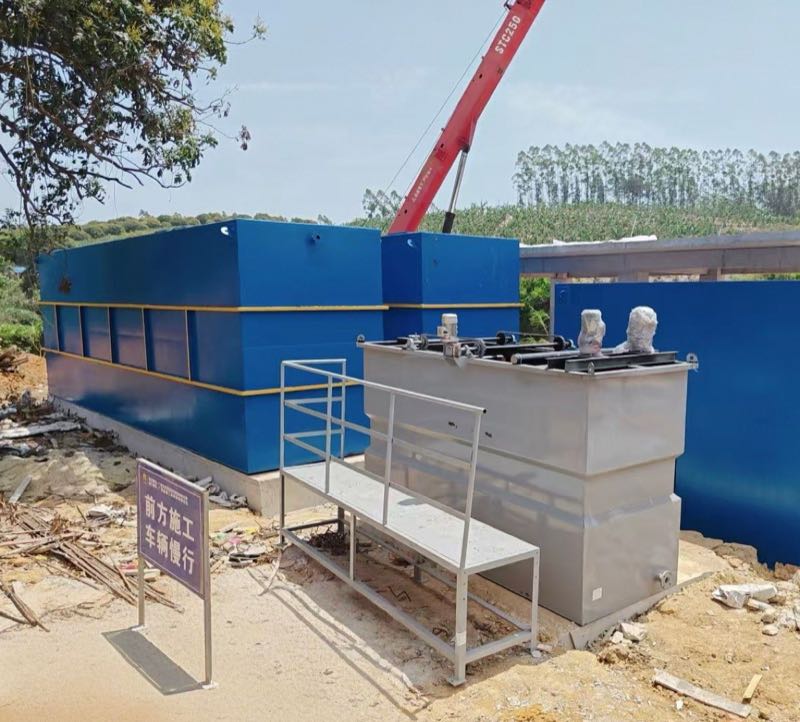
Use dissolved air flotation where the wastewater contains suspended solids, free oil, grease or floatable colloidal material. The industrial DAF pretreatment system should be selected only after representative sampling and settleability or flotation testing. Request chemical consumption, recovered-sludge characteristics and performance data measured on the buyer’s wastewater—not only clean-water test results.
High COD is an organic-load indicator, not a complete process-selection parameter. The supplied high-COD engineering guidance identifies shock loads, toxic compounds, high salinity, inhibitory substances and low BOD/COD ratios as reasons direct biological treatment may fail. It therefore recommends pretreatment, anaerobic treatment, aerobic treatment and advanced polishing as a staged strategy where the wastewater characteristics justify it.
- Characterize the waste by production line, batch, shift and discharge point.
- Remove rags, plastics and fibrous debris with mechanical screening.
- Equalize flow and load, then remove oil, grease, floatable solids and colloidal material where testing supports those steps.
- Use biological pretreatment or anaerobic treatment where biodegradability and inhibition testing support it.
- Provide aerobic treatment for residual biodegradable organics and, where required, advanced wastewater polishing.
The industrial wastewater treatment equipment selection guide can support market comparison, but the final train should be based on the actual effluent and the written acceptance target.
Select Biological Treatment and Any Polishing Stage
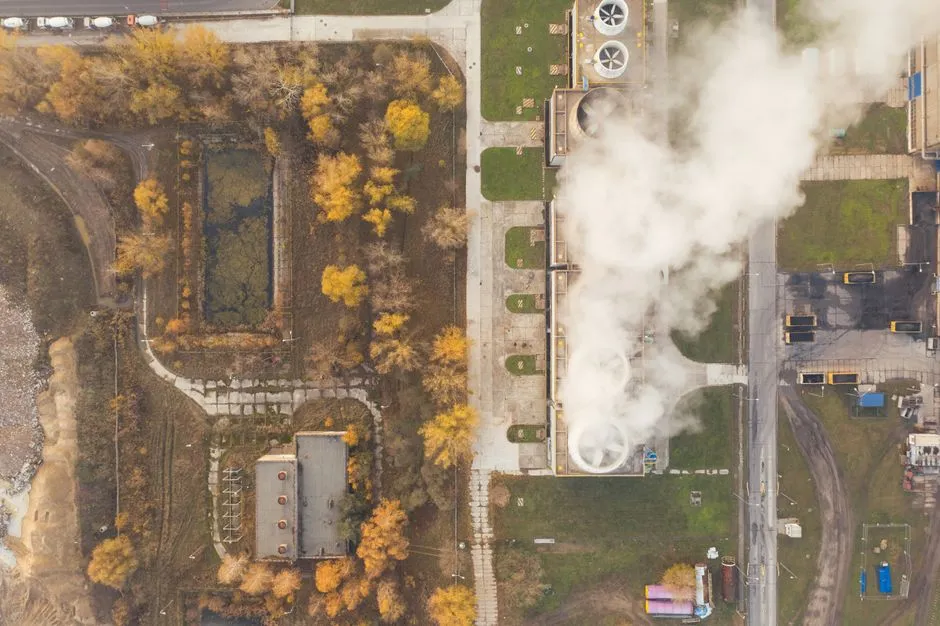
Use staged biological treatment when the influent is high-strength but biodegradable; use direct aerobic treatment only when characterization and treatability testing show that biological inhibition will not prevent stable operation. Anaerobic wastewater treatment can reduce the organic load before aerobic treatment, while aerobic biological treatment addresses residual biodegradable COD and stabilizes effluent quality. Selection must consider COD load, BOD/COD ratio, inhibitory compounds, temperature, pH, salinity, hydraulic profile and the required final effluent quality.
Consider an MBR where compact installation and high-quality effluent are priorities. The integrated MBR wastewater treatment system combines activated sludge with submerged PVDF membrane filtration, but the biological stage still depends on biodegradability, pretreatment and influent stability. The supplied guidance places MBR among aerobic processes used after anaerobic treatment where further organic removal and effluent stabilization are required.
Define polishing by use. Activated carbon, membrane filtration or additional advanced oxidation may be relevant for a tighter discharge specification or water reuse, but none should be included merely to increase the apparent treatment train. A separate DAF, MBR and reuse decision for high-COD wastewater provides a useful comparison framework, subject to the buyer’s legal route and local site data.
| Discharge route or influent problem | Governing rule or process option | What data settles it |
|---|---|---|
| High-strength, biodegradable stream with a low BOD/COD ratio | Screen and equalize first, then evaluate anaerobic pretreatment before aerobic biological treatment. | Representative COD and BOD/COD ratio, shock-load profile, treatability test, pH, salinity, temperature and inhibition results. |
| Toxic, saline or rapidly varying industrial effluent | Do not assume direct biological treatment will remain stable. Evaluate source control, equalization, pretreatment and staged loading. | Toxicity test, chemical and detergent profile, salinity, temperature, batch data and hydraulic variation. |
| Compact installation with high-quality treated effluent | Compare MBR with staged conventional biological treatment, then verify pretreatment and membrane-fouling controls. | Required effluent quality, footprint, mixed liquor and solids data, chemical use, aeration demand and membrane-cleaning plan. |
| Reuse or a more stringent final specification | Add a defined polishing stage only after identifying the constituent that must be removed. | Reuse specification, residual COD, dissolved salts, color, trace organics, membrane or adsorption testing and disposal route for concentrates. |
Build a Test-Backed RFQ and Acceptance Scope
Make the quotation conditional on documented site data and an agreed performance test. Ask each bidder to complete the fillable matrix below and to identify exclusions explicitly. The quote should state the treatment route, design flow, treated-water objective, sludge route, utilities, civil works, commissioning obligations and warranty test in one commercial schedule.
Require a wastewater characterization report covering chemical oxygen demand, BOD/COD ratio, pH, salinity, temperature, oil and grease, suspended solids, toxicity and relevant industry chemicals such as textile dyes, process chemicals and detergents. Influent COD concentration and the sampling method used, daily flow and peak flow, BOD/COD ratio, pH, salinity, temperature, oil and grease concentration, and the textile dye, chemical and detergent profile remain unresolved site inputs that the buyer must supply or commission.
| Quote line item | Technical scope to specify | Red flags to check before signing |
|---|---|---|
| Design basis and route | State flow, COD, BOD/COD, pH, salinity, temperature, oil and grease, suspended solids and toxicity; identify each proposed process stage. | Equipment sized from an assumed COD, with no sampling method, duration or peak-flow basis. |
| Performance guarantee | Define representative influent conditions, sampling points, analytical methods, effluent limits, COD removal basis, uptime and stabilisation period. | Guarantee stated only as “high-COD removal,” with no analytical method or defined loading condition. |
| Equipment and utilities | List screens, equalisation, DAF, biological equipment, aeration, pumping, controls, membranes or polishing equipment, electrical load and chemical requirements. | Critical civil works, power upgrades, standby equipment, reagent supply or utility connections omitted from the price. |
| Sludge and residuals | Identify sludge generation, separation, storage, dewatering, transport, final disposal and responsibility for polishing concentrates. | Supplier calls the sludge “usable” without a destination, permit or handling responsibility. |
| Trial and commissioning | State who performs treatability testing, installation, commissioning, operator training and warranty sampling. | No acceptance test, no operator handover, or performance claimed before stable representative operation. |
| Approvals and delivery | Assign responsibility for sewer acceptance, environmental approvals, site surveys, delivery, installation, commissioning and documentation. | Permit or sewer approval is assumed rather than allocated; delivery, spares and warranty dates remain undefined. |
Assign responsibility for site data, treatability testing, approvals, power and utilities, installation, commissioning, operator training and warranty testing. For textile sludge, require the supplier to review textile sludge dewatering and filter press selection as part of the solids-handling scope rather than treating sludge removal as an undefined residual.
Do not accept a supplier’s generic case-study performance as a project guarantee. The research includes one fluidized-bed reactor designed for 1,500 L/day wastewater containing 5,000 mg/L COD and 230 mg/L ammonia, with an 8-hour hydraulic residence time (Ryerson University Library and Archives). That is a specific research design, not a direct analogue for a Lesotho factory. Require performance evidence at the proposed wastewater characteristics and operating conditions.
Related Equipment
- industrial DAF pretreatment system — specifications, capacity range, and technical data
Frequently Asked Questions
What should be included in an RFQ for a high-COD industrial wastewater treatment system in Lesotho?
Require the bidder to quote from a documented wastewater characterization: chemical oxygen demand, BOD/COD ratio, pH, salinity, temperature, oil and grease, suspended solids, toxicity and relevant industrial chemicals. Also define the legal discharge route, flow basis, pretreatment and biological stages, polishing needs, sludge handling, utilities, commissioning, operator training, analytical methods, performance acceptance and warranty testing. A quotation based only on “COD removal” is incomplete.
Should the factory install sewer pre-treatment or a dedicated treatment system?
Choose sewer pre-treatment only if the utility’s written acceptance conditions cover the factory’s proposed flow, peak load, COD and industrial contaminants, and the pre-treatment package demonstrably meets them. MNN reported that some factory wastewater loads exceeded what the WASCO facility could handle, making sewer capacity confirmation essential. If the required sewer pretreatment cannot achieve the accepted quality, scope a dedicated treatment train with any necessary polishing.
How should the buyer size a DAF, biological treatment and MBR package?
Size the train from representative wastewater data rather than equipment marketing ranges. Obtain daily and peak flow, influent COD and sampling method, BOD/COD ratio, pH, salinity, temperature, oil and grease, suspended solids, toxicity and production chemicals. Confirm biodegradability and treatability before assigning anaerobic or aerobic stages. Use the required final effluent quality to decide whether an integrated MBR wastewater treatment system or another polishing stage is justified.
How should suppliers be compared on cost, delivery and compliance risk?
Compare quotations on the same scope: confirmed treatment route, civil works, utilities, chemical use, sludge disposal, installation, commissioning, operator training, warranty testing, approvals, delivery dates and exclusions. Ask each supplier to identify permit and sewer-acceptance dependencies in writing. No defensible price can be stated without the site wastewater data, flow basis, required effluent specification and delivery scope; request a line-item