Confirm the greywater boundary and reuse application
A greywater recycling system in Bahrain should be selected by matching the legally permitted source streams and approved non-potable end use to measured supply, demand and local approval requirements—not by selecting a treatment train from a generic water-saving claim. Bahrain’s Water Resources Council is pursuing sustainable water utilization, and decentralized greywater reuse is identified as a climate-resilience measure. UF, MBR and packaged biological routes can each be relevant, but the deciding data are fixture eligibility, hourly flows, organic loading, storage turnover, required water quality, footprint, potable backup and the locally adopted code.
Begin with the authority having jurisdiction, not the equipment catalogue. Request written confirmation of the locally adopted plumbing and building code, health rules, water-rights constraints, discharge requirements and permit path. National reuse policy does not constitute approval for an individual building or campus.
Define the approved application, such as toilet flushing, irrigation or cooling, and obtain the applicable quality requirements for that use. Greywater is wastewater from selected fixtures kept separate from toilet waste and reused for an approved non-potable purpose; its exact legal source list remains a legal and engineering question. Use the commercial greywater route-selection method to structure the boundary review, while the site-specific greywater equipment comparison provides a useful secondary route review.
Prepare a fixture-by-fixture source list showing the proposed collection point, branch, equipment and nominated end use. Showers and baths are common sources; hand basins and clothes washers may be included, subject to local rules. Kitchen sinks and dishwashers are often excluded because of grease, food solids and microbial loading. Laundry also requires review for lint, detergent chemistry and contaminated garments. Do not include any stream until the authority and the treatment designer confirm its eligibility.
Match greywater supply to eligible demand
Size systems from time-matched site data, because annual supply can conceal short reuse peaks, long storage periods and excess potable backup. The defensible usable reuse volume is the lesser of treated supply and eligible demand; unused treated supply must be recorded as overflow rather than claimed as a saving.
Request metered sub-flows, a fixture schedule or a documented occupancy model for preliminary screening. For final design, model simultaneous peaks, seasonal irrigation, tank turnover, sewer diversion and potable makeup. Daily and hourly data are necessary because showers, laundry, toilet flushing, irrigation and cooling do not necessarily occur together.
For early screening only, an EPA WaterSense supporting statement cites the 2016 Residential End Uses of Water study at 58.6 US gallons per person per day of indoor use. Its breakdown includes 11.1 US gallons per person per day for showers, 9.6 for clothes washers and 14.2 for toilets. These are study averages, not Bahrain project-flow guarantees: faucets mix uses, leaks are not a planned source, and local rules may exclude laundry. Measure the actual site.
| Discharge route or influent problem | Governing rule or process option | What data settles it |
|---|---|---|
| Eligible fixture branches | Keep nominated greywater branches physically separate and include only locally approved sources. | Fixture-by-fixture source list, branch drawings and written authority confirmation. |
| Excluded kitchen, dishwasher or unapproved laundry discharge | Exclude the branch physically or through an approved treatment basis; exclusion is not a design assumption. | Sanitary survey, grease and solids assessment, laundry contaminant record, and regulator-approved source definition. |
| Hourly supply peak exceeding measured eligible demand | Constrain useful reuse to the smaller of treated supply and demand; identify storage, overflow and diversion consequences. | Metered hourly production, simultaneous fixture-use profile, seasonal demand and storage-turnover analysis. |
| Intermittent demand and prolonged storage | Evaluate tank turnover, stagnation control and potable makeup before adding treatment capacity. | Demand profile, tank volume basis, retention time, overflow route and operating-control sequence. |
| Excess greywater outside reuse demand | Provide an approved sewer or other disposal path rather than presenting surplus flow as recovered water. | Hourly and daily mass balance, diversion capacity and approval of the discharge route. |
Compare UF, MBR and packaged biological treatment
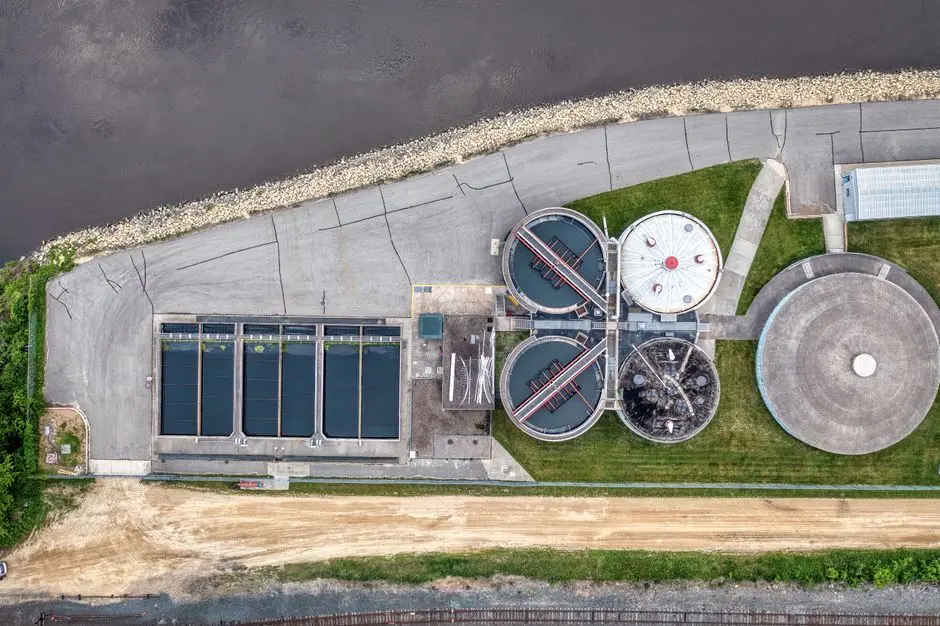
Choose the route by required treatment objective, source composition and operating constraints. UF, MBR and a packaged biological plant are not interchangeable labels, and none should be selected without a defined source and end-use basis.
Use MBR when the design basis calls for biological treatment integrated with membrane separation and compact treatment. An integrated MBR greywater treatment plant may be relevant where the project requires a high-quality, non-potable reuse stream, but the supplier must demonstrate performance for the proposed source and application. Membrane claims do not replace confirmation of the required treatment objective.
Use UF as a clarification barrier within a defined treatment train rather than assuming that membrane filtration alone resolves biological loading, nutrients, pathogens or application-specific quality requirements. The available 0.03 micron UF treatment system should be assessed against the upstream process, required water quality, cleaning requirements and locally accepted validation method.
A packaged biological route can combine anoxic and aerobic treatment, sedimentation and disinfection in a buried unit. Suitability still depends on site footprint, below-grade installation conditions, access, residuals, disposal route, electrical supply and local acceptance. The broader MBR, UF and RO treatment-train comparison provides additional context, but only a Bahrain-specific design can resolve project compliance.
| Discharge route or influent problem | Governing rule or process option | What data settles it |
|---|---|---|
| Source requires biological treatment before reuse | Compare an integrated MBR route with an anoxic/aerobic packaged biological route. | Influent organic and solids characterization, treatment objectives, footprint and operating-control requirements. |
| Final filtration or disinfection barrier is required | Define the complete treatment train and whether UF forms part of that train. | Required end-use water quality, upstream process performance, validation method and membrane-fouling controls. |
| Compact installation is required | Assess MBR footprint against packaged biological and other complete treatment routes. | Available area, equipment envelope, access routes, excavation conditions and maintenance clearances. |
| Buried package is proposed | Confirm below-grade acceptance, residuals handling and disposal access. | Ground conditions, groundwater and flood exposure, lifting provisions, sludge or residual removal route and authority acceptance. |
| Treatment failure or cross-connection occurs | Specify automatic diversion, alarms, non-potable identification and potable water backup. | Failure-mode sequence, sensor and alarm scope, backflow-control design, backup route and approved commissioning protocol. |
Build the quotation scope and acceptance conditions
Issue a site-specific RFQ that separates collection, treatment, reuse, backup, controls, commissioning and regulatory deliverables. Acceptance should remain conditional on confirmation by the authority having jurisdiction: local code, health rules, discharge requirements and the permit path must be settled before equipment selection is treated as compliant.
Require the technical offer to identify included fixtures, prohibited discharges, bypass logic, plumbing drawings, labels, user procedures and potable backup. Require validated performance for the proposed source and end use, supported by commissioning tests, failure-mode demonstrations, sampling, maintenance, consumables, residual handling and recordkeeping.
| Quote line item | Technical scope to specify | Red flags to check before signing |
|---|---|---|
| Source collection network | Approved fixture list, exclusion points, piping materials, slope, isolation, access and greywater collection-network drawings. | Undefined fixtures, kitchen or dishwasher connections, or collection-system design deferred until after award. |
| Treatment plant | Complete train, treatment objectives, duty basis, footprint, utilities, controls, alarms, automatic diversion and residual management. | Route selected by product label without source-water data, no performance basis, or omitted treatment-stage requirements. |
| Reuse distribution | Approved end uses, non-potable identification, backflow and cross-connection controls, pipe separation and potable backup. | Connection to potable fixtures, generic labeling only, or no defined automatic diversion after failure. |
| Storage and overflow | Volume basis, turnover controls, overflow destination and potable makeup arrangement. | Storage sized from annual averages without hourly demand or no approved overflow route. |
| Commissioning and acceptance | Performance tests, sampling plan, failure-mode demonstration, inspections, calibration and records accepted by the relevant authority. | Acceptance based only on startup, visual clarity or certificates not tied to the project duty. |
| O&M and lifecycle scope | Service capacity, maintenance plan, consumables, critical spares, replacement schedule, residual disposal and training. | No local service commitment, hidden cartridge or membrane costs, or residual disposal excluded from responsibility. |
| Approvals and documentation | Permit responsibility matrix, authority correspondence, plumbing approvals, O&M manuals and as-built deliverables. | Supplier calls the package “approved” without identifying the approving authority, code edition or project permit condition. |
Frequently Asked Questions
Which fixtures are eligible, and who confirms them?
Ask the authority having jurisdiction to confirm the project’s legal greywater definition and fixture list. Provide a branch-by-branch schedule identifying showers, baths, hand basins, laundry, kitchen sinks, dishwashers and other proposed sources. Treat kitchen and dishwasher exclusions, laundry chemistry and lint as unresolved until the authority and treatment designer approve the basis.
What flow and demand data are required to size the system?
Request metered hourly and daily sub-flows or a documented occupancy and fixture model, together with hourly and seasonal non-potable demand. The design must also address simultaneous peaks, tank turnover, sewer diversion and potable makeup. Do not size treatment from the cited 2016 study averages alone; they are early-screening context, not Bahrain site data.
What evidence should be required before accepting the treatment package?
Require project-specific performance testing for the proposed source and end use, sampling, calibration records, failure-mode demonstrations, automatic-diversion tests and documentation accepted by the relevant authority. Also verify non-potable identification, backflow and cross-connection controls, potable backup, maintenance records and residual-management arrangements.
How should cost and supplier selection be compared?
Ask each supplier for a separated quotation covering equipment, source collection, reuse plumbing, storage, overflow, potable backup, electrical works, installation, commissioning, authority submissions, training, O&M, consumables, residuals and replacement items. Because no supported Bahrain quotation is available, require site-specific pricing and lifecycle-cost inputs rather than comparing headline package prices. Check whether the supplier can support the proposed source mix, provide local service, accept project-specific acceptance tests and assign responsibility for approval and O&M deliverables.