Define the greywater boundary and intended reuse
For a commercial or industrial greywater recycling system in Armenia, the immediate decision is whether the selected wastewater needs UF, MBR or a packaged treatment route. Greywater can represent 50–80% of daily household wastewater generation, but source flows differ substantially: bathroom and laundry flows differ from kitchen wastewater, which can carry higher organic loads, food solids and grease (S1, S3). UF controls solids and colloids, MBR combines biological treatment with membrane separation, and packaged A/O plants provide biological treatment, clarification and disinfection. The supplied evidence establishes no Armenian reuse or discharge rule, so compliance must be confirmed with the competent authority and the intended reuse endpoint.
Start by identifying each source separately: bathroom sinks, showers, baths and washing machines should be recorded apart from toilet wastewater, kitchen-sink water and dishwasher effluent. S1 identifies kitchen wastewater as a separate design issue because food and grease can clog many systems. Do not include it merely because it appears on a generic “greywater” flow list; require the supplier to state whether it is excluded, separately treated or incorporated into the biological design.
Next, define the endpoint. Irrigation, toilet flushing, industrial process use, cooling or discharge require different supporting evidence. S1 notes that kitchen and bathroom flows may contain dirt, food, grease, hair and cleaning products; it also advises using products without high salt, boron or chlorine bleach because those substances can accumulate in soil. For a commercial or industrial application, request an influent and treated-water quality basis tied to the actual endpoint rather than accepting a general statement that the water is “suitable for reuse.”
Give suppliers a site-input schedule covering flow by fixture and operating period, average daily volume, peak flow, storage requirements and anticipated expansion. Also provide available footprint, gravity head, electrical supply and project-specific BOD, COD, TSS, turbidity, salinity and microbial data. The commercial greywater route-selection framework provides a useful structure, but its jurisdiction-specific framework must not be treated as an Armenian requirement.
Match source conditions to the treatment route
Treatment route selection depends on source characteristics and required reuse-water quality rather than flow volume alone. S3 reports that greywater represents 50–80% of daily household wastewater generation and that per-capita production in developed countries is 60–200 L per day, also citing 75–90% of total domestic wastewater flow. Neither figure is an Armenian commercial design basis. The same source says greywater characteristics vary and treatment should be tailored to local circumstances.
| Discharge route or influent problem | Governing rule or process option | What data settles it |
|---|---|---|
| Relatively clean bathroom or laundry flow | Ultrafiltration can form the solids-and-colloid-control barrier where the reuse endpoint and feed data support it. | Fixture-by-fixture flow, TSS, turbidity, microbial indicators, desired reuse-water quality and backwash arrangements. |
| Variable flow requiring biological treatment and membrane separation | MBR combines biological treatment with membrane separation; evaluate the MBR membrane bioreactor for greywater reuse against required effluent parameters. | BOD, COD, TSS, nutrients, flow profile, membrane-cleaning provisions, footprint and electrical demand. |
| Package treatment requiring biological treatment, clarification and disinfection | Evaluate a packaged A/O greywater treatment plant for a defined package scope. | Design flow, operating hours, soil conditions, above- or below-ground installation, civil interfaces and project-specific effluent targets. |
| Kitchen-sink or dishwasher wastewater included | Define separate grease and solids management, or exclude these flows and revise the flow and load basis. | Flow, COD, BOD, TSS, grease characteristics, fixture exclusions and downstream pretreatment requirements. |
Use the UF, MBR and package-plant comparison for greywater reuse as a technical reference for route logic. Ask each bidder to state what its route removes, what it does not remove, and how the proposed train meets the project’s reuse-water quality specification.
Resolve treatment gaps before issuing the RFQ
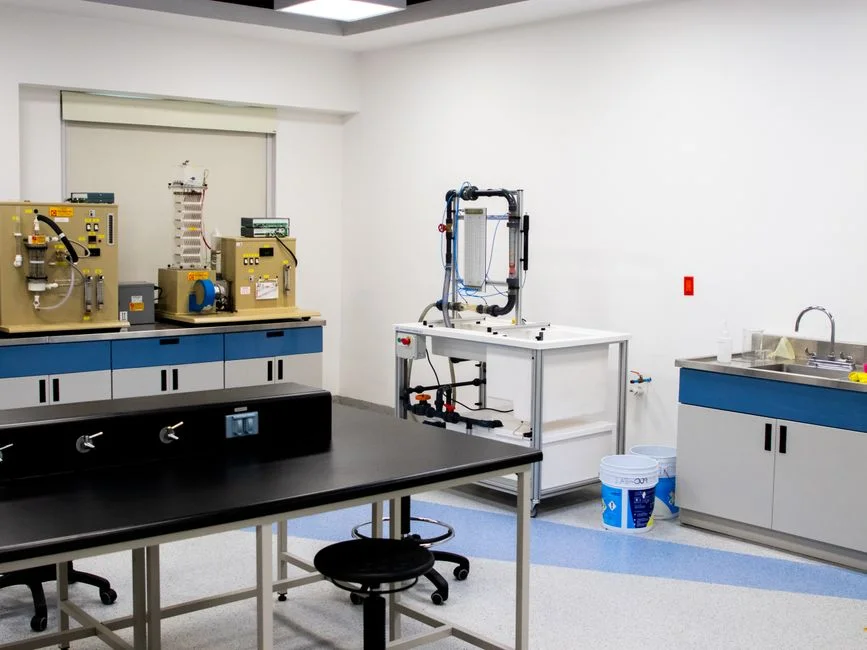
Require a complete greywater treatment train, not a treatment unit priced without its supporting equipment. S1 identifies possible challenges involving solids, surfactants, salts and microbial risk. The supplier should explain where each material enters the train, which component removes it, what concentration enters the next process, and how the claim will be demonstrated.
S1 and S3 identify biological methods, membrane filtration, sorption, ion exchange and UV disinfection as possible treatment tools. These are not interchangeable: state which tools are included, their design duty and any chemical or utility requirements. If kitchen wastewater is included, request the resulting flow, COD and load assumptions, plus the pretreatment selected for food solids and grease.
Price storage as a separate subsystem. S3 notes that modest buffering can help match water availability with demand, while decentralized installations may experience uneven flow distribution. Require the quotation to identify equalization volume, pump controls, overflow provisions, odour control and whether storage is inside or outside the equipment package.
Make the O&M boundary explicit. Require suppliers to price membrane cleaning and backwash, sludge or solids handling, chemical consumption, laboratory or field monitoring, spare parts, maintenance intervals and estimated operator hours. For a non-irrigation endpoint, require a project-specific water-quality basis and confirmation that the proposed effluent suits that application rather than relying on generic reuse language.
Build acceptance criteria and supplier scope
Turn the selected route into mandatory quotation fields before comparing price. The bid should identify source streams, design flow, operating hours, storage, treatment train, reuse endpoint and required treated-water parameters. Any parameter left as “suitable for reuse” should be returned for clarification.
| Quote line item | Technical scope to specify | Red flags to check before signing |
|---|---|---|
| Process and design basis | Selected route, feed sources, average and peak design flow, operating hours, storage and reuse endpoint. | No source-separation schedule; kitchen flow included without a load basis; capacity justified only by household averages. |
| Treated-water performance | Named parameters, test methods, sampling points, test conditions and guarantee basis. | Only “reuse quality” is claimed; no parameter list, sampling procedure or acceptance condition is attached. |
| Factory and site acceptance | FAT and SAT protocols, witnessing, corrections, retesting and consequences of failure. | Commissioning is limited to energization; no representative load, water-quality test or agreed retest process. |
| Civil and installation scope | Foundations, excavation, piping, valves, controls, electrical supply, drainage, commissioning and site restoration. | Equipment price excludes civil works, wiring or connection work that the site must provide. |
| Operations and handover | Training, manuals, O&M plan, spares, warranty, support route and document handover. | Operator workload, consumables and maintenance access are not quantified or priced. |
| Compliance responsibility | Named Armenian authority, written approvals, required records and project hold points. | Foreign permit thresholds or general guidance are presented as Armenian legal requirements. |
Use the industrial wastewater RFQ and selection checklist to tighten commercial comparisons, while ensuring every supplier answers the same greywater questions. Separate documented test results from projected performance and marketing statements. Any Armenian authority, permit, design standard or reuse requirement must be identified in the quotation and confirmed before order.
Confirm Armenian compliance and implementation duties
Do not convert US permit examples into Armenian rules. S2 shows why jurisdiction matters: Arizona’s Type 1 General Permit covers systems producing 400 gallons per day or less, subject to its written rules, while Washington treats systems under 60 gallons per day as tier one and permit-exempt for subsurface irrigation only under Chapter 246-274 WAC. These examples demonstrate different legal structures; they do not establish an Armenian permit category or reuse standard.
The project owner should identify the competent Armenian authority and obtain written confirmation covering the selected reuse endpoint and discharge route. Ask that authority or an appropriately qualified Armenian designer to determine whether source separation, engineered design, installation approval, operating records and discharge monitoring apply. Also confirm the required authority, project standards and approvals before accepting foreign regulatory examples.
Make this verification a contractual hold point: no final route, equipment order or commissioning commitment should rely on an assumed Armenian rule. Record the authority consulted, the written response, applicable documents and any conditions attached to reuse, discharge or installation. The industrial effluent treatment route comparison can support a technical framework, but its jurisdictional references require separate verification.
Further Reading
Frequently Asked Questions
How much does a commercial greywater recycling system in Armenia cost?
Request a quotation only after the feed sources, average and peak flows, storage requirement, reuse endpoint, site constraints and acceptance parameters are fixed. Ask each supplier to itemize equipment, pretreatment, storage, civil works, controls, installation, commissioning, O&M, chemicals, spares and warranty. No Armenian price range is established by the available evidence, so a general price would not support a reliable budget comparison.
Which treatment route should be selected for an Armenian commercial site?
Select UF when the specified reuse endpoint and influent data support solids-and-colloid control; consider MBR where biological treatment and membrane separation are required; and consider packaged A/O treatment where biological treatment, clarification and disinfection are required as an integrated package. Make the final decision from site-specific quality data rather than source volume alone, and include kitchen wastewater only after resolving its grease and solids load.
What performance tests should be included in the RFQ?
Require written parameter limits, test methods, sampling points, FAT and SAT protocols, representative operating conditions, acceptance criteria and consequences of failure. A supplier should identify how treated-water quality will be demonstrated, including any monitoring required after handover. Do not accept “suitable for reuse” without parameter-level evidence.
How should suppliers be selected without assuming Armenian compliance?
Compare route fit, process documentation, O&M scope, delivery responsibilities and acceptance testing, then require the applicable Armenian authority, approvals and project standards to be confirmed in writing. Do not award the contract solely on the lowest equipment price, and treat unresolved compliance as a hold point rather than accepting a foreign permit threshold as applicable law.