Start with the discharge route and effluent target
A high-COD industrial wastewater treatment system in The Gambia should be selected based on the discharge or reuse destination rather than COD concentration alone. The practical route usually combines pretreatment, load-reducing biological treatment, aerobic stabilization and polishing when required. DAF can remove suspended solids, oil and grease; MBR can provide compact biological treatment with fine solids separation. However, the supplied research establishes no Gambian COD discharge limit. Obtain the applicable regulator and receiving-authority criteria, characterize COD and the BOD/COD ratio, and test the wastewater before finalizing equipment capacity.
Identify the route before comparing equipment: direct discharge, sewer connection, controlled reuse or another application. Each route changes the required effluent evidence. A sewer-acceptance condition is not automatically equivalent to a direct-discharge permit, and a reuse specification may impose different treatment and monitoring requirements.
Request the permit or approval held by the plant operator, the applicable discharge consent, receiving-water or sewer-acceptance requirements, and the proposed reuse criteria. For each route, ask the relevant Gambian authority which document governs the project and whether preliminary acceptance is required before equipment selection. Do not use a generic process description as a substitute for those project-specific conditions.
The 2026 Global Center on Adaptation assessment states that stricter regulations and practices can reduce pollution from industrial waste and sewage. It also estimates that industry accounts for approximately 22% of total water withdrawals in The Gambia, making industrial pollution control relevant to the wider water-resource context.
| Discharge route or influent problem | Governing rule or process option | What data settles it |
|---|---|---|
| Direct discharge | Use the plant’s applicable permit and receiving-authority criteria; no numeric COD limit can be assumed from the available research. | Permit, receiving-water description, discharge location and authority confirmation. |
| Sewer connection | Use the sewer authority’s acceptance criteria rather than assuming direct-discharge limits apply. | Written sewer-acceptance conditions, prohibited discharges and any COD, pH or solids limits. |
| Industrial or process-water reuse | Define the end use and required quality before selecting biological and polishing stages. | Reuse application, water-quality specification, user constraints and sampling method. |
The industrial wastewater treatment equipment selection guide provides a broader framework for matching wastewater characteristics with treatment equipment.
Characterize the wastewater before selecting equipment
Wastewater characterization must determine whether the stream is merely organic-strength concentrated or also inhibitory, variable or physically difficult to treat. COD measures oxidizable material, but it does not establish biodegradability, process loading or the quantity of equipment required.
- Collect representative samples across production, cleaning and shutdown cycles, including flow-weighted or event-based samples where appropriate.
- Measure COD, BOD, flow, pH, temperature, salinity, toxicity indicators, suspended solids, oil and grease and colloids.
- Calculate or request the BOD/COD ratio, then test the biological treatability of the selected stream rather than relying on a single COD result.
- Record minimum, maximum and typical loads, including shocks, batch discharges and clean-water dilution.
High-COD industrial examples described by GL Environment extend from several thousand to tens of thousands of milligrams per liter COD. That range is not a sizing table for a Gambian plant. A documented project example from Ryerson University concerns a 1,500 L/day high-strength wastewater containing 5,000 mg/L COD and 230 mg/L ammonia; its aerobic three-phase fluidized bed reactor was developed for that specific duty and cannot be transferred directly to another site.
A low BOD/COD ratio, toxic or refractory compounds, salinity, oil and grease, and sharp load changes can make direct biological treatment unstable. These factors necessitate additional testing or stronger pretreatment, equalization, staged load reduction or a different biological route.
Compare DAF, MBR and combined treatment trains

Select the treatment train by identifying the dominant problem: remove material that harms biology, provide biological capacity under the confirmed load, and add polishing only where the destination requires it.
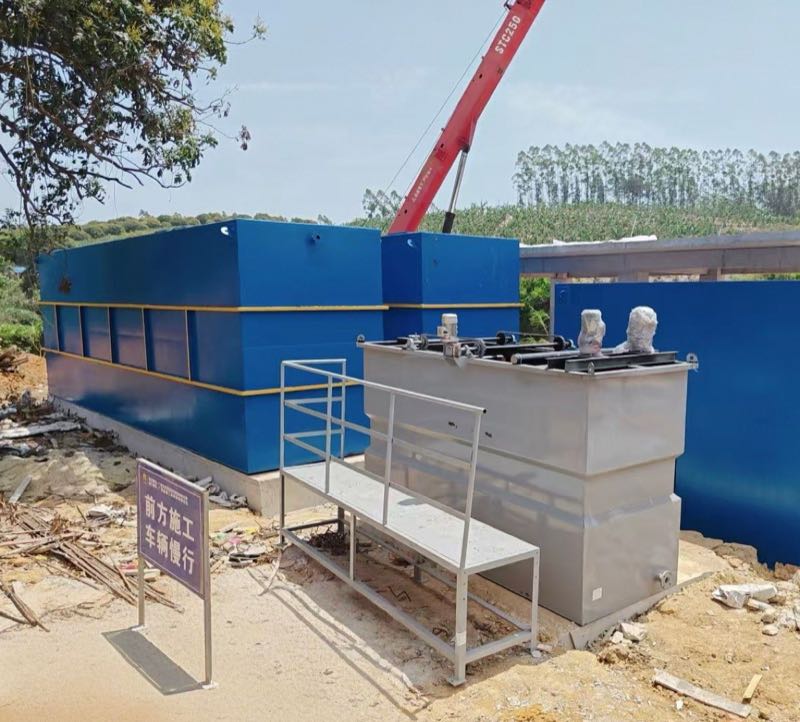
- DAF pretreatment: Consider a DAF system for high-COD pretreatment where suspended solids, oil and grease or colloidal matter could overload downstream biological treatment. Require a process test or jar test to establish chemical demand, solids capture and expected sludge characteristics.
- MBR route: Consider an MBR membrane bioreactor for industrial effluent where compact biological treatment and membrane solids separation are priorities. The supplier must prove pretreatment adequacy, membrane fouling controls, aeration demand, cleaning requirements and effluent performance against the confirmed destination.
- Combined train: Use pretreatment, optional anaerobic wastewater treatment, aerobic biological treatment and polishing where high organic loading, variable quality, toxicity or reuse requirements justify the additional stages. Anaerobic treatment may suit high-strength, biodegradable wastewater, but selection requires treatability testing and evaluation of pH, temperature, salinity, inhibition and biogas objectives.
For a compact comparison of additional barrier technologies, use the material on comparing DAF, MBR, UF and RO treatment routes. For site-specific scope, apply the high-COD treatment specification as a procurement framework.
Build the RFQ around performance and operating obligations
A comparable quotation must state the design basis and the conditions under which performance is guaranteed. Ask every supplier to identify missing client data, exclude unsupported assumptions and list third-party testing required before final sizing.
| Quote line item | Technical scope to specify | Red flags to check before signing |
|---|---|---|
| Process design | Process flow diagram, design basis, hydraulic calculations, duty cycles, equalization requirements and stage-by-stage treatment objectives. | No design flow or influent envelope; COD stated without flow variation, BOD/COD ratio or destination. |
| Performance guarantees | Separate influent and effluent guarantees, including the sampling protocol, operating conditions and method for demonstrating COD performance. | Guarantee lacks a test method, representative influent basis or defined remedy for non-compliance. |
| Controls and utilities | Control philosophy, alarm and shutdown logic, power demand, compressed air, chemicals, water, drainage and remote support requirements. | Excludes site utilities, instruments, wiring or installation interface duties. |
| Residues and sludge | Estimated sludge generation, characterization, collection, storage, disposal route and included handling equipment. | Sludge quantity or disposal responsibility is omitted. |
| Commissioning and handover | Factory and site tests, baseline and acceptance sampling, operator training, manuals, spare parts, preventive maintenance schedule and warranty boundaries. | Commissioning is undefined, local works are excluded or acceptance depends on undocumented client data. |
| Delivery and local scope | Supply boundary, transport, customs, installation, foundations, piping, electrical connections, operator attendance and documentation. | “Turnkey” is used without a responsibility matrix and itemized exclusions. |
The skid-mounted treatment plant scope guide can help identify which factory-built, site and commissioning activities need separate pricing.
Verify climate resilience, commissioning and handover
Accept the plant only after linking process performance to the actual site environment and operating capability. The Global Center on Adaptation’s water-resources assessment identifies salinity intrusion, pollution from industrial waste and sewage, and the need to integrate climate risk into infrastructure planning.
Review flood exposure, heat, power availability, corrosion protection, odor control, drainage and the skill level of available operators. Ask suppliers to state their design assumptions for each condition and identify any change that would alter the duty, footprint or operating cost. For coastal sites, also examine how saline groundwater or other chloride exposure may affect materials, corrosion protection and biological operation.
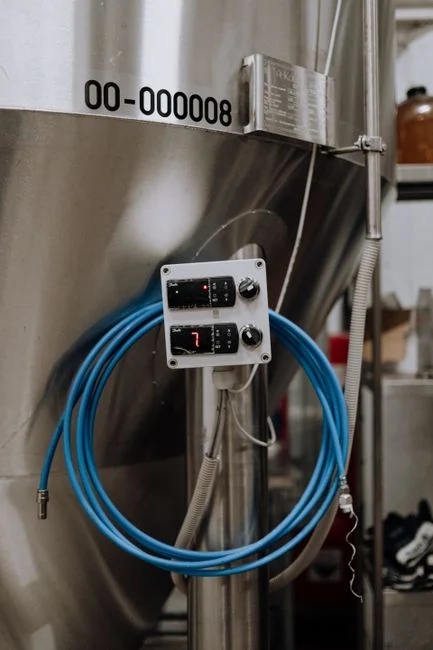
Require baseline sampling before load changes, then acceptance sampling under representative operating conditions. Identify calibrated instruments, their calibration responsibility and the laboratory or qualified tester responsible for each parameter. Handover should include operating and maintenance manuals, equipment registers, drawings, software access where applicable, operator training, critical spares and a preventive-maintenance schedule.
Establish a monitoring plan for COD, flow, pH and treatment-process operating parameters. Include alarm thresholds, escalation contacts, sampling frequency, trend review and a response plan for shock loads. Sludge generation, storage, removal and disposal should remain visible in the operating record.
Frequently Asked Questions
When is DAF needed before an MBR?
DAF is a candidate pretreatment step when the wastewater contains suspended solids, oil and grease, FOG or colloidal material that could foul membranes or overload biological treatment. Confirm the need with representative wastewater testing and a DAF performance test. MBR selection should then follow from the confirmed effluent target and pretreatment performance.
Why can COD concentration alone not size a high-COD treatment system?
COD indicates oxidizable loading but does not establish biodegradability, flow, shock frequency, toxicity or required effluent quality. Ask the supplier for the design flow, influent range, BOD/COD ratio, flow profile, physical contaminants, destination and performance-test method. Without those inputs, any capacity or guarantee remains conditional.
What information is needed for a comparable supplier quotation?
Request a common design-basis package: representative COD and BOD data, daily flow and variation, BOD/COD ratio, pH, temperature, salinity, toxicity indicators, suspended solids, oil and grease, discharge or reuse criteria, site utilities and required deliverables. Require each bidder to identify assumptions, exclusions, missing inputs and any third-party test needed before final sizing.
Which acceptance and supplier-selection items should not be left informal?
Define acceptance sampling, COD performance conditions, instruments and responsible tester, commissioning boundaries, training, documentation, spares, warranty and remedy for non-compliance. For supplier selection, check whether the bidder can support commissioning and operators locally, how remote support is provided, and who is responsible for site installation, utilities, sludge handling and handover. The industrial wastewater treatment equipment selection guide offers a broader checklist for comparing these obligations.