Define the Reuse Route Before Selecting Equipment
Select the treatment route by first defining where the water will go: toilet flushing, irrigation, washdown, controlled discharge or disposal. UF, MBR and packaged A/O systems are not interchangeable because greywater quality, exposure to people, discharge obligations and installation constraints determine the required process. For a commercial greywater recycling system in South Sudan, request source-specific flow and water analysis, applicable permits and the receiving-water requirements before comparing an UF water treatment system, an MBR membrane bioreactor or a packaged A/O treatment plant.
Separate the reuse application from the disposal route. Treated water entering a building or used for toilet flushing requires a documented public-health basis; irrigation and washdown may have different exposure and water-quality considerations. The supplied South Sudan material does not identify a specific regulator, permit pathway or verified site-specific discharge limit, so obtain the applicable documents from the responsible authority rather than treating a supplier statement as an enforceable standard.
APK Aquatech notes that hotels, resorts and commercial facilities in South Sudan can use greywater treatment and wastewater systems to support water reuse. That does not establish the buyer’s permit conditions, design flow or acceptance criteria. The commercial greywater route-selection guide provides a comparison framework, but local requirements still govern this project.
| Discharge route or influent problem | Governing rule or process option | What data settles it |
|---|---|---|
| Toilet flushing or another reuse that enters a building | Define public-health protection, treatment, disinfection and distribution requirements before selecting equipment. | Written requirements from the responsible authority; proposed reuse endpoint; building-entry and cross-connection controls. |
| Irrigation or washdown | Confirm whether the application permits human contact and whether the receiving area requires controlled discharge. | Application description, exposure assessment, receiving-water or disposal route, applicable permit conditions. |
| Commercial greywater with unresolved peak flow | Do not size the plant from average demand alone; establish collection and equalisation requirements. | Average and peak flow in m³/day, hourly profile, source inventory and separate collection points. |
| Unverified South Sudan discharge condition | Keep discharge criteria separate from hydraulic capacity and obtain verified local requirements. | Permit application, receiving-water information and written confirmation from the responsible authority. |
Compare UF, MBR and Packaged A/O Routes
Choose UF when the principal decision is solids control or polishing and the influent already meets the membrane’s inlet requirements; MBR when biological treatment and membrane separation are required by the measured wastewater characteristics; and packaged A/O only when its documented inlet limits and pretreatment requirements match the commercial greywater stream. These process differences dictate the operational intensity of the system.
| Discharge route or influent problem | Governing rule or process option | What data settles it |
|---|---|---|
| Filtration or polishing is the stated need | Evaluate UF, but verify membrane inlet limits, pretreatment and the resulting reuse quality. | Source-by-source COD, BOD, TSS, turbidity, pH, conductivity and oil and grease; required outlet values for the reuse application. |
| Organic load and solids removal are both required | Evaluate MBR as an integrated biological and membrane route. | Influent characterisation, flow profile, membrane configuration, cleaning method, aeration and power requirements. |
| A packaged unit is proposed for commercial greywater | Do not assume direct acceptance; obtain the packaged A/O unit’s inlet-water limits and required pretreatment. | Manufacturer inlet limits, process schematic, pretreatment sequence and process-control narrative. |
| Site has limited footprint or installation labour | Compare skid or packaged configurations only after confirming service access, waste removal and utilities. | Available footprint, access route, power, operator competency, waste-storage area and maintenance concept. |
Do not select from product labels alone. Request the design flow, operating mode, duty cycle, utilities, waste streams and guarantees behind each configuration. The commercial greywater equipment comparison can support that interrogation, but South Sudan site data—not the route names—must determine the answer.
Test Whether the Influent Needs More Than Filtration
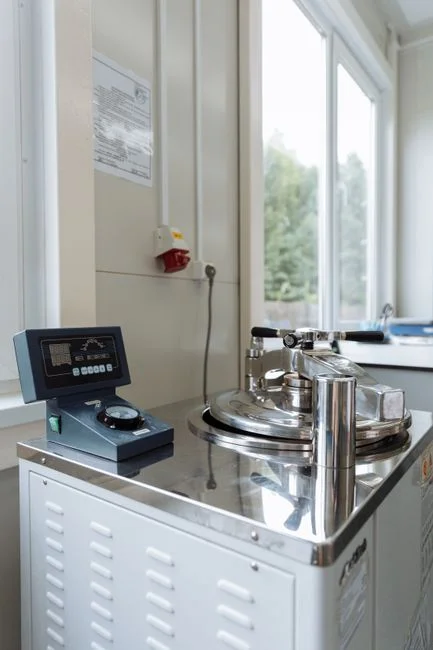
Request COD, BOD, TSS, turbidity, pH, conductivity and oil and grease results for each source and a peak-period composite. Ask the supplier to explain, in a process narrative, how the selected treatment route responds to those measured contaminants. If the data show a condition the proposed process cannot accept, resolve it through pretreatment, a different route or a revised reuse endpoint.
Filter performance cannot substitute for source characterisation. In an academic study of kenaf core and fibre filtration of domestically generated greywater, reported suspended-solids reductions were 26.93% for the core-strained effluent and 18.08% for the fibre-strained effluent; turbidity reductions were 34.36% for core-filtered and 42.82% for fibre-filtered greywater (Agricultural Engineering International: CIGR Journal). These results describe that experimental medium and cannot be transferred to UF, MBR or a commercial site without comparable test data.
Oil and grease, wash chemicals, food residues and episodic discharge events can change the treatment demand. Obtain the sampling method, source coverage and operating conditions behind any proposed performance figures. A route should be rejected if its supplier cannot connect its inlet limits and pretreatment requirements to the buyer’s measured greywater.
Build a Quotable Treatment and Delivery Scope
Price the system as an auditable delivery scope, not as one packaged quotation. Require source flow data, analyses, reuse demand, pretreatment, treatment, disinfection, storage, pumping, controls, installation, commissioning, training and after-sales support as separate items. Each line should identify exclusions and interfaces so that a missing pump, tank, disinfection stage or civil work does not remain buried in a general turnkey price.
| Quote line item | Technical scope to specify | Red flags to check before signing |
|---|---|---|
| Design basis and treatment | Design flow, operating mode, duty cycle, inlet limits, treatment train, power requirement, footprint and utilities. | Average flow is presented as the design basis; peak demand or operating mode is omitted. |
| Pretreatment and ancillary equipment | Collection, screening or solids control, oil management, pumping, storage, disinfection and reuse distribution. | “Complete package” excludes essential pumps, tanks, controls, drainage or electrical works. |
| Installation and commissioning | Civil works, delivery, erection, connections, utilities, commissioning tests, operator training and handover documentation. | Delivery stops at the equipment boundary; installation, site works or training are excluded. |
| Performance and acceptance | Test methods, sampling points, operating conditions and pass/fail thresholds tied to the contracted reuse application. | Guarantee relies on an undefined “greywater” feed, unspecified sample protocol or untested reuse endpoint. |
| Waste and after-sales support | Waste-stream handling, replacement schedule, spare parts, remote support process and monitoring responsibilities. | No waste-disposal route, unsupported local service commitment or no named response process. |
APK Aquatech states that South Sudan project timelines can range from 6–20 weeks and that schedules vary with capacity and complexity. Treat that as market context, not a universal delivery promise. Require the supplier to state milestones, shipping assumptions, site-readiness dependencies and the effect of approval delays. The site-specific commercial greywater RFQ can also help identify missing scope.
Plan Installation and Ongoing Operation
Confirm collection, pumping, pretreatment, treated-water storage and reuse distribution before accepting the treatment route. Gravity drainage may not be available: SFA’s South Sudan field-hospital example used a lifting station to collect and pump wastewater where gravity drainage was not readily available. The excerpt does not provide plant capacity or performance data, so use it as a configuration lesson rather than a sizing precedent.
Request a site risk assessment covering power availability, flood exposure, maintenance access and waste-sludge handling. Define who monitors water quality, checks membrane or biological performance, orders replacement parts and handles non-conforming effluent. Also document operator competency requirements, remote-support escalation and spare-parts availability.
Operational dependencies are part of the process scope. A route that requires reliable aeration, membrane cleaning, specialist service or continuous waste handling should not be approved without confirming those services can operate at the site.
Frequently Asked Questions
What flow rate and greywater analysis should I provide before requesting a quotation?
Provide average and peak greywater flow rates in m³/day, the source inventory, separate collection points and a peak-period flow profile. Obtain COD, BOD, TSS, turbidity, pH, salinity or conductivity, and oil and grease data for each source and the peak-period composite. Also state the reuse demand and required treatment performance. Without these inputs, the supplier cannot establish greywater treatment sizing, verify inlet limits or write meaningful acceptance criteria.
When should a South Sudan commercial project choose UF instead of MBR or a packaged A/O plant?
Choose UF when measured greywater quality is within the membrane’s inlet limits and the application needs solids control or polishing rather than biological treatment. Consider MBR when the process must combine biological treatment with membrane separation. Select a packaged A/O plant only when its documented inlet limits, pretreatment and operating requirements match the source. Ask each supplier to demonstrate that selection against the same analysis and reuse endpoint.
Which commissioning, performance-test and handover items should be included in the supplier’s price?
Include installation, utilities, commissioning, training, operating manuals, spare parts and after-sales support as separately priced items. Require acceptance testing to identify the method, sampling point, operating condition and pass/fail threshold for the contracted reuse application. A red flag is a guarantee that omits the feed-water definition, test protocol or operating condition, because the result cannot then be reproduced or adjudicated.
What local permits, installation requirements and long-term service support should the buyer verify?
Ask the responsible South Sudan authority for the applicable permit, public-health, receiving-water and installation requirements; the available material does not establish a specific regulator or discharge limit for this site. Before signature, verify electrical and civil prerequisites, access for maintenance, flood exposure, waste handling, operator training, spare-parts supply and remote-support responsibilities. Treat unsupported compliance or service statements as unresolved items requiring written evidence.