Start with the wastewater, not the treatment tank
An effluent treatment plant in Kota Kinabalu is a site-specific treatment system that reduces industrial wastewater pollutants before lawful discharge or reuse. The correct design starts with hourly flow and wastewater characterisation, then matches pretreatment, biological or physical treatment, solids removal and disinfection to the required effluent quality. Local evidence from the 2022 UMS study found consistent 80% BOD removal and generally permissible effluent, but occasional oil and grease exceedance—showing why hydraulic and pollutant peaks matter. For industrial projects, DAF can control oils, FOG and solids, while MBR or UF can support higher-quality reuse applications.
Industrial effluent can change with production shifts, washdown, cleaning and batch dumping, so nominal daily flow is not a sufficient design basis. Request average, peak and minimum hourly flow; operating shifts; batch-discharge records; and documented wet-weather or washdown variation. Before selecting equipment, characterise pH, suspended solids, BOD, COD, oil and grease, colour, odour and process-specific contaminants.
The 2022 study at the Universiti Malaysia Sabah main-campus sewage treatment plant compared peak and non-peak periods and found that influent TSS, BOD, COD and oil and grease were generally higher during peak use, with a timely sudden increase also observed (Bolong et al., IOP Conference Series: Materials Science and Engineering, 2022). Although this was campus sewage—not factory wastewater—the finding is a useful warning against designing around stable averages.
Confirm the final destination before fixing the process: direct discharge, sewer connection, irrigation reuse, process-water reuse or a combination. Each destination has a different acceptance basis. Do not transfer municipal sewage assumptions to an industrial effluent treatment project in Kota Kinabalu without checking trade effluent requirements and production-cycle effects. The Malaysia sewage treatment equipment guide provides broader equipment context, but it does not replace project-specific wastewater analysis.
| Design-basis input | Information to obtain | Why it changes selection |
|---|---|---|
| Flow envelope | Average, minimum and peak hourly flow; shifts; washdown and batch events | Sets equalisation, pumping and treatment capacity |
| Pollutant profile | pH, TSS, BOD, COD, oil and grease, colour, odour and process contaminants | Determines whether physical, biological or membrane stages are appropriate |
| Discharge destination | Authority, permit route, sewer conditions or reuse end use | Defines the required treated-effluent objectives |
| Residual destination | Skimmings, sludge, chemical residues and disposal route | Adds handling, storage and disposal equipment |
What local evidence says about effluent performance
The UMS study reported that the main-campus sewage treatment plant’s design parameters complied with the Malaysian Sewerage Industry Guidelines and recorded a consistent 80% BOD removal efficiency (Bolong et al., IOP Conference Series: Materials Science and Engineering, 2022). These are measured, site-specific results from a university campus; they are not design guarantees for an industrial ETP in Kota Kinabalu.
The same study found effluent quality to be inconsistent but generally within permissible limits, except for oil and grease, which occasionally exceeded the allowable value (Bolong et al., 2022). For an industrial project, that observation matters because process wastewater may contain oil, grease and other soluble or emulsified contaminants not represented by campus sewage.
The authors proposed agricultural and landscape irrigation reuse based on the plant’s environmental quality potential and the reduction in direct releases to receiving waters (Bolong et al., 2022). A buyer can use this as evidence that reuse may be technically feasible, not as a blanket permission. The proposed end use, receiving environment, seasonal demand, public-health controls and current regulatory acceptance still require project-specific review.
It would be an engineering error to transfer the UMS performance record directly to a factory, hotel or food processor. The university system evaluated a relatively bounded campus-sewage duty. An industrial ETP must instead demonstrate that its treatment train handles production variability, concentrated batches, trade contaminants and the selected discharge or reuse route. Further context on odour, corrosion and tertiary treatment is covered in the referenced tertiary wastewater treatment and corrosion-control article.
Build an ETP treatment train that matches the pollutant
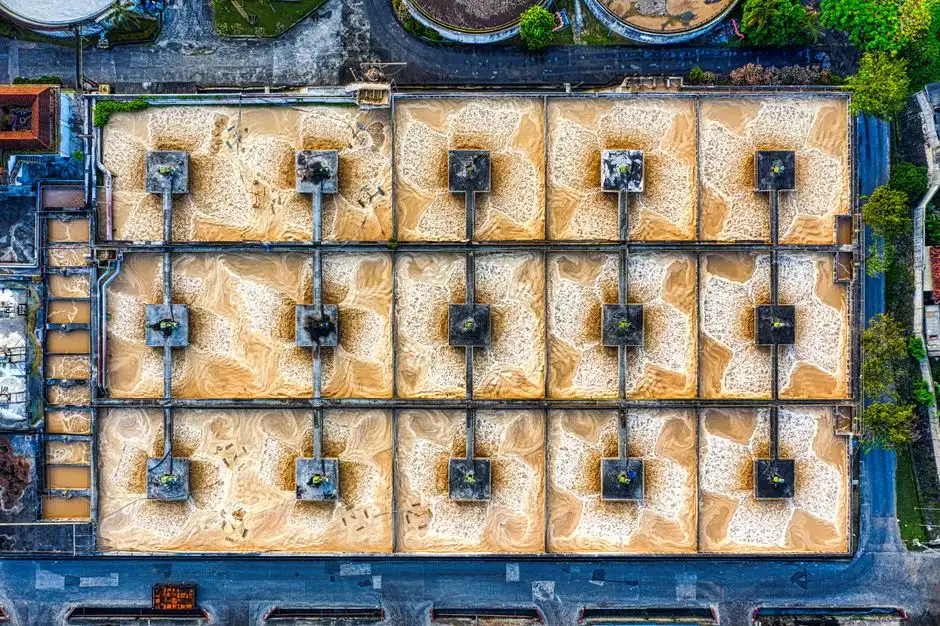
A practical industrial wastewater process flow should begin with screening and equalisation, followed by pH or chemical conditioning where justified, then physical or biological removal, solids separation, polishing and disinfection. The sequence is driven by wastewater analysis rather than by the assumption that every plant needs the same tanks.
- Screen and equalise production, washdown and batch flows.
- Condition pH and dose chemicals only against measured requirements.
- Remove oils, FOG, suspended solids or biodegradable organics through the selected physical or biological stage.
- Separate solids or recover them in the appropriate DAF, clarifier or membrane configuration.
- Polish and disinfect where required by the final discharge or reuse route.
Where suspended solids, colloidal material, FOG and oil and grease dominate, an industrial DAF system is the relevant physical stage to examine. The supplied HydropureWater range covers 4–300 m³/h across 13 standard models; those figures are catalogue selection boundaries, not a Kota Kinabalu sizing calculation.
Where compact biological treatment and fine solids separation are priorities, the integrated MBR wastewater treatment system combines biological treatment and membrane separation. The supplied range is 10–2,000 m³/day, using submerged PVDF membranes with filtration below 1 μm.
UF serves a different role: it can polish treated water, protect downstream membranes or form part of a reuse train. The supplied UF configuration covers 2,000–40,000 L/h, with 0.03 μm PVDF membranes, automatic backwash and air scour. These functions are complementary rather than substitutes: DAF handles floatable material, MBR combines biological treatment with membrane separation, and UF performs membrane filtration.
For non-sewage flows, biological treatment, DAF, clarification and chemical dosing must be selected from the wastewater analysis. A campus treatment train may not address trade contaminants, variable pH, emulsified oil or shock loads simply because its nominal flow appears adequate.
| Technology | Primary role in the treatment train | Selection conditions | Supplied catalogue scope |
|---|---|---|---|
| DAF | Oil, grease, FOG and floatable solids removal | Require wastewater analysis, chemical condition and skimmings handling | 4–300 m³/h; 13 standard models |
| MBR | Biological treatment with membrane solids separation | Assess biodegradability, loading, membrane fouling and controls | 10–2,000 m³/day; submerged PVDF; filtration below 1 μm |
| UF | Polishing, reuse preparation and downstream membrane protection | Define feed quality, recovery, backwash and monitoring | 2,000–40,000 L/h; 0.03 μm PVDF; automatic backwash and air scour |
Compare discharge and reuse options
For lawful discharge, identify the receiving authority and permit conditions before finalising the treatment process. The supplied research does not provide a project-specific numerical discharge limit for an industrial ETP in Kota Kinabalu, so fixed limits should not be invented. The applicable requirements must be confirmed with the relevant Malaysian authorities.
Reuse requires a different design endpoint. The UMS study proposed agricultural and landscape irrigation for a university campus, demonstrating a possible route while leaving project-specific suitability and regulatory review unresolved (Bolong et al., 2022). For a factory, hotel or food processor, the buyer must also define whether reuse water will contact people, enter a process, irrigate food crops or serve another controlled use.
Direct nanofiltration is an advanced polishing concept rather than a default first stage. Schrader’s University of Twente thesis, Direct nanofiltration of wastewater treatment plant effluent, investigated nanofiltration as a method for polishing treatment-plant effluent and identified potential for agricultural or indirect potable reuse applications. The thesis was not a Kota Kinabalu project specification, so site water chemistry, pretreatment, recovery and end-use controls remain necessary.
Constructed wetlands are also a research-backed micropollutant-removal option. Wageningen University’s 2022 PhD thesis examined their use for removing micropollutants from treatment-plant effluent, but the design still depends on site area, hydraulic residence, climate and media. It is not a turnkey specification for an industrial site in Sabah.
Depending on end-use quality, reuse treatment can extend beyond biological or primary treatment to UF, reverse osmosis, disinfection and monitoring. The industrial wastewater treatment guide also illustrates why trade contaminants can require dedicated process steps.
| Destination | Design focus | Evidence or input still required |
|---|---|---|
| Lawful direct discharge | Permit-compatible treatment and monitoring | Current authority conditions and receiving point |
| Controlled irrigation reuse | Pathogen control, salinity and end-use suitability | Reuse site, crop or landscape requirements and regulatory review |
| Process-water reuse | Quality consistency, recovery and pretreatment protection | Process specification and continuous-demand profile |
| Advanced reclamation | Polishing, membrane recovery, disinfection and monitoring | Project-specific pilot and water-chemistry data |
Size the plant against operating envelopes and reuse peaks
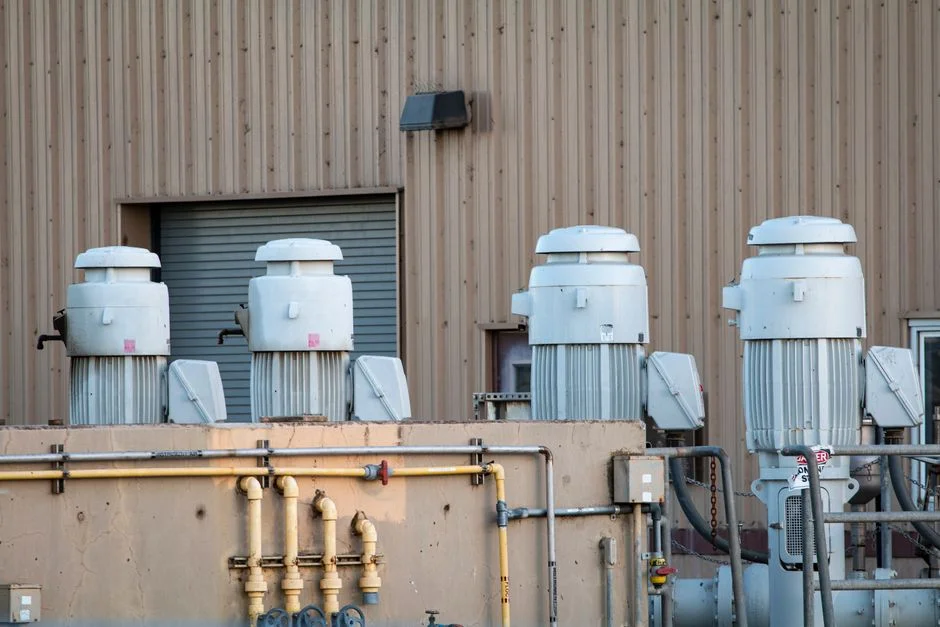
A defensible design separates hydraulic capacity from pollutant-removal capacity. Build cases for normal production, peak production, batch dumping, shutdown and clean-in-place events. A system may pass the peak flow calculation yet fail when a concentrated batch produces a pollutant load beyond its treatment capacity.
Use equalisation to smooth shock loads before DAF or biological treatment. Where justified, add flow controls or intermediate storage, then check the resulting operating sequence with the production team. The automatic chemical dosing system should be selected from measured flow, dose requirements and control logic rather than fitted only to tank volume.
Cross-check every quoted flow against duty, recovery, redundancy and maintenance strategy. The DAF, MBR and UF catalogue ranges are selection boundaries, not universal sizing answers. For reuse, size the polishing train against simultaneous demand and recovery requirements rather than the average discharge rate alone.
Solids management must be designed at the same time as liquid treatment. A plate-frame filter press may be evaluated for dewatering sludge or chemical residues, but the selected arrangement still depends on residual characteristics, expected solids yield and the disposal route.
| Sizing check | Required comparison | Decision output |
|---|---|---|
| Hydraulic peak | Peak event flow against treatment and equalisation capacity | Confirmed peak-handling arrangement |
| Pollutant peak | Concentration and mass load against removal capacity | Confirmation that hydraulic adequacy also provides treatment adequacy |
| Batch dumping | Discharge volume, rate and composition | Storage, flow control or pretreatment decision |
| Duty and recovery | Operating hours, recovery and maintenance outages | Duty/standby and redundancy strategy |
| Reuse demand | Simultaneous demand against polishing output | Reuse-train capacity and storage requirement |
Plan compliance, sludge and delivery for Kota Kinabalu
Supplier proposals should state the intended duty, process assumptions, treated-effluent objectives, instruments, control philosophy, testing scope and performance documentation for the actual project basis. A treatment-tank price without these items is not comparable to a complete ETP scope.
Confirm current Malaysian discharge and sewer requirements with the relevant authorities. The supplied research identifies the Department of Environment for industrial dischargers and SPAN’s oversight role in public sewerage, but it does not provide project-specific numerical limits (Mobility Foresights, Malaysia Wastewater Treatment Market, updated October 2026). Do not use a market report as a substitute for the applicable permit or approval.
Specify how DAF skimmings, biological sludge and chemical residues will be collected, stored, dewatered and disposed of. A stable treated effluent does not eliminate residual management, and residual costs can alter the whole-life comparison between treatment routes.
Equipment access and maintenance also need to reflect continuous operation in Malaysia’s high-humidity climate. The 2026 Malaysian equipment guide notes the need for equipment that withstands continuous high-humidity operation and discusses logistics to industrial sites in Kota Kinabalu (Totalmas, Key Equipment for Effluent Treatment Plant, 2026). Require evidence for site delivery, installation access, spare-parts holding and maintenance response.
Mobility Foresights’ October 2026 market outlook identifies Kota Kinabalu among centralised sewerage-project locations and anticipates demand for membranes, reuse and compact plants. That market signal can support supplier discussions, but it does not validate a specific process, equipment price, delivery period or regulatory limit.
Questions to ask before awarding an ETP supplier
The strongest comparison uses one verified design basis for every bidder. Give each supplier the same verified flow, wastewater-characterisation, reuse and residual-handling information, then require calculations against that common basis.
Request the proposed process flow, hydraulic calculations, equipment sizing basis, control narrative, duty/standby strategy and commissioning acceptance criteria. Treatment objectives should identify every parameter supported by the wastewater analysis and permit route; generic regulatory claims or unsupported guarantees should be rejected.
Also define commercial scope clearly. Confirm installation, commissioning, training, maintenance, spare parts, warranty and long-term consumables. This allows the ETP technology and sizing guide to be used as a procurement structure without treating another city’s project or conditions as a Kota Kinabalu design.
| Document to request | What the buyer should verify | Commercial implication |
|---|---|---|
| Design basis and wastewater analysis | Same flow, loads, batch events and reuse demand used by all bidders | Prevents non-comparable equipment pricing |
| Process and sizing calculations | Hydraulic and pollutant-load checks, recovery, duty and standby | Shows whether the selected train is technically adequate |
| Control and commissioning plan | Instruments, automation, testing and acceptance criteria | Defines handover and performance risk |
| Residual and local-service scope | Skimmings, sludge, chemicals, commissioning, training, spares and support | Exposes omitted whole-life costs |
Frequently Asked Questions
How much does an industrial effluent treatment plant in Kota Kinabalu cost?
A responsible price cannot be quoted from the location or target keyword alone. Request quotations using verified average and peak flow, wastewater concentrations, the discharge or reuse endpoint, site constraints and residual-handling requirements. Ask each bidder to separate equipment, civil works, installation, commissioning, controls, chemicals, energy, maintenance and residual disposal. This lets procurement compare whole-life scope without inventing a project price or relying on generic market figures.
How should an ETP supplier be selected and sized in Kota Kinabalu?
Shortlist suppliers by asking for a project-specific design basis, process calculations, equipment data, control narrative and commissioning criteria tied to the same verified wastewater information. As a sizing and delivery check, request the intended operating duty, recovery, redundancy approach, local installation scope, commissioning support, warranty, spare-parts plan and East Malaysia service evidence. The relevant check is whether the supplier can demonstrate the proposed train against the project envelope—not simply whether it offers the largest catalogue unit.
Are DAF, MBR, UF and reverse osmosis interchangeable technologies?
No. DAF is a physical separation stage for floatable material such as oil, grease and FOG. MBR combines biological treatment with membrane solids separation. UF provides fine membrane filtration for polishing or pretreatment, while reverse osmosis is a more advanced separation process that requires an explicitly defined feed-water and recovery design. The correct sequence depends on wastewater characterisation and the required final quality.
Why can’t a campus sewage treatment plant be used directly to design an industrial ETP?
An industrial ETP must address production variability, batch discharges and trade contaminants that may not occur in campus sewage. The UMS study compared peak and non-peak conditions and found generally higher TSS, BOD, COD and oil and grease during peak use, with a sudden increase also observed (Bolong et al., 2022). Its 80% BOD removal result belongs to that campus system and does not demonstrate equivalent performance for factory wastewater.
Does the 2026 Malaysian wastewater market outlook determine an ETP price or discharge limit?
No. Mobility Foresights’ market outlook, updated October 2026, estimates broader market growth and identifies equipment and reuse trends, but it is not a project-specific equipment-price source, design standard or permit. Use it for commercial context only. Obtain current discharge conditions from the relevant authorities and require suppliers to price the verified project scope, including local delivery, commissioning, residuals, training and long-term operating support.