Package Wastewater Treatment Plant Kazakhstan Cost Drivers
The package wastewater treatment plant Kazakhstan cost for a 1–80 m³/h unit is usually $1.2M–$5M in capital expenditure. Operating cost is $0.15–$0.30/m³. Municipal payback is often 5–7 years, or 3–5 years with industrial reuse.
These bands exclude land, power, and permit fees. Price the skid as equipment plus a standard install, then add site preparation at $50–$100/m² as its own line. Custom civil plants in the 100–1,000 m³/h class are listed here at $10M–$50M, and some notes also use $10M+ once the duty leaves the package band. Package bids in this file cut capital by 30% against a one-off plant of similar flow. Across a wider bid set the stated saving is 30-70%.
Most town schemes we size, serving under 16,000 people, land in the lower half of $1.2M–$5M when power is already at the fence. A buried tank cuts the winter heat load again. Mining and food sites often pay toward the top of the band because fats, grit or salts need a pre-treatment stage. Hold the package wastewater treatment plant Kazakhstan cost against the city-loan figures below before you scale a skid price up to a 100,000 m³/day works.
What the $1.2M–$5M Quote Leaves Out
The $1.2M–$5M band is not a turnkey city. It does not buy a new 35 kV feed, a long outfall, or lagoon closure. Permitting for a repeat package design is 3–6 months in this guide, against 6–12 months for a bespoke works. Operator training is about 1 week, not 4+ weeks. Those three lines move the cheque even when the skid price is firm.
Component prices for a small solar-powered kit are a different page. Use compact wastewater treatment unit component costs solar pump uv esp32 kazakhstan pricing only when the duty is that compact unit, not a 1–80 m³/h package plant.
A worked estimate for a 20 m³/h town plant starts in the low-to-mid package band, then adds the pad. At 10–15 m² of equipment area the skid itself is small, but the road and the fence often triple the disturbed ground. Power at 0.3–0.6 kWh/m³ on A/O duty should be priced at the local tariff before anyone quotes a 5–7 year payback.
Sludge hauled at 20% solids is a separate contract, and it grows when the press is undersized. Chemical spend for pH trim and disinfection stays inside $0.15–$0.30/m³ only when dosing is light. Food plants and oily industrial feeds usually sit above that floor. Put those two lines in the model before you compare suppliers on capital alone.
Package WWTP CAPEX Kazakhstan 2025 by Flow Band
Package WWTP CAPEX Kazakhstan 2025 for a 1–80 m³/h unit stays in the $1.2M–$5M band in this guide, while a full city works is a separate budget. The table keeps the earlier Taraz figure of $45M at 100,000 m³/day. A later feasibility note states about EUR 70 million for that same daily capacity.
Read the rows as bands with a duty attached, not as a single tender price. OPEX for the package band is $0.15–$0.30/m³ of treated water, while custom plants in the file run $0.25–$0.50/m³. Energy, chemicals, labor and sludge haul sit inside both ranges. Membrane replacement is extra on an MBR train and is not a flat add-on for an A/O skid.
| Cost Category | Package WWTP (1-80 m³/h) | Custom-Built WWTP (100-1,000 m³/h) | Notes |
|---|---|---|---|
| CAPEX (Initial Investment) | $1.2M – $5M | $10M – $50M | Taraz WWTP (100,000 m³/day) cost $45M (EBRD data) |
| OPEX (Per m³ Treated) | $0.15 – $0.30/m³ | $0.25 – $0.50/m³ | Includes energy, chemicals, labor, sludge disposal |
| Permitting Timeline | 3 – 6 months | 6 – 12 months | Faster approval for standardized package designs |
| Site Preparation Cost | $50 – $100/m² | $200 – $400/m² | Less extensive civil works required for package plants |
| Labor Training Duration | 1 week | 4+ weeks | Simpler operation, less specialized training needed |
| Typical Payback Period | 3 – 7 years | 7 – 15+ years | Faster ROI due to lower CAPEX and operational efficiencies |
OPEX, Site Works and Payback
Municipal payback in the prose notes is 5–7 years. The table widens package payback to 3–7 years so industrial reuse jobs at 3–5 years stay inside the same row, while custom works are shown at 7–15+ years. A 20% cut in water cost, where reuse is real, is what pulls an industrial job toward the short end. Do not apply that 20% to a town that still discharges and buys no reclaimed water.
Site prep at $200–$400/m² is the custom-plant figure, driven by heavy civil work. Package pads in this file average $50–$100/m². On winter sites we still see the heating circuit and the insulation thickness move OPEX more than the blower nameplate. Budget aeration power at 0.3–0.6 kWh/m³ for A/O and 0.5–1.0 kWh/m³ for MBR before you lock the tariff.
City Loans Are Not a Package Price
According to the EBRD procurement notice published on 9 January 2025, a proposed Kazakhstan WWTPs Modernisation Framework (project 53954) is KZT 150 billion (EUR 300 million) of senior loans. The loans fund construction or full modernisation of treatment plants and associated works to national and EU standards. Finance is either sovereign or backed by a sovereign pledge, or an unsecured senior loan with a project support agreement. This guide still notes that EBRD, ADB and state grants can cover 30–70% of cost on some schemes, but the framework figure is a loan envelope for many utilities, not a grant rate and not a skid price.
According to the EBRD Karaganda board document approved on 7 May 2025, the loan to Karaganda Su LLP is up to KZT 50.3 billion (EUR 93 million) under sovereign backing. Karaganda Region is to add KZT 6 billion (EUR 11 million) to cover VAT. The report's rate as of 14 January 2025 is EUR 1 = KZT 541, and the loan tenor is 15 years. The same document says local commercial banks do not offer this tenor to municipal companies for a works of this size.
Blended concessional finance on that Karaganda sheet is listed as none, and that line is Karaganda only. Do not read it as a cancellation of grant language in the older Taraz note. A buyer comparing a package bid with an IFI city loan should keep the two cheque sizes on different lines. The skid band remains $1.2M–$5M. The city loan is tens of billions of tenge.
Earlier notes on this page cited 69 new plants from EBRD data. According to that 7 May 2025 board document, the Government initiated in 2019 a countrywide programme aimed to upgrade 68 facilities. The Bank signed its first operation under that programme for Aktobe in March 2024. Keep both counts: 69 was the earlier project note, and 68 facilities is the wording in the 2025 board text.
Why Package Plants Still Fill the Gap
Kazakhstan's 2019 programme, as restated by EBRD in the Karaganda report, targets an upgrade of 68 facilities rather than a clean sheet of new cities only. The older note of 69 new plants remains background. Aktau's outskirts plant is described in this file as unfinished, with about 50% of households left without working treatment. Taraz's works, commissioned in 1984, is recorded here at 17.7 million m³/year and as missing current limits, which is why a fast package line still gets specified beside the big EBRD builds.
A package plant in this guide is installed and commissioned in 6–12 months, while a custom civil plant is shown at 3–5 years. Where a lagoon is already failing, that gap of years is the reason the skid is chosen. Most replacement jobs we see on small networks cannot wait out a full ESIA cycle before the first train runs. City-scale EBRD plants follow a different clock, including a 120-day disclosure on Category A schemes.
Compliance Pressure on the Same Clock
SanPiN 2.1.5.980-00 is the effluent set used throughout this guide. BOD5 is carried as below 15 mg/L, tighter than an older limit of below 25 mg/L. The file also states fines up to 5% of annual revenue under the Kazakh Environmental Code 2023 for a miss against those standards. A plant that only hits the old 25 mg/L BOD5 line is not a compliant offer under the limits used here.
Technical Specifications for Climate and SanPiN 2.1.5.980-00
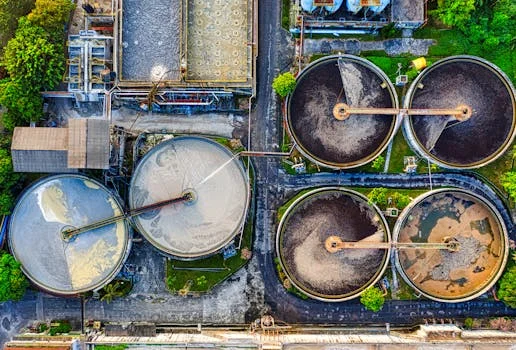
Package plants in this guide are sized to the SanPiN 2.1.5.980-00 set for more than one influent. The working limits used here are TSS below 10 mg/L, BOD5 below 15 mg/L, COD below 50 mg/L and NH4-N below 1 mg/L. Reported COD removal on the package duty is 92–97% when the influent matches the design load. Capacity splits into 1–80 m³/h for towns of 200 to 16,000 people, and 50–500 m³/h for larger industrial duty in mining, oil and gas, or food plants.
A/O, MBR and DAF Removal
A/O trains in this file typically remove 90-95% of BOD5 and TSS, and 70-80% of nitrogen. MBR trains are listed at more than 98% BOD5 and TSS removal and more than 90% COD removal, with strong pathogen reduction. DAF, used as industrial pre-treatment, is listed at 80-95% TSS and FOG removal. Pick MBR when the plot is tight and the permit is at the floor of those limits. Pick A/O when power price dominates and the permit still has margin.
For a buried municipal duty, the Underground Package Sewage Treatment Plant (WSZ Series) is the usual A/O package in this range. Where the permit is tight, MBR systems for high-efficiency wastewater treatment in Kazakhstan are the compact alternative. Do not stack both on a small town flow unless a pilot has shown the A/O line missing NH4-N of 1 mg/L.
Footprint, Power and -30°C Operation
Footprint in this guide is 0.5–2 m² per m³/h of capacity. A 20 m³/h WSZ-class plant occupies about 10–15 m² including access. Municipal packages trend toward 0.5–1.0 m²/m³h, and industrial lines with heavier pre-treatment trend toward 1.0–2.0 m²/m³h. The design air temperature is -30°C to +40°C.
Insulation, heating coils on aeration tanks, and cold-rated pumps are the usual winter kit. A buried tank uses ground cover and often needs less coil heat than a steel tank in the wind. Most steppe plants we size run A/O power at the lower end of 0.3–0.6 kWh/m³ once the tank is below grade and the influent is not ice-cold for months. MBR stays higher, at 0.5–1.0 kWh/m³, because of membrane scour and filtrate pumps.
PLC control is standard on both classes. Under 50 m³/h the file allows about 0.5 FTE per shift, taken from WSZ-series duty notes. That labor saving is real only if spare parts and a remote alarm path exist. A PLC with no local technician becomes a call-out, not a saving.
| Parameter | Municipal/Community Package Plant (e.g., WSZ Series) | Industrial Package Plant (e.g., MBR System) |
|---|---|---|
| Capacity Range | 1–80 m³/h (200–16,000 PE) | 50–500 m³/h |
| Effluent Quality (SanPiN 2.1.5.980-00) | TSS <10 mg/L, BOD5 <15 mg/L, COD <50 mg/L, NH4-N <1 mg/L | TSS <10 mg/L, BOD5 <15 mg/L, COD <50 mg/L, NH4-N <1 mg/L |
| Typical Footprint | 0.5–1.0 m²/m³h (e.g., 20 m³/h plant = 10-15 m²) | 1.0–2.0 m²/m³h (more complex pre-treatment) |
| Energy Consumption | 0.3–0.6 kWh/m³ (A/O) | 0.5–1.0 kWh/m³ (MBR) |
| Operating Temperature Range | -30°C to +40°C | -30°C to +40°C |
| Automation Level | PLC-controlled, low operator input (0.5 FTE for <50 m³/h) | Full PLC automation, remote monitoring, reduced labor |
Compliance Checklist for SanPiN 2.1.5.980-00
SanPiN 2.1.5.980-00, titled in this guide as sanitary rules for protecting surface water, is the limit set applied to every discharge case below. The numbers are TSS below 10 mg/L, BOD5 below 15 mg/L, COD below 50 mg/L, NH4-N below 1 mg/L, and pH 6.5–8.5. A package offer for Kazakhstan should show those five on the process commitment, with the influent range written beside them. A removal percentage without the influent concentration is not a compliance commitment.
- Total suspended solids (TSS): <10 mg/L
- Biochemical oxygen demand (BOD5): <15 mg/L
- Chemical oxygen demand (COD): <50 mg/L
- Ammonium nitrogen (NH4-N): <1 mg/L
- pH: 6.5–8.5
Industrial Rules, Sensors and Sludge
Mining duty in this file follows the Rules for Water Use in Mining (2022) and often asks for more than 90% TSS removal, sometimes with metals removal on top. Food plants, under SanPiN 2.3.2.1078-01 in these notes, usually need disinfection by chlorine dioxide or UV. Mining and oil pre-treatment often starts with DAF systems for industrial pre-treatment in Kazakhstan's mining and oil sectors before the biological tanks. That DAF step is aimed at the 80-95% TSS and FOG band, not at nitrogen.
Plants above 50 m³/h in this guide are expected to carry online pH, TSS and flow, calibrated and reported. Sludge under SanPiN 2.1.7.1322-03 must reach at least 20% solids before landfill haul or further treatment. A plate-and-frame press is the usual tool for that cake. Without a press, liquid sludge haul will erase the OPEX advantage of a small skid.
Permits go to the local Akimat and the Ministry of Ecology. Standardized packages in the file clear that path in 3–6 months. The design file still has to show influent, the outfall, and the sludge route. A permit is written to the outfall, so design to the tighter of the catalogue limit and the site permit.
EBRD city plants add a second layer. The Karaganda project is Category A, with a new works at 500,000 population equivalent, anaerobic digestion, and combined heat and power. The board text says the line is to meet national and EU requirements, including biological nutrient removal. The stated rivers of concern are the Sokur, the Intumak reservoir and the Nura.
The ESIA package was disclosed on 29 February 2024 for 120 days, in English, Kazakh and Russian. National ecological expertise returned a positive conclusion in December 2023. A package supplier on an EBRD job should expect that disclosure rhythm, not a six-week equipment purchase. Budget owner time for those reviews inside the 6–12 month package clock only if the scheme is truly a package, not a Category A city plant.
Supplier Questions Before You Award
Award the supplier who can hit your influent, your winter, and a spare-parts clock inside Kazakhstan. The ten questions below are the ones that change price and risk. A glossy removal claim that skips -30°C is not a complete bid. Ask for the heating schedule before you compare capital cost.
- Technical compliance. Does the plant meet SanPiN 2.1.5.980-00 on your influent, with BOD, COD, TSS and the industrial pollutants named? Ask for a pilot, a calculation, or a plant on similar water.
- Climate. What runs at -30°C? Require insulation, heat on biological tanks and pipework, and cold-rated pumps and PLC enclosures.
- Local support. Is there a service point or a named technician in Kazakhstan, in Almaty, Nur-Sultan (Astana) or Atyrau?
- Industrial water. Can the line take high TDS or mining contaminants? Ask how DAF or reverse osmosis would be added, and who warranties the interface.
- Training. Is training on site or remote, how many days, and is it in Kazakh or Russian?
- Warranty. Benchmark at least 2 years on membranes and electrical parts, and 5 years on structure. Get the exclusion list in writing.
- A plant you can visit. Ask for an operating site in Kazakhstan. This file cites a 30 m³/h oilfield plant in Atyrau as one reference to request.
- Spares. Are membranes, blowers and pumps stocked locally, or imported, and what is the lead time in weeks?
- Papers. Are SanPiN test reports, CE or ISO certificates, and manuals supplied in Russian or Kazakh?
- Growth. Can you add MBR modules to a WSZ-class line, or add a second train, without a new civil footprint?
| Evaluation Category | Key Questions for Suppliers | Benchmark/Expectation |
|---|---|---|
| Technical Compliance | Does the plant meet SanPiN 2.1.5.980-00 for our influent? | Proof of concept, pilot data, or references for similar influent. |
| Climate Resilience | What measures for -30°C operation? | Insulated tanks, heated components, robust material selection. |
| Local Support | Service center in Kazakhstan? | Presence in Almaty, Nur-Sultan, or Atyrau for rapid response. |
| Customization | Can it handle high TDS/industrial waste? | Integration options for DAF, RO, or specific pre-treatment. |
| Operator Training | What training is included? | On-site, multi-day training in local language(s). |
| Warranty | Warranty for membranes, pumps, PLCs? | 2 years for membranes, 5 years for structural components. |
| References | Can we visit a similar installation? | At least one operational reference site in Kazakhstan. |
| Spare Parts | Are parts available locally? | Local stock or contracted short lead times for critical parts. |
| Documentation | SanPiN compliance certificates provided? | Full set of test reports, certifications, and manuals. |
| Scalability | Can the plant be expanded later? | Clear modular expansion strategy (e.g., adding modules). |
What to Send with the Enquiry
A usable enquiry states average and peak flow in m³/h and m³/day, plus influent BOD5, COD, TSS, NH4-N, FOG and TDS. Population alone is not a design basis. Name the receiver as surface water, a city sewer, or reuse, and state the winter case at -30°C and whether the tank is buried. Those four facts decide process and heat load.
Also state sludge at a minimum of 20% solids and the haul distance. Give the power price and a preference for A/O or MBR, because the gap between 0.3–0.6 kWh/m³ and 0.5–1.0 kWh/m³ changes payback. Say who pays, owner cash or an IFI loan, because EBRD procurement rules are not the same as a private purchase order.
Taraz Lessons and What Not to Copy
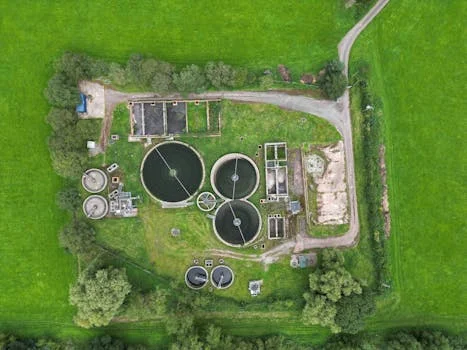
The Taraz file on this page is a large municipal scheme, not a single 20 m³/h skid. It records a 1984 works, influent BOD5 as high as 250 mg/L, and a city above 400,000 residents. The modernisation note here uses a hybrid of A/O units and DAF pre-treatment. Several 80 m³/h modules are described as adding up to 100,000 m³/day.
Reported results are over 95% BOD5 removal and 90% TSS removal, inside the SanPiN 2.1.5.980-00 limits used in this guide. The same note cites a 20% cut in water cost in an EBRD post-project comment. It also cites a 6-year payback helped by grant funding, about 1 week of operator training, and about 40% lower labor cost after PLC control.
Keep the $45M figure in the cost table as the earlier EBRD-labelled number for that 100,000 m³/day scheme. According to CECT's feasibility-study note for EBRD and SCE Zhambyl Su (April 2023 to December 2024), capex is about EUR 70 million. That note keeps the capacity at 100,000 m³/day and aims at local and EU standards, inside the national programme. Use EUR 70 million as the later feasibility figure. Do not delete $45M, and do not treat either number as the price of one package module.
What a Small Plant Can Copy
Copy phased installation, a short local training week, and PLC coverage that actually cuts shifts. Do not copy a city budget onto an 80 m³/h module. One module is not 100,000 m³/day. The module count is how the file explains the city flow, not a price list you can multiply by $1.2M.
Karaganda is a second, separate case. The existing works treat about 95,000 m³/day for a city of about 500,000 people. The 1969 plant is judged not worth rebuilding. The new works is sized at 500,000 population equivalent, with digestion and biogas power. The board text also notes that other utilities still hesitate because of high cost and harsh winters. That hesitation is a heat-load question. Answer it with insulation and coil duty at -30°C, not with a slogan.
Who This Cost Guide Is For
Use this page if you buy or specify a package plant from 1–80 m³/h, or an industrial package up to 50–500 m³/h, and you need capital, power and permit bands before a tender. Municipal engineers, EPC estimators and industrial owners on mining, oil or food sites are the readers. The SanPiN numbers, the winter range and the supplier questions are the decision tools.
Look elsewhere if the job is a full city works near 95,000 m³/day or 500,000 population equivalent. Those follow EBRD Category A rules, a sovereign loan and a design-build contract, as on the Karaganda sheet. Also look elsewhere if you only need a parts list for a tiny solar kit. That scope is the linked component page, not this cost band.
Next step for a package duty: send design flow, influent BOD5 and the discharge point with a sized equipment inquiry. Keep civil works, power and sludge haul as separate lines so the $1.2M–$5M band is not asked to carry them.
Frequently Asked Questions
What does a 1–80 m³/h package plant cost to install in Kazakhstan?
A 1–80 m³/h package plant is usually installed for $1.2M–$5M, before land, a new power feed and permit fees. Operating cost on that band is $0.15–$0.30/m³, covering energy, chemicals, labor and sludge haul. Municipal payback is often 5–7 years, while industrial reuse jobs often return in 3–5 years. A city plant such as Taraz is a different budget: this page records $45M, and the feasibility note states about EUR 70 million at 100,000 m³/day.
What should a bid allow for package wwtp capex kazakhstan 2025?
For 2025 bids, package-plant capital cost in the 1–80 m³/h band remains $1.2M–$5M in this guide. That figure is equipment and a standard install, not an EBRD city loan. Karaganda's sovereign-backed loan is up to KZT 50.3 billion (EUR 93 million) for a new plant at 500,000 population equivalent. The national framework noticed on 9 January 2025 is KZT 150 billion (EUR 300 million) for many utilities, so do not paste those city totals onto a package skid.
How do package plants keep biology alive at -30°C?
Plants in this guide are specified for -30°C to +40°C with insulated tanks, heating coils, and cold-rated pumps. A buried tank usually needs less coil heat than an exposed steel tank. Ask for coil duty at -30°C, not a summer removal rate, because most winter failures we see are on pipe heat trace. Price that heat in the winter tariff before you trust a 5–7 year payback.
What payback is realistic for an industrial user?
Industrial package plants in this file are shown at a 3–5 year payback when reuse cuts freshwater purchase and fines are avoided. The table shows package payback at 3–7 years, municipal service without reuse often at 5–7 years, and custom plants at 7–15+ years. A 20% water-cost cut is cited for the Taraz upgrade, not as a default for every factory. Check the result against OPEX of $0.15–$0.30/m³ and your own power tariff.
Which rules set TSS, BOD5, sludge solids and fines?
This guide applies SanPiN 2.1.5.980-00 at TSS below 10 mg/L, BOD5 below 15 mg/L, COD below 50 mg/L, NH4-N below 1 mg/L and pH 6.5–8.5. Sludge follows SanPiN 2.1.7.1322-03 at a minimum of 20% solids. Food notes cite SanPiN 2.3.2.1078-01, and mining notes cite the 2022 rules, often above 90% TSS removal. Fines are stated at up to 5% of annual revenue under the Environmental Code 2023, so confirm the live outfall permit.