Decide whether Miami needs a package plant or a sewer connection
A packaged sewage treatment plant can fit a Miami housing development when the site lacks a workable Miami-Dade WASD sewer connection and the discharge can be legally permitted. HydropureWater’s 2025 Florida guide identifies package plants in the approximately 1–80 m³/h range and identifies buried A/O units as a practical option for residential communities. For tighter nutrient limits or reuse, an MBR may be preferable; the guide reports about 99% BOD removal for MBR versus 90–95% for standard extended aeration under stable domestic loading. Final selection requires peak-flow analysis, discharge criteria, flood design, PE-sealed documents and a comparison with sewer-extension costs.
The first engineering decision is not which treatment unit to buy. It is whether a municipal connection is available, feasible and economically preferable. Miami-Dade WASD provides a Utilities Information Request that can identify available water and sewer infrastructure and the estimated distance to a connection. For a main extension, sewer lateral, private pump station or first-time service, the developer may also need a WASD Service Agreement.
Do not treat the absence of a lateral at the property boundary as proof that sewer service is unavailable. Miami-Dade WASD states that all first-time connections, new construction, changes of use and most residential or commercial renovations must be evaluated and approved by WASD. Ask the utility to define the point of connection, development-review requirements, service-agreement conditions and the capacity available at the proposed connection.
A decentralized system becomes credible when no workable main exists, an extension is not technically or economically feasible, or the development specifically requires decentralized sewage treatment. Even then, compare the municipal route using total installed cost, impact fees, easements, pumping, schedule, long-term service charges and utility relocation—not just the package-plant equipment quotation. The broader decision structure is:
| Condition | Engineering response | Commercial comparison |
|---|---|---|
| WASD confirms an available connection with acceptable capacity and schedule | Develop the municipal-service option to the point of an extension and service-agreement estimate. | Compare impact fees, extension work, easements and service charges with the onsite alternative. |
| No main is available, or extension feasibility remains unresolved | Advance a preliminary onsite design basis while the utility inquiry continues. | Carry municipal and onsite alternatives as separate scenarios; do not consolidate unverified assumptions. |
| No workable connection exists and discharge is legally achievable | Develop a permitable package-plant concept and phased capacity strategy. | Compare complete installed scope, permitting, operating cost and renewal risk with the extension. |
| Discharge route or treatment criteria cannot be met | Revise the discharge strategy or site concept before selecting equipment. | Treat equipment procurement as premature until the compliance path is established. |
A useful preliminary process comparison is available in the buried A/O and MBR comparison for housing developments, but its treatment discussion must be applied only after Miami service availability and discharge obligations are resolved.
Build a preliminary sizing basis for the development
The Miami Gardens master plan’s 100-gallons-per-capita-per-day sanitary-sewer user level of service is a preliminary planning input, not a universal package-plant design rule. The City of Miami Gardens Comprehensive Development Master Plan, Infrastructure Element, dated December–September 2016, states that user level of service; because the document is from 2016, current confirmation is required before it enters the design basis.
Use the expected resident population and unit mix to develop an initial average wastewater estimate. Then calculate peak-hour and peak-day conditions separately. These peaks may govern biological loading, equalization volume, storage, pump capacity and standby power rather than average flow alone. The project schedule should distinguish occupancy at initial certificate of occupancy from later build-out phases.
- Establish the population and unit program, including apartments, clubhouses and any mixed-use occupancy.
- Develop the sanitary water balance, including pools, laundry, landscaping irrigation and commercial uses that discharge to sewer.
- Apply the preliminary planning flow rate, then document the current local basis selected by the Florida PE.
- Derive average, peak-hour and peak-day wastewater flows without treating the per-capita value as the hydraulic design conclusion.
- Characterize the influent and test whether the selected process has adequate loading, equalization and storage response.
- Match the selected train to the first development phase while reserving space for future modules and reviewing permit consequences of expansion.
The wastewater characterization request should cover BOD, suspended solids, nitrogen, phosphorus, pH, salinity or chloride, conductivity, and fats and oils where relevant. Coastal groundwater, infiltration, pool makeup and seawater intrusion can change process performance and corrosion assumptions. The engineer should also establish whether water and wastewater flows are balanced or whether separate metering and infiltration controls are needed.
HydropureWater’s 2025 Florida guide places package plants at approximately 1–80 m³/h. That is a screening range for pre-engineered onsite systems, not a recommendation for the development. An underground integrated sewage treatment plant may be relevant for screening, but equipment selection should follow confirmed hydraulic, process and regulatory inputs.
| Design-basis item | Preliminary information | Confirmation required before procurement |
|---|---|---|
| Average wastewater flow | Population and unit program with the Miami Gardens planning input only as an initial screen | Current local basis and Florida PE-approved sanitary flow calculation |
| Peak flow and storage | Occupancy phases, peak-hour and peak-day assessment | Diurnal and seasonal data, equalization calculation and off-line storage decision |
| Wastewater quality | Expected domestic-strength wastewater | BOD, suspended solids, nitrogen, phosphorus, pH, salinity or chloride, conductivity and relevant fats and oils |
| Package capacity | HydropureWater’s 2025 screening range of approximately 1–80 m³/h | Manufacturer-rated hydraulic and process capacity with peak and expansion criteria |
| Expansion | Initial and final occupancy scenarios | Reserved expansion area, modular sequencing, equalization impact and permit-modification review |
Phasing can reduce excess initial capacity, but it also creates a future compliance decision. Require the civil engineer and PE to show how additional trains, increased influent strength, standby equipment and changed discharge quality will be handled when occupancy grows.
Compare buried A/O and MBR systems for Miami sites
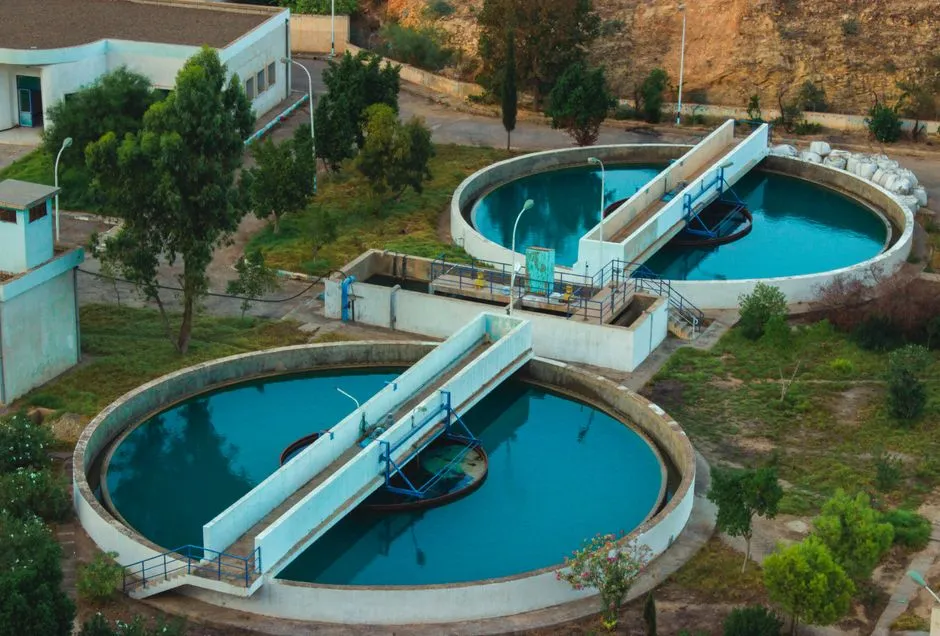
Buried A/O and MBR systems should be selected against the discharge quality, available footprint, expansion sequence and operating burden—not by treating one as universally superior. Buried A/O treatment combines anoxic and aerobic biological contact oxidation, sedimentation and disinfection in a packaged unit. An underground integrated sewage treatment plant can preserve usable surface area when setbacks, landscaping and access requirements constrain above-ground construction.
HydropureWater’s 2025 Florida guide reports that standard extended aeration typically achieves 90–95% BOD removal under stable domestic loading. The same guide reports that MBR can reach approximately 99% BOD removal. That higher removal is relevant where the project needs tighter solids separation, a higher-quality effluent or a potential reuse path. An MBR sewage treatment system should nevertheless be evaluated for membrane maintenance, operator requirements and expansion sequencing.
Where advanced waste treatment applies, Florida Statute 403.086 specifies annual-average limits of CBOD5 at or below 5 mg/L, suspended solids at or below 5 mg/L, total nitrogen at or below 3 mg/L and total phosphorus at or below 1 mg/L, according to HydropureWater’s 2025 Florida guide. The guide also states that county or discharge-specific limits may be tighter. These values are not a substitute for the actual permit applicable to the discharge point.
| Selection factor | Buried A/O package plant | MBR system |
|---|---|---|
| Treatment emphasis | Compact combined biological treatment, sedimentation and disinfection | Higher-quality solids separation and reuse potential |
| Reported BOD performance | Standard extended aeration typically 90–95% under stable domestic loading, per HydropureWater’s 2025 guide | Approximately 99%, per HydropureWater’s 2025 guide |
| Site footprint | Potentially suited to buried installation where soil, groundwater, excavation and access conditions permit | Requires additional equipment, process areas and maintenance access |
| Operating consideration | Evaluate media, aeration, sludge removal, odor control and access | Evaluate membrane cleaning, replacement, instrumentation and specialist support |
| Expansion | Phase trains while retaining expansion and equalization space | Phase membranes and related equipment while confirming process and permit effects |
| Coastal operating risk | Assess salinity, conductivity, corrosion and nitrification performance | Assess the same constraints plus membrane and mechanical maintenance exposure |
HydropureWater’s 2025 guide notes that coastal salinity can slow nitrifiers. Review chloride and conductivity early rather than accepting a process guarantee based only on brochure BOD claims. Ask each supplier to demonstrate how the proposed process performs with the expected salinity and wastewater profile, how nutrient limits are monitored, and what operating data the owner must maintain.
Design the Miami site for flooding, corrosion and service access
Flood protection must be defined by site elevation and local requirements, not by treating a generic Florida hardening note as the engineering design. Specify flood-proof enclosures, elevated electrical and control equipment and submersible components where the design flood elevation, hydrogeology and applicable requirements justify them. The site plan should show finished grade, flood elevations, tank or enclosure elevations, access routes and discharge structures.
HydropureWater’s 2025 Florida guide identifies NEMA 4X control panels and elevated critical equipment as standard practice for Gulf and Atlantic sites, including South Florida. It also identifies flood-proof and submersible components as features that should be specified in the purchase documents rather than deferred to change orders. The MBR sewage treatment system scope should identify every enclosure, panel, pump, control and access point affected by flooding exposure.
Require the structural and electrical designer to state the applicable wind and flood criteria. HydropureWater’s 2025 guide includes ASCE 7-22 wind-load compliance among the supplier-selection checks, but the engineer must determine which edition and loading criteria are adopted by the authority having jurisdiction. Avoid purchasing equipment on a generic “Miami rated” label without drawings, calculations and defined elevations.
Corrosion protection should also be site-specific. The 2025 guide notes that stainless steel or HDPE wetted parts can have advantages over painted carbon steel in humid, salt-laden coastal air. The designer should evaluate wetted materials, external corrosion, fasteners, piping supports, coatings, odor-control provisions and maintenance practices as a coordinated system.
Maintenance access can determine whether an otherwise capable system is operable. Require clear access for sludge removal, media replacement, membrane work, sampling, effluent monitoring, odor control and safe working clearances. Confirm how trucks, vacuum equipment and replacement parts reach the facility during partial occupancy and after landscaping is installed.
Compare capital cost, permitting time and sewer-extension alternatives
Installed package-plant cost must include civil, structural, electrical and mechanical work; otherwise an equipment quotation is not comparable with a sewer alternative. HydropureWater’s 2025 Florida guide gives an installed benchmark of $50,000–$2,000,000+, or approximately $5,000–$25,000 per thousand gallons of daily capacity. That guide also reports Florida licensed plumbing and electrical labor at $85–$120 per hour and states that high-water-table and hurricane-pad work can add 15–20% to base equipment cost.
These figures support an initial budget range, not a project price. Capacity, treatment technology, nutrient limits, site conditions and scope allocation determine the actual result. A developer should request an itemized installed estimate identifying tanks or enclosures, pumps, aeration or membranes, controls, electrical service, odor control, site work, structural flood protection, commissioning, training, monitoring, permits and contingency.
The municipal alternative must be evaluated on the same basis: sewer extension, impact fees, easements, pump stations, utility relocation, roadway restoration and long-term service charges. HydropureWater’s 2025 guide describes sewer-extension pricing as commonly $150–$400 per linear foot, but that benchmark cannot be converted into a project estimate without the route, length, easements, pumping needs and current WASD charges.
| Cost and schedule item | Package-plant quotation to request | Sewer alternative to request |
|---|---|---|
| Infrastructure | Complete treatment train, equalization, controls, electrical and site work | Main extension, lateral, connection fees, easements and any pumping or relocation |
| Compliance | Engineering report, process calculations, drawings, O&M manual and permit-support responsibility | WASD development review, service agreement, application fees and capacity confirmation |
| Schedule | Permit review, fabrication, civil construction, commissioning and occupancy sequence | WASD review, easement acquisition, construction and connection schedule |
| Lifecycle | Power, chemicals, media or membranes, sludge removal, operator labor, monitoring and reserve equipment | Service charges, developer fees and obligations associated with downstream capacity |
| Risk | Approval conditions, flood performance, expansion constraints and performance guarantees | Route availability, construction disruption, approval timing and utility-capacity risk |
HydropureWater’s 2025 guide reports package-plant permitting at 90–180 days when drawings and setbacks are complete. Actual timing depends on application completeness and agency workload, so the schedule should remain conditional until the reviewing agencies confirm the route. The guide also provides additional budgeting context in its domestic sewage treatment buyer guide.
Do not award the contractor from the lowest equipment price. Allocate responsibility for membranes or media, pumps, controls, civil works, commissioning, training, permit support, startup support and warranty obligations in writing.
Obtain a permit-ready design package before ordering equipment
A permit-ready package must connect the selected process to the actual discharge location and phased development plan. Before finalizing capacity or treatment targets, confirm the permitting jurisdiction, receiving-water classification, discharge route and applicable FDEP and local requirements. The Florida PE must determine the relationship between the proposed facility, FDEP Chapter 62-600 and Florida Statute 403.086 advanced waste treatment requirements.
- Obtain the WASD Utilities Information Request and written confirmation of the point-of-connection review, service-agreement needs and municipal alternative.
- Identify the receiving water, discharge point, well, property lines, easements, setbacks, flood elevations and access route on the first site plan.
- Attach the Florida PE-sealed engineering report, process calculations, hydraulic calculations, structural information, O&M manual and site plans.
- Confirm whether the first permit phase reflects initial occupancy and whether later trains require permit modification or new review.
- Request a construction schedule, commissioning plan, remote-monitoring provisions, spare-parts plan and owner O&M cost estimate.
- Hold equipment procurement until the designer confirms that the process can meet the approved discharge criteria and phased-development plan.
The permit file should show the well and discharge point, property-line setbacks and easements from the first submission. HydropureWater’s 2025 guide identifies early site-plan completeness as a way to avoid a second FDEP comment cycle. It also states that a Florida-licensed PE must seal the engineering report and O&M manual.
The underground integrated sewage treatment plant procurement request should therefore include more than equipment dimensions. Require the final offer to state the design flow and loading basis, treatment guarantees tied to applicable criteria, electrical and flood criteria, structural drawings, control narrative, spare parts, commissioning obligations, O&M support and permit responsibility.
Frequently Asked Questions
What will a packaged sewage treatment plant cost for a Miami housing development?
HydropureWater’s 2025 Florida guide gives an installed package-plant benchmark of $50,000–$2,000,000+, subject to capacity, technology, nutrient limits and site extras. Request an itemized installed quote that includes civil work, electrical work, flood protection, controls, membranes or media, commissioning, training, permit support and O&M costs. Do not compare that figure with a catalog equipment price or a sewer extension unless the scopes are equivalent.
Should the design use 100 gallons per capita per day to size the plant?
No. The City of Miami Gardens Comprehensive Development Master Plan, Infrastructure Element, dated December–September 2016, states 100 gallons per capita per day as the sanitary-sewer user level of service. Use it only as a preliminary local planning input, obtain current confirmation and have the Florida PE calculate average, peak-hour and peak-day flows from the development program and wastewater characterization.
How should a Miami developer select a package-plant supplier?
Require Florida PE-sealed documentation, permit support, defined structural and flood criteria, a transparent scope of supply, equipment warranties and O&M support. Compare process performance under the expected wastewater characteristics rather than brochure BOD claims alone. For MBR systems, HydropureWater’s 2025 guide identifies remote monitoring and a five-year pro-rated membrane warranty among the checks to request.
How long will permitting take?
HydropureWater’s 2025 Florida guide reports 90–180 days for package-plant permitting when drawings and setbacks are complete. Treat that as a conditional benchmark because actual review depends on application completeness and agency workload. Confirm the reviewing authority, complete site-plan information and permit responsibilities in writing before relying on the schedule for a development milestone.
Which discharge limits apply to the housing development?
The applicable limits depend on the receiving water and the facility permit. Where advanced waste treatment applies, HydropureWater’s 2025 guide reports the Florida Statute 403.086 annual-average values as CBOD5 at or below 5 mg/L, suspended solids at or below 5 mg/L, total nitrogen at or below 3 mg/L and total phosphorus at or below 1 mg/L. County or discharge-specific requirements may be tighter, and the Florida PE must confirm applicability.
Related Equipment
- MBR sewage treatment system — specifications, capacity range, and technical data