
Determine which pretreatment rules control the discharge
Plastics and rubber plants near Painesville meet pretreatment limits by mapping each process waste stream to the correct categorical subcategory, identifying the local Control Authority, and complying with the most stringent applicable requirement. Federal rules generally include 40 CFR Part 403, Part 414 for plastics and resins, and Part 463 for rubber manufacturing, but the current POTW permit and local limits must be confirmed. In practice, plants characterize oil and grease, TSS, BOD, COD, pH, and relevant priority pollutants; treat emulsified polymer streams with DAF; add biological treatment or MBR where needed; and prove compliance through the permit’s designated sampling point, monitoring frequency, reporting schedule, and pass-through and interference prohibitions.
The Control Authority is the POTW when it has an EPA-approved pretreatment program; where no approved POTW program exists, it is the Approval Authority (U.S. EPA, “Pretreatment Standards and Requirements—Applicability”). It identifies applicable standards, issues or administers the individual pretreatment permit, and applies the most stringent requirement when several provisions apply. EPA identifies three enforceable classes: general and specific prohibitions, categorical pretreatment standards, and requirements that may include local permit provisions and best management practices (U.S. EPA, “Pretreatment Standards and Requirements—Applicability”).
For a plastics or resin operation, begin with 40 CFR Part 414; for rubber manufacturing, use Part 463; then apply Part 403’s general framework. A categorical standard can specify daily and monthly-average concentrations, narrative prohibitions, monitoring provisions, and reporting requirements. Its pass-through prohibition addresses pollutants that would interfere with the POTW or pass through to the receiving treatment works, while the interference prohibition addresses actual or potential interference with POTW operation or sludge quality. Local conditions can be more stringent and therefore controlling.
Do not assume a Painesville-area numeric limit from national guidance. The buyer must obtain the receiving POTW’s identity, pretreatment ordinance, current individual permit, applicable subcategory, local limits, monitoring frequencies, reporting deadlines, and designated sampling-point requirements. A regional review framework is useful, but the enforceable permit remains the starting point for design and compliance.
Map production waste streams to the correct subcategory
Subcategory assignment follows the regulated production operation, not a facility’s product label or the presence of plastics and rubber in the same plant. Part 414 contains separate plastic, resin, and synthetic-resin subparts; Part 463 separately addresses tire production, latex-based processes, and general rubber products, including mechanical, molded, and extruded goods. Each applicable subpart must be reviewed separately because its pollutant limits and monitoring requirements are not interchangeable (U.S. EPA, National Pretreatment Program overview, retrieved 2026-02).
Begin the source survey with contact cooling and process water, emulsion-process wastewater, resin-specific operations, tire production, latex finishing, and molded or extruded rubber products. Document batch kettle cleaning, latex finishing, mold-release operations, polymer-coagulant emulsions, and intermittent discharges. Those events matter because they can produce hydraulic and pollutant peaks that a daily average conceals. For a plant with fluoropolymers, PFAS-treated feedstocks, or relevant catalysts, maintain a current process-water and chemical inventory rather than relying on historical chemical lists.
The facility’s status also affects oversight. EPA defines a significant industrial user to include an industrial user discharging an average of at least 25,000 gallons per day of process wastewater, contributing at least 5% of the POTW’s average dry-weather hydraulic or organic capacity, or designated by the POTW because of a reasonable potential to affect POTW operation or compliance. Sanitary, noncontact cooling, and boiler blowdown wastewater are excluded from the daily-flow calculation (U.S. EPA, “Pretreatment Standards and Requirements—Applicability”).
| Production or discharge stream | Regulatory check | Design evidence needed |
|---|---|---|
| Contact cooling and process water | Confirm the Part 414 or Part 463 subcategory and any local exclusion or monitoring condition. | Flow, cooling-water chemistry, batch frequency, and current discharge points. |
| Emulsion-process wastewater | Check oil-and-grease, TSS, and narrative prohibitions applicable to the subpart. | Emulsion stability, oil content, surfactants, polymer-coagulant use, and flow profile. |
| Tire, latex, molded, mechanical, or extruded rubber | Verify the precise Part 463 subcategory; do not transfer another plant’s limits. | Process inventory, wash and finishing residues, latex constituents, and batch-cleaning records. |
| Intermittent kettle cleaning or mold release | Confirm how the permit defines and monitors batch discharges. | Volume, duration, constituent concentrations, and peak-period overlap. |
Compare DAF and clarifiers for plastics and rubber wastewater only after the subcategory and waste chemistry have been established; neither device resolves an uncertain permit classification.
Characterize pollutants before selecting a treatment train
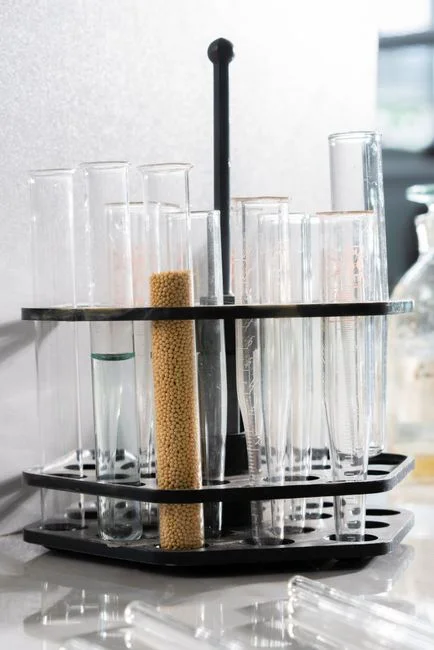
A defensible treatment design begins with representative wastewater data, because category alone does not describe emulsions, soluble organics, batch peaks, or site-specific priority pollutants. The sampling plan should cover TSS, oil and grease, BOD, COD, pH, flow, and the constituents identified by the permit and process inventory. Samples should include production periods and documented batch events rather than only low-flow or clean-water conditions.
Emulsified oil, polymer-coagulant residues, latex finishing residues, and mold-release agents can resist conventional gravity separation because their droplets are mechanically and chemically stabilized. The supplied 2026 pretreatment guide states that dispersed droplets may be below 100 μm and that surfactants can keep them suspended; it therefore identifies DAF rather than a gravity separator as the usual front-end treatment for polymer-bearing streams. Evaluate advanced oxidation for plastic manufacturing wastewater only for specific resistant constituents, not as a substitute for source characterization or bulk treatment.
| Parameter | Supplied 2026 screening guidance | Engineering use |
|---|---|---|
| Oil and grease | 30–60 mg/L monthly average; 100–150 mg/L daily maximum | Initial DAF and equalization screening; verify against the individual permit. |
| TSS | 10–50 mg/L monthly average; 100 mg/L daily maximum | DAF, biological solids handling, and polishing criteria. |
| BOD | 25–50 mg/L monthly average; 100–200 mg/L daily maximum | Biological process loading and pretreatment requirements. |
| pH | 5.0–10.0 instantaneous, or 6.0–9.0 in stricter local permits | Equalization and in-line chemical dosing; permit language controls. |
The ranges above are preliminary screening values from the supplied 2026 pretreatment guide, not Painesville limits. The priority-pollutant review should be targeted to actual chemistry. The source identifies styrene, acrylonitrile, vinyl chloride, benzene, ethylbenzene, anthracene, phenanthrene, and relevant metal catalysts as possible screening targets, not as a universal analytical list for every facility.
PFAS requires a separate current check. The supplied 2026 source states that no federal categorical PFAS limit existed under Part 414 or Part 463 as of 2026, while state screening and permit-renewal monitoring were expanding. For fluoropolymer processing or PFAS-treated feedstocks, request the receiving authority’s current PFAS and 1,4-dioxane monitoring language rather than assuming either a categorical federal limit or a state action level applies locally.
Build a treatment train that controls peak loads
The practical process sequence is equalization and screening, DAF for emulsified oil and floatable solids, biological treatment for dissolved biodegradable organics, and polishing only when the permit or reuse objective requires it. Equalization is especially important where kettle cleaning, latex finishing, or mold-release discharges produce peaks. The supplied 2026 guidance recommends applying a 1.2–1.5 times design safety factor against hydraulic and load spikes; it identifies underestimated kettle-cleaning flows as a specific failure mode.
DAF is the common front-end step for polymer-bearing wastewater because coagulant dosing destabilizes the emulsion, recycled pressurized water creates microbubbles, and floatable material is skimmed. The supplied 2026 source reports 60–90% oil-and-grease removal and 50–80% TSS removal in a single DAF pass. An industrial DAF system for plastics and rubber pretreatment should therefore be evaluated around measured oil, emulsifier, TSS, and peak-flow data rather than average flow alone.
Biological treatment addresses dissolved organics rather than merely recovering floatable material. The supplied guidance reports 85–95% TSS removal for activated sludge and 95–98% BOD removal plus 95–99% TSS removal for MBR. An integrated MBR wastewater treatment system becomes more defensible when measured effluent objectives require solids separation beyond conventional clarification. For a target below 5 mg/L TSS, the supplied guidance considers a combined DAF, biological, multi-media, or UF train; that value is design guidance, not a Painesville permit limit.
| Measured need | Potential unit operation | Selection condition |
|---|---|---|
| Emulsified oil, floatable solids | Equalization plus DAF | Confirm emulsion stability, O&G, TSS, coagulant demand, and peak flow. |
| Dissolved biodegradable organics | Activated sludge or MBR | Use BOD/COD results, biodegradability, loading variation, and solids-disposal constraints. |
| Fine solids below biological or DAF targets | Multi-media or UF polishing | Require an identified target or reuse specification. |
| pH outside the biological operating range | In-line NaOH or H₂SO₄ adjustment | Include mixing, metering, and an operating range of 6.5–8.5 for the biological stage. |
| Strippable priority organics | Stripping followed by GAC adsorption | Confirm constituent-specific treatability and permit language. |
| PFAS screening concern | GAC plus ion exchange or reverse osmosis | Use only after testing and receipt of current authority requirements. |
DAF float, biological sludge, and treatment concentrates each need a documented management route before design approval. An unspecified “sludge disposal line” is not sufficient: the buyer should establish destination, handling method, and whether the receiving POTW imposes additional material restrictions.
Prove compliance at the designated sampling point
The designated sampling point is the representative location where the Control Authority collects samples to determine permit compliance (U.S. EPA, National Pretreatment Program overview, retrieved 2026-02). The current permit must confirm its exact location. The supplied 2026 guide states that it is commonly downstream of all in-plant treatment and upstream of recycle or zero-discharge returns, so the sample represents the actual sewer discharge. A treatment-outlet sample does not establish compliance if another flow can return upstream and bypass the sampled stream.
For categorical industrial users, the supplied guide identifies 24-hour flow-proportional composite sampling as the starting point. The individual permit controls the required method, sample type, analyte list, frequency, and reporting schedule. The same guide reports routine monitoring commonly occurring twice per year to quarterly, with monthly sampling during permit-renewal windows and priority-pollutant scans usually performed annually. These frequencies must not be substituted for the binding permit.
Online TSS, pH, and conductivity measurements linked to SCADA can expose adverse shifts between formal samples, especially during batch discharges. They do not replace required compliance samples or establish permit compliance on their own. The operating program should distinguish trend alarms from analytical compliance results and define who investigates each excursion.
Build the evidentiary record around laboratory reports, chain-of-custody documentation, retained analytical records, discharge monitoring reports, SCADA trends, corrective actions, and sludge-disposal records. The supplied guide calls for a laboratory holding state and NELAP accreditation where applicable; accreditation status, method selection, holding times, and detection limits should be confirmed with the Control Authority. Escalation procedures should identify the responsible operator, notification deadline, resampling approach, and corrective-action owner before an exceedance occurs.
Linking these records to treatment operation is critical: a compliant laboratory result without a defensible sample location or complete chain of custody may not answer the central compliance question.
Compare treatment options and control costs
DAF-led, activated-sludge, and membrane-based configurations address different objectives, and the comparison should begin with the permit and measured wastewater—not with a generic treatment claim. DAF plus activated sludge plus multi-media filtration generally offers a conventional route with less membrane-specific maintenance. DAF plus MBR plus UF occupies more process complexity but can deliver tighter solids separation and may be attractive where water reuse or a stringent solids objective has independent value.
The supplied 2026 cost comparison reports that membrane-based MBR plus UF requires 20–40% more capital expenditure but has 15–25% lower annual operating expense than activated sludge plus multi-media filtration. The source attributes the operating advantage to lower sludge yield, tighter effluent, and reduced chemical consumption. These are comparative estimates from that guide, not a Painesville bid, site-specific budget, or guarantee.
| Decision factor | DAF + activated sludge + multi-media | DAF + MBR + UF |
|---|---|---|
| Capital cost | Lower relative CAPEX in the supplied 2026 comparison. | Reported at 20–40% higher CAPEX in the supplied 2026 comparison. |
| Annual operating cost | Higher relative OPEX in the supplied 2026 comparison. | Reported at 15–25% lower annual OPEX in the supplied 2026 comparison. |
| Solids separation | Conventional clarification followed by multi-media filtration. | MBR followed by UF; evaluate membrane maintenance and replacement exposure. |
| Footprint and integration | Compare the number of tanks, transfer systems, and ancillary areas. | Evaluate skid integration, membrane cleaning, and controls complexity. |
| Reuse objective | May require additional polishing to meet the reuse specification. | Potentially better aligned with tight solids targets, subject to site-specific validation. |
The same source estimates 50–80% lower effective water cost than fresh-water purchase where the POTW accepts reclaimed water, with a roughly 2–4 year payback window for a 50 m³/h plant. These are the source’s comparative estimates, not a Painesville financial outcome. A supplier should size equipment using representative wastewater testing, hydraulic peaks, batch schedules, permit limits, sampling-point requirements, sludge routes, and future production changes—not average flow alone.
Run a pre-discharge compliance readiness check
A pre-discharge review should verify the rule set before the equipment is selected. Confirm the responsible Control Authority, current individual pretreatment permit, local pretreatment ordinance, applicable Part 414 or Part 463 subcategory, designated sampling point, local limits, monitoring frequency, reporting deadlines, and the most stringent applicable requirements.
- Reconcile every production, cooling, cleaning, laboratory, and intermittent discharge stream in the wastewater balance and permit compliance plan.
- Verify that treatment equipment is sized from current wastewater testing, batch schedules, equalization requirements, and future production assumptions.
- Confirm that the designated sampling point is accessible, representative, and located correctly relative to treatment, recycling, and zero-discharge returns.
- Reconcile laboratory reports, chain-of-custody records, DMRs, SCADA trends, excursion investigations, corrective actions, and sludge-disposal records.
- Request current PFAS and 1,4-dioxane screening language where fluoropolymer processing or PFAS-treated feedstocks are present; do not infer a federal categorical limit that was not supplied.
- Record unresolved gaps and assign an owner and deadline before sampling, permit renewal, procurement, or inspection.
Use the pre-sewer compliance checklist as a review aid, but obtain the plastics and rubber plant’s own permit and waste characterization before closing any item.
Frequently Asked Questions
Is DAF alone enough for plastics or rubber wastewater?
Not necessarily. The supplied 2026 guide identifies DAF as the common front-end treatment for emulsified oil and floatable solids, reporting 60–90% oil-and-grease removal and 50–80% TSS removal on polymer-bearing streams. Biological treatment or polishing depends on measured BOD, COD, TSS, priority pollutants, reuse objectives, and the permit limit; DAF alone should not be accepted as the compliance basis without those data.
What data should an equipment supplier receive before sizing?
Request representative wastewater characterization, average and peak flow, batch-cleaning schedules, equalization behavior, constituent concentrations, the applicable permit limits, designated sampling-point requirements, sludge-management constraints, and expected production changes. The supplier should identify which measurements drive DAF loading, biological loading, polishing, and hydraulic margin rather than size the system from average flow alone.
How do membrane systems compare with activated sludge on cost?
The supplied 2026 comparison estimates that MBR plus UF carries 20–40% higher CAPEX but 15–25% lower annual OPEX than activated sludge plus multi-media filtration. Require a site-specific lifecycle model covering sludge handling, chemicals, membrane cleaning or replacement, energy, labor, and disposal. A supplier quotation should state its pricing basis because the comparison is directional evidence, not a Painesville bid or financial guarantee.
How can a plant reduce permit-renewal and supplier-selection risk?
Start the renewal review by identifying the Control Authority, current permit, categorical subcategory, and potentially more stringent local requirements. Require representative sampling that captures batch peaks, complete analytical and chain-of-custody records, current DMR history, and any PFAS or 1,4-dioxane screening request. For supplier selection, verify that the proposed performance claims apply to the same waste chemistry and permit basis; the DAF-versus-clarifier comparison is a technical reference, not a substitute for site testing.