What Changes When Digital Realty Acquires an Arizona Plant?
The wastewater requirements apply to the Arizona facility after acquisition based on its permits, discharge points, process activities, and receiving sewer or water body; a corporate change of ownership does not create a new permit threshold. Digital Realty’s Form 10-K identifies Digital Realty Trust, L.P. as the entity through which its parent owns, acquires, develops, and operates data centers. The buyer must map title, operating, and permitting responsibilities separately, verify permit transferability, establish wastewater flows and constituents, and confirm that treatment and disposal arrangements remain valid at Day 1. The supplied research does not establish any Arizona-specific wastewater limit, discharge standard, or sewer pretreatment threshold, so those values must come from the site’s actual permits and the applicable authority.
A wastewater permit transfer involves more than a simple replacement of the owner’s name on an environmental document. The responsible permit holder, tenant, landlord, and operator may differ, and the instrument may require notice, an application, an amendment, or reissuance. For an industrial user, the receiving sewer authority may also require evidence that the discharge remains acceptable after the transaction. That review should cover monitoring, reporting, sampling, pretreatment controls, reuse plans, and any outstanding compliance obligations.
Digital Realty’s June 22, 2026 announcement concerned a Kansas City land acquisition, increased ownership of Teraco, and the planned acquisition of Columbia Capital. These transactions do not establish wastewater requirements for an Arizona property. For an Arizona transaction, use the site’s permit file, sewer-use records, and current process inventory as the controlling diligence sources. The broader Arizona plant-acquisition wastewater guide and Arizona acquisition wastewater requirements provide additional transaction-specific context.
Build the Arizona Wastewater Due-Diligence File
The diligence file must connect every wastewater stream to its legal authorization and final destination. Request all current wastewater, industrial-user pretreatment, discharge, reuse, groundwater, and stormwater documents associated with the property, including applications, permits, correspondence, inspections, monitoring reports, violations, and renewal dates. Do not accept a spreadsheet summary as a substitute for the underlying approvals.
Build a process-by-process inventory covering domestic sewage, cooling blowdown, process wastewater, equipment washdown, floor drainage, stormwater, and laboratory or tenant flows. For each stream, identify its source, generation point, flow contribution, destination, responsible operator, and controlling authorization. A sanitary sewer connection, permitted outfall, reuse basin, evaporation system, haul-off contractor, or temporary storage area should not be grouped together because each creates a different permit, operating, and closure question.
- Request the seller's complete regulatory correspondence, inspection reports, monitoring reports, violation notices, and renewal records.
- Obtain operating logs and meter data showing current and historical wastewater generation by stream.
- Map each stream to its sewer connection, permitted discharge point, reuse destination, evaporation route, or hauler.
- Identify the legal holder of each permit and the required transfer mechanism.
- Separate groundwater and aquifer constraints from the sanitary sewer approval because infiltration, reuse basins, and other discharge pathways may trigger a separate review.
The following steps establish the foundation for accurate environmental compliance during the transition.
Historical flow and pollutant data provide a baseline, not a guarantee. Future occupancy, tenant processes, cooling configuration, operating schedules, and expansion plans can change both hydraulic and contaminant loads. The acquisition file should therefore include those operating assumptions and identify which conclusions depend on them. The data-center cooling-blowdown treatment reference is useful for stream definition, but the Arizona buyer still needs site records.
| Diligence item | Required evidence | Decision supported |
|---|---|---|
| Authorizations | Permits, applications, approvals, inspections, correspondence, violations, renewals | Transferability, open compliance items, closing conditions |
| Wastewater inventory | Stream map, process descriptions, meters, operating logs, design loads | Flow and contaminant characterization |
| Destinations | Sewer approvals, outfall records, reuse plans, manifests, storage records | Permitted route and treatment requirement |
| Legal responsibility | Title records, leases, operating agreements, permit holder details | Accountability from signing through Day 1 |
Characterize the Wastewater Before Selecting Treatment
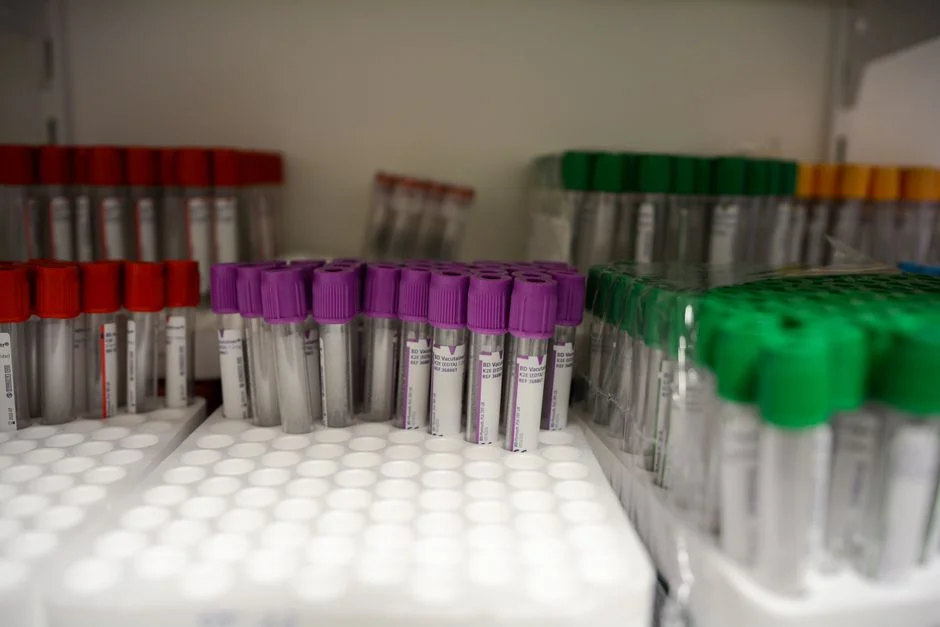
A plant-wide composite sample can conceal the flow and contaminant conditions that control treatment performance. Create an industrial wastewater sampling plan by stream and operating condition. Include normal operation, cooling blowdown cycles, cleaning events, storm response, tenant discharges, and any known upset conditions. The parameter list should come from process chemistry, permit language, and receiving-authority requirements rather than a generic sampling panel.
Request meter and operating-log data that establish average and peak flow, diurnal variation, blowdown frequency, storm response, and expected future loads. For cooling blowdown, investigate salinity and scaling constituents, residual treatment chemicals, corrosion indicators, and biocides where relevant. For process and tenant streams, identify the pollutants and surfactants associated with those users. Record temperature, pH, suspended solids, and oil and grease where the process and permit make them relevant; add toxic or priority pollutants when site activities or permit language indicate concern.
Digital Realty’s Form 10-K reported a portfolio of 309 data centers, including 124 in the United States, as of December 31, 2023. These figures describe corporate operating scale only. They provide no Arizona site flow, wastewater constituent, reuse demand, or permit information and cannot be used as a design basis. For a data-center application, the data-center wastewater and cooling-blowdown guide can inform stream planning, but local measurements and documents remain necessary.
| Characterization element | Evidence to obtain | Reason for the test or record |
|---|---|---|
| Flow regime | Meter data, operating logs, peak and diurnal records | Establishes hydraulic loading and storage requirements |
| Cooling chemistry | Salinity, scaling constituents, chemicals, corrosion indicators, biocides where applicable | Defines pretreatment, materials, and disposal constraints |
| Process and tenant pollution | Stream-specific pollutants, surfactants, and incompatible constituents | Tests whether existing treatment or sewer discharge is suitable |
| General condition | Temperature, pH, suspended solids, and oil and grease where relevant | Supports treatment selection and receiving-route review |
| Compliance parameters | Parameters expressly identified by permits or receiving requirements | Prevents omission of site-specific regulated constituents |
Match the Treatment Train to the Disposal Route
The disposal route determines the treatment question. If the final destination is a sanitary sewer, determine whether the facility qualifies as an industrial user, what pretreatment requirements apply, and whether the receiving authority will accept the existing flow and pollutant loads. If cooling or process water is reused on site, establish the required purity, recovery objective, concentrate-management route, and whether the reclaimed-water system requires separate authorization. If a permitted discharge is involved, verify that the permit covers the post-treatment flow, constituent mix, and future expansion; determine whether an amendment is needed before adding load or changing treatment.
Equipment selection follows those findings. A DAF system for Arizona industrial wastewater pretreatment may be appropriate where verified wastewater contains oil, grease, floatables, or suspended solids that must be removed before sewer discharge or biological treatment. Its published capacity range of 4–300 m³/h and 13 standard models are catalog specifications, not Arizona site requirements.
An MBR wastewater treatment and reuse system is relevant where the design basis supports biological treatment with membrane separation and reuse-quality output. Its published range of 10–2,000 m³/day and sub-1 μm filtration describe the product; they do not demonstrate performance at the facility. Chemical dosing should follow an established chemical-selection, dose-range, and controls review.
| Verified route | First decision | Equipment implication | Diligence still required |
|---|---|---|---|
| Sanitary sewer | Does the industrial-user and pretreatment framework apply? | Physical, chemical, biological, or biological-membrane pretreatment may be needed | Authority limits, acceptance conditions, discharge agreement, sampling program |
| On-site reuse | What purity and recovery are required? | Treatment must address the specified constituent mix and concentrate route | End-use specification, recovery calculation, concentrate disposal, reuse authorization |
| Permitted discharge | Does the permit cover the final treated stream and future load? | Treatment must consistently meet the verified permit basis | Permit limits, monitoring, amendment need, receiving-water constraints |
| Evaporation, haul-off, or storage | What materials and operating controls are authorized? | Segregation, containment, and treatment may be required before disposal | Authorization, carrier records, storage capacity, closure and manifest requirements |
Protect Permits, Equipment and Operations Through Closing
Permit continuity, equipment condition, and operational responsibility need separate closing controls. Prepare a permit-transfer matrix showing each authorization, legal holder, status, conditions, reporting duties, renewal date, transfer mechanism, responsible party, and required closing condition. Inspect treatment assets for structural condition, hydraulic capacity, controls, redundancy, chemical supply, spare parts, sludge management, monitoring equipment, and outstanding maintenance deficiencies.
Effective risk management requires clear delineation between immediate continuity actions and long-term capital projects. An operating permit, valid sewer connection, functional treatment train, trained operator, chemical inventory, and monitoring capability may be closing conditions. A future expansion or treatment upgrade can then proceed through the appropriate authorization and engineering process. This prevents a capital project from being mistaken for a current permit obligation.
The supplied company history reports a Phoenix acquisition in August 2006 and a Chandler capacity expansion in July 2013. These facts demonstrate historical Arizona presence, not the status of a particular permit, sewer agreement, or treatment asset. The June 22, 2026 announcement also identifies a corporate scale signal: approximately 1,440 acres near Kansas City and planned utility delivery of 600 megawatts by early 2028, rising to two gigawatts at full delivery. Those power figures cannot be transferred into Arizona wastewater sizing.
Allocate pre-closing violations, remediation obligations, third-party claims, retrofit costs, and permit-transfer liabilities in the acquisition documentation. Legal and environmental reviewers should assess whether the proposed allocation matches the documentary record.
| Risk register field | Evidence-based entry | Closing response |
|---|---|---|
| Permit continuity | Holder, status, conditions, transfer path, renewal date | Closing condition, escrow, indemnity, or pre-close action |
| Operational continuity | Treatment condition, redundancy, chemicals, controls, monitoring, staff | Repair, replacement, spare-parts plan, or accepted transition risk |
| Future loading | Tenant plans, cooling configuration, expected peak flow | Capacity review and authorization strategy |
| Legacy liability | Violations, notices, remediation needs, third-party claims | Specific indemnity, escrow, or retained obligation |
| Closure | Immediate deficiencies versus post-close capital projects | Named owner, budget, schedule, and permit dependency |
Frequently Asked Questions
Which Arizona permits must transfer when Digital Realty acquires a plant?
Identify the responsible Arizona agency and local sewer or water authority from the facility’s actual permits and discharge destination. The diligence file must determine whether each instrument requires notice, an application, an amendment, or reissuance. A transaction announcement does not establish the transfer requirement, and the supplied research contains no site-specific Arizona permit identification.
How should wastewater treatment equipment be sized and priced?
Request a stream-by-stream flow basis, wastewater characterization, future operating loads, and the sewer, reuse, or discharge requirements that will control acceptance. Ask vendors to state their design assumptions, guarantees, included scope, and any exclusions in writing. No defensible price or equipment capacity can be assigned without those inputs and site-specific commercial quotations.
What should a buyer check when selecting a wastewater supplier?
Check demonstrated fit with the verified flow and contaminant load, treatment-performance documentation, control-system scope, chemical and sludge handling, commissioning support, service capability, and spare-parts availability. Require the supplier to identify which proposed performance depends on permit limits, pretreatment, reuse specifications, or other assumptions that remain unverified.
Does a missing permit document prove a compliance violation?
No. A documentation gap may reflect an incomplete seller file, an incorrect request, or a permit held under another site identifier; it is not,