Which Treatment Route Fits the Development?
For a Zurich housing development, the best packaged sewage treatment plant is determined by wastewater flow, site constraints and permit requirements—not container size alone. A sewer connection should be screened first; below roughly 10 m³/day, an underground packaged plant may be more cost-effective than a containerized membrane bioreactor (MBR), while an MBR becomes more relevant as flows, effluent requirements or available footprint increase. Final selection must be confirmed with Zurich’s responsible authorities using local data, current permit criteria and winter design inputs.
Eawag reports approximately 130,000 km of underground sewers in Switzerland, with about 1.4 billion cubic metres of water used annually to transport human waste to remote treatment plants. It describes the centralised system as effective but costly and resource-intensive. For a Zurich development, therefore, connection feasibility should be assessed before package-plant procurement. This should include the distance to a suitable sewer, gravity and pumping implications, connection capacity, ownership responsibilities and the receiving authority’s willingness to approve the route.
If sewer connection is impractical, packaged treatment can sit within a centralised, decentralised or hybrid sewer strategy. Eawag identifies hybrid systems as a practical option for Switzerland because they combine established infrastructure with treatment at selected locations. A site-packaged plant may therefore be preferable to extending a public sewer where it reduces excavation or avoids an otherwise disproportionate connection.
Screen the options against four inputs: verified design flow, available land, drainage route and receiving-water constraints. A sewer connection usually merits priority where an authorised connection already exists. A buried anoxic/oxic (A/O) plant merits consideration at smaller flows where landscaping can remain above the treatment unit. A containerized MBR merits consideration where the hydraulic envelope, treatment quality or compact footprint requires a higher-capacity factory-integrated system.
This is an initial screening method, not a permit decision. Eawag states that technical and social solutions must be tested with relevant authorities and stakeholders before implementation. Use the packaged sewage treatment options for housing developments as a comparative framework, then have the Zurich authorities confirm the selected route before equipment sizing becomes a tender commitment.
Turn Residents and Occupancy into a Design Flow
Packaged-plant capacity should be derived from people, wastewater flow and peaking—not from a preselected number of containers. HydropureWater’s 2026 sizing guide identifies three required inputs: design population, per-capita wastewater flow and a peak factor. It also states that ISO-container count is a consequence of design flow rather than a starting point.
For permanent Swiss residential occupancy, the 2026 guide gives a planning range of 150–200 L per person per day. The exact value must be confirmed against local water-meter data from comparable developments in the canton. As a separate packaged-plant sizing anchor, HydropureWater cites 50 gallons per person per day, approximately 190 L per person per day, from the Pure Aqua MBR-C sizing table published in 2025. These figures are different bases for preliminary planning; neither replaces site-specific evidence or authority agreement.
For staff accommodation, holiday camps and other transient populations, the 2026 guide applies a peak factor of about 1.5–2.5 to average daily flow when showers, meals and toilet use coincide within a short period. The multiplier must reflect the actual operating pattern rather than be added automatically to permanent housing.
- Define the design population, distinguishing registered residents from maximum temporary occupants.
- Select and document the per-capita flow assumption, then check it against local metered consumption.
- Apply a justified peak factor and express both average and peak flow in m³/day.
- Document BOD, COD, TSS and NH4-N assumptions for treatment selection.
- Confirm the resulting hydraulic and pollutant basis with the responsible Zurich canton and local wastewater authority.
HydropureWater’s 2026 guide warns that packaged MBR systems quoted for municipal-strength sewage are not automatically suitable for high-strength industrial waste. Housing wastewater is normally distinct from that case, but mixed-use inflows must still be checked. The supplier should receive the documented loads and reject the proposal if its stated application is narrower.
| Sizing parameter | Evidence-based basis | Buyer confirmation required |
|---|---|---|
| Permanent residential flow | 150–200 L/person/day for Swiss residential planning, according to HydropureWater’s 2026 guide | Local water-meter data and authority acceptance |
| Packaged-plant anchor | 50 gpd/person, approximately 190 L/person/day, from the Pure Aqua MBR-C sizing table, 2025 | Applicability to the selected plant and project |
| Transient peaking | About 1.5–2.5 times average daily flow, according to HydropureWater’s 2026 guide | Actual occupancy and fixture-use pattern |
| Pollutant basis | BOD, COD, TSS and NH4-N must accompany the hydraulic calculation | Representative wastewater analysis and local permit conditions |
| Equipment quantity | Container count follows from design flow, according to HydropureWater’s 2026 guide | Confirmed process duty and site layout |
Compare a Buried A/O Plant with a Containerized MBR
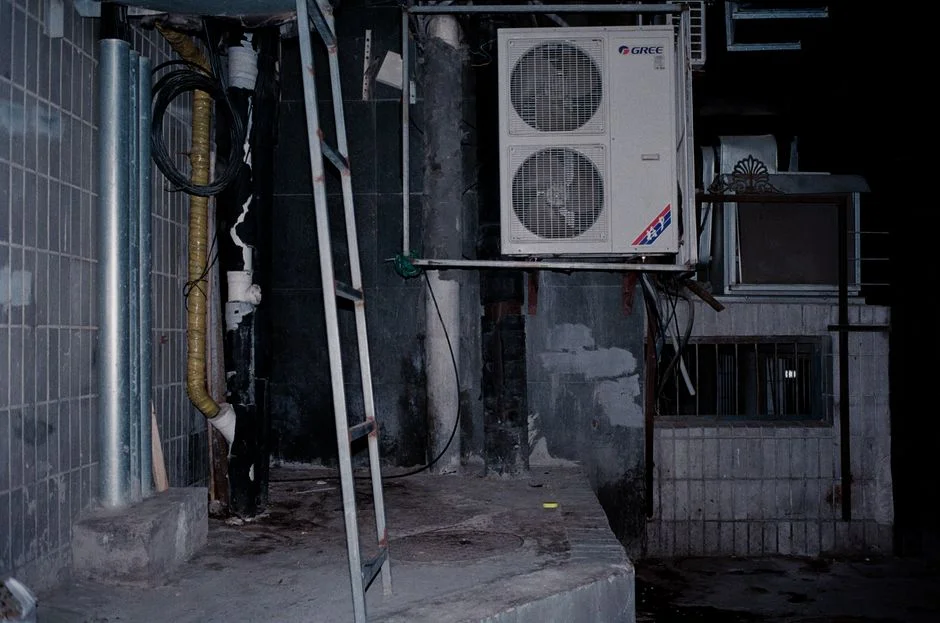
The principal route distinction is between a compact underground biological package and a factory-integrated containerized MBR with membrane separation. Neither is universally superior: the underground WSZ series has a published capacity of 1–80 m³/h and is installed below grade, while the integrated MBR has a published flow range of 10–2,000 m³/day and is configured around submerged PVDF membranes.
The underground WSZ package sewage treatment plant combines anoxic/aerobic biological contact oxidation, sedimentation and disinfection in one buried unit. It can be installed with landscaping above it or mounted on a trailer. Its principal development advantages are reduced visual impact and the ability to use the surface area above the unit. Its risks sit in the civil works: excavation, structural design, groundwater, access for maintenance and the difficulty of replacing internal equipment.
The integrated containerized MBR wastewater treatment system combines activated sludge with submerged PVDF membrane filtration. HydropureWater’s product description states a flow range of 10–2,000 m³/day and an effluent filtration performance below 1 μm. It also states that the footprint is approximately 60% smaller than conventional activated sludge followed by clarification. That comparison is a published product claim, not a Zurich site-allocation guarantee.
For the roughly 10–500 m³/day residential or camp envelope in HydropureWater’s 2026 guide, a single 20-foot high-cube unit often suits the low end and a single 40-foot high-cube unit covers the upper end. Beyond that single-container envelope, multiple containers or larger skids may be needed. Below roughly 10 m³/day, the same guide states that an underground packaged plant is usually more cost-effective than a containerized MBR.
| Decision issue | Buried A/O route | Containerized MBR route |
|---|---|---|
| Published capacity | 1–80 m³/h, according to the HydropureWater WSZ product description | 10–2,000 m³/day, according to the HydropureWater integrated MBR product description |
| Development flow screen | Particularly relevant below roughly 10 m³/day, based on HydropureWater’s 2026 guide | Relevant within the approximately 10–500 m³/day guide envelope and potentially beyond it |
| Site use | Preserves landscaping but requires excavation and underground servicing | Requires vehicle access, lifting clearance and equalization space |
| Process configuration | Contact oxidation, sedimentation and disinfection | Activated sludge plus submerged PVDF membrane filtration |
| Principal procurement issue | Ground conditions, groundwater and maintainability | Membrane duty, buffer volume, electrical supply and winter operation |
A containerized system is not simply a tank delivered to site. Require space for pretreatment, equalization, blower or air-service equipment, sludge handling, controls, maintenance access and lifting by ISO corner castings. For a buried A/O system, require an excavation and groundwater-control plan before comparing its commercial price with an above-ground MBR.
Match Membrane Performance to Zurich Conditions
Membrane format determines packing, scouring, cleaning and fouling-control requirements, but the decisive winter criterion is guaranteed biological performance at the project’s cold influent temperature. Pure Aqua’s MBR-C uses submerged hollow-fibre ultrafiltration with a nominal 0.04 μm pore size. HydropureWater’s DF modules use 0.1 μm flat-sheet PVDF and are available in 80–225 m² packs.
HydropureWater’s DF product description states that the modules consume 10–20 times less energy than external cross-flow systems. Require the supplier to substantiate that claim for the selected flow, membrane area and operating-temperature duty rather than carrying it into the tender as an unqualified operating-cost assumption.
The tender should define maximum transmembrane pressure, automatic cleaning, air scour, chemical-cleaning frequency and membrane-replacement responsibility. Pure Aqua’s 2025 MBR-C description states that its ultrafiltration membranes require one or two maintenance clearings per year. That is a supplier-specific statement; require the selected supplier to provide its own cleaning schedule, reagents, labour assumptions and effects on normal operation.
| Parameter | Published comparison | Procurement requirement |
|---|---|---|
| Membrane format | Submerged hollow-fibre UF at nominal 0.04 μm in Pure Aqua MBR-C; 0.1 μm flat-sheet PVDF in HydropureWater DF | State module type, area and required duty |
| DF pack size | 80–225 m², according to the HydropureWater DF product description | Confirm installed area and parallel-module arrangement |
| Cleaning | Pure Aqua states one or two maintenance clearings per year for its UF membranes, 2025 | Contractual cleaning protocol, chemicals and labour |
| Temperature | Pure Aqua MBR-C is quoted for 20–30 °C operation with a 20 °C design point | Guaranteed winter biological capacity |
| Energy | HydropureWater states 10–20× lower consumption than external cross-flow systems for its DF modules | Validated consumption at the actual duty |
HydropureWater’s 2026 Zurich guide states that cold influent can suppress biomass kinetics and specifies insulation, biomass heating or an explicit lower-temperature design allowance. Ask the supplier to guarantee treatment performance at the minimum expected influent temperature, not merely the equipment’s minimum start-up temperature.
Request the membrane warranty and references for comparable residential installations in central Europe. HydropureWater identifies such references as the best available predictor of behaviour during a Zurich winter. For maintaining consistent effluent quality, the MBR maintenance guidance can support the discussion of routine controls and cleaning responsibilities.
Build a Permit-Ready and Winter-Proof Tender
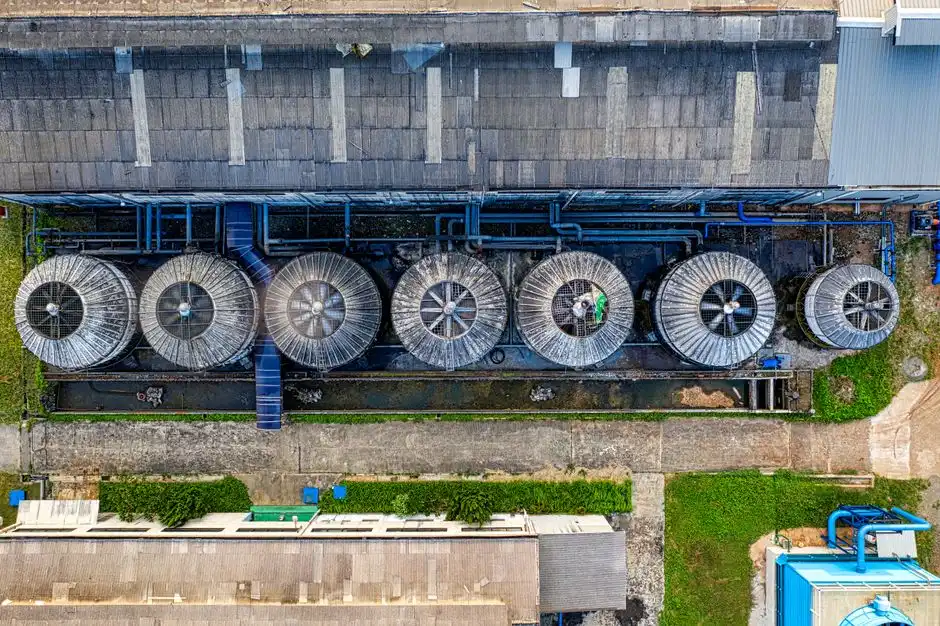
A Zurich wastewater treatment permit should be treated as a design input, not an administrative afterthought. HydropureWater’s 2026 guide states that final hydraulic and pollutant values must be confirmed with the responsible Zurich canton and local wastewater authority, with sign-off referencing AWEL practice and the federal Gewässerschutzgesetz framework.
Issue the technical schedule with the average and peak flows, influent loadings, treatment objectives, discharge route and selected plant format clearly identified. Obtain the discharge authorization and evidence of compliance with the Swiss Water Protection Ordinance. The supplied guide identifies nitrogen, phosphorus and COD as relevant effluent parameters but provides no numerical limits; the tender must therefore use the authority’s current requirements rather than generic substitution values.
Resolve the electrical interface early. Pure Aqua’s 2025 MBR-C description lists the unit at 460 V, three-phase, 60 Hz. For a Zurich site, require written confirmation of operation on the Swiss 400 V, three-phase, 50 Hz electrical supply, or include any required transformer within the quoted scope. Make protection, earthing, control-system compatibility and grid-connection responsibilities explicit.
Define the packaged-plant boundary. It should state whether the supplier supplies pretreatment, biological treatment, membrane or clarification, disinfection where required, PLC controls, remote monitoring, standby equipment, sludge handling, potable water for cleaning and all site utilities. A clear boundary prevents an attractive equipment quotation from obscuring civil, electrical or operational exclusions.
Place the following into the contract rather than treating them as commercial preferences: factory test evidence, commissioning acceptance criteria, membrane warranties, spare-parts schedules, cleaning intervals, operating-temperature guarantees and central European residential references. Require the supplier to demonstrate cold-weather biological capacity and identify any insulation, heating or seasonal-operation constraints.
Budget figures need an equally clear evidence label. HydropureWater’s 2026 guide cites CHF 80,000–150,000 for a containerized MBR serving 100 people. That is an indicative package-plant figure, excluding site preparation, civil works and Swiss-specific grid connections. The guide also states that no industry-standard Zurich-specific packaged-MBR price exists. Obtain quotations against one common tender scope; otherwise the exclusions will make the offers incomparable.
Plan Delivery, Commissioning and Lifecycle Support
Plant price and manufacturing lead time do not represent the project completion date. HydropureWater’s 2026 Zurich guide gives indicative manufacturing and delivery lead times of 12–20 weeks for European suppliers and 16–24 weeks for Chinese suppliers. These are planning references rather than guaranteed dates. The same guide allows another 2–4 weeks for installation and commissioning by certified technicians.
Before issuing a purchase order, confirm the customs and transport arrangements, site-access route, lifting plan, electrical connection, civil-work interfaces and sludge-disposal responsibility. Require each bidder to identify which activities fall inside its price and delivery schedule. Where possible, tie progress payments to an agreed factory test, documented shipment readiness and successful site commissioning.
The handover package should include the factory test certificate, operating manual, as-built drawings, membrane warranty, complete spare-parts list, cleaning protocol, software access and support procedure. A supplier that cannot provide these items has not demonstrated the operational evidence needed for a remote housing-development installation.
Frequently Asked Questions
What wastewater flow should be used to size a packaged sewage treatment plant for Zurich housing?
Use 150–200 L per person per day for preliminary Swiss residential planning, according to HydropureWater’s 2026 guide, then add a justified peak factor and confirm the result against local water-meter data. For temporary accommodation, the guide uses a peak factor of about 1.5–2.5. Final average and peak flows, together with BOD, COD, TSS and NH4-N assumptions, require confirmation by the Zurich authorities and the selected supplier.
What budget should a buyer allow for a containerized MBR?
HydropureWater’s 2026 guide gives an indicative CHF 80,000–150,000 range for a containerized MBR serving 100 people. Treat that as a screening figure rather than a tender price: it excludes site preparation, civil works and Swiss-specific grid connections. Request itemized quotations based on the same flow, loadings, container format, treatment duty and electrical and temperature adaptations.
What must AWEL and the local wastewater authority confirm before procurement?
Ask AWEL and the local wastewater authority to confirm the final design population, average and peak flow, pollutant assumptions, discharge route and current discharge requirements. The project must obtain the required discharge permit and demonstrate compliance with the Swiss Water Protection Ordinance. The supplied research identifies nitrogen, phosphorus and COD but gives no numerical limits, so use the authority’s current criteria rather than generic limits.
How should suppliers be compared on winter reliability and lifecycle support?
Require comparable evidence from every bidder: a factory test certificate, a guaranteed minimum operating temperature with winter treatment capacity, membrane warranty, cleaning protocol, spare-parts list and central European residential references. Also require each bidder to confirm 400 V, three-phase, 50 Hz compatibility and to state whether any transformer is included. This produces a functional comparison rather than a ranking based only on container dimensions.
How long should buyers allow for delivery and commissioning?
HydropureWater’s 2026 guide cites 12–20 weeks for European-supplier manufacturing and delivery and 16–24 weeks for Chinese suppliers. It allows another 2–4 weeks for installation and commissioning by certified technicians. Treat these as planning ranges; obtain a project-specific schedule covering factory testing, transport, customs, site readiness, utilities and acceptance testing.
Related Equipment
- underground WSZ package sewage treatment plant — specifications, capacity range, and technical data